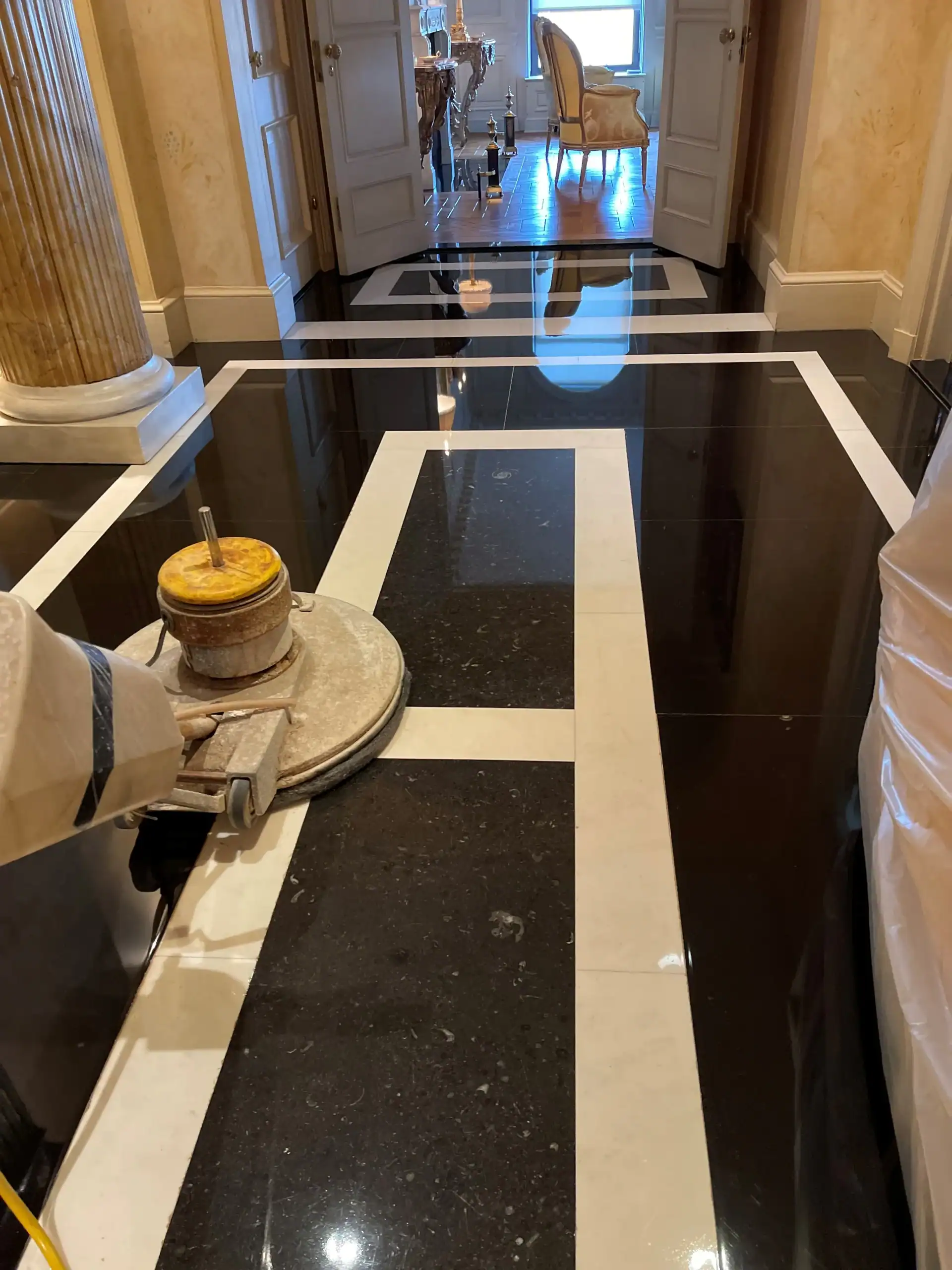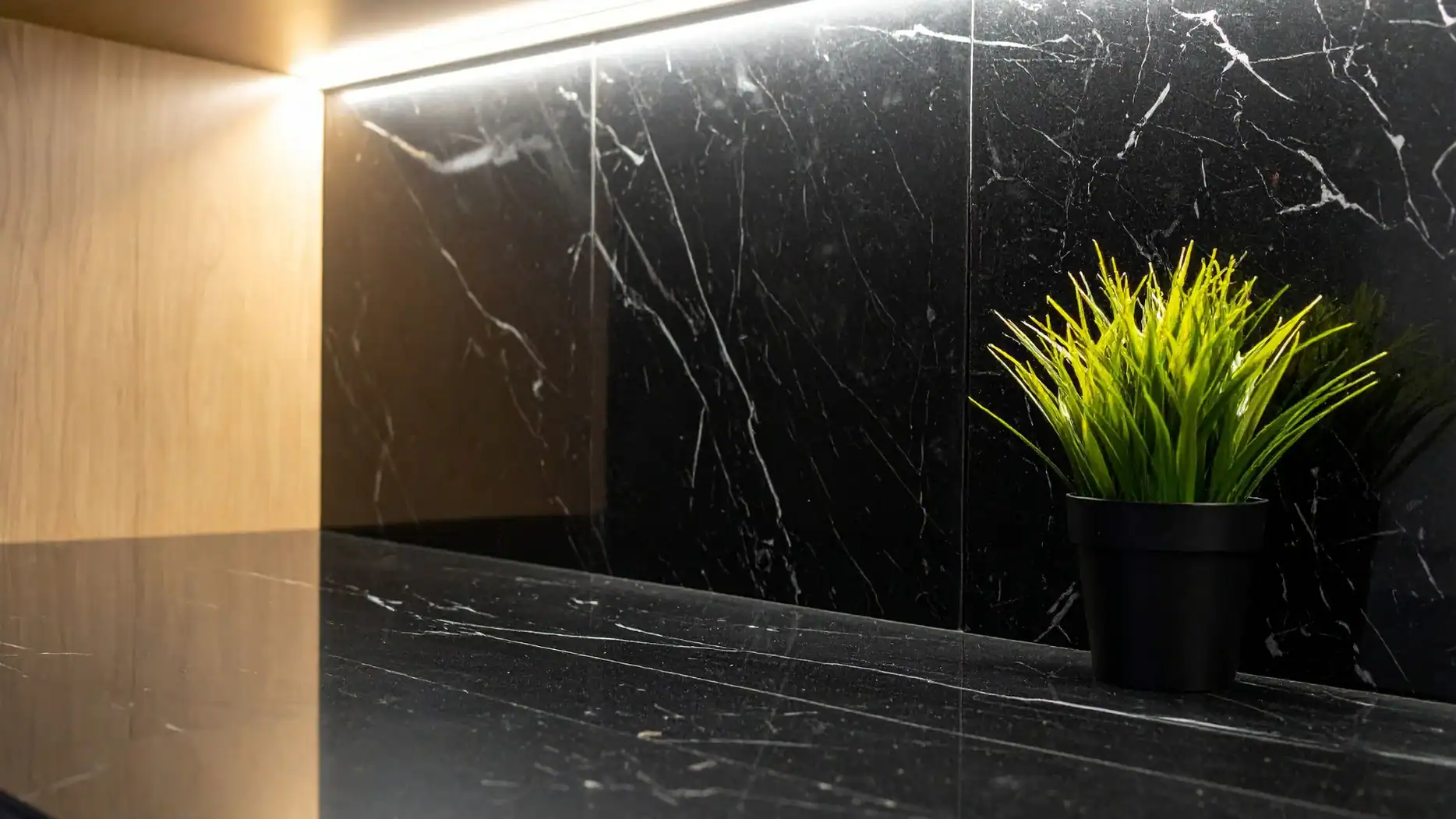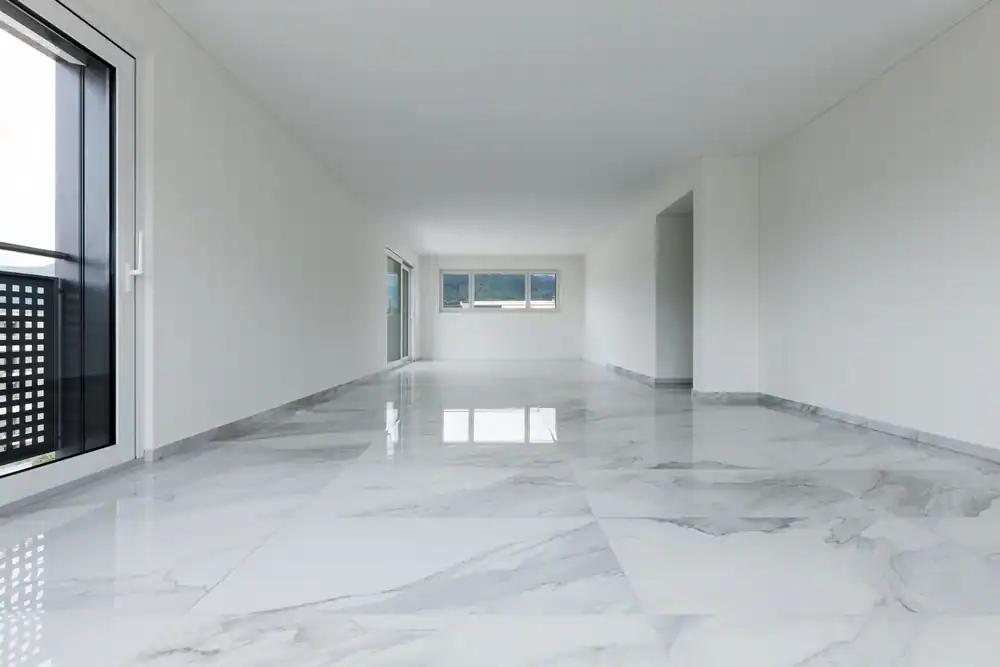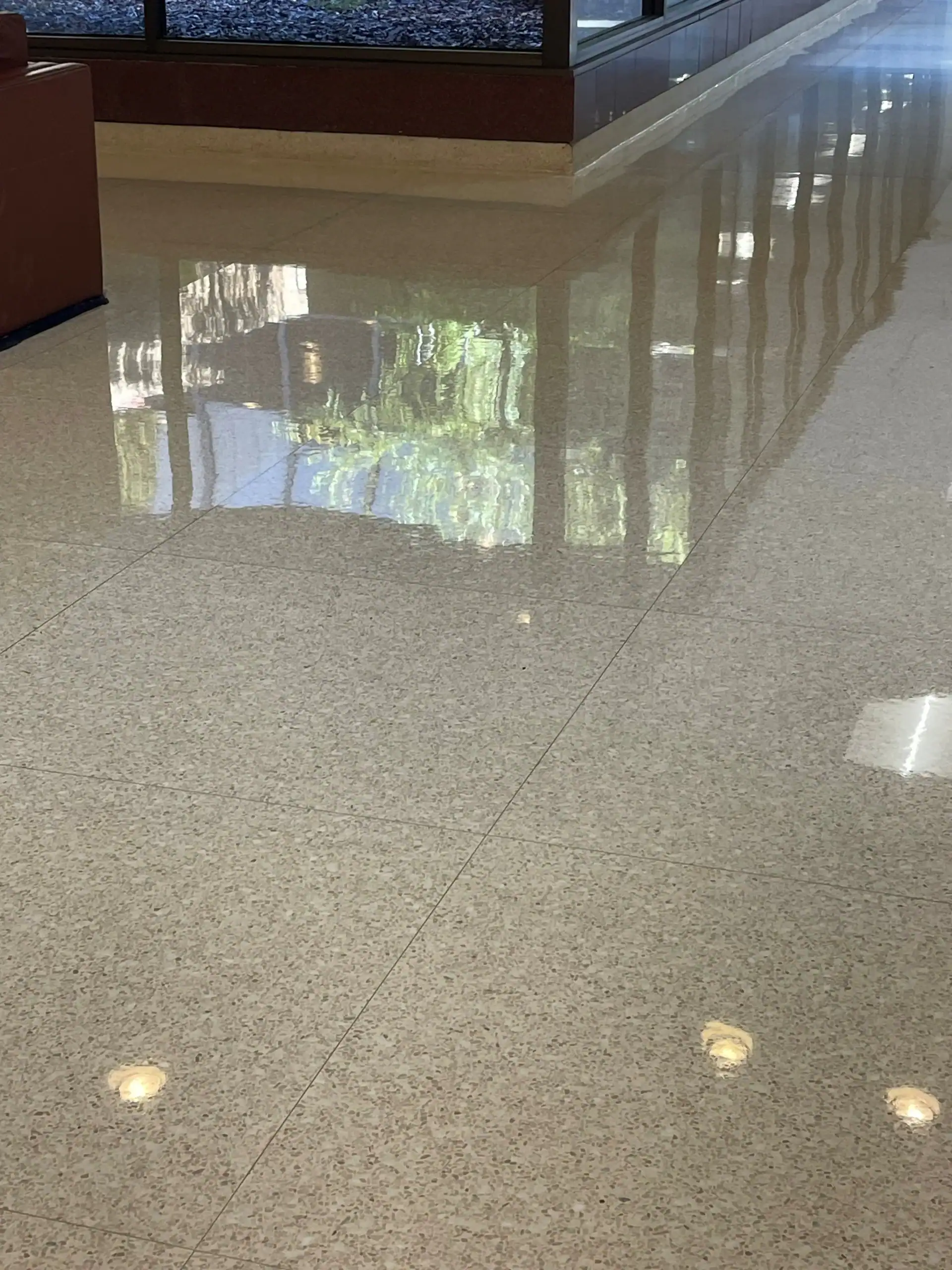
Your marble is showing signs of damage—dull spots, etching, scratches, or stains that won't budge. Recognizing these warning signs early can save you thousands in replacement costs.
Share:
Summary:
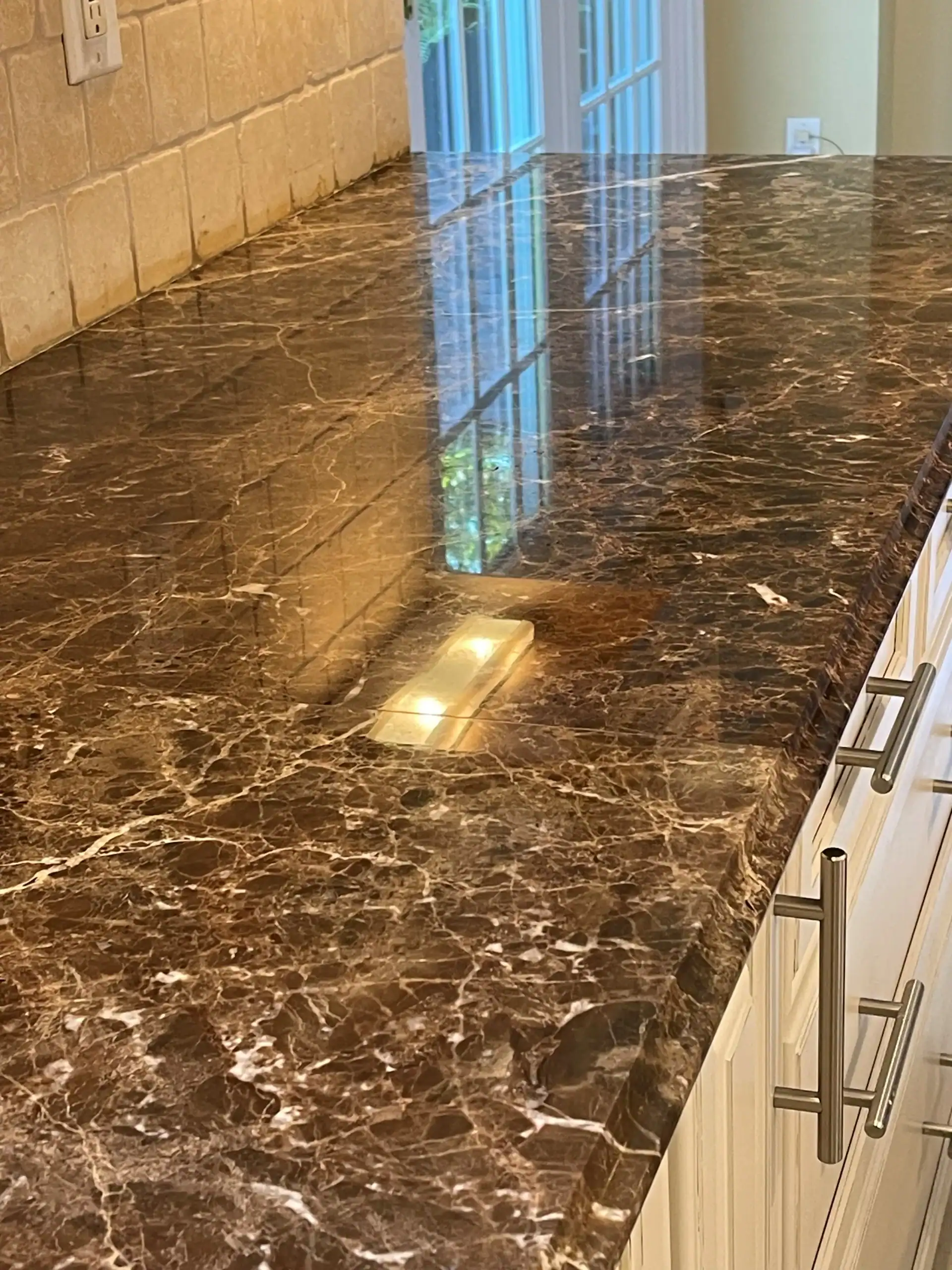
Walk into your kitchen or bathroom and really look at your marble. Does it still reflect light the way it did when it was new? If you’re seeing a dull, lifeless surface instead of that mirror-like finish, something’s changed beneath the surface.
Marble naturally loses its polish over time, especially in high-traffic areas. Foot traffic grinds microscopic particles against the surface, slowly wearing away that glossy finish. On countertops, daily use combined with cleaning products gradually dulls the stone. This isn’t something you can fix with better cleaning products or more elbow grease—the polished layer is physically worn away and needs professional restoration to return.
The dullness you’re seeing has specific causes, and understanding them helps you prevent future damage. Marble is calcium carbonate, which means it’s softer than many people realize. When you walk across marble floors, tiny particles of dirt act like sandpaper, gradually scratching and dulling the surface.
On countertops, the culprit is often your cleaning routine. Products labeled “all-purpose” or “natural” frequently contain acids that react with marble’s calcium composition. Even something as innocent as lemon juice or vinegar will etch marble on contact, creating dull spots that look like water stains but won’t wipe away. Many Nassau and Suffolk County homeowners don’t realize their bathroom cleaners are slowly destroying their marble until the damage becomes obvious.
The polished finish on marble isn’t a coating—it’s the stone itself, ground and polished to a specific level of smoothness. Once that finish is worn away through traffic, improper cleaning, or acidic exposure, no amount of cleaning will bring it back. The stone needs to be professionally honed and repolished to restore that original luster. This is why you can clean your marble perfectly and still see dullness—you’re not dealing with dirt, you’re dealing with structural surface damage.
Professional restoration removes the damaged layer through controlled grinding and honing, then rebuilds the finish with progressively finer polishing. It’s not a quick fix or a coating that will wear off—it’s actually restoring the marble’s structure to its original condition. For Long Island homes dealing with hard water and coastal humidity, this process also addresses the specific types of wear that local conditions create.
Not all dullness requires professional help, so how do you know when it’s time to call in experts? Start with a simple test. Clean a small area of your marble thoroughly with plain water and a soft cloth, then dry it completely. If the surface still looks dull or you can see uneven patches of shine, you’re looking at damage that goes beyond surface dirt.
Run your hand across the marble. It should feel perfectly smooth, almost slippery. If you feel any roughness or texture, the surface has been damaged and needs restoration. On floors, check high-traffic areas first—entryways, paths between rooms, areas in front of sinks. These spots show wear first and give you an accurate picture of what’s happening to your marble.
Look at your marble from different angles under various lighting conditions. Dull spots from etching or wear become more obvious when light hits the surface at an angle. If you see cloudy areas, rings, or patches that look different from the rest of the surface, those are signs of acid damage or wear that require professional attention. These marks won’t improve with cleaning because the marble’s structure has been altered.
For Nassau County homeowners with historic marble, dullness often appears gradually over decades. You might not notice the change day-to-day, but comparing your marble to photos from when you first moved in reveals the extent of wear. Historic marble especially benefits from professional restoration because the stone itself is often thicker and higher quality than modern installations, making it worth preserving rather than replacing.
We can assess exactly what’s causing your dullness. Sometimes it’s simple wear that responds well to polishing. Other times, it’s a combination of etching, scratches, and improper sealing that requires a more comprehensive approach. Getting an expert evaluation costs nothing but gives you clarity on what your marble actually needs versus what you’ve been trying to fix on your own.
Want live answers?
Connect with a High Definition Marble Restoration Inc expert for fast, friendly support.
You’ve scrubbed that spot on your countertop three times, but it’s still there. Or maybe you’ve noticed dull rings where glasses sat, or cloudy areas near your sink. These marks aren’t dirt—they’re etching, and they represent actual damage to your marble’s surface that no amount of cleaning will fix.
Etching happens when acidic substances react chemically with marble’s calcium carbonate composition. The acid literally dissolves a microscopic layer of the stone, leaving behind a dull, rough spot that contrasts sharply with the surrounding polished marble. Stains are different—they occur when liquids penetrate into the stone’s pores and get trapped beneath the surface. Both require professional restoration, but for different reasons.
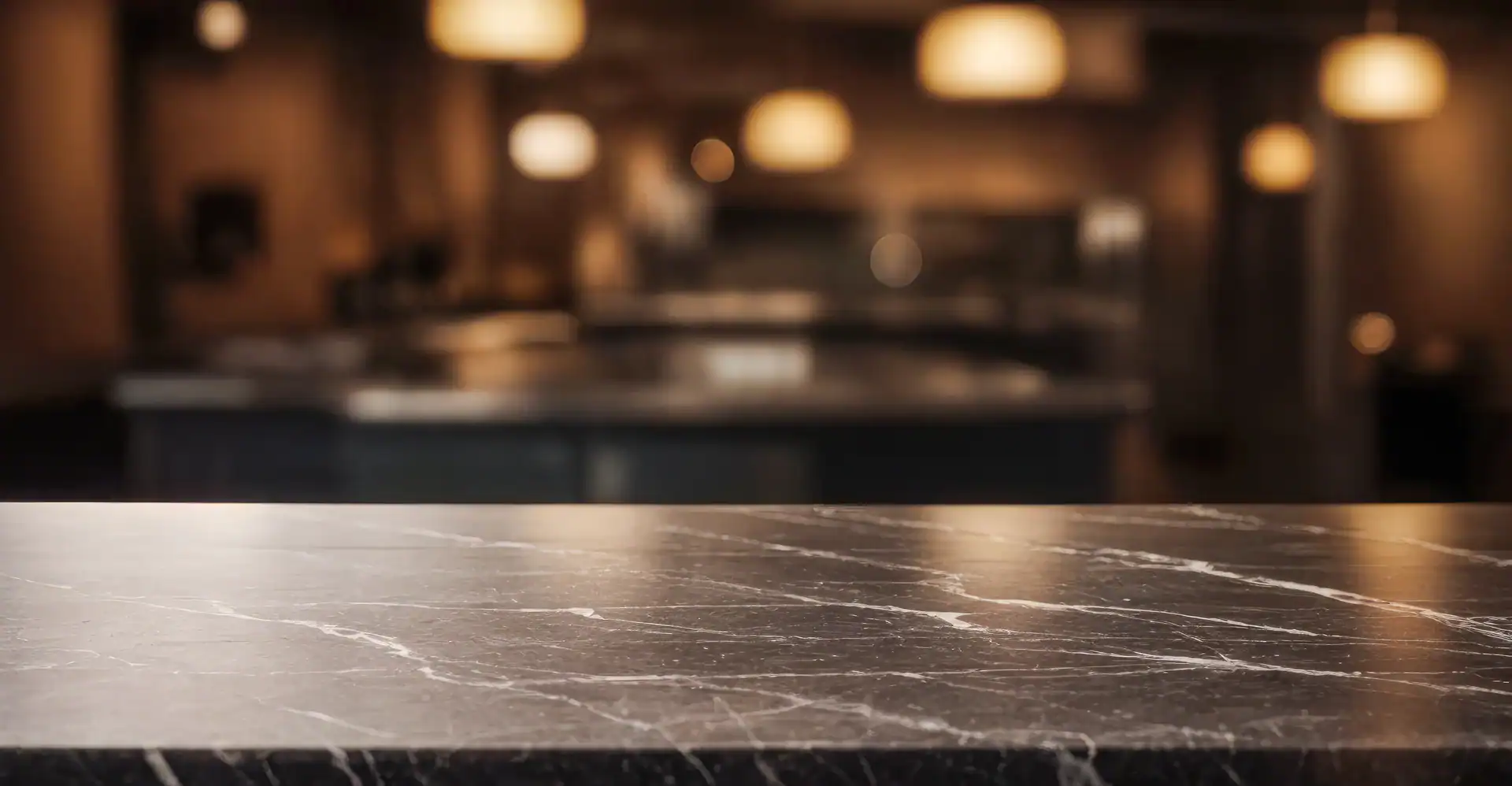
Etching shows up as dull, light-colored spots or rings on your marble. The most common culprits are things you use every day without thinking twice. Lemon juice, vinegar, wine, coffee, soda, and even some fruit juices will etch marble on contact. The damage happens fast—sometimes in just minutes if the spill isn’t wiped up immediately.
What surprises most homeowners is that their cleaning products are causing the problem. Bathroom cleaners, kitchen degreasers, and products marketed as “natural” often contain citric acid, vinegar, or other acidic ingredients that etch marble while you’re trying to clean it. You’re literally damaging your marble while attempting to maintain it. This is especially common in Nassau and Suffolk County homes where hard water creates mineral buildup, leading people to reach for stronger cleaners that make the problem worse.
Stains work differently. They happen when liquids soak into marble’s porous structure and leave behind colored deposits. Coffee, tea, wine, and oil are the usual suspects. Unlike etching, which damages the surface, stains penetrate below it. This is why a stained area might still feel smooth to the touch even though it looks discolored. If your marble wasn’t properly sealed, or if the sealer has worn away over time, staining becomes much more likely.
The challenge with both etching and staining is that they often happen together. You spill wine on your countertop—the acid in the wine etches the surface while the pigments stain it. Now you’re dealing with both surface damage and deep discoloration. Trying to remove the stain without addressing the etching, or vice versa, leaves you with a marble surface that still looks damaged. Professional restoration handles both issues in the correct sequence, removing stains first, then repairing the etched surface, and finally sealing everything to prevent future damage.
Long Island’s hard water adds another layer of complexity. Mineral deposits from water create their own type of etching and staining, appearing as white, chalky residue that builds up over time. These deposits don’t just sit on the surface—they actually react with the marble, creating permanent discoloration if not properly addressed. This is particularly problematic on bathroom marble and kitchen backsplashes where water exposure is constant.
How do you know if those marks on your marble require professional restoration? Start by trying to clean the area with plain water and a soft cloth. If the mark doesn’t budge, you’re not dealing with surface dirt. Etching appears as dull, light-colored spots that feel slightly rough when you run your finger across them. The texture change is the giveaway—you’ve lost the smooth, polished surface in that area.
Stains show up as darker discoloration that can range from light brown to deep black, depending on what caused them. If you see rings from glasses or bottles, spots near your coffee maker, or dark areas around your sink, those are stains that have penetrated into the stone. The longer stains sit in marble, the deeper they go and the harder they become to remove. What starts as a surface issue becomes a deep penetration problem if you wait too long to address it.
Check for patterns in where you’re seeing damage. Etching often appears near sinks, cutting boards, or anywhere acidic foods are prepared. Bathroom marble shows etching around soap dispensers, shampoo bottles, and anywhere cleaning products are stored or used. If you’re seeing dull spots in these locations, acids are the likely cause. Stains tend to appear near coffee makers, wine storage, or areas where spills happen frequently.
One test that reveals both etching and inadequate sealing is the water test. Put a few drops of water on your marble and watch what happens. On properly sealed marble, water should bead up and sit on the surface. If it soaks in within a few minutes, your sealer has failed and your marble is vulnerable to both etching and staining. This is particularly important for Nassau and Suffolk County homeowners because the humid coastal climate accelerates sealer breakdown.
Professional restoration doesn’t just remove etching and stains—it addresses why they happened in the first place. Proper restoration includes resealing with commercial-grade products that provide better protection than retail sealers. You’re not just fixing existing damage; you’re preventing future problems. For marble that’s been improperly maintained for years, professional restoration essentially gives you a fresh start with surfaces that are easier to maintain going forward.
Your marble is telling you what it needs through these warning signs—dullness, etching, scratches, stains, and physical damage. Catching these issues early makes restoration straightforward and affordable. Wait too long, and minor surface damage becomes structural problems that cost significantly more to address.
Professional restoration brings your marble back to its original beauty while protecting your investment for years to come. You’re not just fixing cosmetic issues—you’re preserving the character and value of your home. For Nassau and Suffolk County homeowners dealing with historic marble or challenging damage, working with specialists who understand both the stone and local conditions makes all the difference.
If you’re seeing any of these signs in your marble floors or countertops, we bring 35 years of experience restoring even the most challenging surfaces. From historic 100-year-old installations to modern marble showing everyday wear, our owner-operated approach ensures your project gets the expertise and attention it deserves.
Article details:
Share:
Continue learning: