Expert historic marble floor restoration for Nassau and Suffolk County homes, specializing in century-old floors and complex restoration projects.
Share:
Summary:
Nassau and Suffolk Counties are home to countless historic properties built during Long Island’s golden age of estate construction. From the Gold Coast mansions of the early 1900s to charming vintage homes throughout the region, many feature original marble floors installed using techniques and materials that simply aren’t replicated today.
Historic marble restoration Long Island makes both financial and preservation sense. Restoring natural stone is often more affordable, faster (most jobs are less than 2 days work) and more rewarding than replacing an older stone surface. Even better? Well-maintained original floors, especially in historic homes, can increase property value by 3-5%. Potential buyers often pay premium prices for authentic, restored features.
The alternative—ripping out irreplaceable historic materials—means losing the character and craftsmanship that makes your home special. Once those original floors are gone, they’re gone forever.
Historic marble floors aren’t just old—they’re fundamentally different from modern installations. This is why antique marble floor restoration Nassau County requires specialized expertise that goes far beyond standard cleaning services.
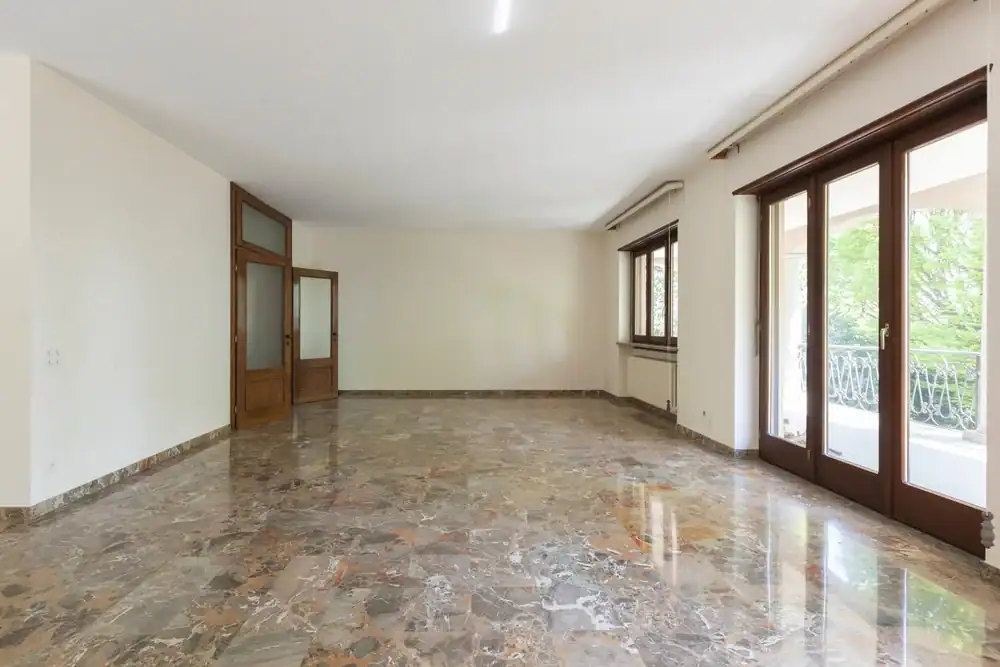
Because stone and marble types vary due to different minerals that are present in the stone, it takes an expert with a deep understanding of installation methods and style of stone to be able to properly restore antique stone surfaces. For example, calcite marble is white, red marble gets its color from hematite, and limonite makes marble green or yellowish – and if they are all together in a mosaic or tile floor, the stone expert needs to handle them uniquely and with care.
Century-old marble often has different thickness patterns than you’d expect. Unique wear characteristics. Installation methods that require specialized knowledge. The marble itself may have developed patina or character marks that need to be preserved rather than eliminated.
Some historic installations used different binding materials or underlayment systems that affect how restoration work should be approached. Then there’s the challenge of matching finishes. Historic marble floors often had hand-finished surfaces with subtle variations that machine polishing can’t replicate.
Getting the restoration right means understanding not just what the floor looks like now, but what it was supposed to look like when it was first installed decades ago. The stakes are high because marble and natural stone restoration is a highly skilled job as stone can be ruined very easily by an inexperienced tradesman. You will find a lot of “cleaning companies” offering this service and using extremely harsh abrasives and acids to destroy your stone for you.
Historic marble floors in Long Island homes face challenges that modern installations rarely encounter. Age brings complexity, and complexity requires expertise to address properly.
Some marbles in the market have more natural defects, especially cracks. If these defects are not repaired in advance, there may be problems once the marble is laid. Even if these defects are hidden, their presence may show up gradually as they can cause damage to other parts of the marble. In century-old floors, these hidden issues have had plenty of time to reveal themselves.
Water damage is particularly common in older homes where moisture barriers weren’t standard. This is especially problematic in Nassau and Suffolk County homes near the water, where humidity and occasional flooding can affect basement and ground-level marble installations. The main ingredient of most marble is calcium carbonate, which is vulnerable in a wet environment. If the surrounding environment is full of water, the loose part of the stone structure may burst up, leaving stone pits in the marble.
Years of inappropriate cleaning products create another layer of problems. There are many acidic substances in a home, and they are all harmful to marble. Whether they come from commercial cleaners, homemade cleaning solutions (such as those with vinegar), fruits, or drinks, your marble surfaces are very susceptible to them, as they cause a chemical reaction with the calcium carbonate in the stone, dissolving marble and leaving an etch mark.
Traffic patterns in historic homes also create specific wear issues. Entryways, hallways, and main living areas show decades of foot traffic in patterns that reflect how families actually lived in these spaces. The wear isn’t uniform—it follows the natural flow of daily life, creating restoration challenges that require understanding both the technical and human history of each floor.
Want live answers?
Connect with a High Definition Marble Restoration Inc expert for fast, friendly support.
Since 1998, we have specialized in the kind of complex historic restoration work that other contractors avoid. Featured in the New York Times in 2001, we’ve built our reputation on a simple philosophy: the worse the condition, the better the opportunity to showcase true restoration expertise.
As an owner-operated business, we ensure a disciplined approach to every project with superior masking and cleanup. This isn’t a crew showing up with generic equipment and hoping for the best. Every historic restoration project gets direct owner involvement, ensuring the knowledge and experience that these irreplaceable floors deserve.
Our track record speaks for itself. Our very first client, the Garden City Hotel on Long Island, has been using our natural stone care services exclusively for more than 16 years. When a prestigious Long Island institution trusts you with their marble for nearly two decades, that tells you something about both expertise and reliability.
True historic marble restoration goes far beyond cleaning and polishing. It starts with understanding what you’re working with—the type of marble, its age, how it was originally installed, and what’s happened to it over the decades.
The assessment phase is critical. The art of stone restoration, especially older installations should be done under the supervision of experts with 10 or more years of experience and proper training. This means identifying not just surface problems, but underlying structural issues that could affect the restoration process.
For floors with significant wear or damage, the restoration process often involves carefully removing damaged sections while preserving as much original material as possible. This might mean hand-matching marble pieces. Recreating original installation patterns. Or developing custom techniques to address problems that didn’t exist when the floor was first installed.
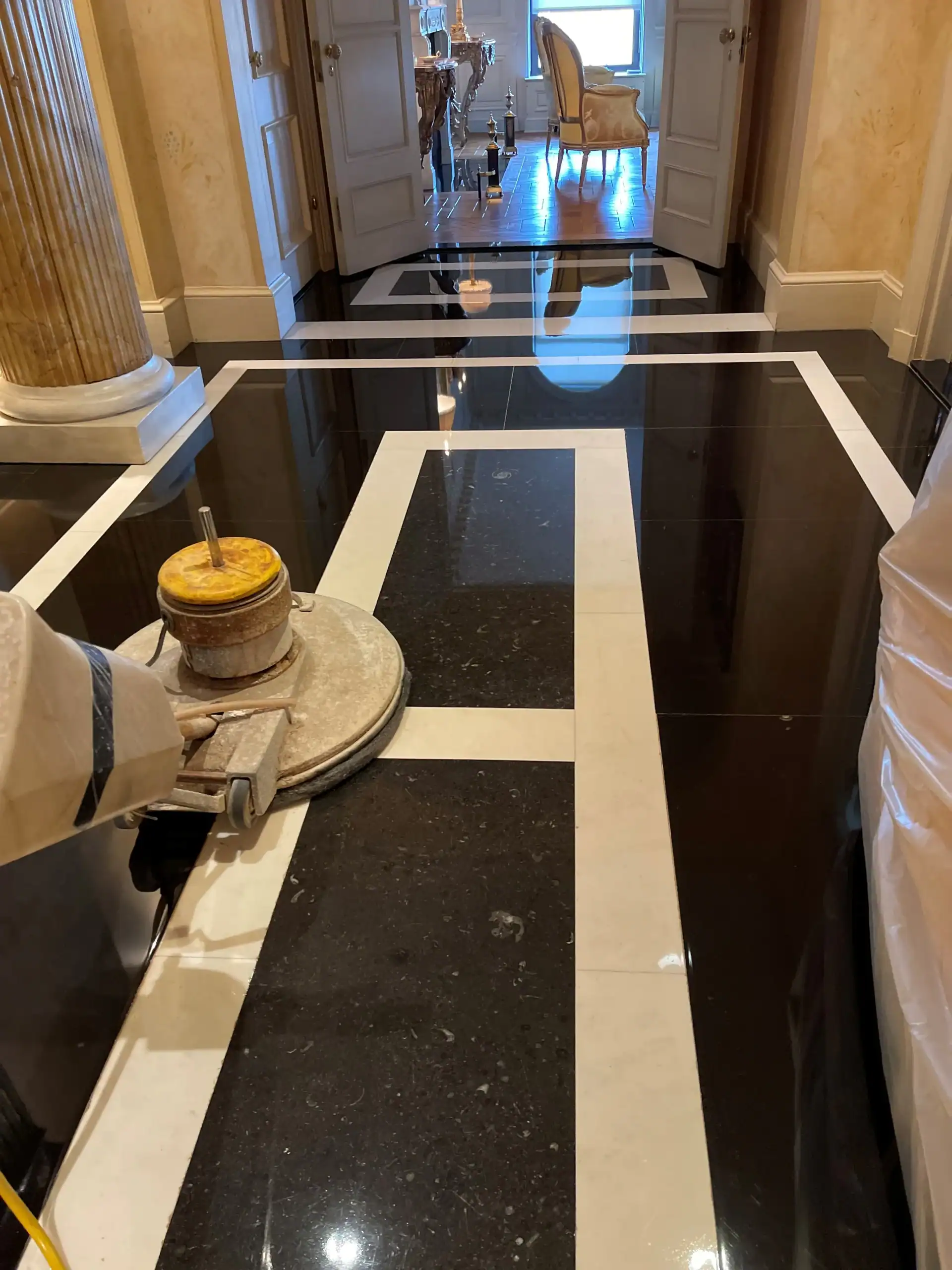
The finishing process for historic marble requires particular expertise. Modern polishing techniques can actually damage older marble or create finishes that look wrong for the period. The goal isn’t to make a 100-year-old floor look brand new—it’s to make it look like it did when it was new, which is a subtle but important distinction.
Throughout the process, protection of surrounding areas is crucial. Historic homes often have other period features—woodwork, plaster walls, original hardware—that need to be protected during restoration work. The cleanup and masking protocols become as important as the restoration techniques themselves.
A professional historic marble restoration project typically begins with a detailed assessment of your floors’ condition, history, and restoration needs. This isn’t a quick walk-through—it’s a comprehensive evaluation that considers the marble type, installation method, current problems, and realistic restoration goals.
The timeline for historic restoration work varies significantly based on the floor’s condition and scope of work needed. Most jobs are less than 2 days work for straightforward restoration, but complex historic projects may require additional time for proper preparation, specialized techniques, or custom solutions.
Communication throughout the process is essential, especially in historic homes where unexpected discoveries are common. You might find that removing damaged marble reveals original installation details that affect the restoration approach. Or testing might show that the marble responds differently than expected to standard restoration techniques, requiring custom solutions.
The final result should be floors that capture the original beauty and character of your historic home while addressing the practical needs of modern living. This means surfaces that are not only beautiful but properly sealed and maintained for long-term durability.
Cost considerations for historic restoration work typically fall within $5 to $15 per square foot for most stone restoration services, though complex historic projects may require additional investment for specialized techniques or materials. The key is understanding that you’re not just restoring floors—you’re preserving irreplaceable historic features that add both character and value to your home.
Your historic marble floors represent more than just beautiful surfaces—they’re part of Long Island’s architectural heritage and your home’s unique character. The decision to restore rather than replace these irreplaceable features preserves that history while creating floors you can enjoy for decades to come.
Professional restoration makes both preservation and financial sense. Investing in restoration can improve your property value and help prevent the need for future costly replacements. More importantly, it maintains the authentic character that makes historic Long Island homes so special.
When you’re ready to bring your historic marble floors back to their original beauty, our expertise and experience ensures your project gets the specialized attention these irreplaceable floors deserve. With over 25 years of experience, NY Times recognition, and a track record of successful historic restorations throughout Nassau and Suffolk Counties, we understand both the technical challenges and the preservation responsibilities that come with restoring century-old marble floors.
Article details:
Share:
Continue learning: