Worn marble staircases create safety risks and damage your home's value. Professional restoration removes scratches, etching, and dull spots while eliminating slip hazards—at 70% less than replacement cost.
Share:
Summary:
Daily foot traffic wears down marble faster than you’d think. Sand and grit from outdoor shoes act like sandpaper, creating microscopic scratches that accumulate over time. Eventually, the polished surface dulls to the point where no amount of cleaning brings back the shine.
Acidic substances cause immediate, permanent damage through a process called etching. Lemon juice, wine, vinegar, and many household cleaners chemically react with marble’s calcium carbonate composition, leaving dull spots that feel rough to the touch. These aren’t stains—they’re actual surface burns that can’t be cleaned away.
Water exposure compounds the problem, especially in Long Island’s coastal climate. Moisture penetrates through worn or damaged surfaces, then freezes and expands during temperature changes. This cycle weakens the stone structure from within, creating cracks and chips that spread over time.
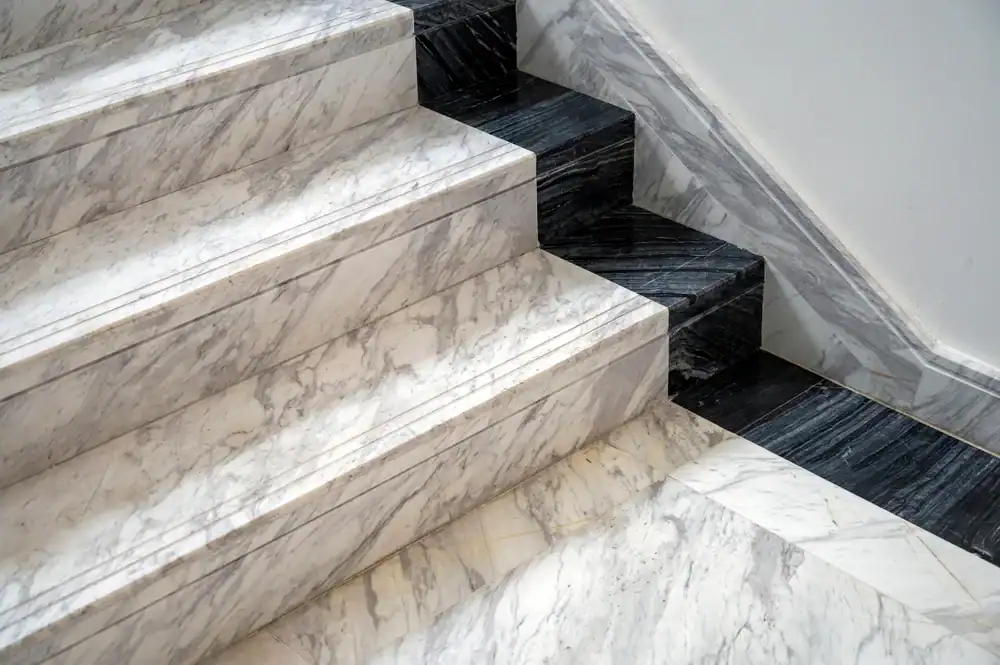
The polished finish that makes marble beautiful also makes it slippery when worn. Unlike other materials that become rougher with age, marble becomes smoother and more dangerous as its protective surface layer deteriorates. Heavy foot traffic gradually wears away the natural texture that provides grip, creating genuinely hazardous conditions on every step.
Uneven wear patterns make the problem worse. The center of each step—where people naturally walk—wears faster than the edges. This creates subtle dips and variations in the surface that your foot doesn’t expect, increasing the risk of slips and falls. Stairway accidents cause over one million injuries annually in the United States, and worn marble stairs contribute significantly to that statistic.
Poor lighting makes worn marble even more dangerous. When surfaces lose their reflective properties due to staining and wear, step edges become harder to see clearly. This creates particularly hazardous conditions during evening hours or in areas with inadequate illumination. For Nassau County and Suffolk County families with young children or elderly visitors, these safety concerns become a daily worry rather than a theoretical risk.
Water on worn marble is especially treacherous. Once the protective finish has been damaged, moisture sits on the surface instead of beading up. Combined with soap residue, cleaning product buildup, or just humidity from Long Island’s coastal environment, this creates a skating rink effect that’s genuinely frightening to navigate. Many homeowners avoid using their own staircases in certain weather conditions because the risk feels too high.
The deterioration accelerates once it begins. Surface scratches allow moisture penetration. Stains etch deeper into compromised stone. Minor chips become major cracks that affect structural integrity. What starts as a cosmetic issue quickly evolves into a safety liability that puts everyone who uses your stairs at risk, from family members to guests to service providers.
Most homeowners unknowingly destroy their marble by using products that seem safe but are actually harmful to natural stone. Standard household cleaners often contain acids that etch marble surfaces, creating permanent dull spots while trying to remove dirt. The damage happens on contact, and it’s irreversible without professional restoration. Products with lemon, vinegar, or even “natural” citrus ingredients chemically burn the marble every time you clean.
Abrasive scrubbers accelerate surface wear at an alarming rate. That rough side of the sponge or those “magic eraser” products work by physically abrading the surface. On marble, this scratches away the polished finish, creating a dull, damaged appearance that gets progressively worse with each cleaning. Many people notice their marble looking worse after they clean it, not better—and they’re right.
Commercial marble cleaners promise results but often deliver more damage. Products marketed as “marble polish” or “marble shine” typically contain waxes or coatings that sit on top of the stone. These wear off quickly in high-traffic areas like staircases, leaving uneven, streaky buildup that looks worse than the original problem. The wax also traps dirt, creating a grimy layer that’s difficult to remove without professional intervention.
Nassau County and Suffolk County’s hard water creates its own set of challenges. The mineral-rich water leaves calcium and magnesium deposits that appear as white, chalky residue on marble surfaces. These deposits don’t just sit on the surface—they actually react with the marble, creating permanent discoloration if not properly addressed. Standard cleaning methods can’t remove these mineral bonds because they’re chemical reactions, not surface dirt.
The cycle continues because homeowners don’t realize the products they’re using cause the damage they’re trying to fix. They see dull spots, use an acidic cleaner to “remove the stain,” and create more etching. They notice scratches, scrub harder with an abrasive pad, and wear away more of the protective finish. By the time they realize professional help is needed, the damage has often spread throughout the entire staircase, requiring more extensive restoration than if they’d reached out earlier.
Want live answers?
Connect with a High Definition Marble Restoration Inc expert for fast, friendly support.
Professional restoration removes damaged surface layers and rebuilds the finish from the ground up. This isn’t cleaning or polishing in the traditional sense—it’s a complete refinishing process that addresses damage at its source. The approach varies based on your marble’s condition, type, and the level of damage present, which is why assessment comes first.
The process starts with a thorough inspection of your staircase’s condition. Every step, riser, and handrail receives careful evaluation to identify scratches, etching, cracks, and structural issues that need attention. This assessment determines exactly what restoration approach will deliver the best results for your specific situation, from the type of diamond abrasives to use to the final finish level that balances aesthetics with safety.
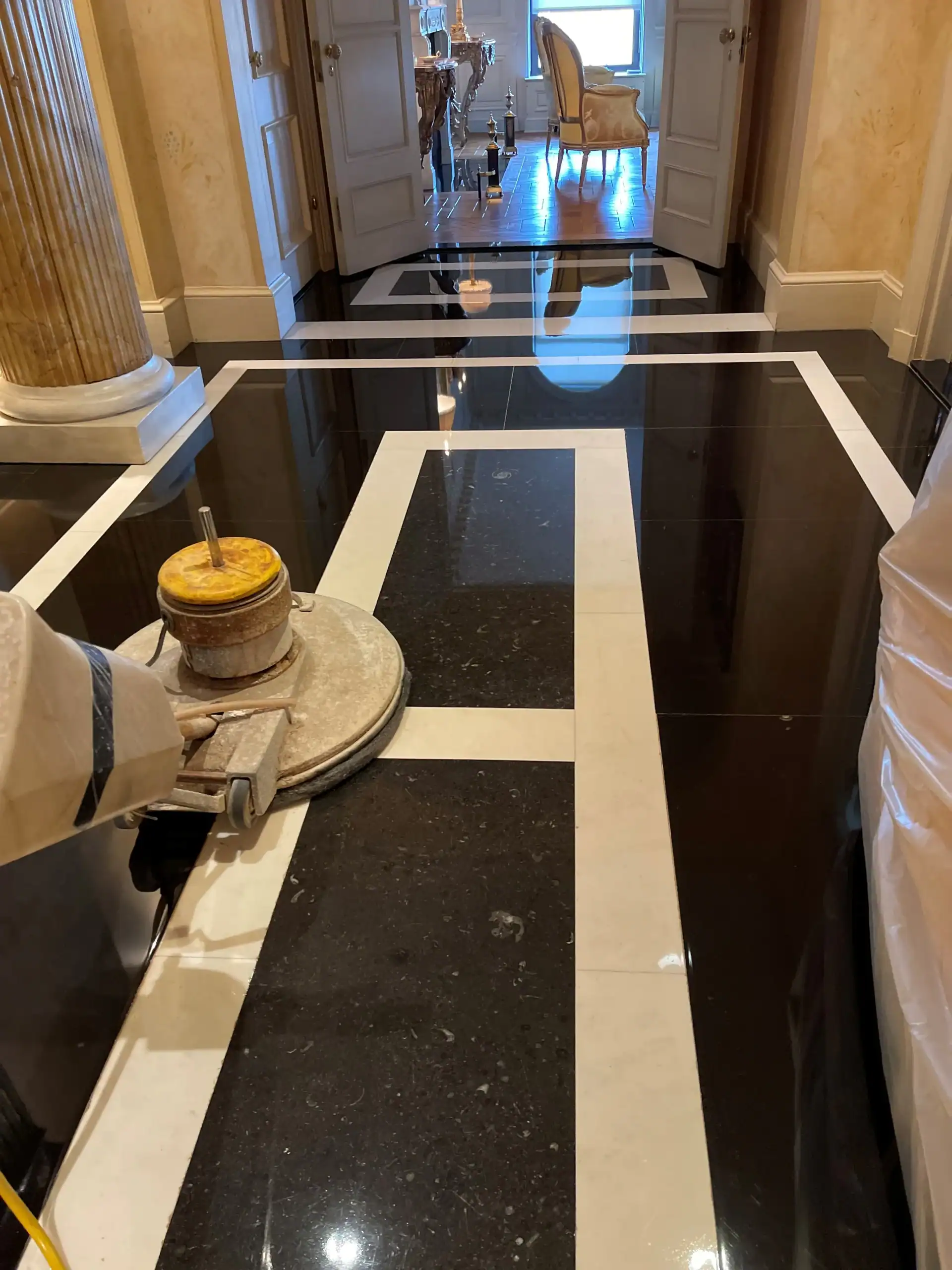
Diamond grinding removes the damaged surface layer. Using progressively finer diamond abrasives, we carefully grind away scratches, etching, and wear patterns. This exposes fresh, undamaged marble underneath. The key is removing just enough material to eliminate the damage without compromising the stone’s structural integrity—typically only a few millimeters of surface material.
After grinding removes deep damage, honing refines the surface through multiple stages of progressively finer abrasives. This typically involves diamond pads in grits ranging from 120 to 1500 or higher, with each stage serving a specific purpose in rebuilding the marble’s finish. The number of stages depends on the initial damage level and the final finish you want to achieve.
The 120 grit resin bond diamond pad system is aggressive enough to remove surface scratches and expose a new layer of stone, but not so aggressive that it disturbs the marble’s structure unnecessarily. This first stage addresses the most significant wear and tear, creating a foundation for the finer work that follows. For heavily damaged staircases common in Nassau County’s historic homes, this stage makes the most dramatic visible difference.
Progressive refinement continues through 220, 400, and 800 grit stages. The 220 grit removes scratches left by the 120 grit while beginning to close the pores in the marble’s surface—an important step for both appearance and protection. The 400 grit honing process creates enough friction to start developing the stone’s natural sheen. By the 800 grit stage, the surface should be scratchless with a medium-high natural sheen that’s already impressive.
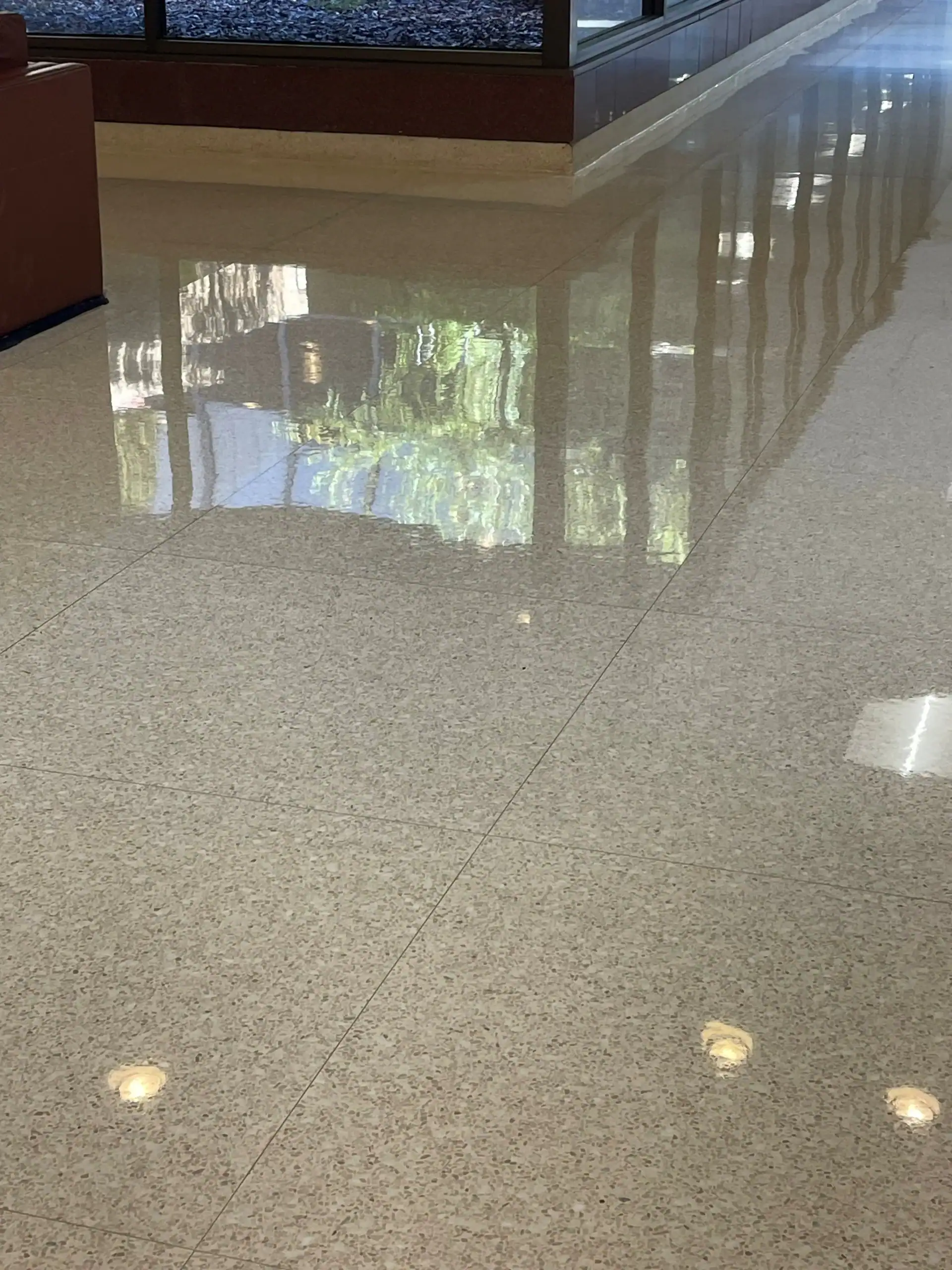
Polishing brings back the mirror-like finish or creates a subtle matte appearance, depending on your preference and safety needs. For high-gloss elegance in formal settings, the polishing continues to very fine grits (1500 to 3000) that create that stunning reflective surface marble is known for. For enhanced grip in high-traffic areas, the process stops at a lower grit that provides a more subtle finish with better traction.
The choice between finishes depends on safety requirements, aesthetic preferences, and location within your property. Formal entryways in Suffolk County estates often benefit from high-gloss finishes that create dramatic visual impact and showcase the marble’s natural veining. High-traffic family staircases might need more subtle finishes that provide better slip resistance without sacrificing the elegant appearance. Professional restoration allows you to choose the finish level that works for your specific needs, or even vary the finish between different areas of the same staircase.
Chips and cracks get repaired using color-matched materials that blend seamlessly with the original marble. These specialized repair compounds are tinted to match your specific marble type, whether it’s Carrara, Calacatta, Botticino, or another variety common in Long Island’s historic homes. After application, the repairs are ground and polished along with the rest of the surface, making them virtually invisible to the casual observer.
Structural issues require attention before cosmetic restoration begins. If settling has created cracks or if moisture has caused internal damage, these problems need to be addressed first. Ignoring underlying structural issues means your beautiful restoration won’t last because the foundation isn’t stable. This is particularly important in older Nassau County and Suffolk County homes where settling and foundation movement can create stress on marble installations.
Protective sealing creates an invisible barrier that guards against future staining, water damage, and wear. Modern penetrating sealers work by getting deep into the marble’s pores rather than sitting on top of the surface like old-fashioned waxes. This provides comprehensive protection that extends your restoration investment significantly while making daily maintenance easier and less risky.
The sealing process isn’t just surface protection—it’s structural preservation. By preventing moisture penetration, sealers protect against the freeze-thaw cycle that damages marble from within. This is especially important in Long Island’s climate, where temperature fluctuations and coastal humidity create conditions that accelerate marble deterioration if the stone isn’t properly protected.
Anti-slip treatments can be integrated into the final finishing without compromising visual appeal. These treatments create micro-texture that provides grip while maintaining the elegant appearance that makes marble so desirable. For staircases where safety is the primary concern—especially in homes with elderly residents or young children—this option delivers peace of mind without sacrificing aesthetics or requiring unsightly traction strips.
The entire process typically takes one to three days for a standard residential staircase of 10 to 15 steps, depending on the extent of damage. Most work is completed on-premises and is dust-free or nearly dust-free, minimizing disruption to your daily routine. You can often continue using other areas of your home while the restoration is in progress, though the staircase itself will be off-limits during active work periods.
Restoration costs a fraction of replacement while delivering comparable or better results. New marble stairs can cost $300 to $900 per step plus installation, quickly adding up to $15,000 to $45,000 or more for a complete staircase. Professional restoration addresses existing damage at significantly lower cost, typically ranging from $5 to $20 per square foot depending on the extent of damage and restoration method needed—often saving 70% compared to replacement.
For historic properties throughout Nassau and Suffolk County, NY, replacement means losing authenticity that cannot be recovered. The Gold Coast mansions and early 1900s estates that characterize Long Island’s architectural heritage feature marble selected for its specific characteristics and installed using period-appropriate techniques. Modern marble, while beautiful, lacks the patina, character marks, and unique qualities that develop over decades. Replacing historic marble diminishes both the aesthetic value and the historical significance of these properties.
The age and thickness of historic marble installations make them ideal candidates for restoration. Century-old homes typically feature substantial marble thickness—often 1.5 to 2 inches or more—that can withstand multiple restoration cycles throughout its lifetime. This means your staircase can be professionally restored several times over the years, each time bringing it back to like-new condition without replacement. With proper care, professionally restored marble can last 10 to 15 years before needing another full restoration.
Property value considerations strongly favor restoration, especially when selling. Well-maintained marble surfaces command higher prices and create strong first impressions for potential buyers touring your home. Restored marble tells a story of care, quality, and attention to detail that resonates with discerning buyers. Real estate professionals consistently note that properties with beautifully maintained stone surfaces justify higher asking prices and often sell faster than comparable homes with damaged or neglected marble.
If you’re dealing with marble stairs that have lost their beauty to years of wear, we can bring them back to life. Our owner-operated approach ensures direct expertise on every project, with specialized knowledge in historic floor restoration that preserves the character of Nassau and Suffolk County’s most distinguished properties.
Article details:
Share:
Continue learning: