Expert marble wall restoration for Nassau and Suffolk County homes, covering shower walls, backsplashes, and feature walls with specialized historic restoration techniques.
Share:
Summary:
Marble walls face different challenges than countertops or floors. Vertical surfaces deal with water runoff, steam exposure, and cleaning product residue that creates specific damage patterns you won’t see elsewhere.
The most common issue is etching from acidic bathroom cleaners. Most homeowners don’t realize their regular cleaning products contain acids that react with marble’s calcium carbonate, creating those dull, cloudy spots that look like stains but are actually surface damage.
Long Island’s mineral-heavy water compounds these problems. Hard water deposits build up on marble surfaces, and when combined with soap residue and bathroom moisture, create conditions where staining and etching accelerate rapidly.
Shower walls take the brunt of water exposure in your bathroom, and marble’s porous nature makes it vulnerable to specific types of water-related damage that many homeowners don’t understand.
When marble absorbs water, it becomes darker in color. White marble tiles turn gray and often stay that way because they’re constantly saturated. This isn’t just a cosmetic issue – it indicates that water is penetrating the stone structure, potentially causing long-term damage.
The problem gets worse with improper sealing. Many homeowners think sealing prevents all water absorption, but sealers can actually trap moisture inside the stone, especially on vertical surfaces where gravity works against natural evaporation. Water that can’t evaporate through the sealed surface stays trapped, causing persistent discoloration.
Steam from hot showers creates additional challenges. Unlike direct water contact, steam penetrates into every pore and crack, carrying soap residue and mineral deposits deep into the marble structure. Over time, this creates buildup that’s impossible to remove with regular cleaning methods.
The location matters too. Bottom tiles on shower walls get exposed to standing water even when they’re not in the direct spray pattern. These areas often show the most severe discoloration because they’re constantly wet without adequate drying time between uses.
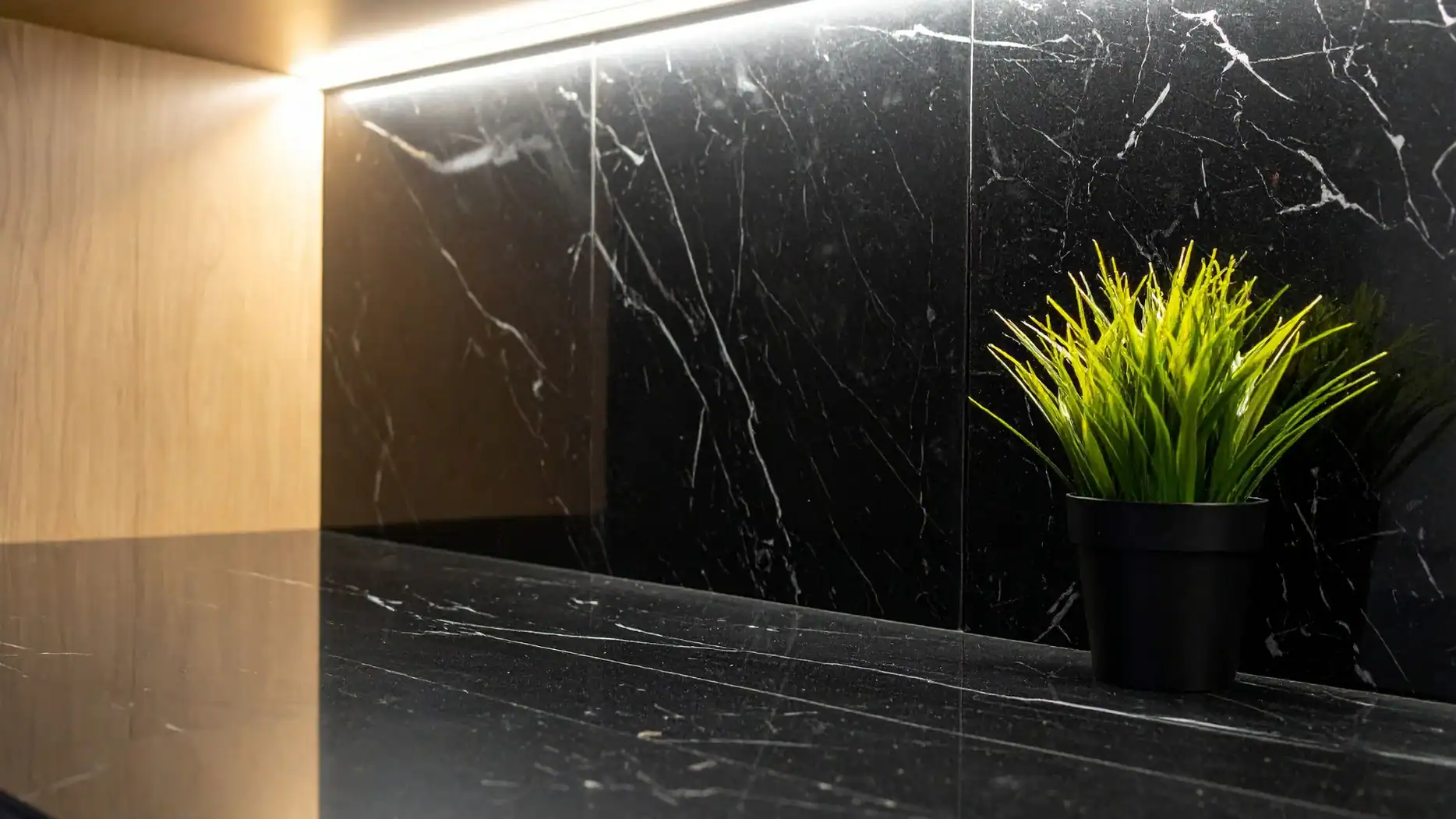
Marble backsplashes in kitchens and bathrooms face a different set of challenges than shower walls, but the damage can be just as frustrating to deal with. The combination of soap residue, cooking oils, and mineral deposits creates layers of buildup that gradually dull the marble’s natural shine.
Soap scum isn’t just a surface issue – it actually bonds with marble at a molecular level. Traditional bathroom cleaners that claim to remove soap scum are often too acidic for marble, causing etching damage while trying to address the buildup problem. This creates a cycle where homeowners cause more damage while attempting to clean their surfaces.
Hard water deposits present their own challenges on backsplash areas. Nassau and Suffolk County’s mineral-rich water leaves calcium and magnesium deposits that appear as white, chalky residue on marble surfaces. These deposits don’t just sit on the surface – they actually react with the marble, creating permanent discoloration if not properly addressed.
Kitchen backsplashes also deal with grease and cooking residue that penetrate marble’s porous structure. Unlike soap scum, these organic stains can actually feed bacteria growth if they’re not properly removed, creating both aesthetic and hygiene concerns.
The key issue with backsplash restoration is that most damage occurs gradually over months or years. By the time homeowners notice the problem, multiple types of damage have layered on top of each other, requiring professional restoration techniques to properly address each issue without causing additional harm to the marble.
Want live answers?
Connect with a High Definition Marble Restoration Inc expert for fast, friendly support.
Professional marble wall restoration involves a systematic approach that addresses each type of damage in the correct sequence. Unlike cleaning, restoration actually repairs the marble structure and restores the original finish.
The process starts with thorough assessment to identify all damage types present. Etching, staining, mineral deposits, and soap scum buildup each require different treatment approaches, and the sequence matters for achieving lasting results.
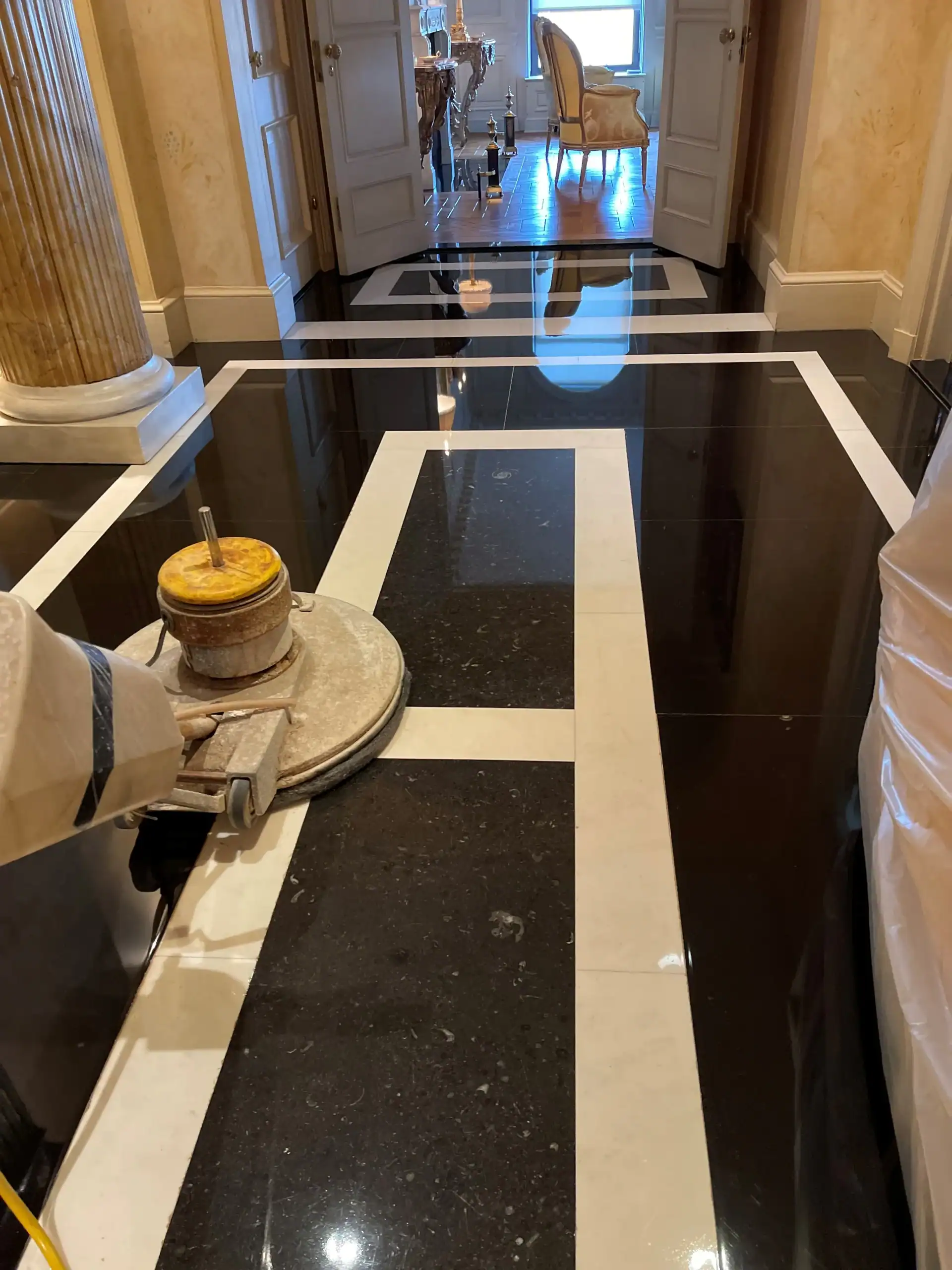
Surface preparation involves careful grinding and honing to remove scratches, etching, and dull spots. Then comes polishing to restore the original finish, followed by proper sealing to protect against future moisture and staining.
Historic marble walls require specialized restoration techniques that preserve the stone’s character while addressing decades of accumulated damage. Standard cleaning methods often fall short because they can’t penetrate the layers of buildup without risking damage to aged marble.
We use professional steam cleaning with precisely controlled temperatures to remove deep-seated dirt, soap scum, and mineral deposits without harsh chemicals. The key is using commercial-grade equipment that operates at optimal settings – home steam cleaners can actually damage marble by applying inconsistent heat or pressure.
The steam cleaning process works by using superheated water vapor to dissolve buildup at the molecular level. This allows for deep cleaning without the abrasive scrubbing that can scratch or etch marble surfaces. For historic properties, this gentle approach preserves the marble’s original texture and patina.
Following steam cleaning, restoration focuses on repairing structural damage. Etching from years of acidic cleaning products requires honing to remove the damaged surface layer, followed by polishing to restore the proper finish. This process can take damaged marble that looks beyond repair and bring it back to its original condition.
Sealing historic marble requires special consideration. Older marble often has different porosity characteristics than modern stone, so the sealing approach must be tailored to the specific marble type and condition. The goal is protection without altering the stone’s natural aging characteristics.
Most historic marble wall restoration projects take 1-2 days depending on the extent of damage and size of the area. We perform the work on-site using dustless techniques that minimize disruption while ensuring professional results.
Grout problems often accompany marble wall damage, and addressing both issues together is crucial for lasting restoration results. Failed grout allows water penetration behind marble tiles, creating conditions for mold growth and structural damage that goes beyond surface restoration.
The most common grout issues include cracking, discoloration, and missing sections. These problems typically develop gradually, but they accelerate once water starts penetrating behind the marble. Moisture trapped behind tiles can cause adhesive failure, leading to loose tiles and more extensive damage.
We address grout issues as part of the overall marble restoration process. This involves removing damaged grout, cleaning and preparing the substrate, and installing new grout that’s properly sealed and color-matched to complement the restored marble.
Moisture problems behind marble walls require investigation to identify the source. Common causes include plumbing leaks, inadequate waterproofing during original installation, or failed caulk seals around fixtures. Simply restoring the marble surface without addressing underlying moisture issues leads to recurring problems.
Our restoration process includes moisture testing to ensure the substrate is properly dried before new materials are applied. If moisture problems are identified, they must be corrected before marble restoration can proceed. This might involve plumbing repairs, improved ventilation, or waterproofing membrane installation.
Preventive measures are built into our restoration process. Proper sealing of both marble and grout, along with appropriate caulking around fixtures, creates a moisture barrier that protects the restoration investment. Regular maintenance schedules help identify potential problems before they cause significant damage.
Marble wall restoration offers a practical solution that saves money while preserving the luxury and character of your home. Professional restoration typically costs a fraction of replacement while delivering results that can last for decades with proper care.
The key is addressing problems before they become extensive. Early intervention prevents minor etching and staining from developing into structural damage that requires more complex repairs.
When you’re ready to restore your marble walls to their original beauty, we bring the expertise and specialized techniques needed for lasting results in Nassau and Suffolk County homes.
Article details:
Share:
Continue learning: