Understanding the difference between marble etching and staining is crucial for proper restoration and avoiding costly mistakes.
Share:
Summary:
Marble etching occurs when acidic substances chemically react with the calcium carbonate in your marble, literally eating away at the stone’s surface. This isn’t surface damage you can simply clean off.
Common culprits include lemon juice, vinegar, wine, coffee, and even some household cleaners. The acid doesn’t need to sit long—damage can happen in mere seconds after contact.
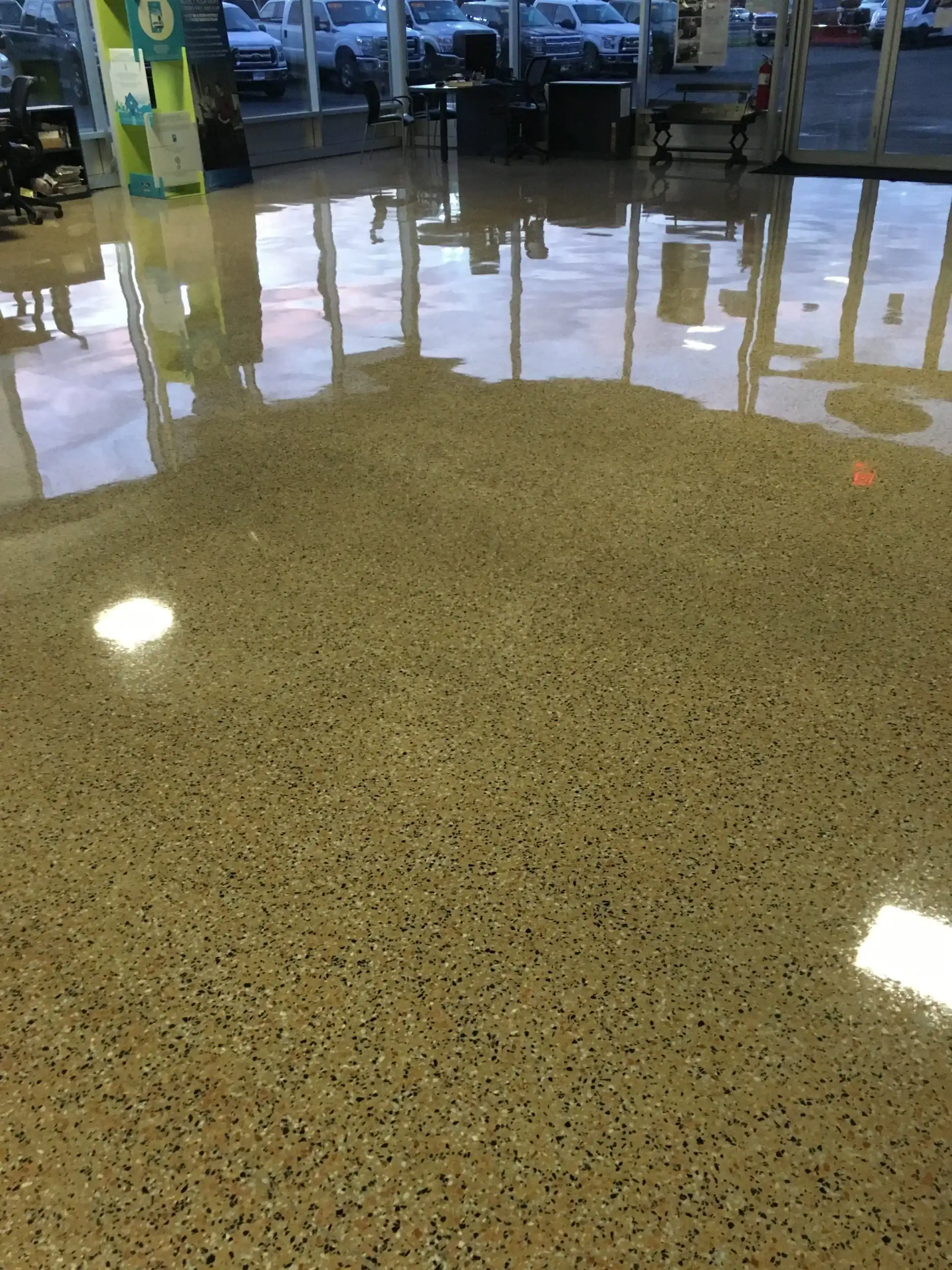
Etched areas typically appear lighter or duller than the surrounding marble surface. You’ll notice the affected spot has lost its shine and feels rougher to the touch compared to the rest of your stone.
Unlike stains, etches are often only visible from certain angles or when light hits the surface just right. They might look like water rings, dull spots, or cloudy areas that seem to be “under” the surface.
The key visual test is simple: if the damaged area appears lighter than your natural stone color, you’re likely looking at etching. This happens because the acid has actually altered the marble’s crystalline structure, creating a different light reflection pattern.
Historic homes in Nassau County and Suffolk County often feature marble that’s particularly susceptible to etching due to age and previous treatments. The older the marble, the more reactive it can become to acidic substances.
Here’s where many homeowners make a costly mistake. Seeing a dull spot, they assume it’s a stain and attack it with stronger cleaners or abrasive scrubbing. This approach actually makes etching worse.
Since etching is physical damage to the stone itself, no amount of cleaning will fix it. Acidic cleaners will create more etching, while abrasive scrubbing can scratch the already-compromised surface.
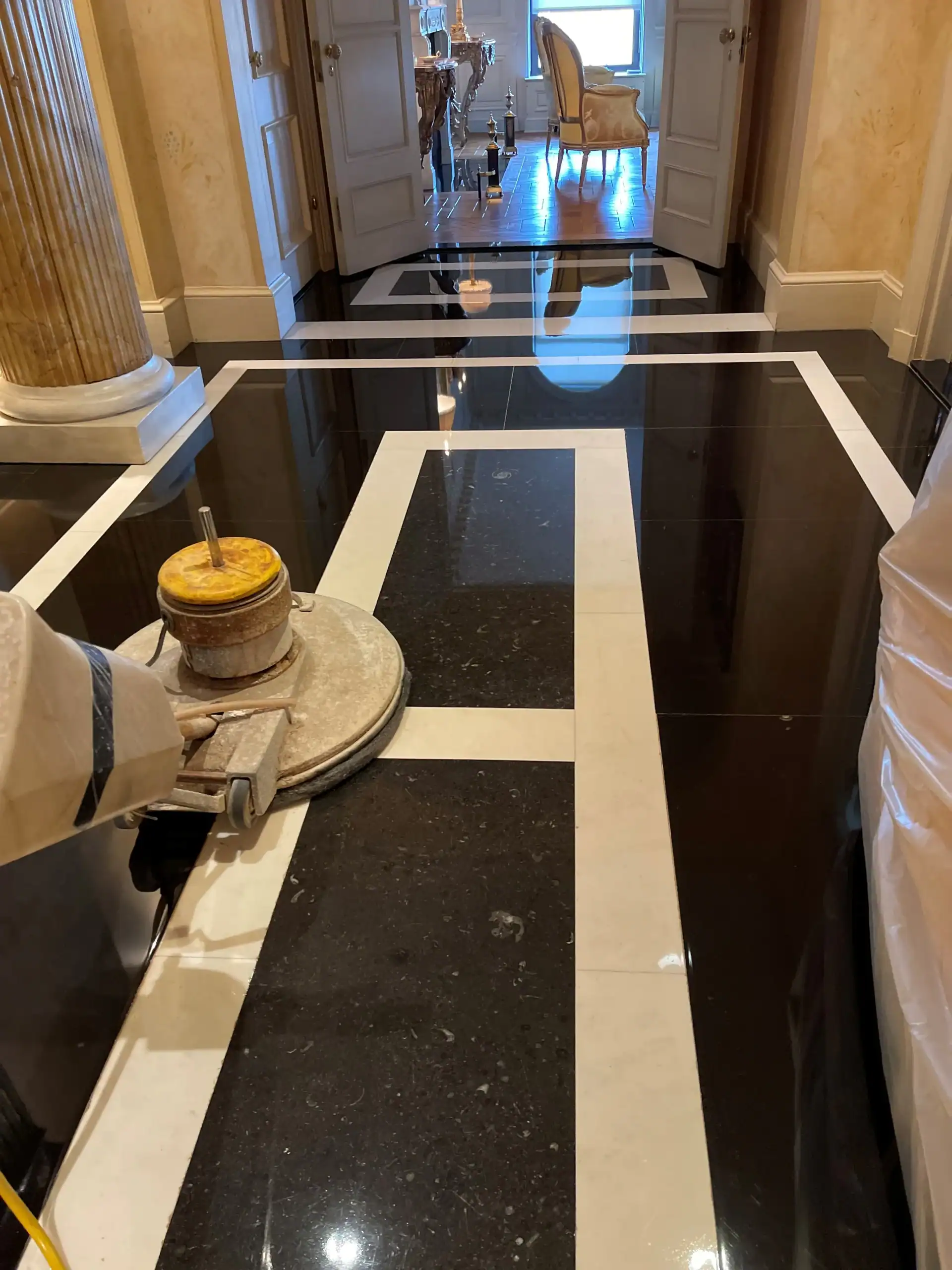
Professional marble restoration requires specific techniques to rebuild the marble’s surface. This might involve diamond polishing compounds, specialized grinding equipment, or complete resurfacing depending on the severity.
The restoration process must match the existing finish across the entire surface. Trying to “spot treat” etching often results in a shiny patch that looks worse than the original damage. This is why marble restoration in historic Long Island homes requires experienced professionals who understand how to work with aged stone.
Want live answers?
Connect with a High Definition Marble Restoration Inc expert for fast, friendly support.
Marble staining happens when liquids penetrate into the stone’s porous structure and become trapped beneath the surface. Unlike etching, stains don’t damage the marble’s finish—they discolor it from within.
Stains typically appear darker than your natural stone color and maintain the same texture as the surrounding marble. Common staining agents include oil, wine, coffee, rust, and organic materials.
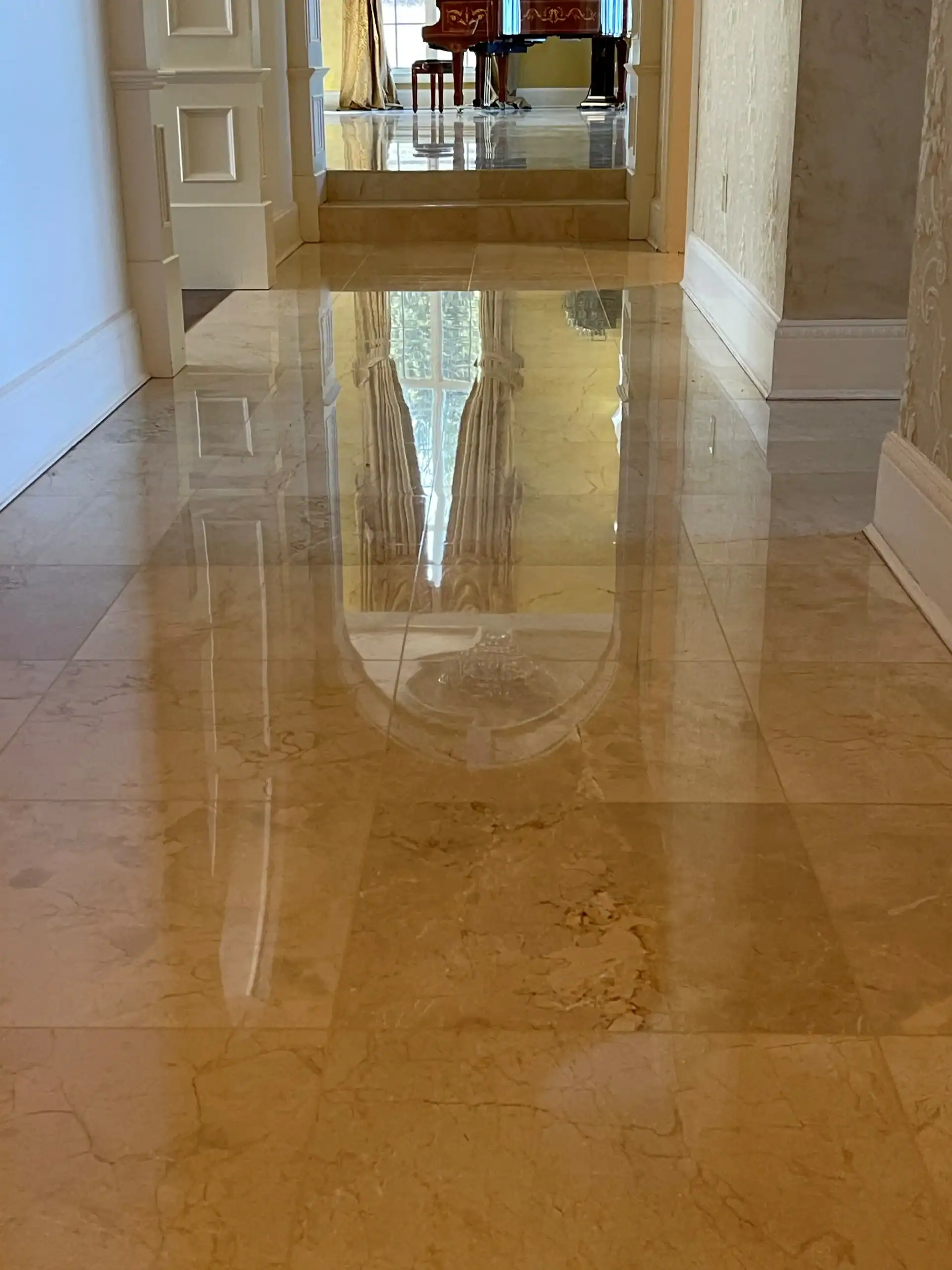
Natural marble is inherently porous, meaning it can absorb liquids if not properly sealed. When a staining substance penetrates these pores, it leaves behind pigments or particles that create discoloration.
The depth of stain penetration depends on several factors: how long the substance remained on the surface, the marble’s porosity level, the condition of any existing sealer, and the nature of the staining material itself.
Oil-based stains tend to penetrate deeply and can be particularly challenging to remove. Organic stains from coffee, wine, or fruit might be easier to extract but can become permanent if left untreated for extended periods.
Proper sealing is your first line of defense against staining, but even sealed marble can stain if the sealer has worn down or if the spill is particularly aggressive. Regular maintenance and resealing every 6-12 months help prevent most staining issues.
Effective stain removal requires matching the right technique to the specific type of stain. Professional restoration specialists use poultice treatments—wet, clay-like materials that draw stains out of the stone through absorption.
Different stains require different poultice formulations. Oil stains might need a baking soda and acetone mixture, while organic stains respond better to hydrogen peroxide-based treatments. Rust stains require specialized rust removers safe for natural stone.
The process isn’t quick. Poultices typically need to remain in place for 24-48 hours, covered with plastic wrap to maintain moisture. Multiple treatments might be necessary for deep or old stains.
After successful stain removal, the marble must be properly cleaned, dried, and resealed to prevent future staining. This final step is crucial—failing to reseal leaves your marble vulnerable to new stains and potential etching from cleaning products.
The difference between etching and staining isn’t just academic—it determines your entire restoration approach and cost. Misdiagnosis leads to wasted time, money, and potentially irreversible damage.
Professional marble restoration specialists can quickly identify the type of damage and recommend the most effective treatment. We understand how different marble types react to various restoration techniques and have the specialized equipment needed for proper repair.
For historic homes in Nassau County and Suffolk County, this expertise becomes even more critical. Antique marble often requires techniques that respect the stone’s age and previous treatments while achieving modern performance standards. At High Definition Marble Restoration Inc, we specialize in these complex historic restoration projects, bringing decades of experience to preserve your marble’s beauty and value.
Article details:
Share:
Continue learning: