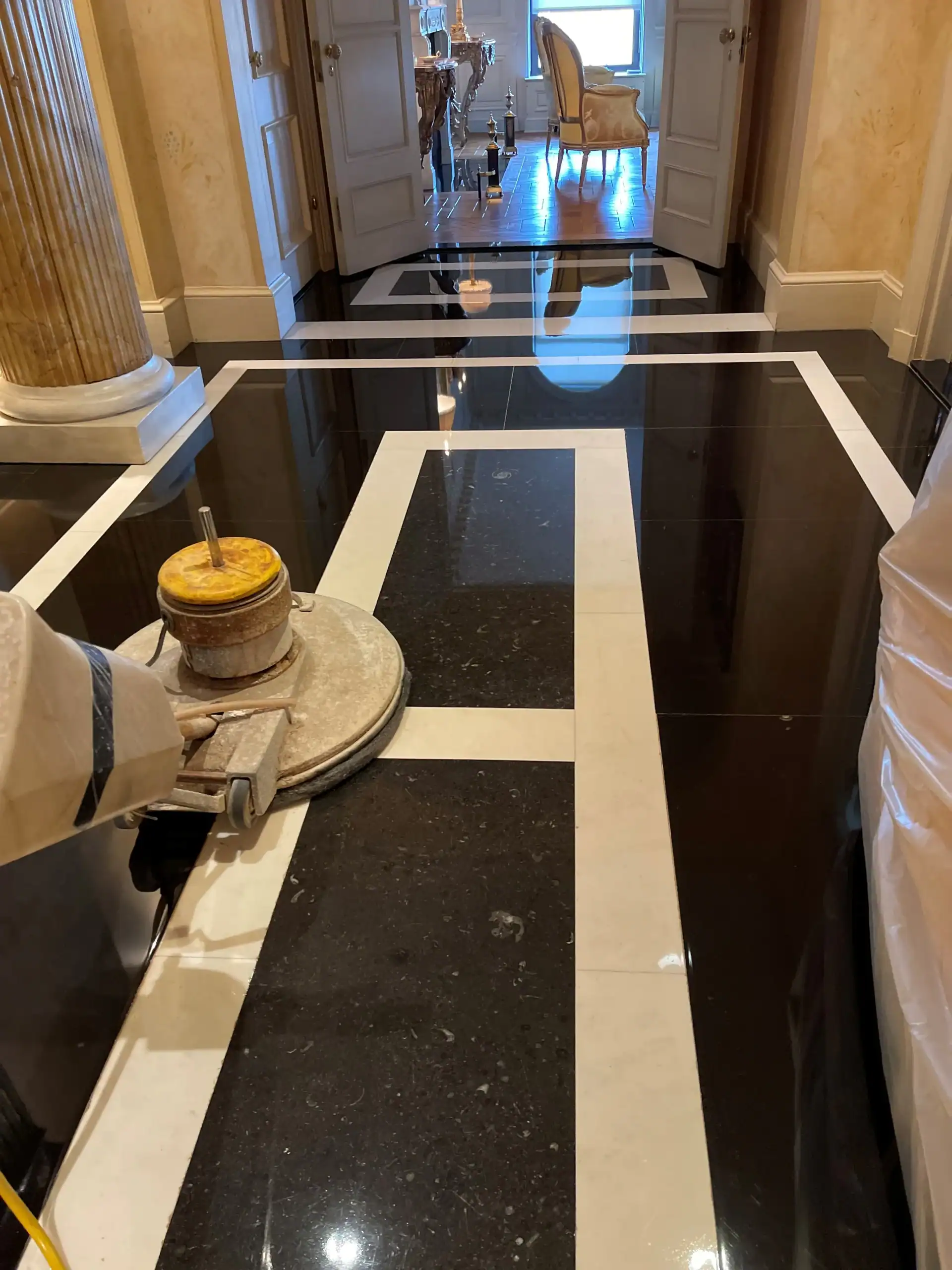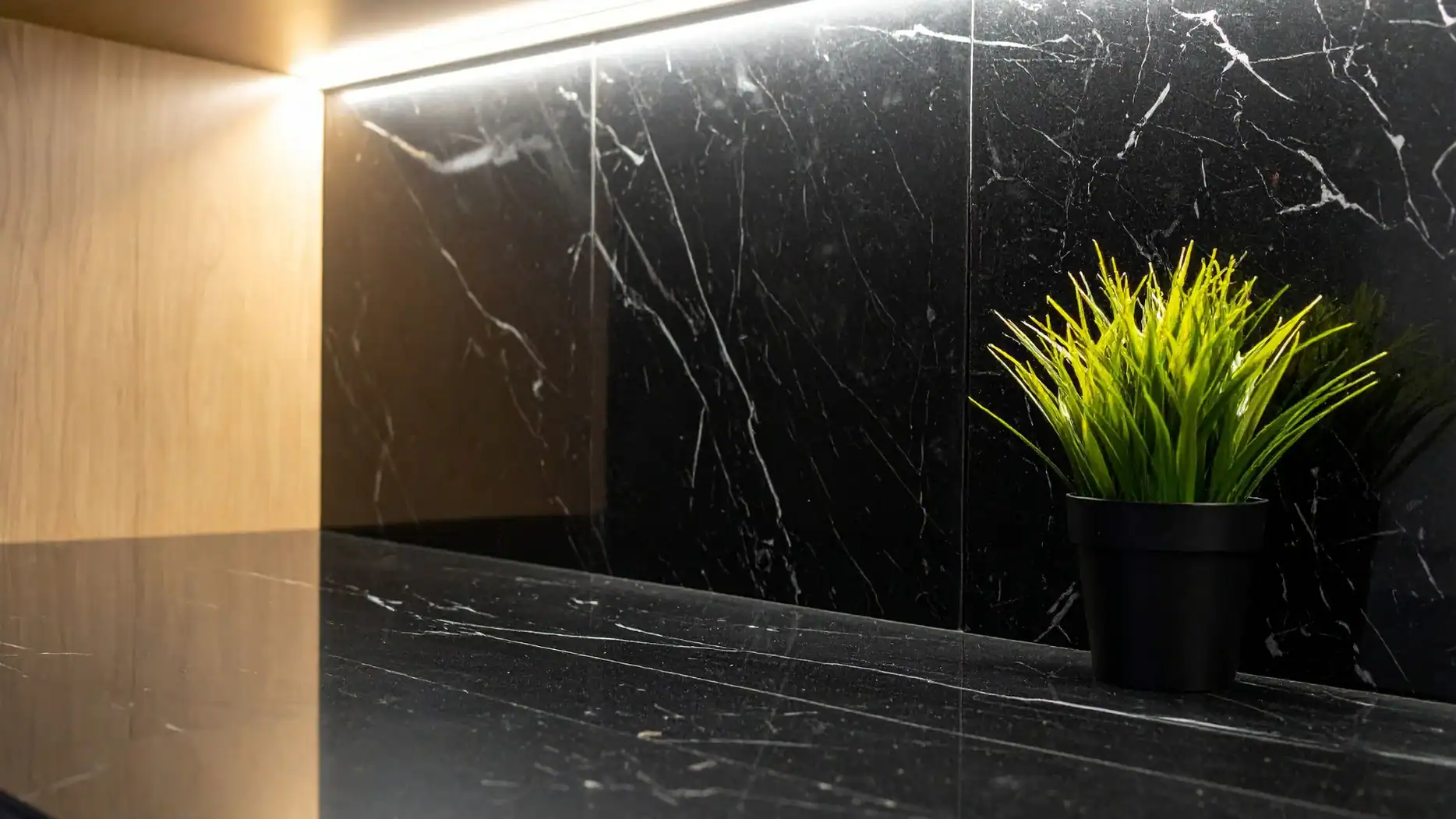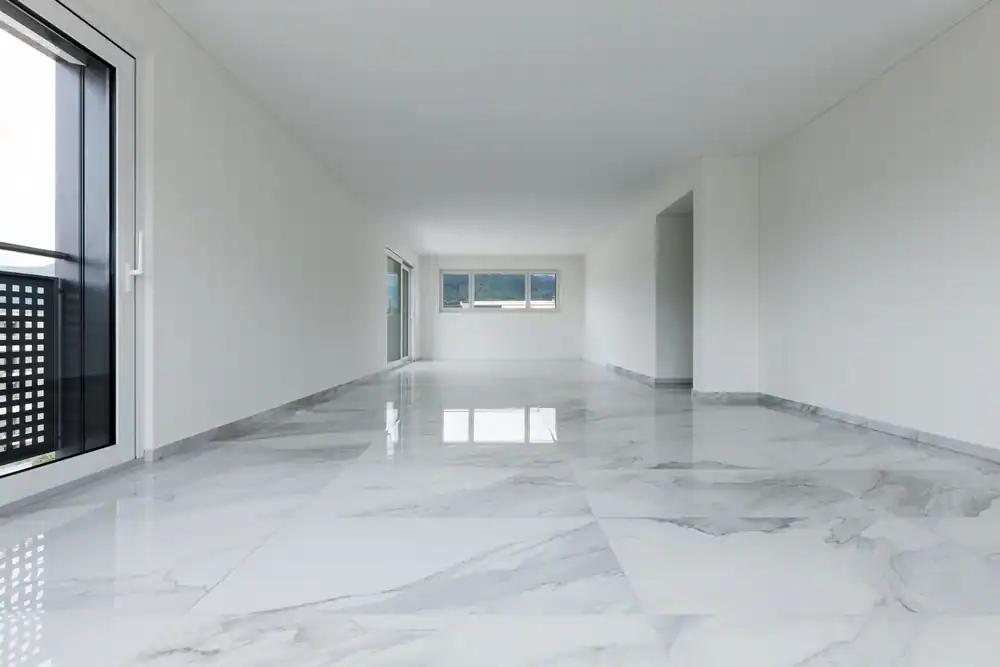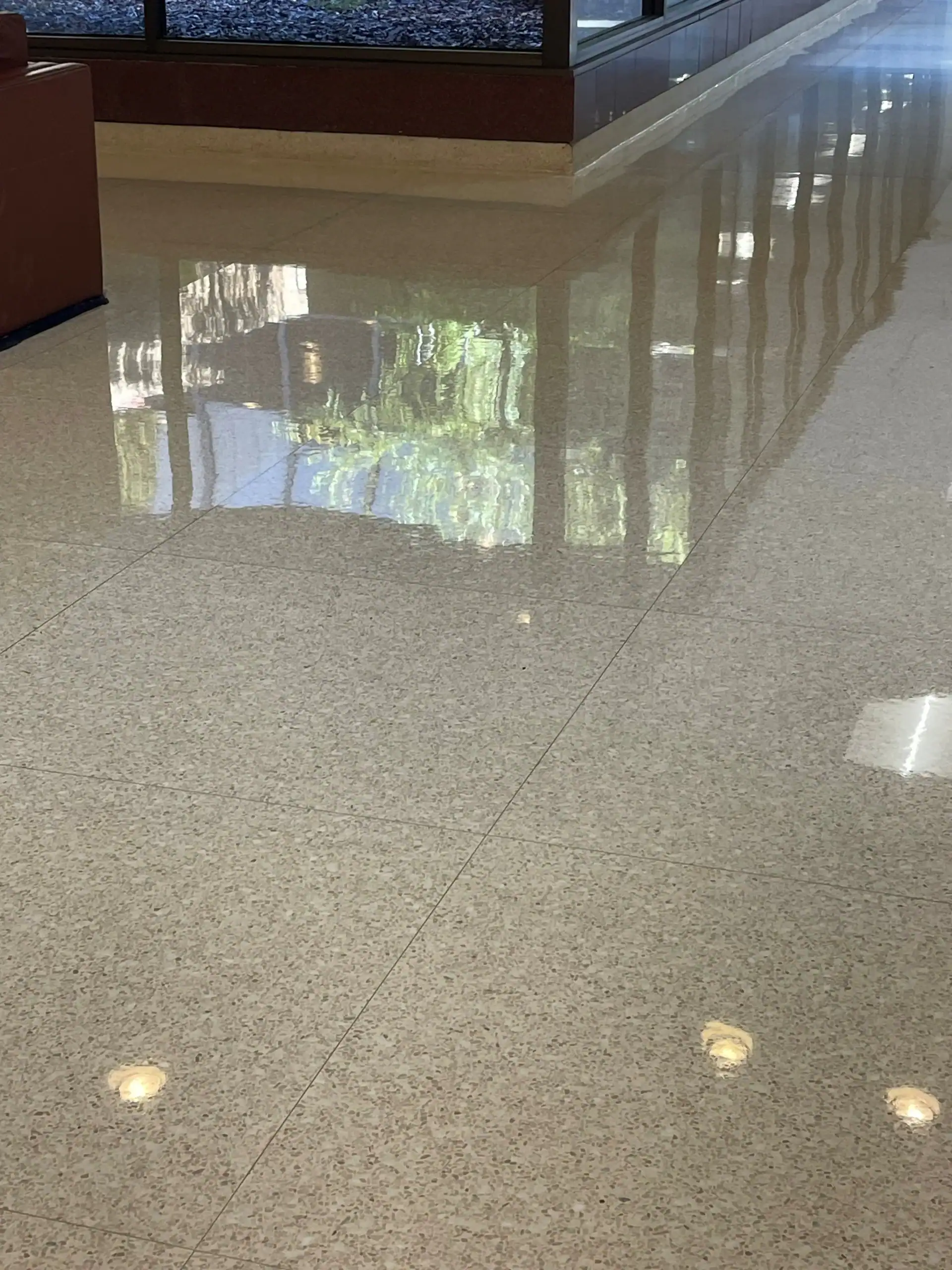
Environmental factors like moisture and household cleaners cause serious marble damage. Understanding these threats helps protect your Long Island investment.
Share:
Summary:
Marble consists primarily of calcium carbonate, making it highly reactive to even mild acids. This fundamental chemistry explains why so many common household products become marble’s worst enemy.
Most common household cleaners will damage marble, including vinegar, ammonia, bleach, and brand-name cleaners like Lysol because they are too alkaline or too acidic. These products don’t just clean—they chemically react with your marble’s surface.
The damage happens faster than most homeowners realize. Etching begins as soon as acid comes in contact with the stone, meaning even a single drop of orange juice or coffee underneath a cup can leave a permanent mark.
Your kitchen and bathroom harbor the most dangerous marble enemies. Fruit juices like lemon, lime, tomato, orange, and cranberry can absorb into marble and create darker spots, with the acid potentially leaving lighter or darker colored spots while dulling the stone’s shiny finish.
Most colas contain phosphoric acid with pH levels between 2.5 and 3.5, making immediate cleanup crucial. Even seemingly innocent products pose threats. Toilet bowl cleaners are among the most acidic products in your home, with pH levels as low as 1, capable of wreaking long-term havoc on marble floors.
Vinegar, often considered the greatest cleaner on earth, can damage marble upon contact almost instantly. The chemical reaction is immediate and irreversible. When acidic substances contact marble, they cause etching by dissolving the calcium carbonate layer, leaving behind rough, cloudy patches that can’t be buffed out easily.
Professional restoration becomes necessary because many homeowners try to buff out etching with DIY solutions, but this often leads to more damage as store-bought cleaners and abrasive pads worsen the problem. The damage compounds, making professional intervention the only viable solution.
What makes this particularly frustrating for Nassau and Suffolk County homeowners is that installers, salespersons, or previous owners rarely inform buyers about proper marble maintenance, forcing homeowners to learn through costly damage.
While acids get most of the attention, alkaline products present an equally serious threat to marble surfaces. Common culprits include ammonia-based cleaners, floor and tile cleaning products, and even items as innocuous as baking soda when used in excess.
Alkaline etching occurs when alkaline substances interact with calcium carbonate in marble, as this principal mineral component is highly reactive with both acidic and alkaline agents, leading to surface degradation.
The visual signs of alkaline damage mirror acid damage but often develop more gradually. Etched areas develop a whitish appearance due to removal of marble’s outer layers, and in severe cases, the surface becomes rough or textured to the touch.
Products high in alkaline, including many cleaning and kitchen products, should be avoided on marble because the alkaline salts can have chemical reactions when exposed to the porous surface, leaving permanent deep marks and stains that cannot be cleaned or wiped off.
This dual threat—both acidic and alkaline products—means marble owners face a narrow window of safe cleaning options. Safe cleaners must have pH levels above seven, ideally slightly higher for cleaning power, as pure water has a pH of seven and manufacturers typically increase pH to between seven and 10 for effective yet safe marble cleaning.
The complexity of maintaining proper pH balance explains why professional marble restoration services become essential for Nassau and Suffolk County homeowners dealing with accumulated damage from years of improper cleaning.
Want live answers?
Connect with a High Definition Marble Restoration Inc expert for fast, friendly support.
Long Island’s unique coastal environment creates specific challenges for marble maintenance. Marble can be affected by environmental factors like temperature and humidity, with potential risks of thermal shock or moisture-related warping and staining.
Nassau and Suffolk County’s proximity to the Atlantic Ocean means higher humidity levels year-round. This constant moisture exposure affects marble differently than in drier climates, requiring specialized restoration approaches for local conditions.
Marble in showers easily becomes dirty and dull due to hard water build-up, mineral deposits, soap scum, mold growth, and general neglect, with common issues including white build-ups from hard water minerals and streaks from dripping pipes.
Long Island’s hard water presents ongoing challenges for marble surfaces throughout Nassau and Suffolk County. These mineral deposits are difficult to remove with general surface cleaners, and many bathroom cleaners are too aggressive for marble, leading to etching or discoloration.
The mineral content in local water supplies creates a cycle of damage. As water evaporates from marble surfaces, it leaves behind calcium and magnesium deposits. These white, chalky residues aren’t just cosmetic—they interact with the marble’s surface chemistry over time.
Marble is very popular in showers, which are the most humid areas, requiring waterproofing while performing restoration processes, using powerful adhesive instead of caulk, and sealing with waterproof sealers. This specialized approach addresses the unique challenges of Long Island’s water conditions.
Professional restoration becomes necessary because standard cleaning methods can’t address the embedded mineral deposits without causing additional etching. Hard water build-up, combined with soap scum and mold growth, creates deposits that are difficult to remove with general cleaners, and bathroom cleaners are often too aggressive for marble.
The restoration process for hard water damage requires specific techniques. Comprehensive shower restoration includes hard water build-up removal, erosion and corrosion repairs, and professional sealing to prevent future mineral accumulation. This specialized knowledge explains why Nassau and Suffolk County homeowners benefit from local restoration experts who understand regional water conditions.
Nassau and Suffolk County’s many historic homes present unique marble restoration challenges. Since 1990, we have provided restoration services for precious, historic marble pieces throughout the New York metro area, indicating the prevalence of antique marble installations requiring specialized care.
Historic marble faces different environmental stresses than modern installations. We take extraordinary care when working on historical properties, recognizing that century-old marble requires different restoration approaches than contemporary stone.
Temperature fluctuations common in older Long Island homes without modern climate control create expansion and contraction cycles that stress marble joints and surfaces. These thermal changes, combined with settling in historic foundations, create micro-fractures that allow moisture and contaminants to penetrate deeper into the stone.
The age factor compounds environmental damage. Our restoration processes respect the item’s history, enhancing beauty without compromising antique value through gentle methods like mild abrasives and controlled scrubbing levels. This approach recognizes that historic marble has different tolerances than modern stone.
Professional restoration for historic properties requires understanding both the original installation methods and how decades of environmental exposure have affected the stone’s integrity. Old-fashioned techniques used by talented European stone crafters often provide the best restoration results for antique marble, combining traditional craftsmanship with modern protective treatments.
The complexity of historic marble restoration—balancing preservation with functionality—explains why specialized expertise becomes essential for Nassau and Suffolk County homeowners maintaining century-old marble installations.
Understanding the environmental and household factors that damage marble empowers you to make informed decisions about protecting your investment. Understanding these sensitivities is crucial for proper marble care and maintenance, but when damage occurs, professional intervention becomes necessary.
The combination of Long Island’s coastal environment, hard water conditions, and the prevalence of damaging household products creates a perfect storm for marble deterioration. Marble can be damaged by wear, exposure, improper maintenance, and wrong cleaning chemicals, but almost without exception, these surfaces can be restored to their original condition and shine.
For Nassau and Suffolk County homeowners dealing with marble damage, we bring the specialized expertise needed to address both environmental and household damage factors, restoring your valuable stone surfaces to their original beauty while protecting them against future deterioration.
Article details:
Share:
Continue learning: