Professional marble restoration in Nassau County and Suffolk County can last 10-15 years with proper care, significantly longer than basic maintenance approaches.
Share:
Summary:
Professional marble restoration typically lasts 10-15 years in residential settings throughout Nassau County and Suffolk County. This timeline assumes normal use and proper maintenance, which is significantly longer than the 2-3 years you might get from basic cleaning services.
High-traffic commercial spaces see shorter intervals, usually requiring full restoration every 5-8 years. However, the quality of the original restoration work makes the biggest difference in longevity.
Historic properties throughout Long Island often see even longer-lasting results when restoration honors the original craftsmanship methods used on century-old installations.
The difference between restoration that lasts 15 years versus 3 years comes down to technique and expertise. Surface-level polishing might make your marble look better temporarily, but it doesn’t address underlying structural issues that cause premature failure.
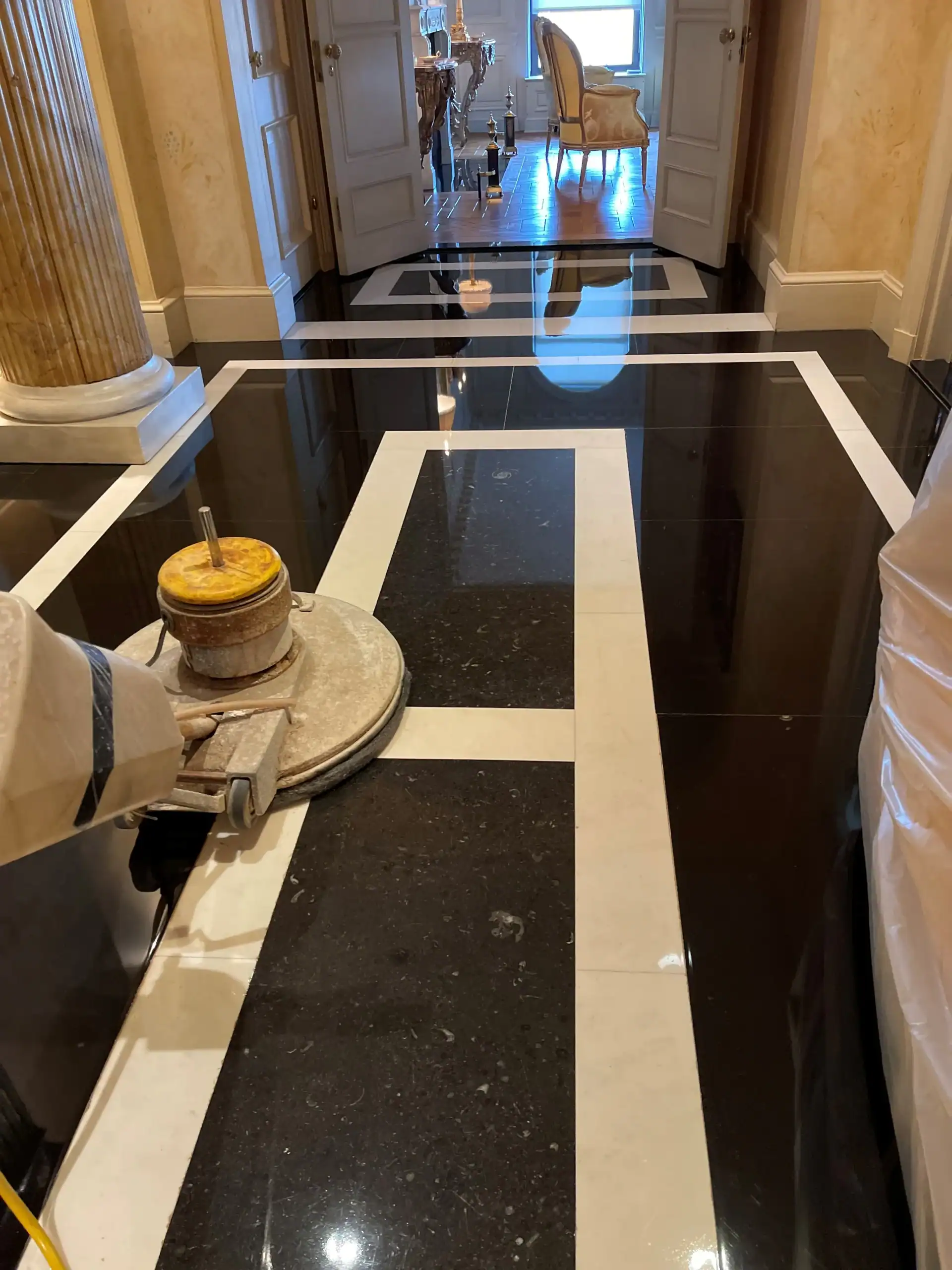
Professional restoration involves multiple stages: thorough assessment, proper cleaning, grinding when necessary, honing to the correct finish level, and sealing with appropriate products. Each step requires specific knowledge about your marble type and its current condition.
Historic marble installations, common throughout Nassau County’s older estates, need specialized approaches. The original installation methods, marble composition, and decades of wear create unique challenges that require experience with period materials and techniques.
Many contractors skip critical steps to save time and cost. They might polish without proper cleaning, use incorrect sealing products, or fail to address underlying moisture issues. These shortcuts create beautiful immediate results that deteriorate rapidly.
The substrate condition also matters significantly. If your marble has settling issues, improper installation, or moisture problems, surface restoration alone won’t provide lasting results. Addressing these foundational issues during restoration extends the work’s lifespan considerably.
Century-old marble installations throughout Suffolk County require different approaches than modern marble work. The original craftsmen used techniques and materials that modern restoration must respect to achieve lasting results.
Historic marble often has unique characteristics: different mineral compositions, hand-finished surfaces, and installation methods that modern techniques can damage. Understanding these differences prevents restoration approaches that look good initially but fail prematurely.
Original marble installations frequently used lime-based mortars and specific sealing compounds that interact differently with modern products. Using incompatible materials creates chemical reactions that accelerate deterioration, shortening restoration lifespan significantly.
The patina and character of historic marble shouldn’t be completely removed during restoration. Aggressive techniques that strip away decades of natural aging often create surfaces that wear unevenly and require more frequent maintenance.
Proper historic restoration also considers the building’s overall condition. Moisture infiltration, structural settling, and HVAC changes affect how restored marble performs over time. Addressing these environmental factors during restoration prevents premature failure.
Temperature fluctuations in older buildings can stress restored marble surfaces. Understanding how your specific property’s conditions affect marble helps determine the best restoration approach for maximum longevity.
Want live answers?
Connect with a High Definition Marble Restoration Inc expert for fast, friendly support.
Several factors influence how often your marble needs full restoration. Understanding these helps you plan maintenance budgets and recognize when restoration timing is optimal.
Traffic levels affect restoration frequency more than any other factor. Residential marble in low-traffic areas might go 15-20 years between full restorations, while high-traffic commercial spaces need attention every 5-8 years.
Your marble’s original quality and installation also matter. Premium marble with proper installation lasts longer between restorations than lower-grade stone or problematic installations.
Regular maintenance significantly extends the time between full restorations. Properties that invest in annual professional cleaning and sealing every 3-5 years often double their restoration intervals.
Immediate spill cleanup prevents etching and staining that accelerate restoration needs. Acidic substances like wine, citrus, and cleaning products cause permanent damage when left on marble surfaces, requiring more frequent professional intervention.
Using appropriate cleaning products makes a substantial difference. pH-neutral cleaners designed for natural stone preserve the restoration work, while acidic or alkaline cleaners gradually damage the surface and sealing.
Professional maintenance visits can identify small issues before they become major problems. Addressing minor scratches, loose areas, or sealing failures early prevents the spread of damage that would require full restoration.
The quality of your building’s environment affects maintenance needs. Properties with stable humidity, good ventilation, and proper drainage around marble installations require less frequent intervention than those with environmental stresses.
Seasonal maintenance considerations in Nassau and Suffolk County include salt exposure from winter weather, humidity changes, and temperature fluctuations that can affect marble stability over time.
Recognizing the difference between maintenance needs and full restoration requirements helps you time interventions appropriately and avoid unnecessary costs.
Surface etching appears as dull, whitish spots where acid has reacted with the marble. Light etching can often be addressed with polishing, while extensive etching requires full restoration to achieve uniform appearance.
Deep scratches that catch your fingernail indicate restoration needs, while surface scratches might respond to professional polishing. The extent and depth of damage determine the appropriate intervention level.
Widespread dullness across large areas usually indicates that previous sealing has failed and the marble surface has been compromised. This condition typically requires full restoration rather than simple resealing.
Staining that doesn’t respond to appropriate cleaning products often indicates the need for restoration-level intervention. Some stains penetrate deeply enough that surface treatments won’t provide satisfactory results.
Structural issues like loose tiles, uneven surfaces, or gaps between marble pieces require restoration-level attention. These problems affect both appearance and the longevity of any surface treatments applied.
Color inconsistencies or patches where previous repairs are visible often indicate the need for comprehensive restoration to achieve uniform appearance across the entire installation.
Professional marble restoration represents a significant investment that should provide lasting results. Understanding the factors that affect longevity helps you make informed decisions about timing, techniques, and maintenance.
Quality restoration work typically provides 10-15 years of beautiful results in residential settings, with proper maintenance extending these intervals even further. The key lies in choosing restoration approaches appropriate for your specific marble type, property conditions, and usage patterns.
For historic properties throughout Nassau County and Suffolk County, specialized expertise in period materials and techniques ensures restoration work that honors original craftsmanship while providing modern durability. We specialize in these challenging projects where experience with century-old installations makes the difference between lasting success and premature failure.
Article details:
Share:
Continue learning: