Learn what causes marble floors to lose their shine and how professional restoration brings back their original beauty.
Share:
Summary:
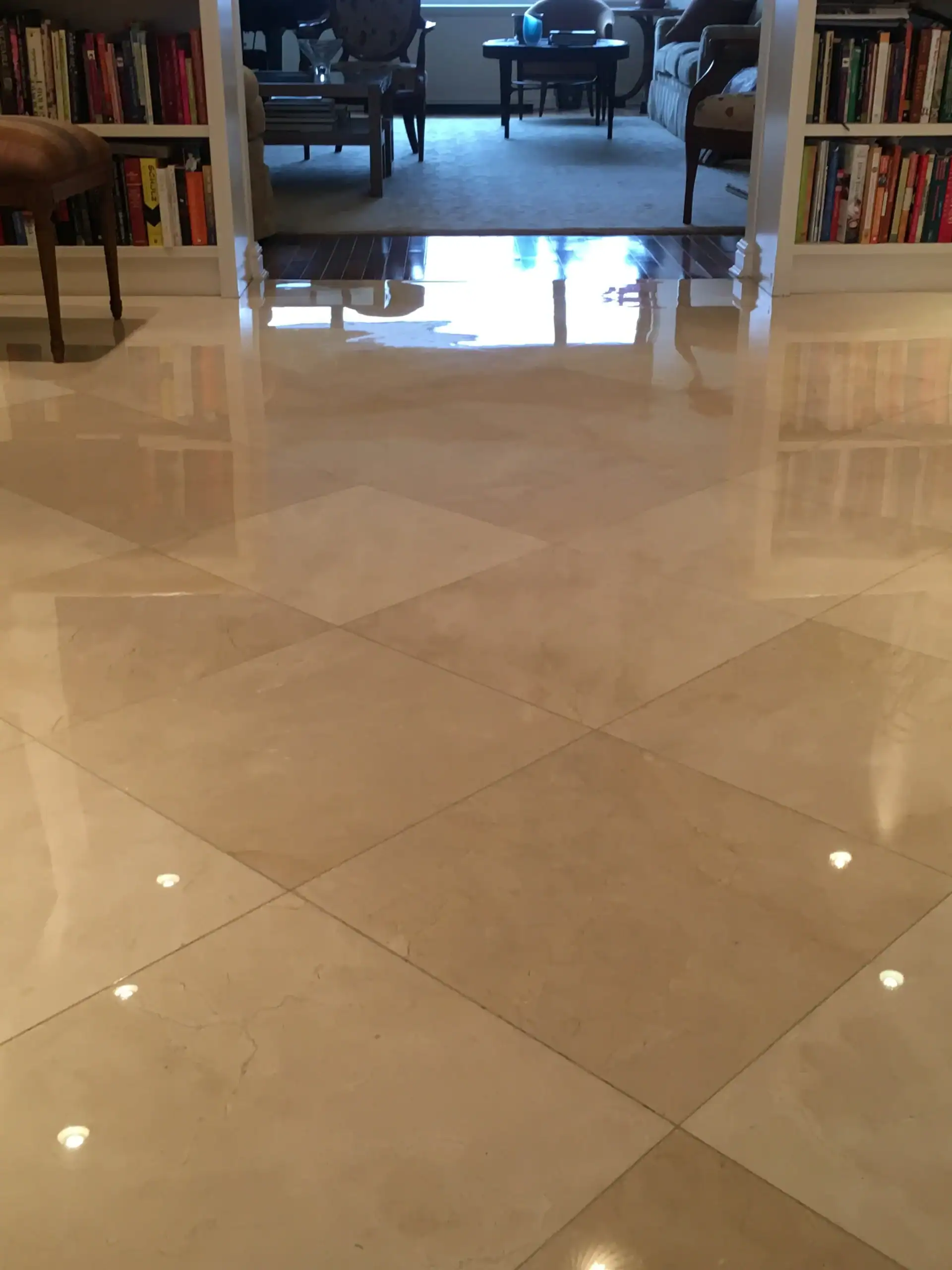
Marble floors don’t just get “dirty”—they get damaged at the molecular level. Unlike harder stones, marble is composed primarily of calcium carbonate, making it vulnerable to specific types of damage that create that frustrating dull appearance.
The most common culprit is something you might not expect: everyday activities and cleaning routines that seem harmless. Your beautiful marble is actually fighting a daily battle against elements that gradually strip away its polished surface.
Understanding these causes helps you see why simple cleaning won’t fix the problem—and why professional restoration is often your most cost-effective solution.
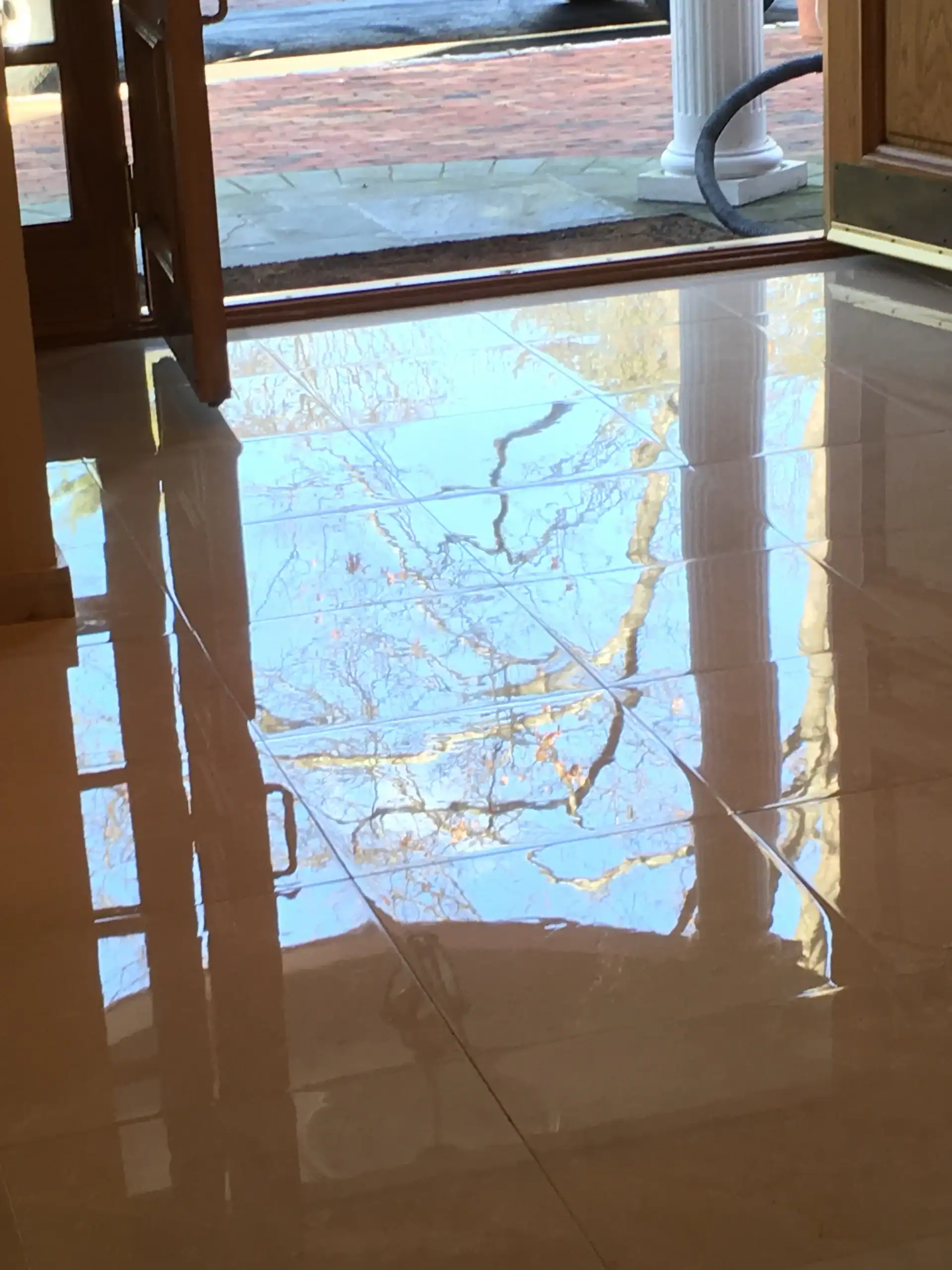
Etching is the number one reason why marble floors lose their shine, and it happens more easily than most homeowners realize. When acidic substances come into contact with marble, they literally dissolve the calcium carbonate in the stone’s surface. This chemical reaction destroys the smooth, polished layer that creates marble’s signature shine.
Common household items that cause etching include lemon juice, vinegar, wine, coffee, and even some cleaning products marketed as “natural” or “all-purpose.” The damage appears as dull spots, rings, or cloudy areas that feel rough to the touch. Unlike stains that darken the marble, etch marks typically appear lighter or hazier than the surrounding stone.
What makes etching particularly frustrating is that it can happen in seconds. A glass of wine spilled during dinner, a drop of lemon juice from cooking, or cleaning with the wrong product can create permanent damage that no amount of scrubbing will fix. The etched areas become more porous, making them more susceptible to staining and further damage.
Many homeowners try to address etching with over-the-counter marble polishes or home remedies, but these surface treatments can’t repair the actual chemical damage. The stone’s surface has been physically altered, and only professional restoration techniques can properly address the underlying problem and restore the uniform finish across the entire floor.
Even without chemical damage, marble floors face constant wear from daily life. Foot traffic brings in dirt, sand, and other abrasive particles that act like sandpaper on your marble’s surface. Over time, this microscopic scratching creates a dull, worn appearance that robs marble of its reflective properties.
The problem intensifies in high-traffic areas like entryways, kitchens, and hallways. Each step grinds these particles into the marble, gradually wearing away the polished surface. What starts as barely noticeable dulling progresses to obvious wear patterns that make your floors look aged and neglected.
Improper cleaning makes the situation worse. Many homeowners unknowingly use cleaning products that are too harsh for marble’s delicate composition. Ammonia-based cleaners, vinegar solutions, and even some pH-neutral products can cause etching or leave residues that attract more dirt. Using the wrong mop or cleaning technique can also create fine scratches that accumulate over time.
The irony is that the harder you try to clean damaged marble with conventional methods, the more damage you often create. Scrubbing etched areas won’t remove the damage—it just creates more scratches. Using acidic cleaners to cut through soap scum or stains actually makes the etching worse. This cycle of well-intentioned cleaning that causes more harm is why many homeowners feel frustrated and consider replacement as their only option.
Want live answers?
Connect with a High Definition Marble Restoration Inc expert for fast, friendly support.
Professional marble restoration isn’t just deep cleaning—it’s a complete surface renewal process that addresses damage at its source. Our restoration process removes the damaged surface layer and creates a new, uniform finish that looks as good as or better than the original installation.
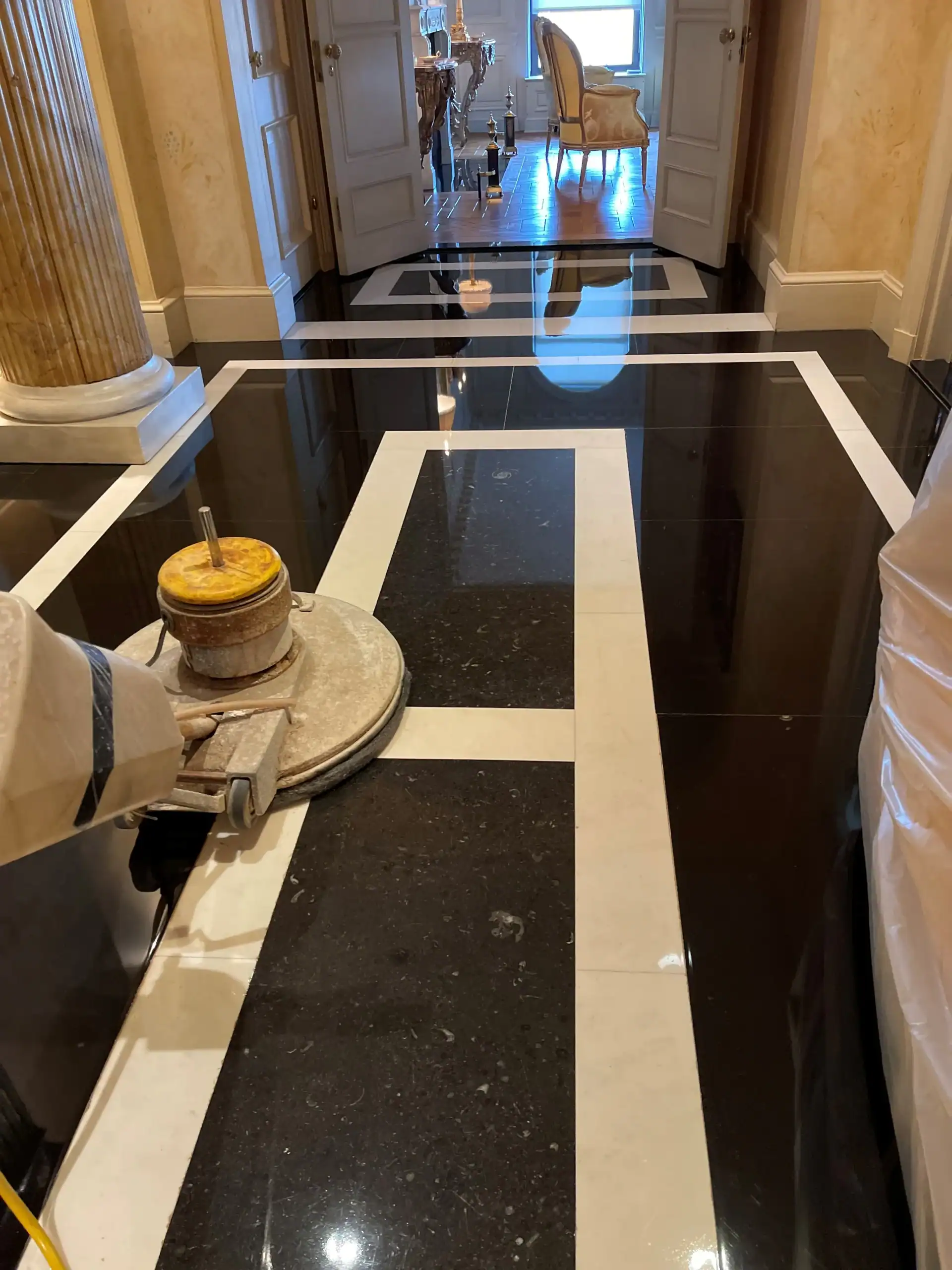
The key difference between professional restoration and DIY attempts is the equipment and expertise involved. We use industrial-grade diamond abrasives and specialized machinery to precisely control the grinding and polishing process. This allows us to remove exactly the right amount of damaged material while creating a perfectly smooth, uniform surface.
Most importantly, professional restoration is often more cost-effective than replacement, delivering dramatic results for a fraction of the cost of new marble installation.
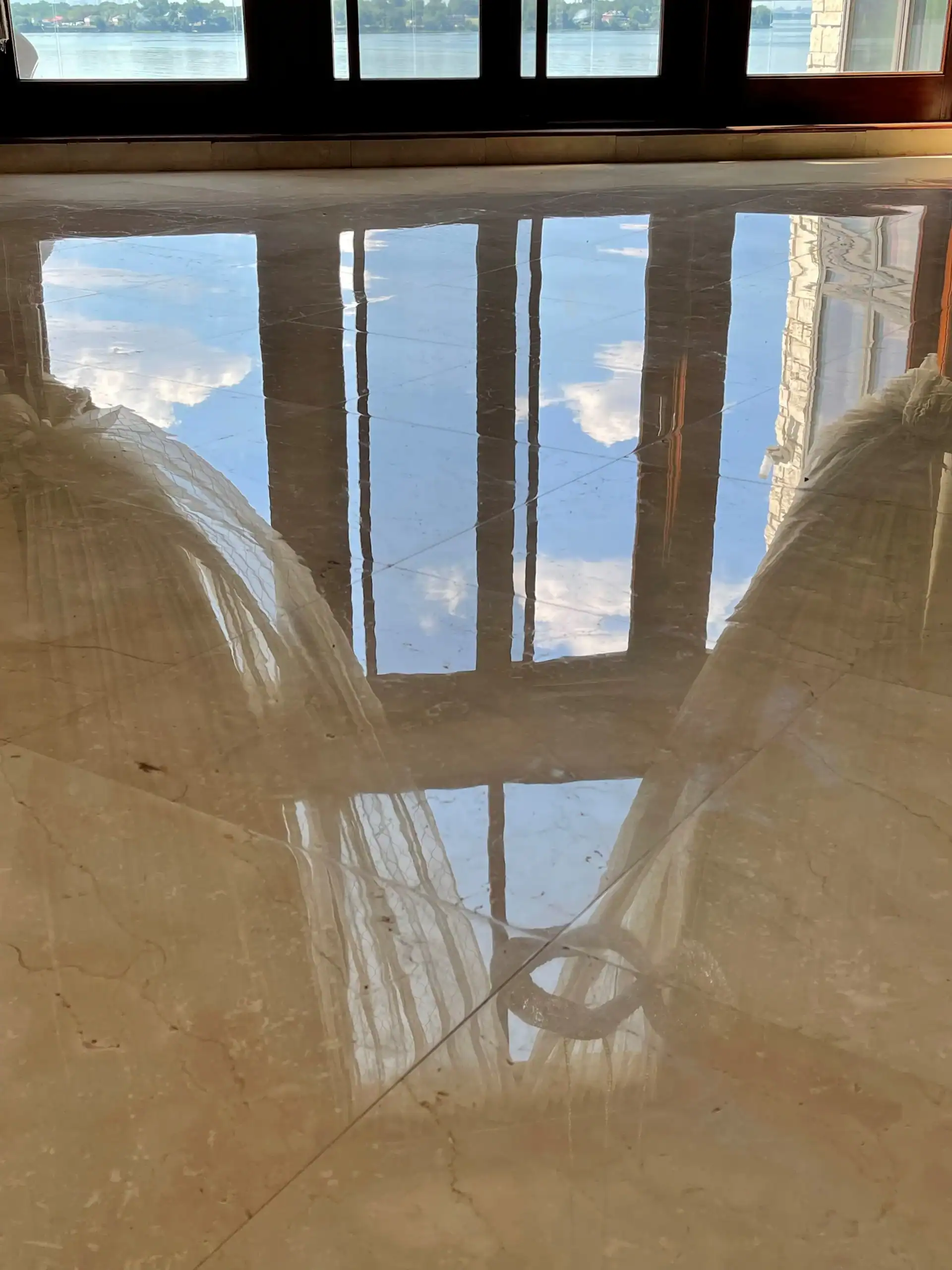
Our marble restoration follows a proven four-step process that systematically addresses different types of damage and builds up to the final polished finish. Each step serves a specific purpose and prepares the surface for the next level of refinement.
The first step is grinding, which removes the most severe damage including deep scratches, etching, and uneven surfaces. Using coarse diamond abrasives, we grind away the damaged layer to reveal fresh, undamaged marble underneath. This step also addresses lippage—the uneven height differences between marble tiles that create trip hazards and an unprofessional appearance.
Honing comes next, using progressively finer diamond abrasives to smooth the surface and remove the grinding marks from the previous step. This creates a uniform, matte finish and prepares the marble for the polishing phase. The honing process also removes smaller scratches and stains that weren’t addressed during grinding.
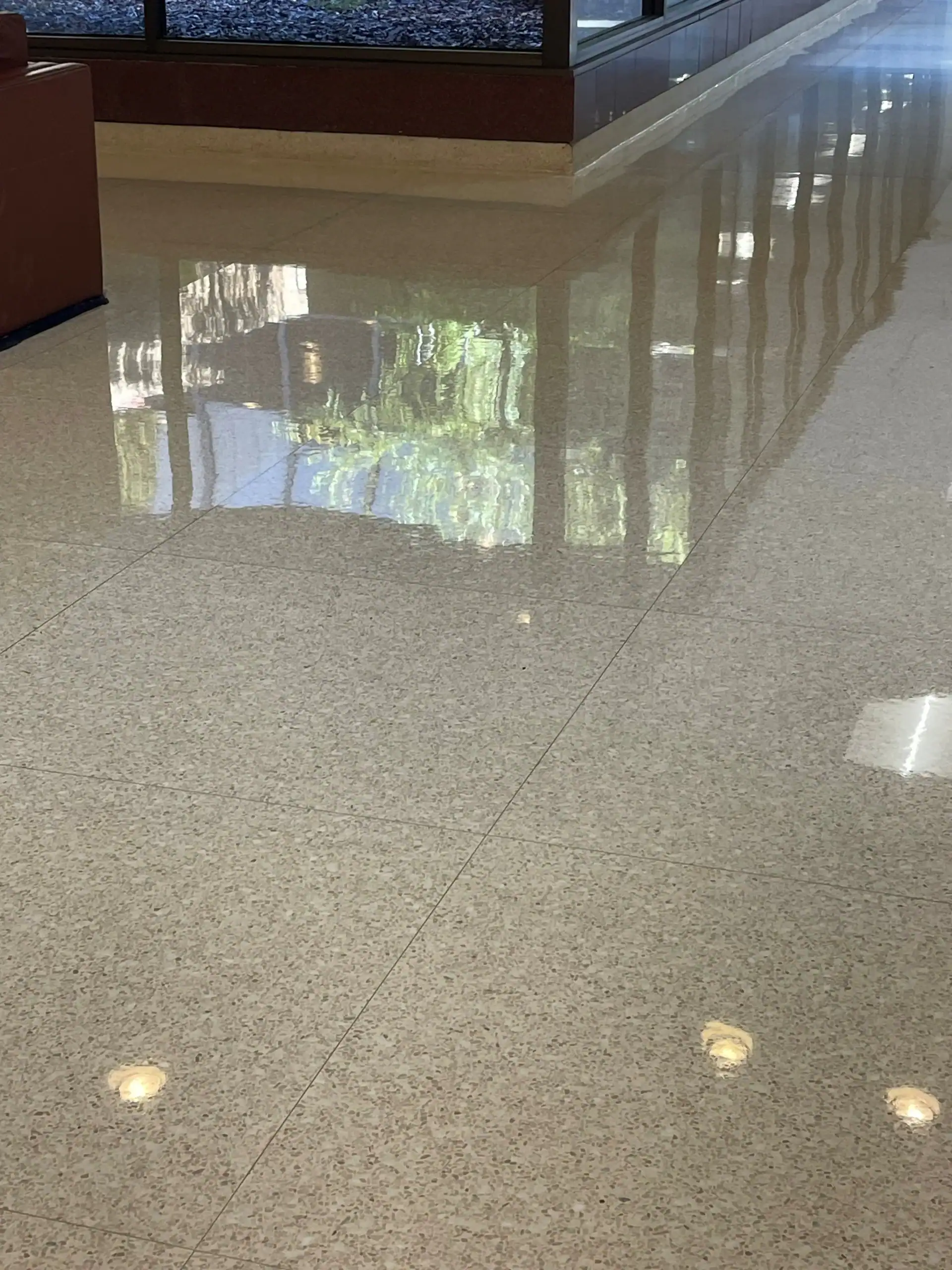
The polishing step uses even finer abrasives to create the desired level of shine, from a subtle satin finish to a high-gloss mirror finish. This is where the marble’s natural beauty really emerges, as the polishing process brings out the stone’s color and veining while creating that signature reflective surface.
Finally, sealing protects the newly restored surface from future damage. A high-quality penetrating sealer helps prevent staining and makes routine maintenance easier, while still allowing the marble to “breathe” naturally.
The internet is full of DIY marble restoration tips, from baking soda pastes to over-the-counter polishing compounds. While these methods might provide temporary improvement on minor damage, they can’t address the fundamental problems that cause marble to lose its shine, and they often create new problems.
Consumer-grade products lack the precision and power needed for true restoration. Marble polishing requires specific grit sequences and controlled pressure to achieve uniform results. Without professional equipment, DIY attempts often create uneven finishes, swirl marks, or over-polished spots that look worse than the original damage. The highly reflective nature of polished marble makes any imperfections immediately visible.
Our restoration succeeds because we address the root causes of marble damage rather than just masking symptoms. When we grind away the damaged surface layer, we’re removing years of accumulated etching, scratching, and wear. The systematic progression through different grit levels ensures a uniform finish that matches across the entire floor.
Perhaps most importantly, our restoration includes proper sealing and maintenance guidance. Many DIY attempts fail because homeowners don’t understand how to protect their marble after treatment. We provide the knowledge and products needed to maintain the restored finish, helping you avoid the same problems that caused the original damage.
The expertise factor can’t be overstated. Our experienced restoration technicians understand how different types of marble respond to treatment, how to match finishes across different areas, and how to handle complications that arise during the process. This knowledge, combined with professional-grade equipment and materials, is what makes the difference between temporary improvement and lasting restoration.
Your dull, damaged marble floors don’t have to stay that way. Understanding the science behind marble damage helps you see why professional restoration is often the smartest solution—delivering dramatic results for a fraction of replacement cost while preserving the character and value that drew you to marble in the first place.
Our four-step restoration process addresses damage at its source, creating a renewed surface that can last for decades with proper care. Whether you’re dealing with etching, wear patterns, or general dullness, professional restoration can bring back that mirror-like shine and elegant appearance you remember.
For homeowners in Nassau and Suffolk County dealing with marble that’s lost its luster, we offer the expertise and proven process needed to restore your floors to their original beauty—or even better.
Article details:
Share:
Continue learning: