


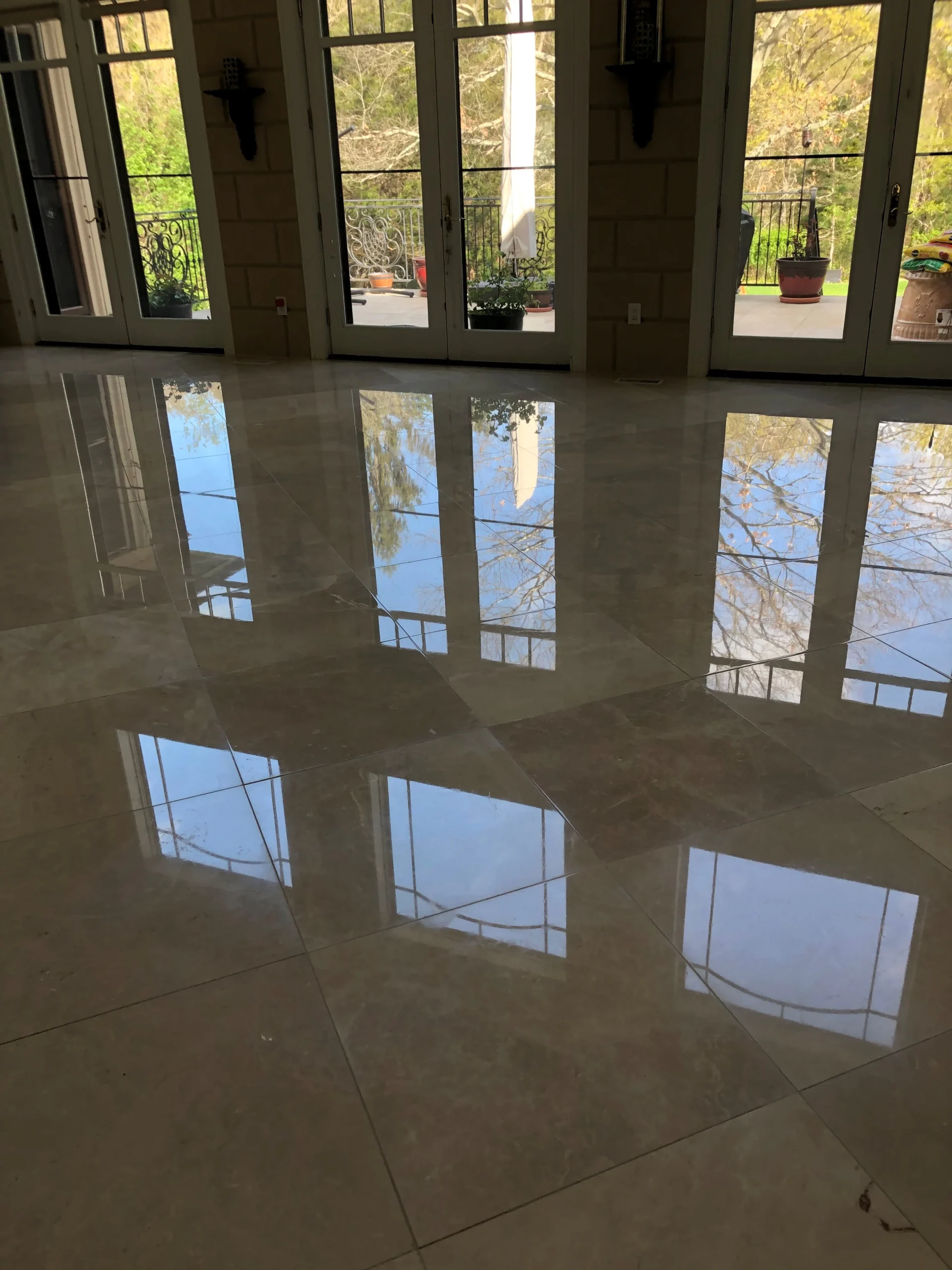
You’re looking at dull marble that used to shine. Maybe there are etched spots from years of the wrong cleaners. Maybe scratches that catch the light in all the wrong ways. You’ve probably tried polishing it yourself or had someone come in who made it worse.
Here’s what changes after proper restoration: your floors reflect light the way they did when your home was built. The veining stands out again. You stop noticing the damage because it’s gone. And when people walk through your entry, they see the craftsmanship—not the wear.
Most Water Mill homes have marble that’s 80 to 100 years old. That stone has character modern materials can’t replicate. The grain patterns, the color depth, the way it was cut and set—it’s irreplaceable. Restoration brings that back without ripping anything out. You keep the history. You just lose the damage.
The difference between restoration and replacement isn’t just cost, though restoration typically runs about 70% less. It’s about keeping what makes your home yours. When you restore instead of replace, you’re not starting over. You’re finishing what the original craftsmen started.
We’ve been restoring historic marble in Nassau and Suffolk County since 1998. We’re owner-operated, which means the person who quotes your job is the same person who does the work. No subcontractors. No handoffs. Just direct accountability from start to finish.
We specialize in the difficult jobs—century-old floors with damage that makes other companies walk away. The New York Times featured our work in 2001 because we take marble that looks beyond saving and bring it back. That’s still what we do best.
Water Mill properties are different. The estates here were built during the Gilded Age and early 1900s, when marble work was an art form. The installation techniques, the materials, even the finish standards were different than what you see today. We know how to work with those older floors because we’ve been doing it for over 25 years. When you call us, you’re talking to someone who understands what you’re dealing with—and how to fix it without compromising the original character.
First, we assess the damage. Not every floor needs the same level of work, and we’re not going to sell you services you don’t need. We look at etching, scratches, stains, and overall dullness. Then we give you a transparent quote with no surprises.
The restoration process starts with grinding down the damaged surface layer. We use diamond abrasives in progressively finer grits to remove scratches, etching, and stains. This isn’t a surface polish—we’re actually removing a thin layer of stone to get below the damage. For historic marble, this requires understanding the original finish and matching it.
After grinding, we move to honing. This smooths the surface and begins bringing back the clarity. Then we polish using specialized compounds that bring out the natural shine in the stone. The final step is sealing, which protects against future staining and etching.
Most jobs take less than two days. You’re not displaced for weeks. We work efficiently because we’ve done this thousands of times. And because we handle your project directly, you get someone who knows exactly what they’re doing at every stage. When we’re done, your marble looks the way it did when it was first installed—sometimes better, because modern restoration techniques can achieve results the original installers couldn’t.

Ready to get started?
Our marble restoration service covers the full process: damage assessment, grinding, honing, polishing, and sealing. We handle everything from minor surface etching to deep scratches and stains that have been there for decades. If your marble can be saved, we’ll save it.
For Water Mill properties specifically, we often work with Carrara, Calacatta, and other Italian marbles that were popular in early 20th-century estates. These materials respond differently to restoration than modern stone. We adjust our process based on the specific marble type, its age, and how it was originally finished. That level of customization is why owner-operated matters—you need someone with enough experience to make those judgment calls correctly.
We also handle bathroom floor restoration, which presents different challenges than larger spaces. Bathrooms typically have more etching from toiletries and cleaning products. The restoration process is the same, but the attention to detail around fixtures and tight spaces requires more precision. We’ve restored marble in Water Mill bathrooms that hadn’t been properly maintained in 50 years. The results speak for themselves.
You’ll also get a clear explanation of how to maintain your marble after restoration. Most of the damage we see comes from using the wrong cleaners. We’ll tell you exactly what to use and what to avoid so your floors stay beautiful longer. Proper maintenance can keep restored marble looking new for decades.
Restoration typically costs 70% less than replacement. New marble installation in the Hamptons area runs between $70 and $190 per square foot when you factor in materials, demolition, disposal, and installation. Restoration usually ranges from $5 to $15 per square foot depending on the damage level.
But cost isn’t the only factor. Replacement means losing your original marble—the veining, the color variations, the craftsmanship that makes historic stone special. In Water Mill estates, that original marble often has characteristics you can’t replicate with modern materials. Buyers specifically look for authentic period details when they’re shopping in this market. Ripping out original marble to install new stone actually decreases your home’s historic value, even if the new material is technically higher grade.
The other consideration is time. Replacement takes weeks because you’re demolishing, prepping the subfloor, ordering materials, and installing. Most restoration jobs finish in under two days. You’re not living in a construction zone. You’re not dealing with dust and debris throughout your home. We come in, restore the marble, seal it, and you’re done.
Yes. Acid etching is one of the most common problems we fix. It happens when acidic cleaners—vinegar, lemon-based products, even some commercial cleaners—eat away at the marble’s surface. You’re left with dull spots that look like water stains but won’t wipe away. Many homeowners make it worse by trying to clean more aggressively, which just spreads the etching.
The solution is grinding away the damaged surface layer and re-polishing. We use diamond abrasives to remove the etched stone, then progressively finer grits to smooth and polish the surface. For light etching, we might only need to hone and polish without aggressive grinding. For severe etching that’s been building up for years, we go deeper. The key is removing enough stone to get below the damage without compromising the floor’s structural integrity.
After restoration, we seal the marble with a penetrating sealer that provides some protection against future acid exposure. But the real solution is changing what you clean with. We’ll give you specific product recommendations that are pH-neutral and safe for marble. Most people don’t realize that common household cleaners are destroying their floors. Once you know what to avoid, preventing future etching is straightforward.
Properly restored and maintained marble can go 10 to 20 years before needing another full restoration. The lifespan depends on foot traffic, how well you maintain it, and whether you’re using the right cleaning products. High-traffic entries might need attention sooner than a formal dining room that rarely gets used.
Marble itself lasts over 100 years with proper care—your Water Mill home is proof of that. The stone doesn’t wear out. What happens is the finish degrades from use, cleaning, and exposure. Restoration resets that finish. If you maintain it correctly after restoration, you’re extending the time before the next service significantly.
Maintenance means using pH-neutral cleaners, wiping up spills quickly (especially acidic liquids like wine or citrus), and using rugs in high-traffic areas. We also recommend a professional cleaning and resealing every few years, which is much less intensive than full restoration. That maintenance service takes a few hours and costs a fraction of restoration, but it keeps your marble looking good and prevents damage from building up. Think of it like changing your oil instead of rebuilding your engine—small preventive steps save you major work later.
Polishing is the final step in restoration, but it’s not the same thing as full restoration. If your marble has minor dullness and no significant damage, polishing alone might be enough. We use polishing compounds and buffing equipment to bring back shine. This works when the stone’s surface is still intact—you just need to enhance the finish.
Full restoration is what you need when there’s actual damage: scratches, deep etching, stains that have penetrated the stone, or uneven wear patterns. Restoration involves grinding away the damaged layer with diamond abrasives, then honing to smooth the surface, then polishing to restore shine. It’s a multi-step process that removes stone to get below the damage. Polishing by itself can’t fix scratches or etching because those problems are in the stone, not just on the surface.
Here’s how to know which you need: if you run your hand over the marble and feel texture differences, scratches, or rough spots, you need restoration. If the marble looks dull but feels smooth, polishing might be enough. When you call for a quote, we’ll assess your floors and tell you exactly what’s required. We’re not going to upsell you on restoration if polishing will solve your problem. But we’re also not going to polish over damage and pretend it’s fixed. You’ll get an honest assessment based on what your floors actually need.
We handle marble restoration in any room—bathrooms, kitchens, entryways, living spaces. Bathrooms are actually one of our most common projects because that’s where marble takes the most abuse. Toiletries, hair products, and cleaning chemicals create etching and staining that builds up over years. Shower floors and walls get especially damaged from soap scum and hard water.
Bathroom restoration follows the same process as floor restoration, but it requires more precision. We’re working around fixtures, in tight corners, and often on vertical surfaces. The marble in Water Mill estate bathrooms is frequently the same high-quality stone as the floors—Carrara, Calacatta, sometimes even rarer materials. These bathrooms were designed as showpieces, and restoring them properly means respecting that original craftsmanship.
Kitchen marble—countertops, backsplashes, islands—presents different challenges. Kitchens see acidic foods, oils, and constant use. Countertops often have etching around the sink and stove. We restore kitchen marble the same way we restore floors: assess the damage, grind if necessary, hone, polish, and seal. The sealing step is especially important in kitchens because you need protection against staining from cooking. We use sealers rated for food-prep surfaces that won’t affect the marble’s appearance but will give you better stain resistance.
Yes, and that’s specifically what we specialize in. Historic marble was finished differently than modern stone. The polishing techniques, the tools, even the expectations for what “finished” looked like were different in the early 1900s. When we restore a century-old floor in Water Mill, we’re not just making it shiny—we’re matching the character of the original finish.
This requires understanding how marble was processed and installed during different periods. Gilded Age marble often has a softer polish than modern stone because the polishing compounds and equipment available then produced different results. Some historic floors were honed rather than polished, giving them a matte finish that’s elegant but not reflective. We assess what the original finish was and replicate it. That might mean stopping at a lower polish level than we could technically achieve, because going further would make the marble look wrong for the period.
The other factor is the stone itself. Marble quarried 100 years ago came from different parts of the quarry than modern stone, and sometimes from quarries that no longer exist. The mineral composition can be slightly different, which affects how it responds to polishing. We adjust our process based on how the specific stone reacts. This is why owner-operated matters—these judgment calls require experience you can’t get from a training manual. When the person doing your restoration has 25 years of hands-on work with historic marble, you get results that respect your home’s original character instead of fighting against it.