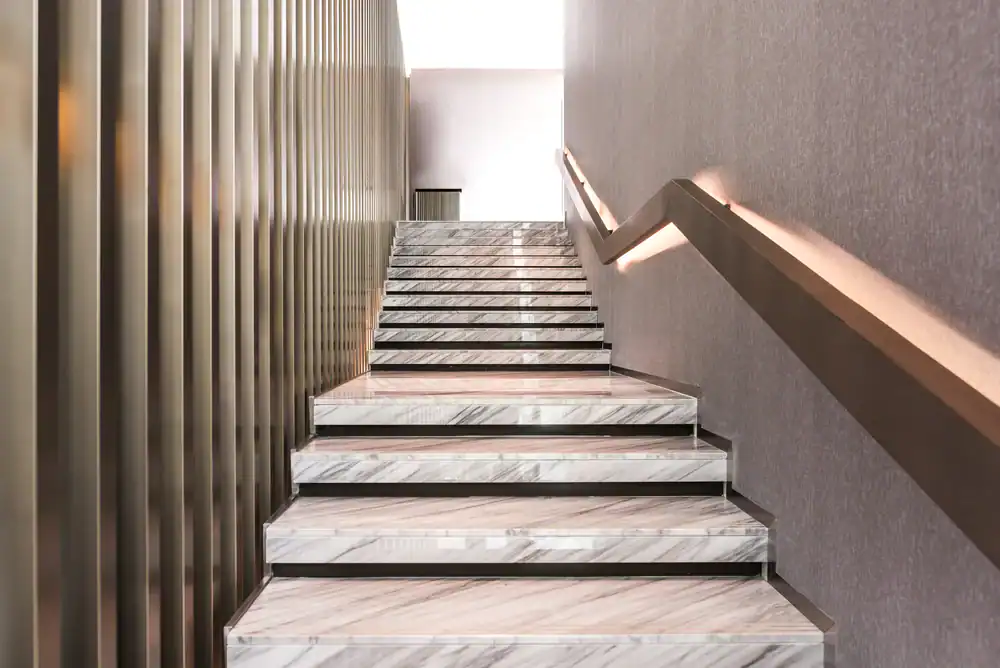
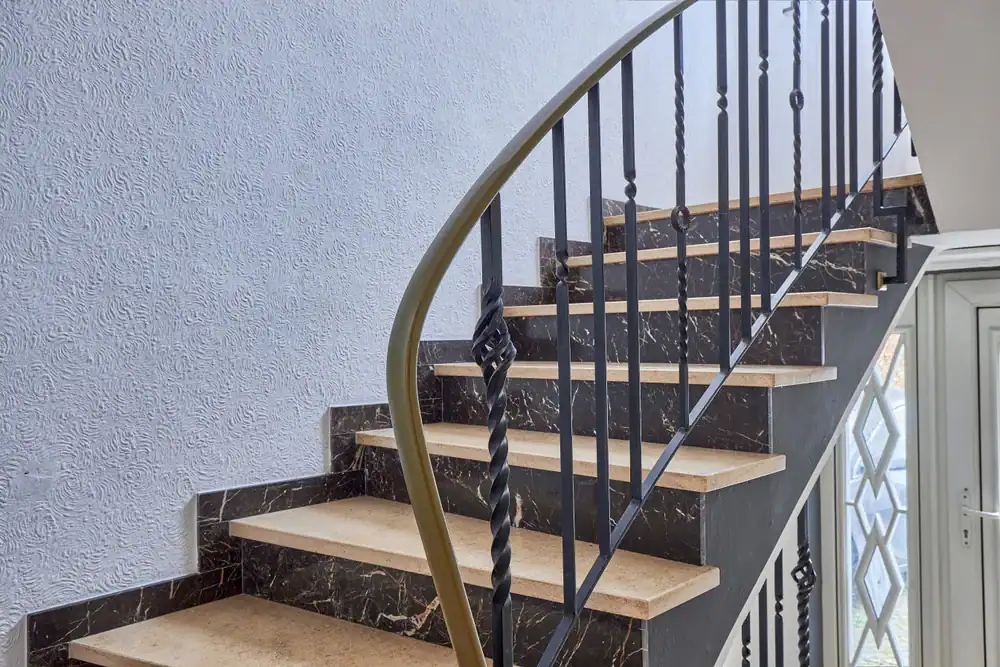
Your marble staircase was built to last centuries, not decades. When scratches, etching, and wear start showing, you don’t need replacement – you need restoration.
We bring damaged marble staircases back to their original shine and beauty. No more dull, scratched surfaces that make your historic home look tired. Instead, you get mirror-like marble that reflects light beautifully and feels smooth under your feet.
The difference is dramatic. Where you once saw etching from years of foot traffic, you’ll see crystal-clear reflections. Where scratches caught dirt and looked worn, you’ll see seamless, polished stone that looks like it was just installed.
We’ve been restoring Long Island’s historic marble staircases for over 25 years. We’re the company that gets called when century-old marble needs expert care.
Being owner-operated means you work directly with the craftsman who understands your staircase. No subcontractors, no miscommunication – just transparent service from start to finish.
Seaford’s historic homes deserve specialists who understand the craftsmanship that went into these staircases. We’ve restored marble stairs in homes built in the 1800s and early 1900s, preserving the character while bringing back the original beauty that made these homes special.
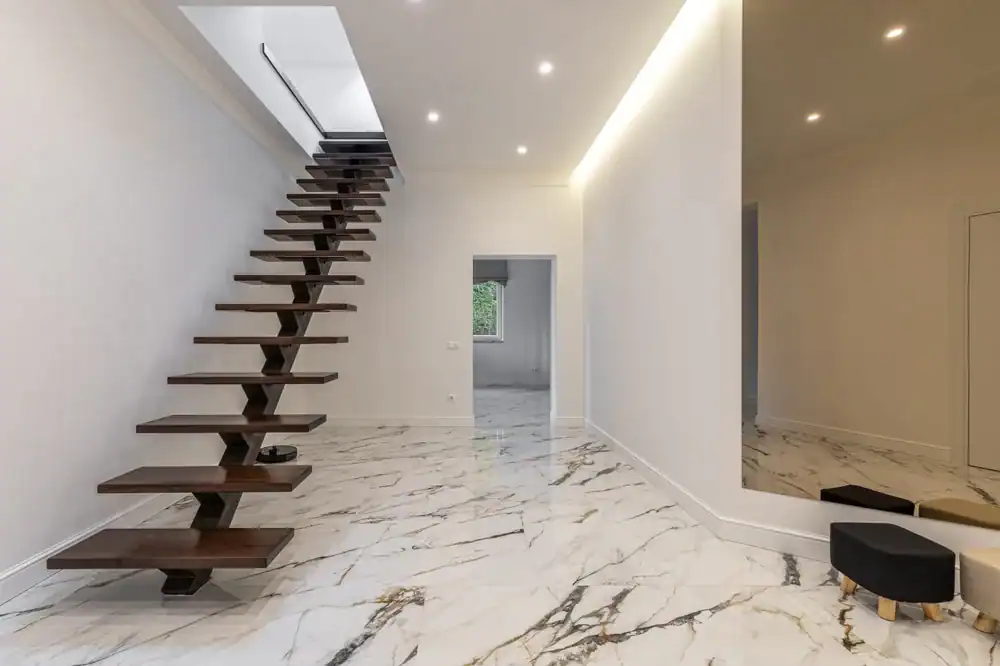
First, we assess your marble staircase to understand the damage and determine the right restoration approach. Every staircase is different – some need light polishing, others require deeper honing to remove scratches and etching.
Next, we carefully mask and protect your home. Your walls, railings, and surrounding areas stay clean throughout the process. We use specialized equipment designed for staircase work, not floor tools adapted for stairs.
The restoration itself involves progressively finer diamond pads to remove damage and restore the marble’s natural shine. We finish with professional-grade sealers that protect your investment and make maintenance easier. The entire process typically takes one to two days, depending on the staircase size and condition.
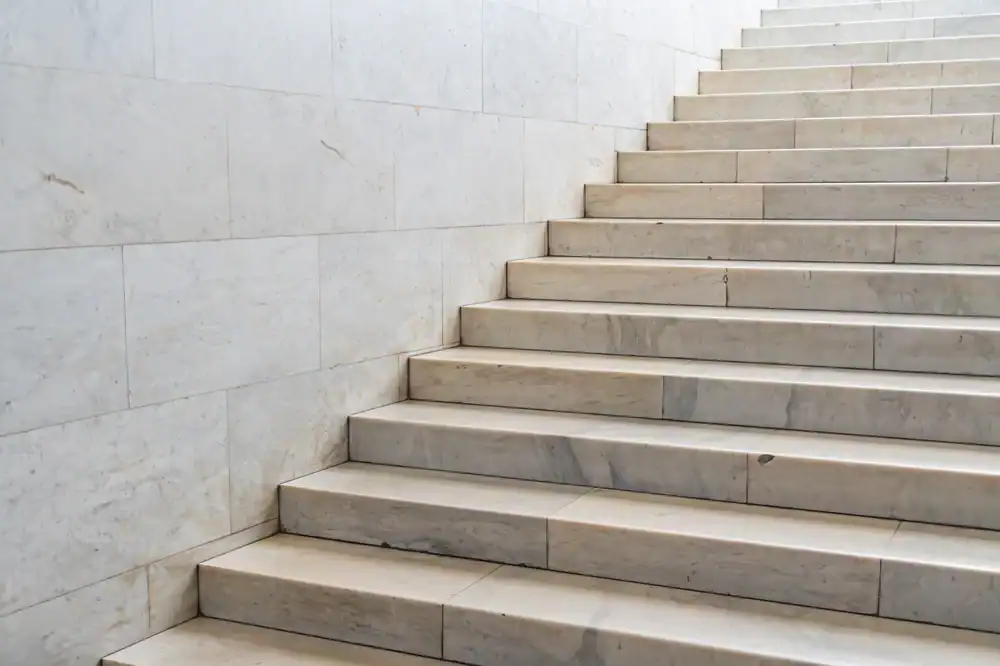
Ready to get started?
Your marble staircase restoration includes complete damage removal, from surface scratches to deep etching. We restore the original polish and apply protective sealers that help prevent future damage.
Long Island’s historic homes often have unique marble varieties that require specific techniques. Carrara marble from the early 1900s responds differently than modern marble, and we adjust our process accordingly. Your staircase gets treatment designed for its specific stone type and age.
The restoration also includes minor repairs – filling small chips, addressing loose sections, and ensuring your staircase is structurally sound. You get a staircase that not only looks beautiful but functions safely for your family.
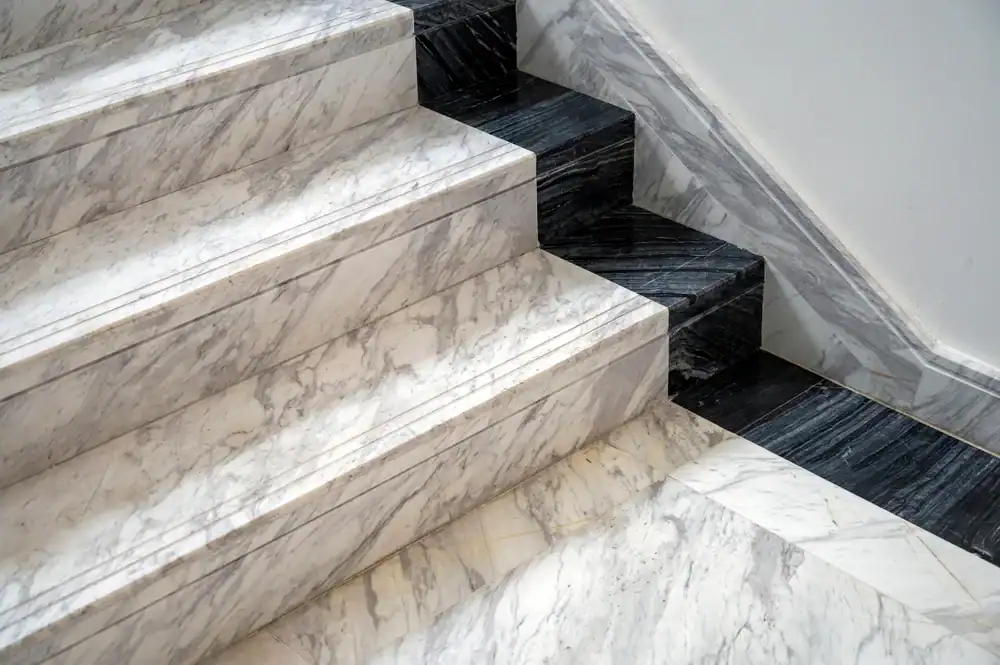
Most marble staircase restorations take one to two days, depending on the size and condition of your stairs. A typical 12-step staircase with moderate damage usually takes about 8-10 hours of work time.
We work efficiently but never rush the process. Each step needs proper attention to achieve that mirror-like finish. The timeline also depends on drying time for sealers – we want to make sure your staircase is fully protected before we consider the job complete.
You can use your staircase the same day in most cases, though we recommend waiting 24 hours before heavy use to let the sealers fully cure.
Yes, we specialize in bringing back marble staircases that look beyond repair. Deep scratches, heavy etching, and years of damage can almost always be restored without replacement.
The key is understanding how marble responds to different restoration techniques. What looks like permanent damage is often just surface-level problems that can be removed with the right equipment and expertise. We’ve restored staircases that homeowners thought needed complete replacement.
Even marble with heavy wear patterns, deep scratches from furniture, or acid damage from cleaning products can usually be brought back to like-new condition. The worse the damage, the more dramatic the transformation.
Cleaning removes dirt and surface stains, but restoration actually repairs the marble itself. If your stairs look dull, scratched, or etched, cleaning won’t fix the underlying damage to the stone surface.
Restoration involves removing damaged marble to reveal fresh stone underneath, then polishing it to the original shine. This process eliminates scratches, etching, and wear patterns that cleaning can’t touch.
Many homeowners try cleaning first and get frustrated when their stairs still look dull. That’s because the marble surface itself is damaged, not just dirty. Restoration addresses the actual stone damage, not just what’s sitting on top of it.
We use comprehensive masking and containment systems designed specifically for staircase work. Your walls, railings, artwork, and furnishings stay completely protected throughout the process.
Marble restoration creates fine dust, so we use specialized equipment with built-in vacuum systems that capture particles at the source. We also seal off work areas with plastic sheeting to prevent any dust from reaching other parts of your home.
Our cleanup process is thorough – we don’t consider the job finished until your home is cleaner than when we arrived. This attention to detail is part of what sets owner-operated businesses apart from larger companies that rush through jobs.
Restored marble stairs are actually easier to maintain than damaged ones. The smooth, sealed surface resists stains and cleans more easily than scratched, porous marble.
Regular maintenance is simple: sweep regularly and mop with pH-neutral cleaners designed for natural stone. Avoid acidic cleaners like vinegar or lemon-based products, which can cause new etching over time.
The professional sealer we apply helps protect against spills and makes routine cleaning more effective. With proper care, your restored staircase should maintain its beauty for many years before needing professional attention again.
Yes, we restore all types of natural stone staircases including limestone, travertine, granite, and terrazzo. Each stone type requires different techniques and equipment, which is why experience with historic materials matters.
Limestone staircases, common in early 1900s homes, need gentler restoration methods than harder stones like granite. Travertine requires filling techniques that marble doesn’t. We adjust our process based on your specific stone type and condition.
We also handle concrete stairs that have been polished or stained. Many Long Island homes have concrete staircases that can be transformed into beautiful, durable surfaces that complement the home’s historic character.