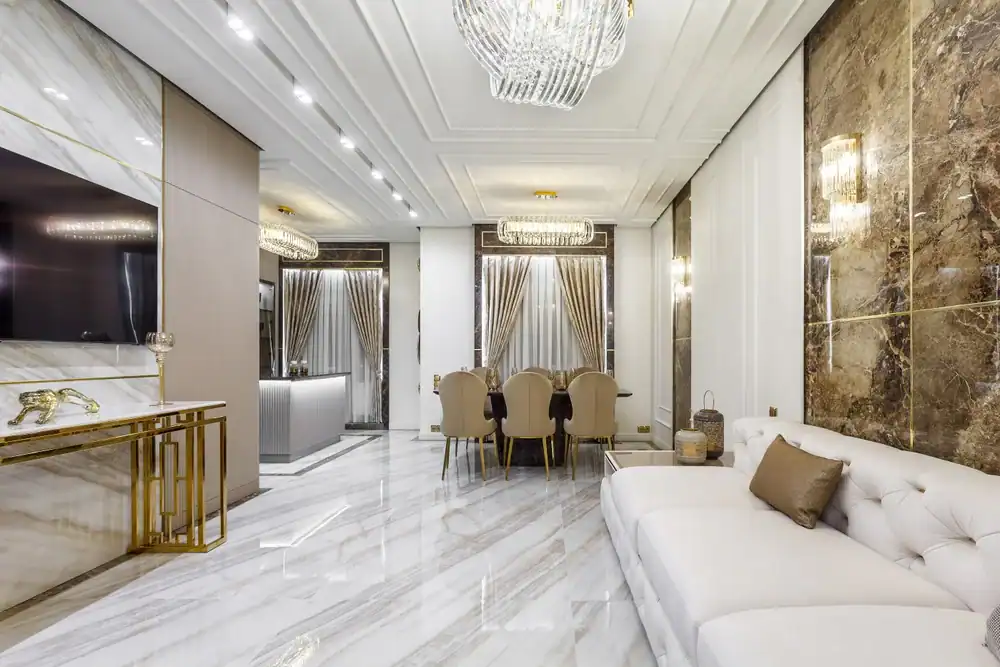
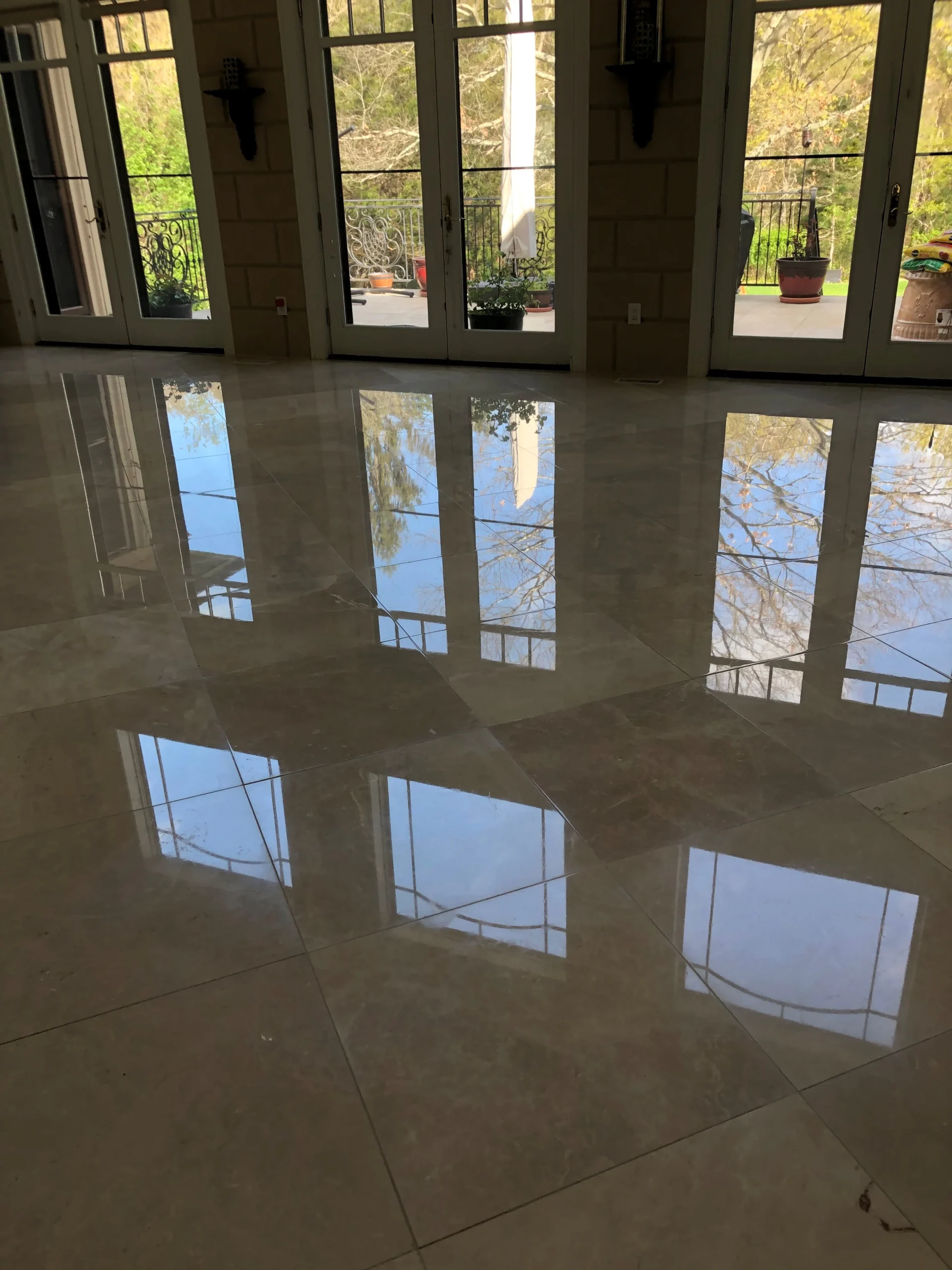
Your marble looks the way it did before decades of foot traffic, harsh cleaners, and well-meaning but damaging maintenance wore it down. The etching disappears. The dullness is gone. The stone has depth again.
You’re not covering up problems or masking wear with coatings that peel off in a year. Restoration removes damaged surface layers and exposes fresh stone underneath. That’s why the results last 10 to 15 years in most homes, not two or three.
And you’re keeping the floor that’s been there since the house was built. The veining, the color variations, the craftsmanship—none of that gets replicated when you rip it out. Restoration costs a fraction of replacement, usually between $800 and $2,400 depending on square footage. New marble installation in this area runs $70 to $190 per square foot, and that’s before you factor in demolition, disposal, and downtime.
If the marble is still structurally sound, replacement doesn’t make sense. Restoration does.
High Definition Marble Restoration Inc has been restoring historic floors across Nassau and Suffolk Counties for over 25 years. The owner oversees every project personally. No subcontractors. No rotating crews. Just direct expertise from start to finish.
We were featured in the New York Times in 2001 for our restoration work, and we’ve built long-term relationships with clients who value craftsmanship. The Garden City Hotel has trusted us exclusively for over 16 years. That’s the kind of relationship you build when the work holds up.
Westhampton Beach has some of the most beautiful historic homes on Long Island, many built in the 1960s and 1980s with marble that’s now 40 to 60 years old. The coastal humidity, hard water, and age create specific problems that require more than a standard cleaning. We understand how these floors were installed, what they’ve been through, and how to bring them back without destroying the characteristics that make them worth keeping.
We start with a damage assessment. That means looking at the extent of etching, scratching, staining, and any structural issues like cracks or loose tiles. This tells us what needs to be repaired before we start polishing.
Next comes surface preparation. We repair chips, seal cracks, and remove any old coatings or residue that’s built up over the years. Then we use a series of diamond abrasives to grind away the damaged surface layer and expose fresh marble. This is where the transformation happens—the stone starts to look like stone again.
After grinding, we move through finer grits to refine the surface, then polish it to the level of shine you’re looking for. Some historic floors had a honed finish originally, not a high gloss. We match what makes sense for your floor. Finally, we apply a penetrating sealer that protects against staining and etching without changing the appearance or creating a coating that wears off.
The process usually takes one to two days depending on the size of the floor. We mask off surrounding areas, manage dust with proper equipment, and clean up completely when we’re done. You’re not left with a mess.

Ready to get started?
You get a complete evaluation of the floor’s condition before we start. That includes identifying what caused the damage in the first place, so you know what to avoid going forward. If there are cracks, chips, or missing pieces, we repair them. If there’s etching from acidic cleaners or spills, we remove it.
The restoration itself involves multiple steps of grinding and polishing using professional-grade diamond pads. This isn’t a topical treatment. We’re physically removing the damaged layer of stone and bringing up fresh marble from underneath. The result is a surface that’s smooth, even, and restored to its original depth of color.
In Westhampton Beach, we see a lot of damage from hard water and coastal humidity. Mineral deposits build up over time, especially around sinks, showers, and entryways. We address that during the process. We also see floors that have been damaged by acidic cleaners—vinegar, lemon-based products, or harsh chemicals that were never meant for marble. Those etch marks can be polished out if the damage isn’t too deep.
After polishing, we seal the floor with a high-quality penetrating sealer. This doesn’t change the look of the stone, but it does give you more time to clean up spills before they stain. It’s not a coating, so it won’t peel or wear unevenly.
Most residential marble floor restoration projects in Westhampton Beach run between $800 and $2,400, depending on the square footage and the condition of the floor. That’s significantly less than replacement, which can cost $70 to $190 per square foot for new marble installation alone, not including demolition, disposal, or downtime.
The cost of restoration depends on how much damage needs to be repaired before polishing. If there are extensive cracks, deep etching, or structural issues, that adds time and materials. But even in those cases, restoration is almost always more cost-effective than tearing out the floor and starting over.
We provide free quotes with transparent pricing upfront. No surprises, no upselling once we’re on-site. You’ll know what the job costs before we start, and you’ll understand what you’re paying for.
Yes. In fact, historic marble is often higher quality than what’s available today. The stone itself is durable, and if it’s been in place for decades, it’s proven it can last. What wears out is the surface, not the material.
Older floors do require specialized knowledge. The installation techniques used 50 or 100 years ago were different from modern methods. The stone may have been hand-finished with subtle variations that machine polishing needs to respect. We’ve worked on floors throughout Nassau and Suffolk Counties that date back to the early 1900s, and we understand how to restore them without erasing the characteristics that make them valuable.
The key is knowing what you’re working with. Some old marble has a honed finish, not a polished one. Some has natural pitting or veining that shouldn’t be “fixed.” We assess each floor individually and restore it in a way that makes sense for its age, style, and original craftsmanship.
Most residential projects take one to two days, depending on the size of the floor and the extent of the damage. Smaller bathrooms or entryways can often be completed in a single day. Larger areas like foyers, hallways, or open-concept living spaces may take two days.
The timeline also depends on what needs to be done before polishing. If there are cracks that need to be filled and cured, or if old coatings need to be stripped, that adds time. We’ll give you a clear timeline during the quote so you know what to expect.
We work efficiently, but we don’t rush. The quality of the restoration depends on taking the time to do each step correctly. That means proper surface preparation, multiple passes with progressively finer abrasives, and a thorough cleanup when we’re done. You’ll have access to the space again as soon as the sealer has cured, which is usually within a few hours of completion.
Yes. Etching happens when acidic substances—like vinegar, lemon juice, wine, or certain cleaning products—chemically react with the marble and dissolve the surface. It leaves dull spots or rough patches that don’t come out with regular cleaning.
Restoration removes the etched layer by grinding down the surface and exposing fresh stone underneath. Once the damaged layer is gone, we polish the marble back to a smooth, even finish. The etching disappears completely as long as it hasn’t penetrated too deeply into the stone.
Dull spots that aren’t caused by etching—like wear patterns from foot traffic—are also fixed during restoration. We level the surface, remove scratches, and bring back the depth and clarity the marble had when it was new. This is permanent work, not a temporary fix. The results last 10 to 15 years in most residential settings with proper care.
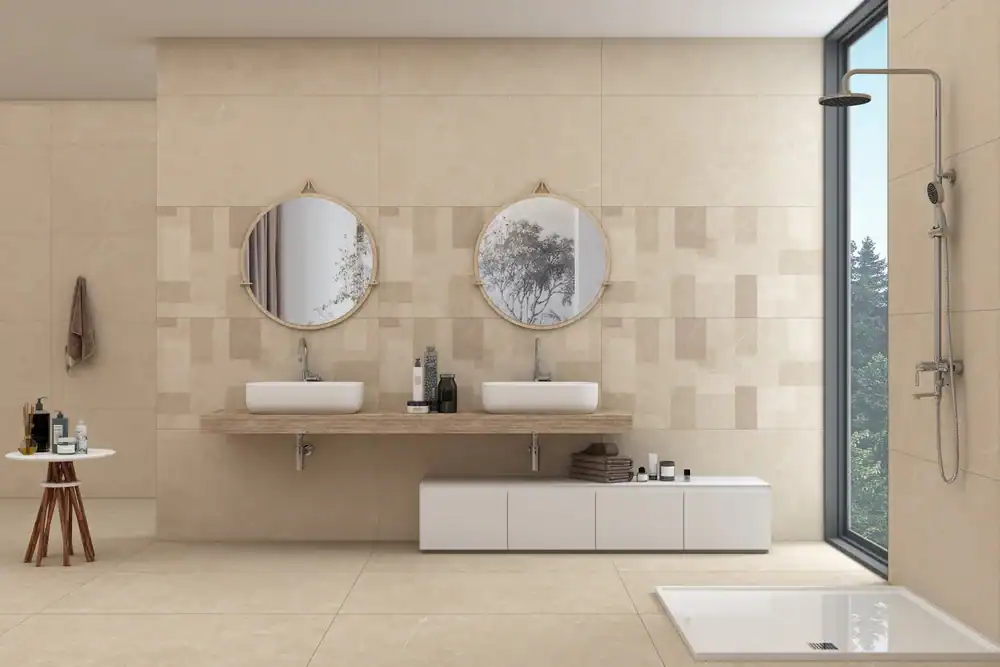
Yes. Bathroom marble restoration is one of the most common projects we handle. Showers, vanity tops, and bathroom floors take a lot of abuse from soap scum, hard water, and cleaning products that aren’t safe for marble.
The process is the same as floor restoration—we assess the damage, repair any cracks or chips, remove etching and stains, and polish the surface back to its original finish. In bathrooms, we also pay close attention to grout lines and caulking, which can harbor mold or mildew if they’ve been compromised.
Hard water is a particular problem in Westhampton Beach. Mineral deposits build up on marble surfaces over time, especially in showers and around faucets. We remove those deposits during the restoration process and seal the marble to make future cleaning easier. The sealer won’t stop water from sitting on the surface, but it does give you more time to wipe it down before it stains or etches.
The most important thing is avoiding acidic cleaners. No vinegar, no lemon-based products, no harsh chemicals. Use a pH-neutral cleaner designed for natural stone, or just warm water and a microfiber mop for daily cleaning.
Wipe up spills quickly, especially anything acidic like wine, coffee, or citrus. The sealer we apply gives you some protection, but it’s not a shield. It buys you time, but it doesn’t make the marble indestructible.
Use mats or rugs in high-traffic areas and near entryways where sand and dirt can scratch the surface. Don’t drag furniture across the floor. If you need to move something heavy, lift it or use felt pads.
With proper care, restored marble floors can last 10 to 15 years before they need professional attention again. Some clients go longer. It depends on how much traffic the floor sees and how well it’s maintained. We’ll walk you through the specifics when we finish the job, so you know exactly what to do and what to avoid.