

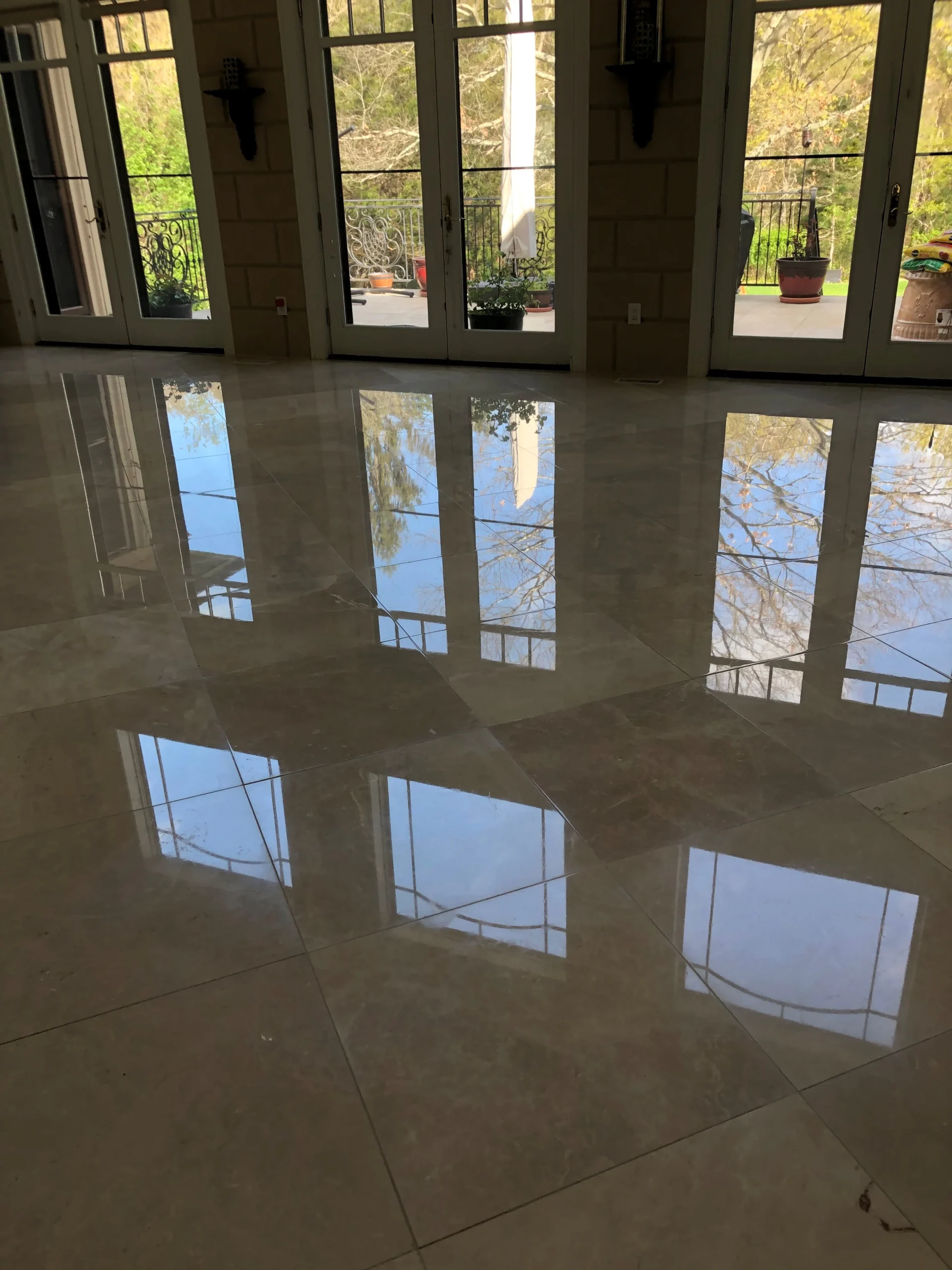
You’re looking at marble that once looked stunning. Now it’s dull, scratched, etched from years of use and maybe a few cleaning products that did more harm than good. The question isn’t whether it can be fixed—it can. The question is whether you want to spend $70-190 per square foot ripping it out, or $5-15 per square foot bringing it back.
Restoration gives you the original surface, the authentic veining, the craftsmanship you can’t replicate with modern materials. Most jobs take less than two days. You get floors that look new again without losing what made them special in the first place.
West Sayville has homes built in the 1800s, estates from the 1920s with marble that’s survived a century. That’s not something you throw away because it needs work. That’s something you restore once and protect for the next hundred years.
We’ve specialized in historic floor restoration throughout Nassau and Suffolk Counties for over 25 years. The New York Times featured our work in 2001. We’re owner-operated, which means the person who answers your call is the same person overseeing your project.
We focus on the difficult jobs—century-old marble, floors that other companies say need replacement, materials that require someone who actually understands what they’re working with. West Sayville’s older homes, especially the ones near the water built between 1880 and 1930, often have marble floors that have seen moisture damage, settling, decades of foot traffic. We’ve seen it all.
You get transparent pricing before work starts, direct communication throughout the project, and someone who knows that your 100-year-old floor isn’t just a surface—it’s part of your home’s history.
First, we assess the damage. Scratches, etching, stains, lippage—we need to see what we’re working with before we can tell you what it’ll take to fix it. You get a free quote with transparent pricing. No surprises.
Once we start, we mask and protect everything around the work area. Marble restoration creates dust and requires equipment, but your space stays protected. We use diamond abrasives to remove damage layer by layer, starting with coarser grits and working up to finer polishing pads. This isn’t a surface treatment—we’re actually removing damaged stone and revealing fresh material underneath.
After grinding and honing, we polish the marble to the finish you want. High gloss, honed, somewhere in between—it’s your call. Then we seal it properly to protect against future staining and etching. Most residential jobs take one to three days depending on square footage and condition. You’re left with floors that look like they did when they were first installed, with protection that’ll keep them that way.

Ready to get started?
You get a full assessment of your marble’s condition before any work begins. We identify cracks, chips, etching, stains, and structural issues that need addressing. Historic marble often has problems that have had decades to develop—we find them before they become bigger problems.
The restoration process includes diamond grinding to remove damage, honing to smooth the surface, and polishing to your preferred finish level. We handle repairs for chips and cracks, lippage correction if your tiles are uneven, and proper sealing with commercial-grade products that actually protect the stone.
West Sayville homes, particularly the older properties built in the 1940s-1960s and the historic estates closer to the water, often have marble in entryways, bathrooms, and kitchens. Water damage is common in homes near the bay where moisture barriers weren’t standard construction practice. We address those issues as part of the restoration—not just the surface appearance, but the underlying problems that caused the damage in the first place. You get floors that don’t just look better, but last longer because they’re properly restored and protected.
Restoration typically runs $5-15 per square foot depending on the condition and size of the area. Replacement costs $70-190 per square foot when you factor in demolition, disposal, new material, and installation. You’re looking at saving 80% or more by restoring what you have.
The math gets even better when you consider that historic marble has characteristics you can’t buy new. The veining patterns, the color variations, the craftsmanship—modern marble doesn’t look the same. You’re not just saving money, you’re keeping something irreplaceable.
Most West Sayville homeowners we work with are dealing with marble that’s 50-100 years old. That marble has survived this long because it’s quality material. It doesn’t need replacement—it needs proper restoration and sealing.
Most residential marble restoration projects take one to three days. A small bathroom might be done in a day. A large entryway or multiple rooms might take two to three days. The timeline depends on square footage, how damaged the marble is, and what finish level you want.
We don’t rush the process. Each grit level in the grinding and polishing sequence needs proper attention. Skipping steps or moving too fast shows up in the final result. You’ll see companies that promise same-day restoration—that’s usually a topical coating that’ll fail in six months, not actual stone restoration.
The work is disruptive while it’s happening. We’re using equipment, there’s dust even with proper containment, and you can’t walk on the floors during certain stages. But it’s temporary disruption for a permanent fix. Compare that to replacement, which takes longer, costs more, and destroys original materials you can’t get back.
Yes. Deep scratches and etching are exactly what the restoration process is designed to fix. We’re not covering damage—we’re removing it by grinding down to fresh stone below the damaged layer.
Etching happens when acidic substances eat into the marble surface. It looks like dull spots or watermarks. Scratches come from grit, furniture, years of foot traffic. Both require removing damaged stone and re-polishing the surface. The depth of the damage determines how much material we need to remove, but marble can handle it—you’ve got thickness to work with.
The worse the damage, the better the transformation. We specialize in floors that other companies look at and recommend replacement. Those are often the best candidates for restoration because the difference is so dramatic. Your 100-year-old marble floor in West Sayville has probably been through a lot—water damage, harsh cleaners, decades of use. It can be brought back.
Restored original marble floors can increase property value by 3-5% according to real estate data. In West Sayville, where the median home price is around $835,000, that’s $25,000-40,000 in added value. Buyers pay premium prices for authentic, well-maintained historic features.
The National Association of Realtors reports that quality stone surfaces can boost home value up to 25% in the right market. West Sayville buyers—particularly those looking at historic properties near the water—appreciate original materials and authentic character. Ripping out century-old marble and replacing it with modern tile actually decreases value for buyers who want historic homes.
Beyond resale value, you’re protecting your investment. Marble floors that are properly restored and sealed last for decades without needing major work again. Compare that to the ongoing maintenance costs of damaged marble or the depreciation of cheap replacement materials.
Polishing is the final step in restoration—it’s what creates the shine. Full restoration includes grinding, honing, repairing, and then polishing. If your marble just needs a refresh and has no major damage, polishing might be enough. If you’ve got scratches, etching, stains, or uneven tiles, you need full restoration.
Think of it this way: polishing is like waxing a car with good paint. Restoration is like sanding down to bare metal, fixing dents, repainting, and then waxing. Most marble floors that haven’t been professionally maintained in years need restoration, not just polishing.
We assess your floors and tell you what they actually need. Some companies will sell you a full restoration when polishing would work, or try to polish floors that need grinding first. Neither approach gives you good results. You need someone who knows the difference and recommends the right process for your specific situation.
Historic homes are our specialty. We’ve worked on century-old marble throughout Nassau and Suffolk Counties, including many of West Sayville’s older properties. The estates built between 1880-1930, the ranch homes and Cape Cods from the 1940s-1960s—we understand the materials and construction methods from those eras.
Historic marble often has issues modern floors don’t face. Water damage from outdated moisture barriers, settling that causes lippage, repairs from previous owners who didn’t know what they were doing. West Sayville’s proximity to the water means many older homes have dealt with moisture problems over the decades.
We know how to work with old marble without causing more damage. The stone itself is often higher quality than modern material, but it requires someone who understands historic restoration techniques. You’re not just getting your floors cleaned—you’re getting proper restoration that respects the age and character of the original installation.