


You get the floor you remember—or the one you saw in photos from when your house was first built. The scratches are gone. The dullness is gone. The etching from decades of hard water and harsh cleaners is corrected.
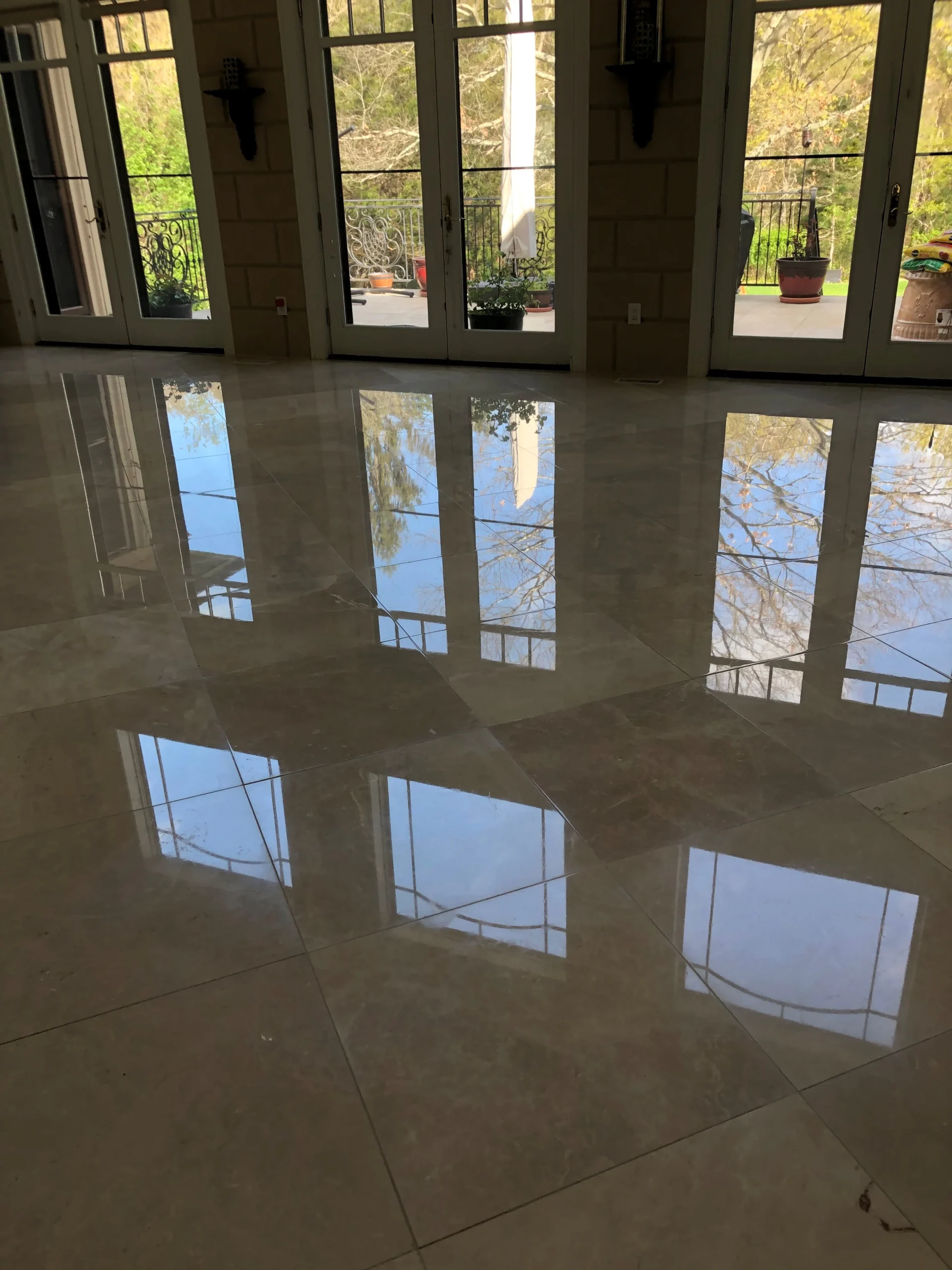
What you’re left with is a smooth, reflective surface that catches light the way marble is supposed to. Not a new floor trying to look old. Your original floor, restored to what it looked like before wear and time took over.
And you didn’t have to rip anything out. Most jobs wrap up in under two days. You’re not dealing with dust everywhere, contractors for weeks, or disposing of irreplaceable materials. You’re getting your space back quickly, with floors that look like they were just installed—but with all the character and craftsmanship that only a century-old floor can have.
High Definition Marble Restoration Inc has spent over 25 years working on floors that most companies won’t touch. We’re owner-operated, which means you’re getting the person who actually knows how to fix your floor—not a subcontractor learning on the job.
We were featured in the New York Times back in 2001 for our restoration work. Since then, we’ve worked on everything from 100-year-old estate floors across Nassau County to commercial properties like the Garden City Hotel, which has trusted us exclusively for over 16 years.
West Islip has plenty of homes from the 1960s and earlier, many with original marble in entryways, bathrooms, and kitchens. We understand what those floors were supposed to look like when they were first installed. That’s not something you learn from a training video—it comes from decades of hands-on work with historic materials.
First, we assess the condition of your marble. We’re looking at the type of stone, the level of damage, any etching or staining, and what finish it originally had. This tells us what process your floor needs—not every marble floor gets the same treatment.
Next, we protect everything around the work area. Masking and containment aren’t optional steps for us. You shouldn’t have dust on your furniture or grit tracked through your house because we didn’t take the time to do it right.
Then we start the actual restoration. Depending on the condition, this might involve honing to remove scratches and etching, followed by polishing to bring back the original finish. We’re using professional-grade equipment and techniques refined over 35 years—not the same tools a cleaning company rents for the weekend.
The final step is sealing and protecting the surface so it holds up better going forward. When we’re done, you’re left with a floor that looks the way it should—and we’ve cleaned up like we were never there.

Ready to get started?
You’re getting a full restoration—not just a polish. That means we’re addressing scratches, etching, stains, and any damage that’s built up over the years. If your bathroom floor has water spots or your entryway marble looks hazy and dull, we’re fixing that.
We also handle marble floor polishing for surfaces that are in decent shape but just need their finish brought back. This is common in West Islip homes where the marble has been maintained but has lost its shine over time due to Long Island’s hard water and regular foot traffic.
For floors that have deeper issues—cracks, chips, or areas where the stone has been damaged by improper cleaning—we do marble repair work before refinishing. The goal is a seamless result where you can’t tell where the damage used to be.
And if you’ve got old concrete floors you’re thinking about restoring instead of covering up, we do concrete polishing too. It’s a different process than marble, but it’s becoming a popular option for basements and garages in older Long Island homes—durable, easy to maintain, and surprisingly good-looking when done right.
Restoration typically runs between $5 and $15 per square foot depending on the condition of your marble and what needs to be done. Replacement costs between $70 and $190 per square foot when you factor in demo, disposal, new material, and installation.
For a 200-square-foot entryway, you’re looking at $1,000 to $3,000 for restoration versus $14,000 to $38,000 for replacement. That’s not a small difference, especially when the end result with restoration is often better—you keep the original stone, the character, and the craftsmanship that came with your home.
The other thing people don’t always consider is the disruption. Replacement means days or weeks of contractors, dust, debris, and your entryway or bathroom being completely unusable. Restoration is usually done in less than two days with minimal mess.
Yes. Etching from acidic cleaners is one of the most common issues we see, especially in West Islip where a lot of homeowners have tried DIY solutions or hired cleaning companies that didn’t know what they were doing.
Etching leaves the marble looking dull and rough because the acid has literally eaten into the surface of the stone. It’s not something you can buff out with a rag—it requires honing the surface down to remove the damaged layer, then polishing it back to the original finish.
We’ve restored floors that were hit with everything from vinegar to harsh bathroom cleaners. As long as the damage is only on the surface and the stone itself is still intact, it’s fixable. The key is stopping the damage now and getting someone in who knows how to reverse it without making it worse.
Most residential jobs are completed in less than two days. A typical bathroom floor can be done in a day. Larger areas like entryways or kitchens might take a day and a half depending on the size and condition.
Commercial projects or extremely damaged floors can take longer, but we’ll give you a clear timeline upfront based on what your floor needs. We’re not dragging jobs out—we’re getting in, doing the work right, and getting out of your way.
The other factor is drying time if your floor needs sealing. You’ll need to stay off it for several hours after we’re done, but we’ll walk you through that before we start so there are no surprises.
According to the National Association of Realtors, restoring marble flooring can increase property value by 3% to 25% depending on the scope and visibility of the work. In West Islip, where median home values are around $750,000, that’s potentially $22,500 to $187,500 in added value.
Even if you’re not selling right now, buyers notice original marble—especially in historic homes. It’s a feature that sets your property apart. But only if it’s in good condition. Dull, scratched, or stained marble does the opposite—it makes buyers wonder what else hasn’t been maintained.
Restoration brings that feature back to being an asset instead of a liability. And unlike a kitchen remodel where you might recoup 60% of your investment, marble restoration costs so much less than replacement that the return is almost always worth it.
The owner is directly involved in every project. We don’t subcontract this work out to crews who may or may not know what they’re doing. When you hire us, you’re getting someone who’s been doing this for over 25 years and has the experience to handle floors that other companies would walk away from.
That matters more than people realize. Marble restoration isn’t something you can fake your way through. If you use the wrong abrasive or apply too much pressure, you can ruin the stone permanently. There’s no “undo” button.
We’ve seen plenty of floors that were damaged by well-meaning contractors or cleaning companies who didn’t understand the material. Our job is often fixing what someone else messed up. You don’t have that risk here because the person running the equipment is the same person who quoted your job and knows exactly what your floor needs.
Honing is the process of grinding down the surface of the marble to remove scratches, etching, and damage. It leaves the stone with a smooth but matte finish. Polishing comes after honing and brings out the shine by refining the surface to a high gloss.
Some floors only need polishing if they’re in good shape but have lost their reflective finish over time. Others need honing first to correct damage, then polishing to restore the original look. It depends entirely on the condition of your stone.
In older West Islip homes, we often see floors that need both—decades of foot traffic, furniture being moved, and improper cleaning have left the surface scratched and dull. Honing removes that damage. Polishing brings back the mirror-like finish the floor had when it was new. The combination is what gets you a true restoration, not just a temporary improvement.