


You’re looking at marble that’s seen a century of foot traffic. Maybe water damage from Southampton’s coastal humidity. Maybe etching from cleaners that weren’t meant for natural stone. The surface is dull, scratched, or cracked in places you didn’t notice until recently.
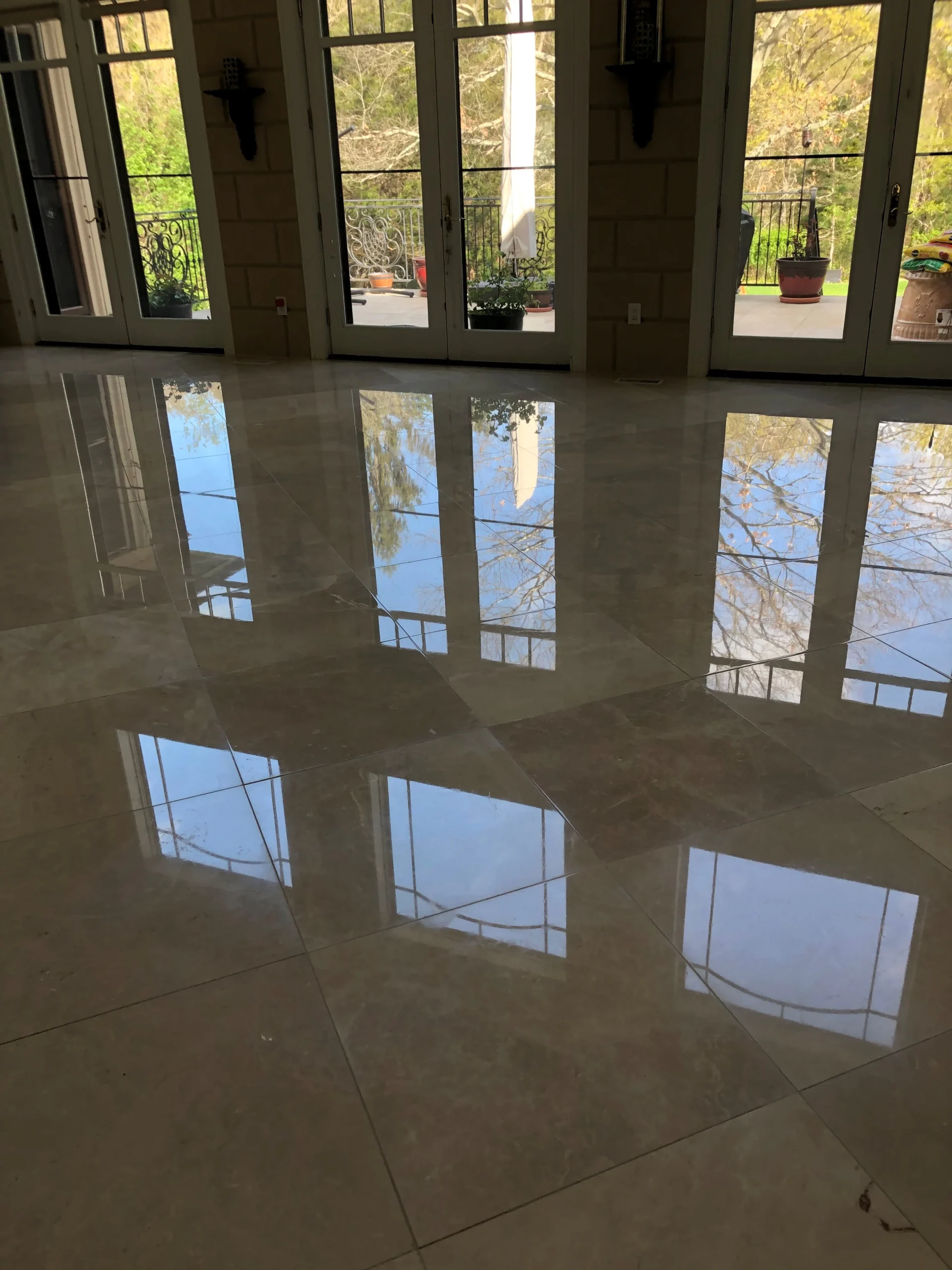
Here’s what changes after restoration. The stone looks like it did when your home was built—deep color, mirror-like finish, no haze. Cracks are stabilized so they don’t spread. Water stains disappear. The floor reflects light again instead of absorbing it.
Most jobs take less than two days. You’re not living in a construction zone for weeks. The process is 99% dust-free, so your furniture and air quality stay intact. And because we’re restoring what’s already there, you’re spending a fraction of what new marble installation would cost—while keeping the irreplaceable character that makes Southampton homes worth what they are.
High Definition Marble Restoration Inc has spent over 25 years working on the kinds of floors most contractors won’t touch. The worse the condition, the better we like it. That’s not bravado—it’s what we’re built for.
The owner oversees every job personally. No subcontractors. No handoff to a crew that’s never worked with historic stone. You’re getting someone who’s been featured in the New York Times for this exact work, and who’s restored floors throughout Nassau and Suffolk Counties since the late ’90s.
Southampton properties demand a specific level of care. These aren’t cookie-cutter homes with builder-grade finishes. They’re estates with original marble installed using techniques that don’t exist anymore. We understand what’s at stake when you’re deciding whether to restore or replace, and we know how to handle stone that’s been in place for 100 years without causing more damage.
First, we assess the floor in person. Not every marble floor needs the same approach, especially when you’re dealing with antique installations. We’re looking for cracks, lippage, water damage, previous repairs that failed, and how the stone reacts to moisture—critical in Southampton’s coastal environment.
Next, we repair structural issues before we touch the surface. Hidden cracks get stabilized. Loose tiles get reset. If there are defects that’ll cause problems later, we address them now. Skipping this step is how other companies end up making things worse.
Then comes the actual restoration. We use diamond abrasives to remove scratches, etching, and surface damage—not harsh acids that eat away at calcium carbonate. The process is methodical: coarse grits to level the surface, finer grits to remove scratches, and polishing compounds to bring back the original finish. We’re not adding a coating. We’re bringing the stone itself back to a natural shine.
Finally, we seal the floor with a product suited to your specific marble type and Southampton’s humidity levels. You get care instructions that actually work, a timeline for when the floor is fully cured, and a warranty that covers the work long-term.

Ready to get started?
You’re getting a complete restoration, not just a surface polish. That means crack repair, lippage correction if tiles have shifted over time, stain removal, and honing or polishing depending on the finish your floor originally had. We also handle bathroom floor restoration, where moisture damage tends to show up first in older Southampton homes.
If your marble has deep scratches from furniture, etching from acidic cleaners, or dullness from decades of wear, the restoration process removes those layers and exposes fresh stone underneath. For floors with significant damage, we might need to grind the surface down before rebuilding the finish—but that’s determined on-site, not guessed over the phone.
We’ve also started offering concrete restoration and polishing for Southampton properties that want the look of stone with lower maintenance. It’s becoming more common in high-traffic areas, mudrooms, or basements where traditional marble might not hold up as well. The process is similar—diamond abrasives, progressive refinement, sealing—but the material behaves differently and costs significantly less than new marble installation.
Every job ends with a protective sealer chosen for your specific stone and how you use the space. High-traffic entryways get different treatment than guest bathrooms. We don’t use one-size-fits-all products.
Restoration typically costs a fraction of replacement—and it’s faster. New marble installation in Southampton can run $70 to $190 per square foot when you factor in removal, disposal, materials, and labor. You’re also losing the original stone permanently, which matters in historic homes where authenticity affects property value.
Marble restoration costs vary based on condition, square footage, and what needs repair, but most jobs come in well under replacement cost. You’re paying for labor and materials to fix what’s there, not to source and install new stone. And because most projects finish in under two days, you’re not dealing with extended downtime or the disruption of a full demolition and reinstall.
The bigger consideration isn’t just cost—it’s what you lose when you replace. Original marble floors in century-old Southampton homes were often installed with craftsmanship and materials you can’t replicate today. Once they’re gone, that’s it. Restoration preserves that character while giving you a floor that looks and performs like new.
Yes, but it depends on the extent of the damage and what caused it. Surface cracks can be filled and polished so they’re nearly invisible. Deeper structural cracks need stabilization to prevent them from spreading—especially important in floors that are 100+ years old and have been shifting with the house.
Water damage is common in Southampton properties near the coast. Moisture gets under the marble, breaks down old adhesives, and causes staining or efflorescence (white, chalky deposits). If the damage is just surface staining, we can remove it during restoration. If water has compromised the substrate or caused tiles to lift, we reset them properly with modern moisture barriers before refinishing.
Some marble types are more vulnerable than others. Calcium carbonate-based stones react poorly to prolonged moisture, which is why bathrooms and entryways in older homes often show damage first. We assess this during the initial visit and tell you exactly what’s fixable and what isn’t. If the floor is too far gone, we’ll say so—but that’s rare. Most damage looks worse than it actually is.
Most marble floor restoration projects take less than two days. Smaller areas like bathrooms can be done in a few hours. Larger spaces or floors with extensive damage might take longer, but we give you an accurate timeline upfront based on what we see during the assessment.
The process is 99% dust-free, which matters in Southampton homes with high-end furnishings and finishes. We use equipment designed to contain dust at the source, so you’re not dealing with cleanup in other rooms or poor air quality during the work. You’ll need to stay off the floor while we’re working and for a few hours after we seal it, but it’s not the kind of disruption you’d get from a full replacement.
We schedule around your timeline. If you need the work done before an event or between rental periods, we make it happen. The owner oversees every job personally, so there’s direct communication throughout—no waiting for a project manager to relay messages or wondering when the crew will show up.
Honing gives you a matte or satin finish—smooth to the touch but without the high gloss. Polishing creates a reflective, mirror-like surface. The difference comes down to how far we take the refinement process and what finish your marble originally had.
Some historic marble floors were installed with a honed finish intentionally, especially in entryways or high-traffic areas where a polished surface would show scratches more easily. Other floors were meant to be polished and have lost their shine over time due to wear, etching, or improper cleaning. We match the original finish unless you want something different.
Polishing requires more steps and finer abrasives, so it takes longer and costs slightly more than honing. But it also gives you that deep, reflective finish that makes marble look dramatic in Southampton’s natural light. Honed finishes are more forgiving with everyday wear and tend to hide minor scratches better. We walk you through the options based on your floor’s condition, the room’s use, and what you’re trying to achieve.
Bathroom floor restoration is one of the most common jobs we do, and yes, we can remove most staining. Water stains, soap scum buildup, rust from metal fixtures, and discoloration from old grout or caulk all come out during the restoration process.
The challenge with bathroom floors is that they’ve usually been exposed to moisture for decades, especially in older Southampton homes where waterproofing wasn’t standard. If water has penetrated deep into the stone, surface cleaning won’t touch it. That’s where restoration makes the difference—we’re removing the damaged layer of stone entirely and exposing fresh material underneath.
Some stains are permanent if they’ve been there long enough, particularly with softer marbles that absorb liquids easily. We can usually lighten them significantly even if we can’t remove them completely. And once the floor is restored and properly sealed, new stains won’t penetrate the way they did before. You’re essentially resetting the floor’s ability to resist damage going forward.
Yes. Concrete polishing has become one of the fastest-growing flooring options, and we’ve added it as a service because the process is similar to marble restoration—just applied to a different material. You’re using diamond abrasives to refine the surface, then sealing it for protection and sheen.
Polished concrete works well in Southampton properties where you want the look of stone without the maintenance or cost of marble. It’s popular in basements, mudrooms, garages, and commercial spaces where durability matters more than traditional elegance. The finished surface looks similar to terrazzo or honed marble, and it holds up better in high-moisture environments.
The cost is significantly lower than marble installation—usually $3 to $12 per square foot depending on the level of polish and any decorative elements you want added. It’s also faster than marble restoration in most cases because there’s no crack repair or tile resetting involved. If you’re considering concrete as an alternative to replacing damaged marble, we can walk you through what’s realistic for your space and budget.