

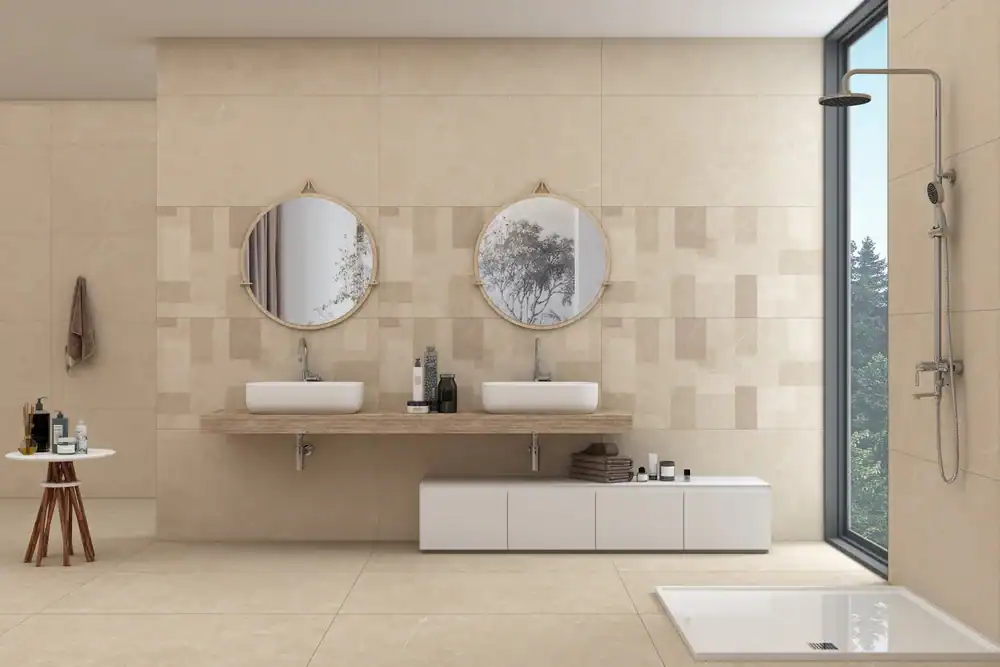
You’re looking at marble that’s cloudy, etched, stained, or just worn down from decades of use. Maybe it’s in your entryway, bathroom, or throughout the main floor of a home built in the 1950s or earlier. The question isn’t whether it can be fixed—it’s whether you’ll find someone who knows how to do it right.
Professional marble floor restoration costs between $5 and $15 per square foot. Replacement runs $70 to $190 per square foot for new marble installation. On a 300-square-foot floor, that’s the difference between $4,500 and $57,000. You keep the original character, the historic value, and the craftsmanship that doesn’t exist in new materials.
Most jobs take less than two days. The surface gets honed, polished, and sealed properly—not just cleaned or coated with something that’ll wear off in six months. When it’s done, the floor looks the way it did when it was first installed. That finish typically lasts 10 to 15 years in a residential setting with normal use and proper care.
High Definition Marble Restoration Inc has been restoring marble floors across Nassau and Suffolk Counties since 1998. We were featured in the New York Times in 2001 for our work on complex historic restoration projects. The Garden City Hotel has used us exclusively for over 16 years.
We’re owner-operated, which means the person who quotes your job is the same person overseeing the work. No subcontractors. No handoffs. You get someone who’s spent 25 years working on floors that most companies won’t touch—100-year-old marble with damage that looks irreversible until you know what you’re doing.
South Farmingdale has a median property value of $584,400 and a homeownership rate above 94%. Many of these homes were built in the 1950s or earlier, with original marble floors that have been walked on, cleaned incorrectly, and neglected for decades. We work on those floors regularly. The ones where the character is still there, buried under years of wear.
First, we assess the floor. Not every marble floor needs the same approach. We’re looking at the type of marble, the level of damage, what’s been done to it before, and what it’s supposed to look like. If you’ve tried DIY products or had a cleaning company use harsh chemicals, we need to know that upfront.
Next, we hone the surface. This removes scratches, etching, stains, and any uneven areas. We use diamond abrasives in stages, starting coarse and moving finer. This is where most of the damage gets erased. It’s also where inexperienced contractors ruin floors by going too aggressive or skipping steps.
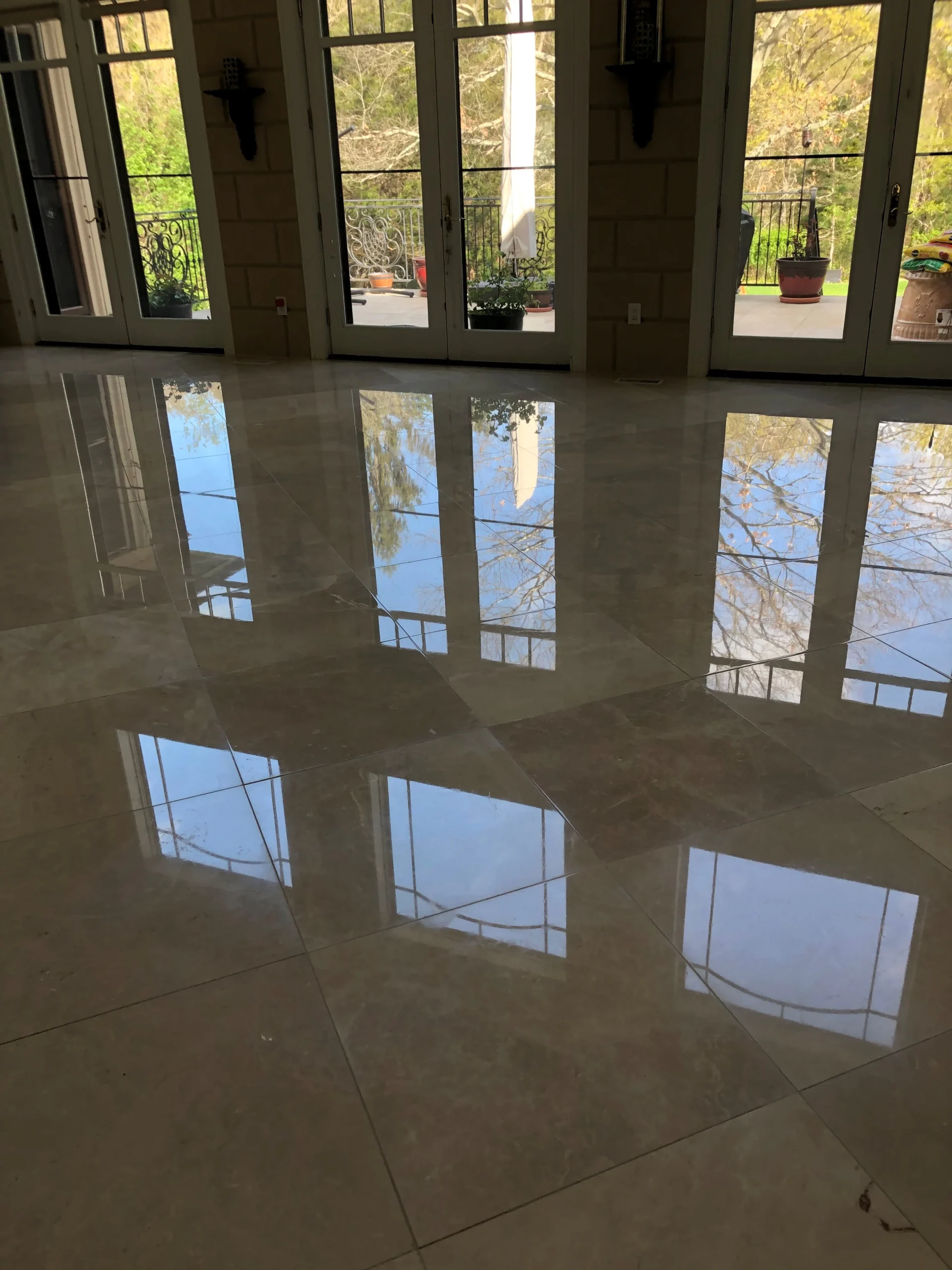
Then we polish. This brings back the shine and depth that marble is known for. It’s not a topical coating—it’s the actual surface of the stone being refined to a high gloss. Finally, we seal it. A proper sealer protects against staining and etching without changing the appearance. It’s not a finish you can see or feel. It just works.
We mask everything, clean up completely, and walk you through maintenance so the floor lasts. Most residential projects are done in one to two days depending on square footage and condition.

Ready to get started?
You get a full assessment before we start. We’ll tell you what’s realistic, what’s not, and what it’ll cost. No surprises. Pricing is transparent and provided upfront.
The restoration itself includes honing, polishing, and sealing. If there are cracks or chips, we handle marble repair as part of the process. We also restore bathroom floors, which tend to have more etching and water damage due to Long Island’s hard water and high humidity. Soap scum, mineral deposits, and improper cleaning products do a lot of damage in wet areas.
We’ve recently added concrete restoration and polishing to our services. If you have decorative concrete, terrazzo, or polished concrete floors that need refinishing, we use the same disciplined approach. It’s a different material, but the principles are the same—restore the surface, don’t replace it.
South Farmingdale’s coastal location means higher humidity year-round. That affects how marble ages and how we approach sealing. We account for that. We also know that many homes in Nassau County have original marble that’s never been professionally restored. It’s been cleaned, maybe waxed or coated, but not actually brought back to its original condition. That’s what we do.
Marble floor restoration typically costs between $5 and $15 per square foot depending on the condition and size of the area. Full replacement costs between $70 and $190 per square foot when you factor in removal, disposal, new material, and installation.
For a 300-square-foot entryway, restoration runs around $1,500 to $4,500. Replacement would cost $21,000 to $57,000. You’re saving over $18,000 on average, and you’re keeping the original floor—which often has better quality marble than what’s available today.
The other cost to consider is time. Restoration takes one to two days for most residential projects. Replacement can take a week or more, with demolition, subfloor work, and curing time. If you’re trying to minimize disruption or you’re prepping a home for sale, restoration is faster and less invasive.
Yes. Deep scratches and etching are exactly what the honing process is designed to fix. We use diamond abrasives to remove the damaged layer of stone and reveal a fresh surface underneath. This isn’t a cover-up—it’s actual removal of the damaged material.
Etching happens when acidic substances like vinegar, lemon juice, or harsh bathroom cleaners eat away at the calcium carbonate in marble. It leaves dull spots or rough patches. Honing removes that etched layer entirely, then we polish the surface back to a high gloss.
The key is knowing how much material to remove. Take off too much and you risk unevenness or changing the profile of the floor. Not enough and the damage is still visible. That’s where experience matters. We’ve been doing this since 1998, including floors that other contractors said were beyond repair.
A professionally restored marble floor typically lasts 10 to 15 years in a residential setting with normal use and proper maintenance. High-traffic commercial areas may need attention sooner, but most homes don’t generate that kind of wear.
What affects longevity is how you clean and maintain the floor after restoration. Use pH-neutral cleaners only—nothing acidic, nothing abrasive. Wipe up spills quickly, especially anything acidic like wine, coffee, or citrus. Use mats in entryways to reduce grit and dirt being tracked across the surface.
The sealer we apply protects against staining and minor etching, but it’s not indestructible. Resealing every few years is smart, and it’s something you can have done without a full restoration. If you follow basic care guidelines, the floor will stay in great shape for well over a decade before it needs professional attention again.
Cleaning removes dirt and surface grime. Polishing restores the actual finish of the stone. If your marble looks dull, cloudy, or scratched, cleaning won’t fix it. You need the surface refinished.
Marble floor polishing involves honing the stone with diamond abrasives, then polishing it to bring back the gloss. This removes scratches, etching, and dullness at the material level. It’s not a coating or a wax—it’s the stone itself being smoothed and refined.
A lot of homeowners try commercial marble cleaners or hire cleaning companies, and they’re disappointed because the floor still looks worn. That’s because the damage is in the stone, not on top of it. Once the surface is compromised, only restoration will bring it back. Cleaning maintains a floor that’s already in good condition. Polishing restores one that isn’t.
We specialize in older homes. The worse the condition, the better the project is for us. We’ve built our reputation on restoring 100-year-old floors that other contractors avoid.
Older marble is often higher quality than what’s available today. It’s also more forgiving to work with if you know what you’re doing. Many historic homes in South Farmingdale and across Nassau County have original marble in entryways, bathrooms, and kitchens. These floors have been walked on for decades, cleaned with the wrong products, and sometimes coated with wax or sealers that have yellowed or worn unevenly.
We know what those floors are supposed to look like. We’ve seen the original finishes, we understand the materials, and we know how to bring them back without damaging the stone. If your home was built in the 1950s or earlier and the marble has never been professionally restored, we’ve probably worked on a floor just like it.
Yes. Well-maintained original marble floors can increase property value by 3% to 5%, and in some cases up to 25% according to the National Association of Realtors, depending on the home and the market.
Buyers pay a premium for authentic, restored features. Original marble has character and quality that new materials don’t replicate. When a floor is restored properly, it becomes a selling point instead of a liability. If it’s dull, stained, or damaged, buyers either discount their offer or plan to replace it—which costs them tens of thousands.
Restoration costs a fraction of replacement and positions your home as move-in ready with high-end finishes intact. In South Farmingdale, where the median home value is over $580,000 and many properties are historic, original marble in good condition is a real asset. It signals that the home has been cared for and that the character hasn’t been stripped out.