

You’re not looking at these floors thinking they need a little polish. You’re wondering if they can even be saved. The grout lines are dark. The surface is dull or scratched. Maybe there’s water damage you didn’t notice until recently.
Here’s what matters: restoration costs 60-80% less than replacement. Most jobs take less than two days. And if the marble itself is still intact, we can bring it back to how it looked when your home was new.
That means you keep the original craftsmanship, the veining, the character that made you fall in love with the place. You’re not ripping out irreplaceable materials and starting over. You’re investing in what’s already there—and what’s already worth saving.
The result is a floor that looks museum-quality, increases your property value, and reflects the care these homes deserve. No dust everywhere. No weeks of construction. Just the floor you’ve been hoping was still possible.
High Definition Marble Restoration Inc specializes in the kind of work other contractors walk away from. Historic floors. Complex damage. Materials that haven’t been made in a hundred years.
We’re owner-operated, which means you’re working directly with someone who knows what they’re looking at—not a crew that showed up in a van. We were featured in the New York Times back in 2001. Our very first client, the Garden City Hotel, has used us exclusively for over 16 years.
Shoreham’s housing stock reflects Long Island’s golden age—early 1900s estates, waterfront properties, homes built when craftsmanship still meant something. We’ve worked on floors like yours throughout Nassau and Suffolk Counties. We understand what these materials need, and we know what happens when someone who doesn’t tries to fix them.
First, we assess the damage. Not every floor needs the same treatment. Water damage, etching from acidic cleaners, scratches, dullness—they all require different approaches. We’ll tell you exactly what we’re dealing with and what it’ll take to fix it.
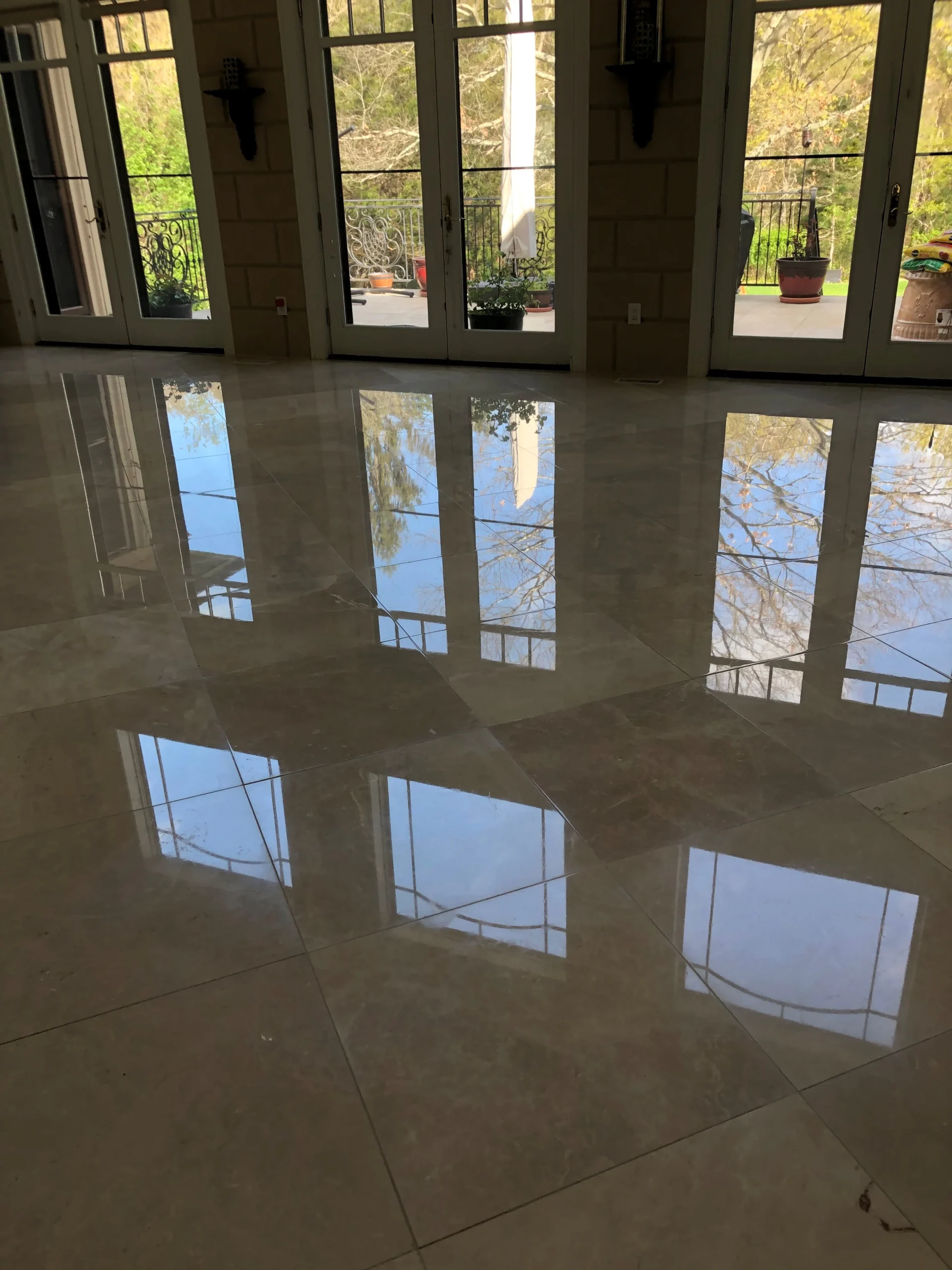
Then we start the restoration. Depending on the condition, that might mean grinding to remove deep scratches or staining, honing to smooth the surface, and polishing to bring back the original shine. We use advanced dustless technology, so 99% of the work happens without the mess you’d expect.
Most marble floor restoration projects are done in under two days. Bathroom floor restoration usually wraps up in one to two days depending on size and condition. We handle everything on-site—no need to remove materials and reinstall them later.
When we’re finished, the floor is sealed to protect it from future damage. You’ll get a comprehensive warranty and straightforward care instructions. Then it’s yours to enjoy—and it’ll look like it did when the house was new.

Ready to get started?
We handle grinding, honing, polishing, sealing, and repair. If your marble has cracks, chips, or missing pieces, we fix that first. If the surface is etched from years of the wrong cleaning products, we remove that damage before we polish.
This isn’t a surface-level cleaning. It’s a full restoration of the stone itself. We’re bringing it back to its original finish—the one it had before decades of foot traffic, water exposure, and harsh chemicals took their toll.
In Shoreham, where so many homes date back to the early 1900s, we also see a lot of water damage. Older homes near the water didn’t have modern moisture barriers. That means the marble has often absorbed water over time, leading to staining or even structural issues underneath. We assess all of that before we start, so there are no surprises.
We also offer concrete restoration and polishing now—a newer service that’s getting a lot of interest from homeowners who want that same high-end finish on concrete surfaces. Same process, same attention to detail.
Restoration typically costs between $5 and $15 per square foot. Replacement runs $70 to $190 per square foot on Long Island—sometimes more if you’re matching historic materials or dealing with custom work.
That’s not a small difference. For a 200-square-foot entryway, you’re looking at $1,000 to $3,000 for restoration versus $14,000 to $38,000 for replacement. And replacement means you lose the original stone, the craftsmanship, and the character that makes your home worth what it is.
Restoration also takes less time. Most jobs are done in under two days. Replacement can take weeks once you factor in demo, subfloor work, material sourcing, and installation.
Yes. In fact, that’s our specialty. The older and more damaged the floor, the better suited we are to handle it.
Historic marble has characteristics you can’t replicate with modern materials—unique veining, color variations, craftsmanship that doesn’t exist anymore. As long as the stone itself is intact, we can restore it. Even floors with water damage, deep scratches, or decades of etching from improper cleaning can be brought back.
We’ve worked on century-old marble throughout Nassau and Suffolk Counties, including many of the historic properties from Long Island’s estate era. Age brings complexity, but it doesn’t mean the floor is beyond saving. We assess the condition first and tell you exactly what’s possible.
No. We use advanced dustless technology that contains 99% of the dust generated during grinding, honing, and polishing.
Older restoration methods were messy—dust would get everywhere, and homeowners would be cleaning for weeks. That’s not the case anymore. Our equipment captures the dust as we work, so your home stays clean.
Most of the work happens on-site. We don’t need to remove your floors and bring them somewhere else. Everything is done in place, with minimal disruption to your daily routine. For most projects, you’re looking at less than two days of work, and the space is usable again as soon as we’re done sealing.
Honing smooths the surface of the marble and removes scratches, etching, or dullness. It creates a matte or satin finish. Polishing comes after honing and brings out the shine—the glossy, reflective finish most people associate with marble.
Not every floor needs both. If your marble just looks dull or has minor surface damage, polishing might be enough. If there are deeper scratches, stains, or significant etching, we’ll need to hone first to level the surface before we polish.
The finish you want also matters. Some homeowners prefer a honed, matte look—especially in bathrooms or high-traffic areas where a glossy surface might show wear more quickly. We’ll walk you through the options based on your floor’s condition and how you want it to look.
Water damage usually shows up as discoloration, staining, or a chalky texture on the surface. In older homes, especially those near the water in Shoreham and along Long Island’s coast, moisture can seep into the marble over time if there wasn’t a proper moisture barrier installed.
Sometimes the damage is obvious—dark spots, rings, or areas where the stone looks different from the rest of the floor. Other times it’s subtle, like a slight dullness or a change in texture that you might not notice unless you’re looking for it.
Water damage doesn’t always mean the floor is ruined. In many cases, we can remove the staining and restore the stone. But if water has been sitting under the marble for years, there might be subfloor issues we need to address first. That’s why we assess everything before we start—so you know exactly what you’re dealing with and what it’ll take to fix it.
If you maintain it properly, restored marble can last indefinitely. The stone itself is incredibly durable—it’s been around for a century already in most historic homes, and it’ll be around for another century if it’s cared for.
After restoration, we seal the marble to protect it from staining, moisture, and everyday wear. That seal needs to be reapplied periodically—usually every one to three years depending on traffic and use. We’ll give you specific care instructions based on your floor.
The key is avoiding harsh cleaners. Acidic substances—vinegar, lemon-based products, even some common household cleaners—will etch marble and dull the finish over time. Use pH-neutral cleaners designed for natural stone, and your floor will stay beautiful for decades. We’ll walk you through exactly what to use and what to avoid.