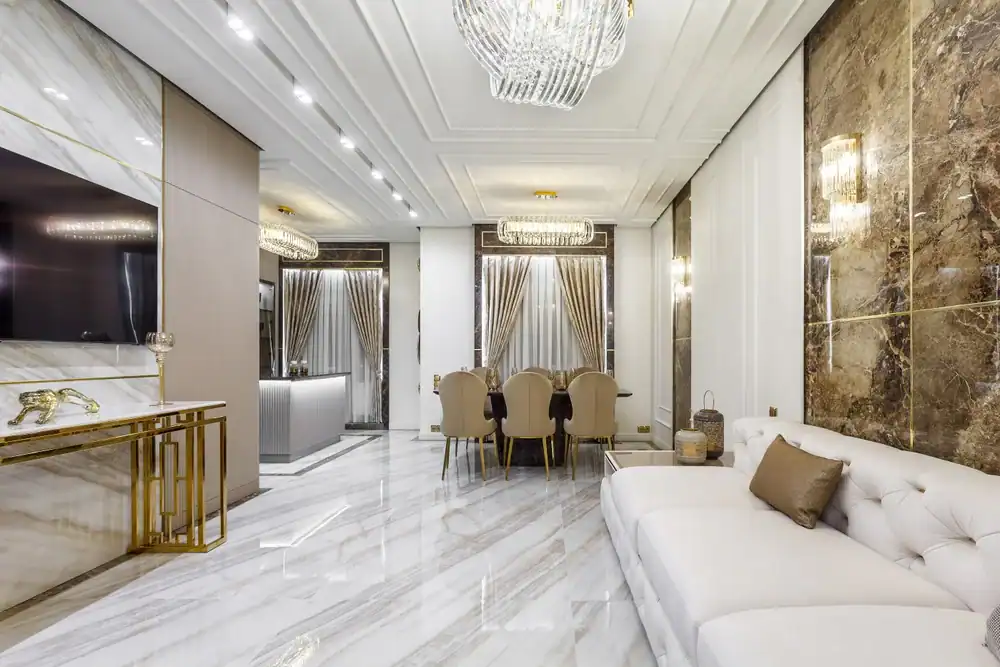
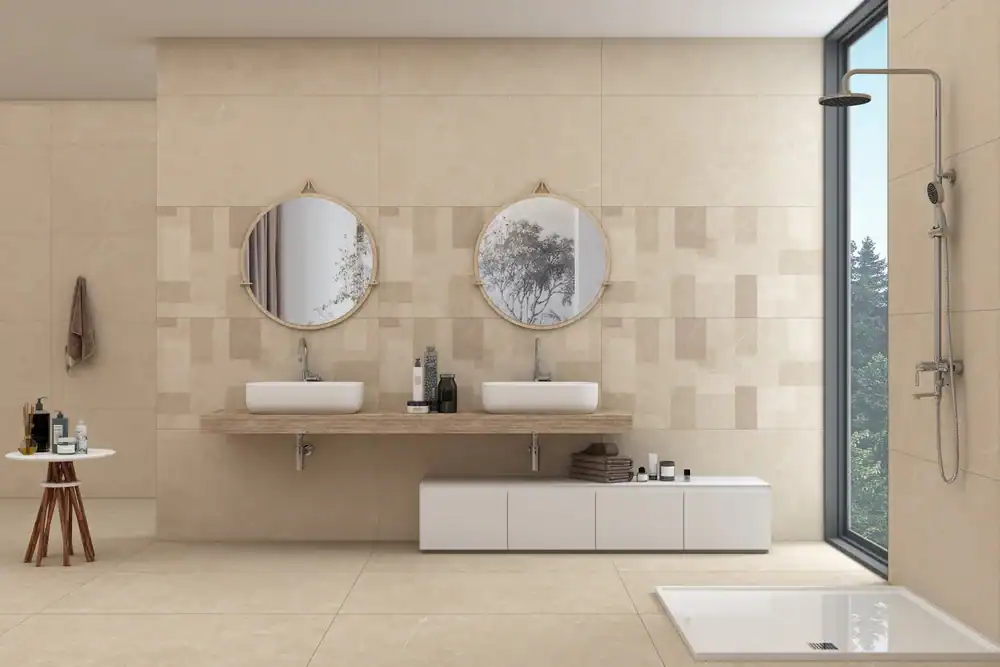
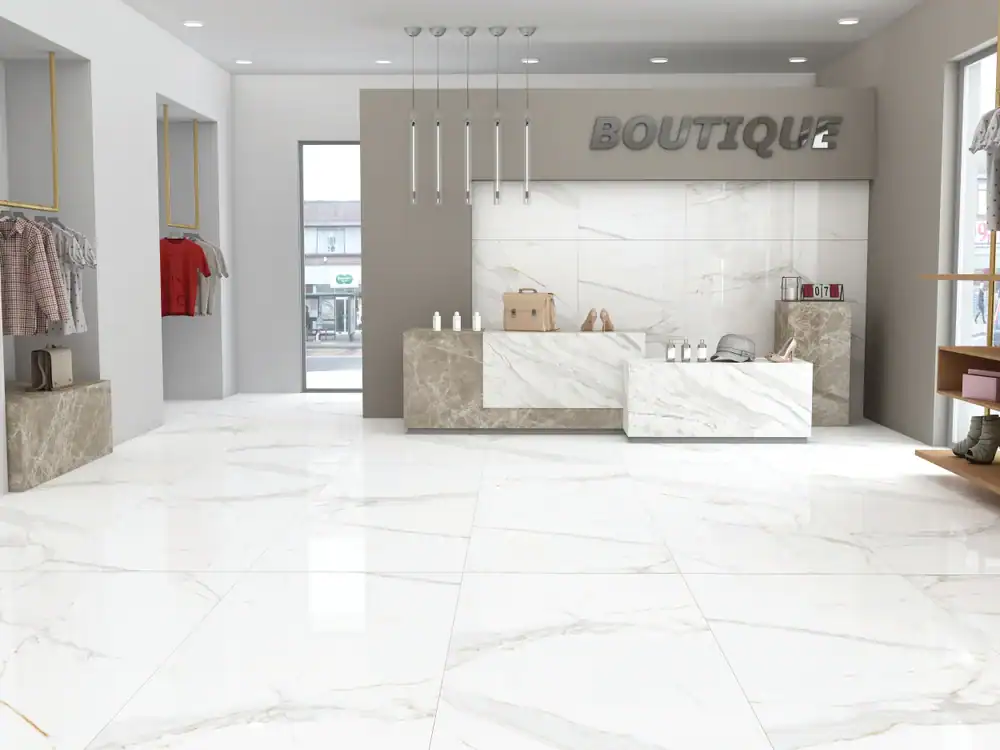
You’re not just getting shinier floors. You’re getting surfaces that look the way they did before years of foot traffic, hard water, and wrong cleaning products took their toll.
The difference shows up when guests notice. When your home feels the way it should. When you stop avoiding certain rooms because the floors look tired or stained.
Professional marble floor restoration in Shirley typically costs 70-80% less than replacement. You’re looking at $1-3 per square foot for floor restoration versus $3,000-$8,000 or more for demolition, disposal, new materials, and reinstallation. The work gets done in 1-2 days, and you can use the space immediately after. No weeks of construction dust, no ripping out historic materials that can’t be replicated, no losing the character that makes your home worth what it is.
Restored marble lasts 10-15 years with proper care. That’s real value—not just cosmetic touch-ups that fade in months.
High Definition Marble Restoration Inc specializes in the jobs most contractors won’t touch. Century-old floors. Historic homes throughout Nassau and Suffolk County. Marble that’s been damaged by Long Island’s hard water and coastal humidity.
The New York Times featured our work in 2001. The Garden City Hotel has trusted us exclusively for over 16 years. Those relationships don’t happen by accident—they happen when you consistently deliver results on projects where there’s no room for error.
You’re dealing with an owner-operated business. That means the person who quotes your job oversees the work. No handoffs to crews who don’t know what they’re doing. No surprises halfway through when someone realizes your 100-year-old marble needs a completely different approach than modern stone.
Shirley homeowners face specific challenges. The local water creates mineral deposits that look permanent. Coastal air accelerates wear. Historic properties need restoration techniques that preserve authenticity while fixing real damage. We’ve handled all of it.
First, we assess the damage. Not all marble problems are the same—etching from acidic cleaners requires different treatment than hard water staining or physical scratches. You get a transparent quote upfront based on the actual condition and square footage.
The restoration process uses diamond abrasives to mechanically remove damage without harsh chemicals that could make things worse. We’re removing the damaged layer and revealing the undamaged marble underneath. For Shirley homes dealing with hard water buildup, this means actually eliminating those white crusty deposits instead of just covering them up.
Most work happens on-site with a 99% dustless process. You’re not dealing with construction mess spreading through your house. The job typically takes 1-2 days depending on size and damage severity.
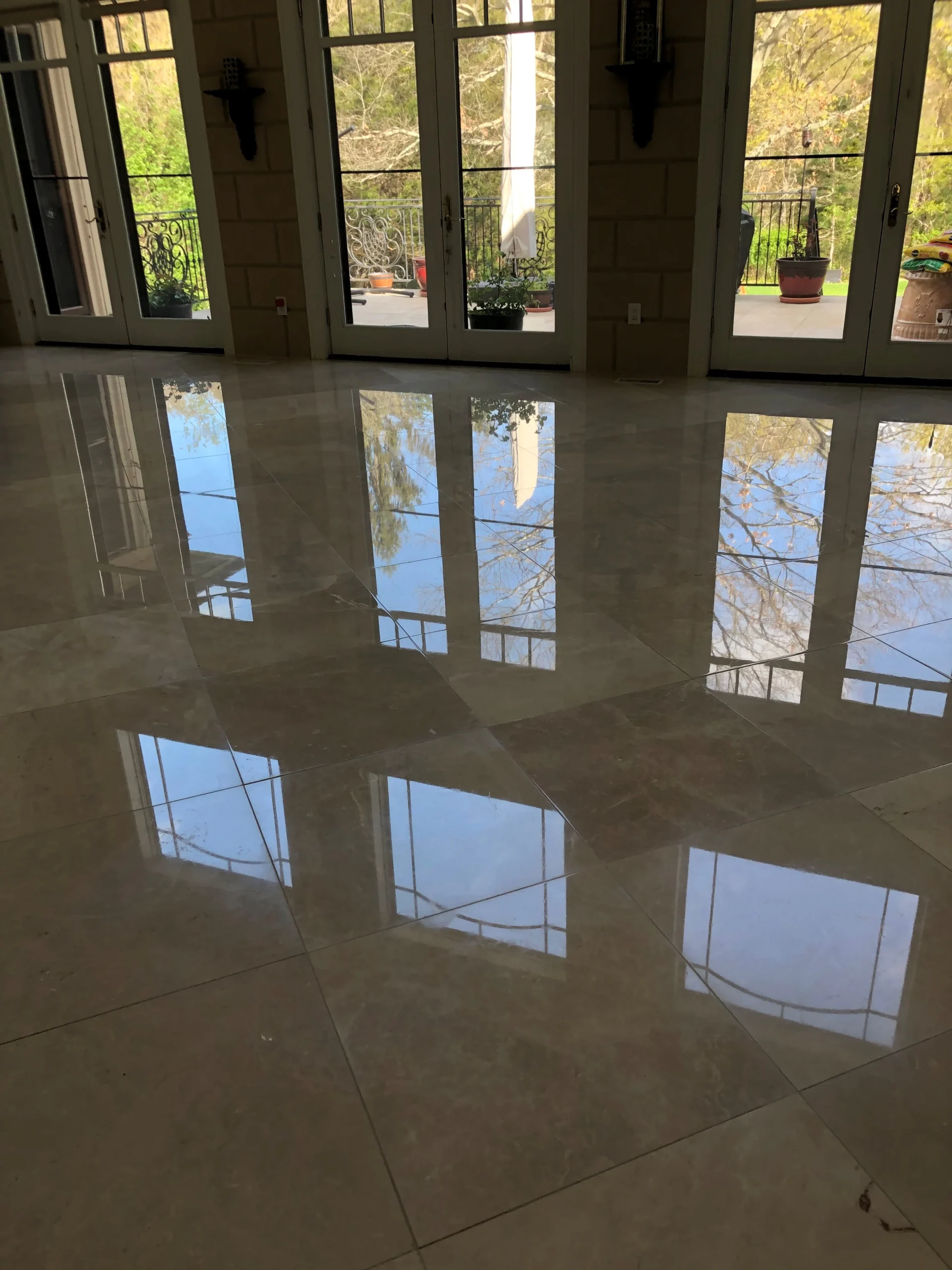
After grinding and honing, we polish the marble to restore its original finish—whether that’s a high gloss or a softer hone. You can walk on the floors immediately. No curing time, no staying out of rooms for days.
The difference between DIY marble floor polishing and professional restoration is significant. You’re not buffing the surface—you’re rebuilding it. That’s why the results last years instead of weeks.

Ready to get started?
You get a full assessment of what’s causing the damage. That matters in Shirley because Long Island’s mineral-rich water creates problems that look like stains but are actually mineral deposits bonded to the surface. Knowing the difference determines the right fix.
The restoration includes complete surface preparation, diamond grinding to remove etching and scratches, honing to smooth the stone, and polishing to your preferred finish level. For bathroom floor restoration, we address the soap scum buildup and hard water damage that standard cleaning can’t touch.
Historic marble gets extra attention. Floors installed 100+ years ago used different setting methods and materials. We adjust techniques to preserve the installation integrity while restoring the surface. That’s the difference between restoration that protects your investment and aggressive work that causes new problems.
You also get guidance on proper marble floor care moving forward. Most damage happens because homeowners don’t realize their regular bathroom cleaners contain acids that etch marble. Knowing what to avoid and what to use extends your restoration for years.
The work comes with a comprehensive warranty. We’re confident enough in the results to back them long-term, which matters when you’re making a significant investment in your home’s most visible surfaces.
Marble floor restoration typically runs $1-3 per square foot depending on damage severity. Replacement costs $3,000-$8,000 or more for average-sized areas once you factor in demolition, disposal, new materials, and installation labor.
For a 200-square-foot bathroom, you’re looking at $200-600 for restoration versus $3,000+ for replacement. Kitchen countertops follow similar math—restoration costs a fraction of what you’d pay to rip out and replace.
The cost difference gets even bigger with historic marble. You can’t replicate 100-year-old materials and craftsmanship. Replacement means losing authentic character that actually increases your property value. The National Association of Realtors reports that maintaining historic features can boost property value by up to 25%, particularly in Nassau and Suffolk County where buyers specifically seek that authenticity.
Yes. Hard water damage and etching from acidic cleaners are two of the most common problems we fix in Shirley homes.
Hard water creates white, crusty mineral deposits that bond to marble surfaces. Long Island’s water is particularly mineral-rich, which is why those spots seem impossible to remove with regular cleaning. Our diamond restoration process mechanically removes the mineral layer without using harsh chemicals that could damage the marble further.
Etching from bathroom cleaners is actually surface damage, not staining. Most products that claim to remove soap scum contain acids that react with marble’s calcium carbonate, creating dull, cloudy spots. We remove the etched layer through controlled grinding and honing, then repolish the marble to restore its original finish.
The key difference between professional marble repair and DIY attempts is that we’re fixing the actual damage, not masking it. That’s why the results last 10-15 years instead of fading in months.
Most marble floor restoration projects take 1-2 days depending on square footage and damage severity. You can use the floors immediately after we finish—no curing time or staying out of rooms.
A typical bathroom floor restoration in Shirley takes one day. Larger areas like entrance halls or kitchens might take two days if there’s extensive etching or hard water damage to address.
The process is 99% dustless, so you’re not dealing with construction mess spreading through your house. We complete the work on-site using equipment designed for residential properties, not industrial settings.
Compare that to replacement projects, which involve demolition, disposal, subfloor prep, material delivery, installation, and grouting. You’re looking at weeks of disruption, contractors coming and going, and rooms you can’t use. Restoration gives you better results in a fraction of the time.
Marble polishing is surface-level work that buffs existing marble to enhance shine. Marble restoration actually removes damaged layers and rebuilds the surface.
If your marble just looks dull but has no etching, scratches, or stains, polishing might be enough. But most floors we see in Shirley have real damage—etching from acidic cleaners, hard water deposits, scratches from foot traffic, or wear patterns from decades of use. Polishing won’t fix those problems.
Restoration uses diamond abrasives in progressively finer grits to grind away damage, hone the surface smooth, and then polish to your preferred finish. You’re removing the damaged layer and revealing undamaged marble underneath.
The results look completely different. Polishing might improve appearance for a few months. Restoration brings marble back to its original condition and lasts 10-15 years. That’s why restoration costs more upfront but delivers significantly better value—you’re actually fixing problems instead of temporarily hiding them.
Yes. Historic marble restoration is actually our specialty—the older and more challenging the floor, the better the project is for us.
Century-old marble requires different restoration approaches than modern stone. The installation methods were different, the materials were different, and the way the marble responds to restoration techniques is different. We take extraordinary care to preserve the authentic character while addressing decades of accumulated damage.
Since 1998, we’ve built our reputation on projects other companies won’t touch. The New York Times featured our work bringing 100-year-old floors back to life. Those jobs require understanding period installation techniques and knowing how to restore without causing new problems.
Shirley has homes with marble installations that can’t be replicated today. Replacing them means losing value and authenticity. Proper restoration preserves what makes your property special while giving you floors that look the way they did originally. That combination of preservation and functionality is exactly why specialized expertise matters for historic properties in Nassau and Suffolk County.
Not when it’s done correctly. Professional marble refinishing restores your floors to their original appearance—it doesn’t change the character or create an artificial look.
The concern usually comes from seeing bad restoration work where contractors used overly aggressive techniques or wrong materials. We’ve fixed plenty of those disasters. Stone can be ruined easily by inexperienced workers, which is why you’ll find cleaning companies offering marble services who have no business touching historic or valuable installations.
Our process is controlled and precise. We’re removing only the damaged surface layer—typically just millimeters—and revealing the undamaged marble underneath. The finish matches what your floors originally had, whether that’s high gloss or a softer hone.
For historic floors, preservation is the priority. We’re not trying to make 100-year-old marble look modern. We’re bringing it back to its original condition while maintaining the authentic character that makes it valuable. You get floors that look right for your home’s age and style, not something that feels out of place.