


You’re not looking at a cleaning problem. If your marble floors are dull, etched, or stained, no amount of scrubbing will fix it. Those are physical damage issues, not dirt. And the wrong approach—harsh chemicals, aggressive buffing, or a “cleaning company” that doesn’t understand stone—will make it worse.
Restoration brings back the original finish without replacing anything. That means you keep the authentic character, the hand-finished details, and the craftsmanship that modern installations can’t replicate. You also avoid the cost of tearing out and replacing floors, which runs $70 to $190 per square foot on Long Island. Restoration typically costs a fraction of that.
The result is a floor that looks the way it did when it was first installed—sometimes over a century ago. And in Setauket’s historic properties, where original materials directly impact value and authenticity, that matters more than most people realize.
We’ve spent over 25 years working on the kinds of floors other contractors avoid. The older, the more damaged, the more complex—that’s where we do our best work. We’re owner-operated, which means you’re getting direct expertise on every project, not a crew that’s guessing.
We were featured in the New York Times back in 2001, and our very first client—the Garden City Hotel—has used us exclusively for more than 16 years. That doesn’t happen by accident.
Setauket has some of the most beautiful historic properties on Long Island, from pre-war colonials to Gold Coast-era estates. Many of these homes still have their original marble floors, installed with materials and techniques that simply don’t exist anymore. We understand what those floors were supposed to look like, and we know how to get them there without compromising their integrity.
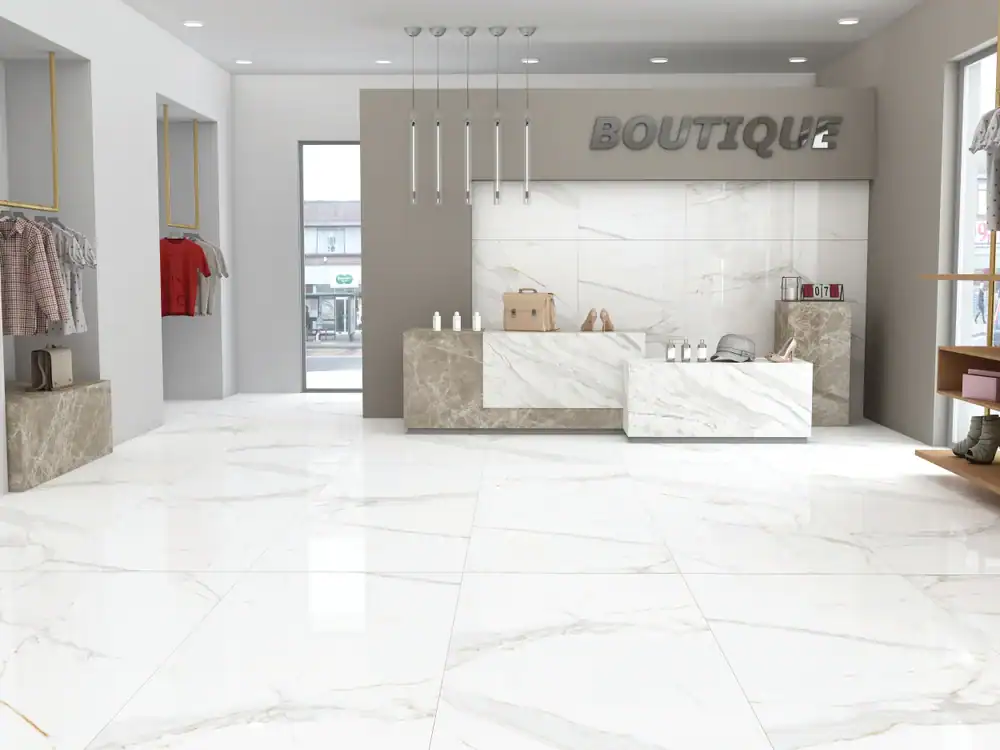
First, we assess the condition of your marble. Not all damage is the same, and not all marble is the same either. Historic floors often have unique characteristics—veining patterns, mineral content, hand-finished surfaces—that require a specific approach. We identify what we’re working with before we touch anything.
Next, we address the damage. Etching, staining, scratches, and dullness all require different techniques. We’re not buffing with harsh abrasives or pouring acid on your stone. We’re using professional-grade restoration methods that remove damage at the surface level and rebuild the finish properly.
Then we polish and seal. This is where the floor comes back to life. The finish is restored to its original luster, and we apply a protective seal that makes daily maintenance easier and helps prevent future damage. Most jobs take less than two days, and you’re left with a floor that looks completely transformed—but still authentically yours.

Ready to get started?
Every restoration project starts with a free quote and a transparent timeline. You’ll know exactly what we’re doing, how long it will take, and what it will cost before we start. No surprises.
We handle the full scope of marble floor care—polishing, honing, stain removal, crack repair, and sealing. If your floor has structural issues like settling cracks or loose grout, we address those too. And we’ve recently expanded into concrete restoration and polishing, so if you have modern flooring that needs the same level of attention, we can handle that as well.
In Setauket and the surrounding Nassau and Suffolk County areas, we’re seeing more homeowners realize that their original floors are worth saving. These aren’t just functional surfaces—they’re part of the home’s history. Restoring them properly can increase your property value by 3 to 5 percent, and in neighborhoods where authenticity matters, buyers will pay a premium for original, well-maintained materials. You’re not just getting a better-looking floor. You’re protecting an investment.
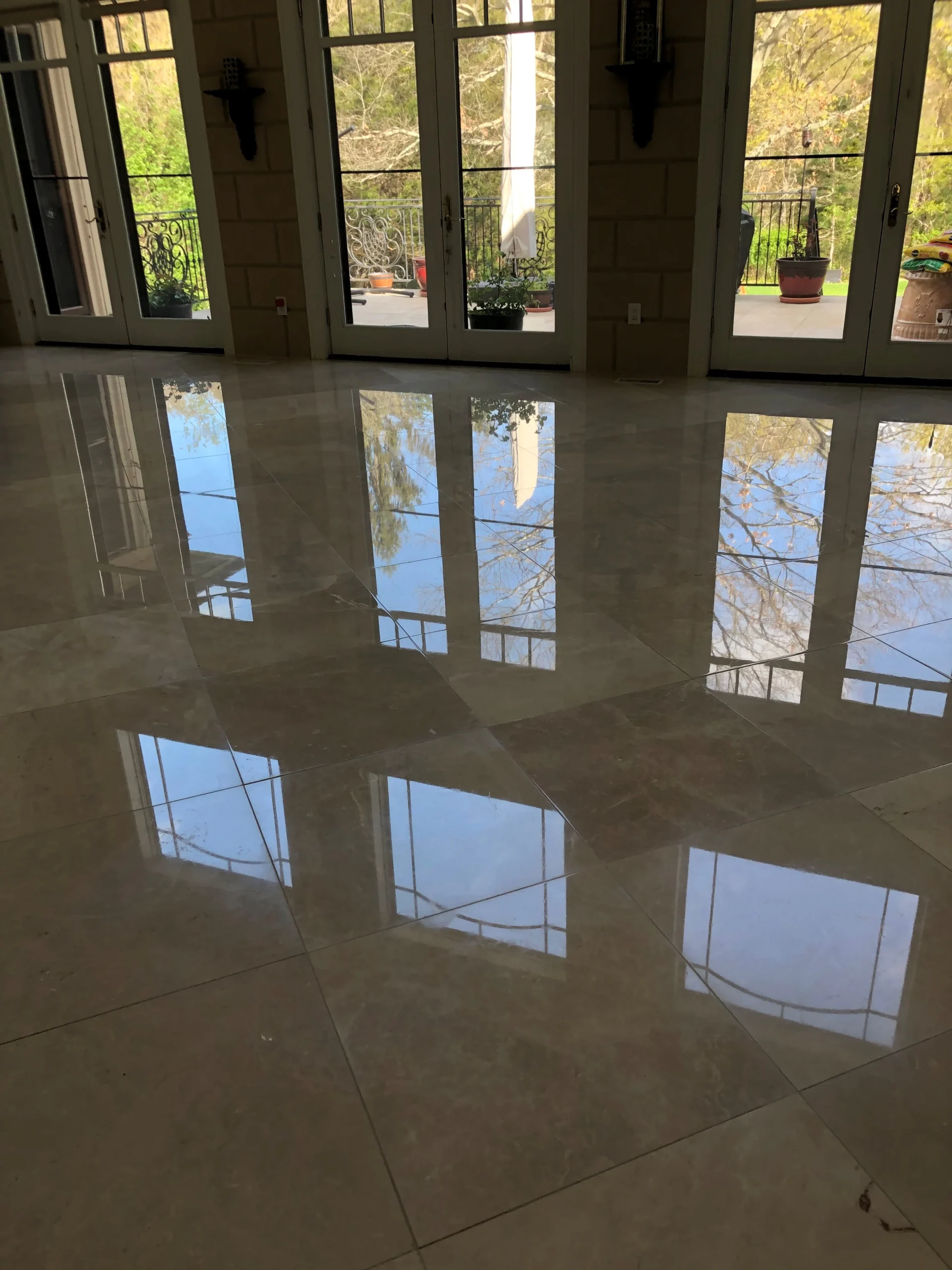
Yes, we can restore it—and in most cases, restoration is the better option. Century-old marble floors were built with materials and craftsmanship that don’t exist anymore. The stone itself is often higher quality than what you’d get today, and the installation methods were different. Ripping it out means losing something irreplaceable.
Restoration addresses the damage without removing the floor. We’re fixing etching, removing stains, repairing cracks, and bringing back the original finish. The floor you’re left with is the same floor, just returned to the condition it was in decades ago.
Replacement, on the other hand, is expensive—$70 to $190 per square foot on Long Island—and you’ll never get the same character back. If your floor is structurally sound, restoration is almost always the smarter move.
Restoration typically costs between $5 and $15 per square foot, depending on the condition of the floor and the scope of the work. Replacement costs $70 to $190 per square foot for new marble installation, plus the cost of removing and disposing of the old floor.
For a 100-square-foot area, you’re looking at $500 to $1,500 for restoration versus $7,000 to $19,000 for replacement. The difference is significant, and that’s before you factor in the time and disruption involved in a full replacement project.
Restoration also preserves the value of your home. In historic properties, original materials are a selling point. Buyers in Setauket and the surrounding Gold Coast areas often pay more for homes with authentic, well-maintained features. Replacing those features with modern materials can actually hurt your resale value.
Because cleaning doesn’t fix etching. Etching is physical damage to the surface of the marble, caused by acidic substances like wine, citrus, vinegar, or even some household cleaners. When acid contacts marble, it eats away at the minerals and leaves a dull, rough spot. No amount of cleaning will remove that—you’re not dealing with dirt.
In fact, cleaning with the wrong products makes it worse. A lot of general-purpose cleaners are acidic, so every time you try to clean the floor, you’re actually creating more etch marks. That’s why the floor keeps getting duller no matter how much you scrub.
The only way to fix etching is to restore the surface. We remove the damaged layer and re-polish the marble to bring back the original shine. Once that’s done, we can also recommend the right maintenance products so you’re not accidentally damaging the floor again.
Most residential projects take less than two days. The exact timeline depends on the size of the area, the condition of the marble, and whether there are any structural repairs needed, but the process is faster than most people expect.
We’re not tearing anything out or waiting for new materials to arrive. We’re working with what’s already there, which speeds things up considerably. And because we’re owner-operated, we’re on-site managing the project directly—no delays, no miscommunication, no waiting around for a crew to show up.
You’ll get a clear timeline during the quote process, and we stick to it. We also take care of masking and cleanup, so you’re not left dealing with dust or debris after we’re done.
It depends on the stain, but most can be removed or significantly reduced. Stains happen when a substance soaks into the porous surface of the marble and discolors it from within. Common culprits include oil, wine, coffee, rust, and organic materials.
We use professional-grade poultices and extraction methods to draw the stain out of the stone. This isn’t something you can do with a household cleaner—it requires the right materials and technique. Some stains, especially older ones or those that have been repeatedly cleaned with the wrong products, are more stubborn, but we can usually improve them.
The key is acting quickly. The longer a stain sits, the deeper it penetrates. If you’ve got a fresh stain, don’t try to scrub it out with an acidic cleaner—that’ll just etch the surface and make things worse. Call us for a free quote, and we’ll assess what can be done.
We work on most natural stone—marble, limestone, travertine, terrazzo, and similar materials. We’ve also expanded into concrete restoration and polishing, which is a newer service but one we’re seeing more demand for, especially in modern homes and commercial spaces.
What we don’t work on is porcelain. Porcelain tile requires a completely different approach, and we’d rather focus on what we do best—restoring natural stone and concrete with the kind of precision and expertise that comes from 25 years of experience.
If you’re not sure what type of flooring you have, we can identify it during the quote process. A lot of homeowners in Setauket’s older properties aren’t sure whether they’re dealing with marble, limestone, or something else, and that’s fine—we’ll figure it out and recommend the right approach.