


You’re looking at marble that used to shine. Now it’s dull, scratched, etched from years of the wrong cleaners. Maybe you’ve been told replacement is the only option.
It’s not. Restoration costs around $12 per square foot. Replacement runs $70 to $190. That’s not a small difference when you’re talking about a foyer, bathroom, or entire first floor.
But cost isn’t the only reason to restore. Many homes in Selden were built in the 1960s and earlier—some dating back to the early 1900s. The marble in those homes came from quarries that don’t exist anymore. Once you rip it out, that’s it. You’re replacing irreplaceable material with something modern that doesn’t have the same depth, veining, or character.
Restoration gives you the floor you already have—just the way it looked when it was new. The scratches disappear. The dullness goes away. The stone gets its polish back. And it lasts 10 to 15 years in a residential setting if you maintain it right.
High Definition Marble Restoration Inc specializes in historic floor restoration across Nassau and Suffolk Counties. We’re owner-operated, which means the person you talk to on the phone is the same person overseeing your job.
We’ve worked on century-old marble throughout Long Island—floors from Gold Coast estates, vintage homes in Selden and surrounding towns, and properties where the marble has been walked on for generations. The New York Times featured our work back in 2001. We’re not new to this.
Selden has a high concentration of older homes—median build year is 1966, with a good number going back to the 1940s and earlier. Those homes often have original marble that’s worth saving. We understand the specific types of stone used in this area, the damage patterns caused by Long Island’s hard water and coastal environment, and how to bring those floors back without destroying them in the process.
First, we assess the floor. Not every scratch or etch requires the same approach. We look at the type of marble, the extent of the damage, and what’s realistic to achieve.
Then we start with honing. This removes scratches, etching, and surface damage by grinding the stone with progressively finer abrasives. It’s a controlled process—nothing like the harsh chemicals or random orbital buffers that cleaning companies use. We’re removing a thin layer of stone to get to fresh material underneath.
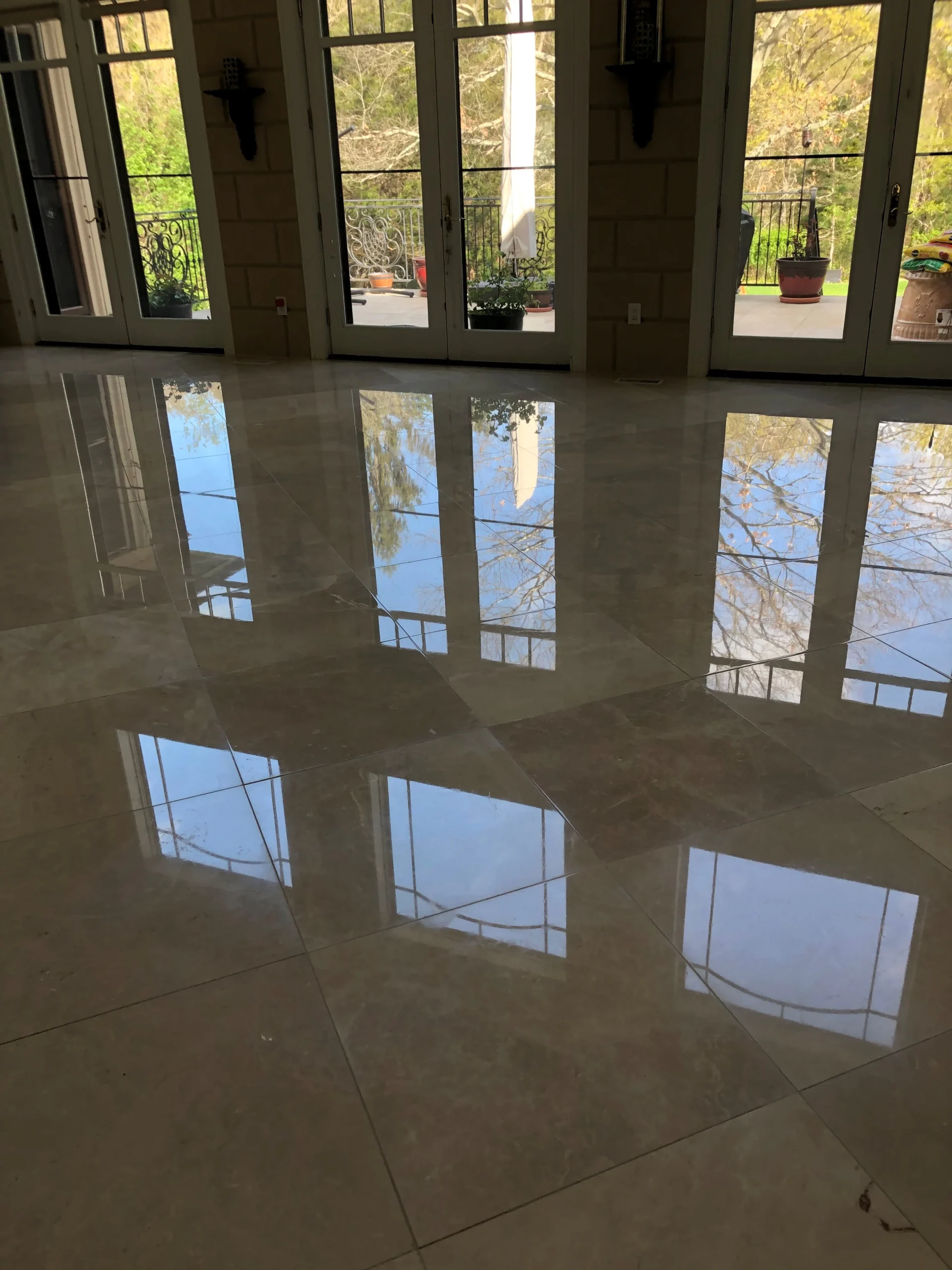
After honing, we polish. This is where the shine comes back. We use diamond polishing pads in stages, each one finer than the last, until the marble reflects light the way it’s supposed to.
Finally, we clean up and protect your space. Most residential jobs finish in 24 to 48 hours. You’re not dealing with weeks of dust and disruption.
The result is a floor that looks new again—because we’ve essentially reset the surface. No coatings, no topical shine that wears off in six months. Just restored stone.

Ready to get started?
You get a full assessment before any work starts. We’ll tell you what’s fixable, what’s not, and what it’s going to cost. No surprises halfway through the job.
The restoration itself includes honing to remove damage, polishing to restore shine, and detailed edge work around baseboards and transitions. We mask and protect everything that’s not marble—cabinets, walls, fixtures. Your space stays clean.
In Selden and the surrounding area, we see a lot of damage from DIY attempts and improper cleaning products. Vinegar, bleach, acidic cleaners—they all etch marble. The more you use them, the worse it gets. Part of what we do is reverse that damage and give you a clear maintenance plan so it doesn’t happen again.
We also handle marble repair for cracks, chips, and missing pieces. If your floor has structural issues or deep damage, we’ll address that before polishing. There’s no point in making a broken floor shiny.
And because we’re local to Long Island, we understand the environmental factors at play here. Hard water leaves deposits. Salt air accelerates wear. We account for that in how we restore and seal your floors.
Marble restoration typically costs between $5 and $15 per square foot, with most jobs averaging around $12 per square foot. Replacement costs between $70 and $190 per square foot when you factor in demolition, disposal, new material, and installation.
For a 200-square-foot foyer, restoration runs around $2,400. Replacement could easily hit $20,000 or more. That’s not a small gap.
The other thing to consider: if your home was built before 1970, there’s a good chance your marble came from a quarry that’s no longer operating. You can’t just order the same stone. Restoration lets you keep the original material, which matters if you care about authenticity and resale value in a historic property.
In a residential setting, professional marble restoration lasts 10 to 15 years if you maintain the floor properly. That means using pH-neutral cleaners, wiping up spills quickly, and avoiding anything acidic.
Compare that to basic cleaning or topical treatments, which might last two to three years before the floor looks dull again. Restoration actually resets the stone’s surface. You’re not just covering up damage—you’re removing it.
High-traffic commercial spaces see shorter lifespans, but in a home where you’re not dragging equipment or dealing with hundreds of people walking through daily, restored marble holds up well. When it does start to show wear again, you can have it re-polished. The stone doesn’t wear out.
Yes. Etching from acidic cleaners is one of the most common types of damage we fix. Vinegar, lemon-based products, bleach, and even some “natural” cleaners will dull marble and leave cloudy spots.
The good news: etching is surface-level damage. Honing removes that damaged layer and exposes fresh stone underneath. Once we polish it, the floor looks like the etching never happened.
The bad news: if you keep using the wrong products, the damage will come back. We’ll walk you through what’s safe to use and what’s not. It’s a short list. Most people are shocked at how many common household cleaners will ruin marble, but once you know, it’s easy to avoid.
Most residential marble restoration projects take 24 to 48 hours from start to finish. That includes honing, polishing, cleanup, and any detail work around edges and corners.
Larger spaces or floors with significant damage might take longer, but we’ll give you a timeline upfront. You’re not guessing when your house will be back to normal.
The process does create some dust, even though we use equipment designed to minimize it. We mask off the work area and clean thoroughly when we’re done. You’ll need to stay off the floor while we’re working, but once we’re finished, it’s ready to use. No curing time, no waiting for coatings to dry.
If the marble is structurally sound—no major cracks, no pieces missing, no underlying substrate issues—restoration almost always makes more sense. You’re spending less, keeping original material, and getting a floor that looks new.
Replacement makes sense if the marble is broken beyond repair, if the subfloor is damaged, or if you genuinely want a different look. But if you’re only replacing because the marble looks bad, you’re likely spending 10 times more than you need to.
In Selden, where a lot of homes were built in the 1960s or earlier, original marble adds value. Buyers looking at historic properties expect to see original details. Ripping out that marble and replacing it with modern tile can actually hurt resale value, not help it. Restoration keeps the character intact while giving you a floor that’s as functional and beautiful as new construction.
Polishing is the final step in restoration, but it’s not the whole process. If your marble is scratched, etched, or stained, polishing alone won’t fix it. You need honing first to remove the damage, then polishing to bring back the shine.
A lot of cleaning companies offer “marble polishing” but what they’re really doing is buffing the surface with a topical product. That might make the floor look shinier for a few months, but it doesn’t address underlying damage. Once the coating wears off, you’re back where you started.
True marble restoration involves grinding the stone with diamond abrasives to remove damaged material, then polishing it in stages to restore the natural shine. No coatings, no shortcuts. It takes longer and costs more than a cleaning service, but the results last years instead of months.