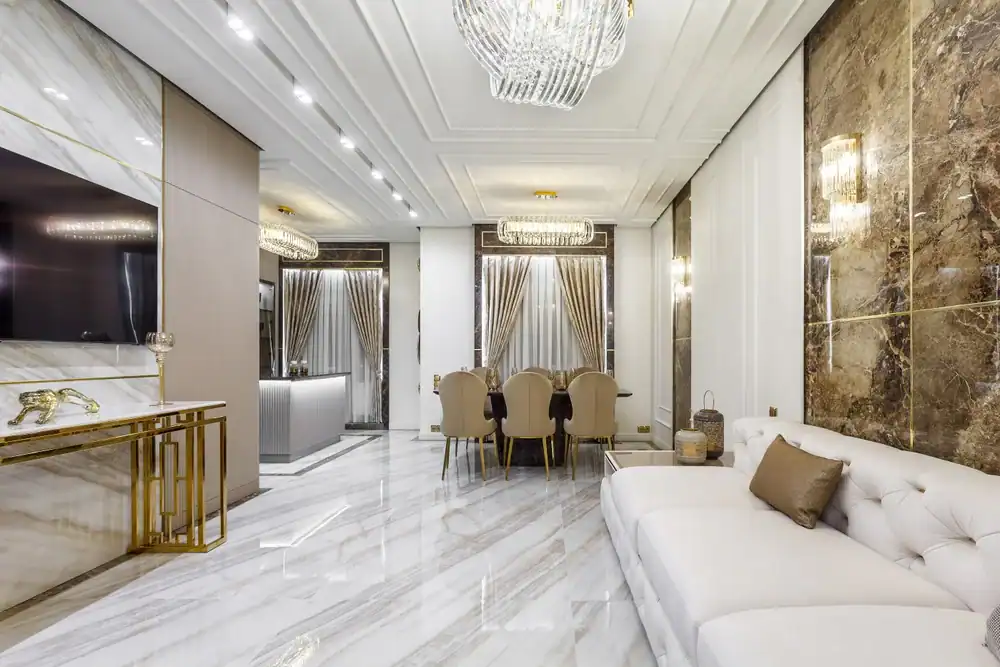
You get your original floors back. Not some approximation or modern substitute, but the actual marble that’s been in your home for decades, brought back to the finish it had when it was first installed.
The etching disappears. The dullness is gone. The scratches that made you wince every time guests walked through your foyer are polished out completely.
Most restoration work wraps up in under two days. Your home stays protected throughout the process with proper masking and cleanup. And you’re not dealing with the dust, debris, and disruption of tearing out and replacing an entire floor.
The cost runs a fraction of what new marble installation would set you back. We’re talking about saving tens of thousands of dollars while keeping the authentic character that makes your Searingtown home valuable in the first place.
We’ve been restoring historic marble floors across Nassau County since 1998. The New York Times featured our work in 2001, but what matters more is that our very first client still uses us exclusively after 16 years.
We’re owner-operated. That means the person who quotes your job is the same person overseeing the actual restoration work. No handoffs to untrained crews who’ve never seen marble installed the way it was during Long Island’s Gold Coast era.
Searingtown’s historic homes present challenges most contractors avoid. Century-old marble was installed differently than modern stone. The materials vary. The techniques required to restore them without causing irreversible damage take real expertise, not just a polishing machine and some YouTube confidence.
First, we assess the actual condition of your marble. Not every floor needs the same approach. Some require honing to remove deep etching. Others just need polishing to restore the finish. We tell you upfront what your specific floor needs and what it’ll cost.
Before any restoration work starts, we mask and protect everything in the space. Baseboards, walls, adjacent rooms—your home stays clean throughout the process.
The restoration itself involves removing damaged surface layers through careful honing, then progressively finer polishing to bring back the original finish. We’re not covering up damage with coatings or topical sealers that wear off in six months. We’re actually removing the damaged stone and revealing the undamaged marble underneath.
After polishing, we apply penetrating sealers that protect against future staining without changing how your marble looks. Then we walk you through simple maintenance that keeps your floors looking right for years, not weeks.

Ready to get started?
You get a complete evaluation of your marble’s condition before we start any work. We identify the type of stone, the installation era, and the specific damage patterns. This matters because marble installed in 1920 requires different handling than marble from 1980.
The restoration includes honing to remove etching, scratches, and surface damage. Then multi-stage polishing brings back the original finish—whether that’s a high gloss or the softer hone that was popular in certain periods.
We handle the entire floor, not just the visible damage. Marble wears unevenly. Traffic patterns create dull paths. Restoration evens everything out so your whole floor matches.
Searingtown homes often feature marble in entryways, bathrooms, and kitchens. Many of these installations date back to when this area transitioned from farmland to the estate community it became during Long Island’s affluent suburban expansion. That original marble is irreplaceable. Once it’s gone, you can’t get it back. Restoration preserves what you actually have instead of replacing it with something that’ll never match the character or quality.
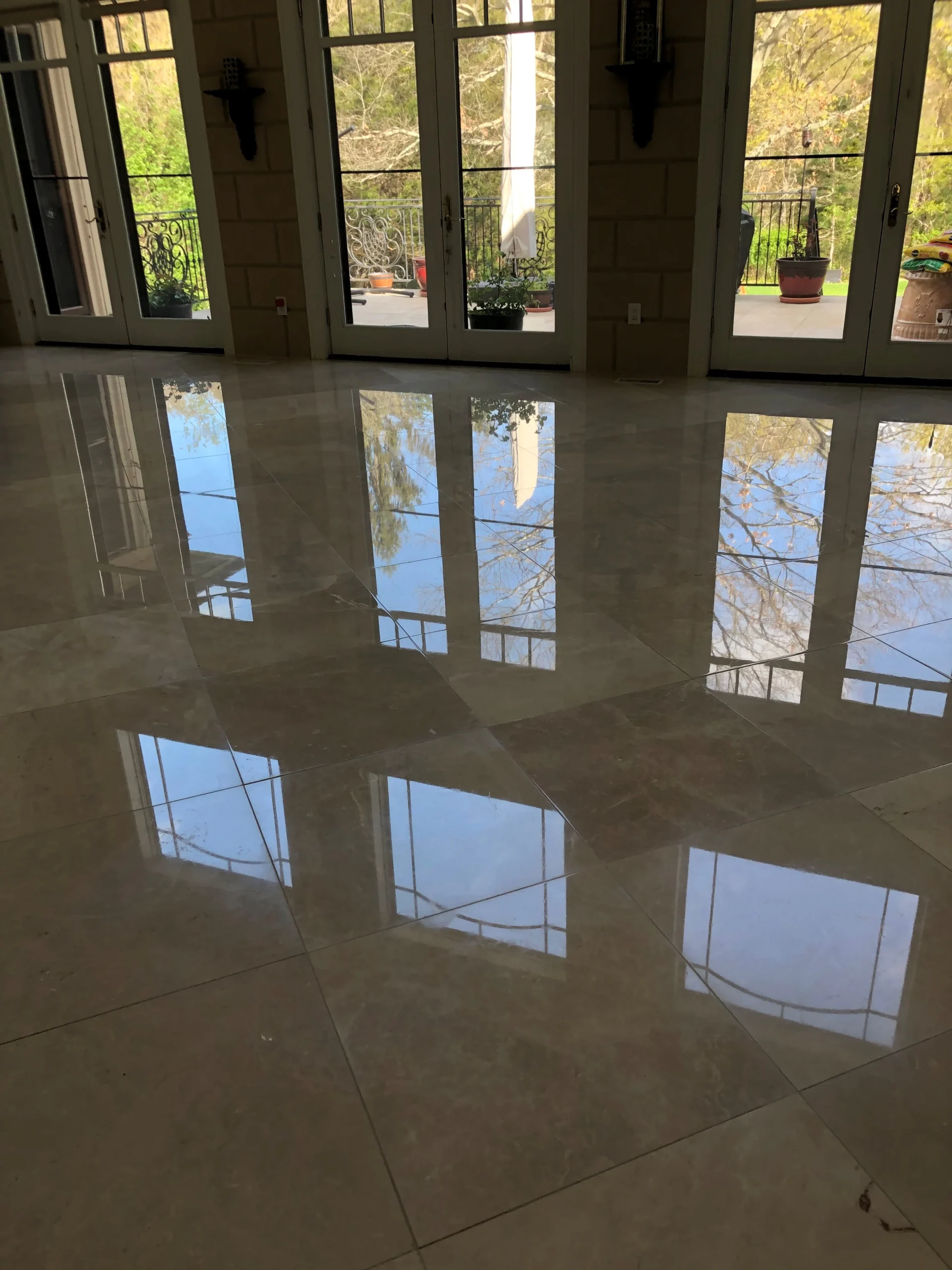
Professional marble restoration typically costs a fraction of replacement. New marble installation on Long Island runs between $70 and $190 per square foot when you factor in materials, labor, and disposal of your existing floor.
Restoration costs significantly less because we’re working with what’s already there. You’re not paying for new stone, new installation, or the labor to rip out your current floors.
For a typical Searingtown foyer or bathroom, you’re looking at savings of $10,000 to $30,000 or more by restoring instead of replacing. And you keep the original marble that adds authentic character to your home—something new installation can never replicate.
Yes. Deep scratches and etching are exactly what honing and polishing are designed to fix. We’re not buffing the surface or applying a coating that hides damage temporarily. We’re removing the damaged layer of stone.
Honing takes the marble down past the scratches using progressively finer abrasives. Then polishing brings the surface back up to its original finish. The scratches don’t get filled in or covered up—they actually get removed.
The only limitation is if the marble has been ground down so many times in the past that there’s not enough material left to work with. That’s rare. Most floors, even ones that look terrible, have plenty of stone left to restore properly.
Most residential marble restoration jobs finish in less than two days. A typical entryway or bathroom usually takes one day. Larger spaces or floors with severe damage might take two days.
The timeline depends on the floor’s size and condition. A 200-square-foot foyer with moderate etching wraps up faster than a 500-square-foot space with deep scratches throughout.
We give you an accurate timeframe upfront after assessing your specific floor. And we work efficiently because we’ve been doing this since 1998. You’re not dealing with a crew that’s learning on your marble.
Old marble is actually what we specialize in. The worse the floor, the better the job is for us. We’ve built our reputation on restoring century-old floors that other contractors won’t touch.
Historic marble differs from modern stone in composition, installation method, and how it responds to restoration techniques. Many cleaning companies will destroy old marble by using harsh acids or aggressive abrasives that work fine on newer stone but ruin antique installations.
We understand how marble was quarried, cut, and installed during different eras. That knowledge is critical when you’re working with floors from Long Island’s Gold Coast period. The techniques that restore a 1920s marble floor aren’t the same ones you’d use on marble from the 1990s.
After restoration, your marble needs basic cleaning with pH-neutral cleaners and periodic resealing. That’s it. You’re not signing up for complicated maintenance routines or expensive ongoing treatments.
Daily cleaning means wiping up spills promptly and using a cleaner specifically made for natural stone. Avoid anything acidic—no vinegar, no lemon-based products, nothing with harsh chemicals. Those create the etching that damages marble in the first place.
Resealing happens every one to three years depending on traffic and use. It’s a simple process that takes a few hours. We walk you through exactly what your specific marble needs and show you how to tell when it’s time to reseal. Most clients find that proper maintenance after restoration costs $200 to $600 annually and keeps their floors looking right for decades.
We restore all marble surfaces—floors, countertops, bathroom vanities, shower walls, and any other natural stone in your home. The process is similar regardless of whether it’s horizontal or vertical.
Countertops often need restoration because they’re exposed to acidic foods, harsh cleaners, and daily wear that creates etching and dullness. Bathroom marble gets damaged by soap scum, hard water deposits, and cleaning products that aren’t safe for natural stone.
We also handle concrete polishing and restoration, which we’ve added because many Searingtown homes are incorporating polished concrete in renovations. But marble restoration—especially historic marble—remains our specialty and what we’re known for across Nassau County.