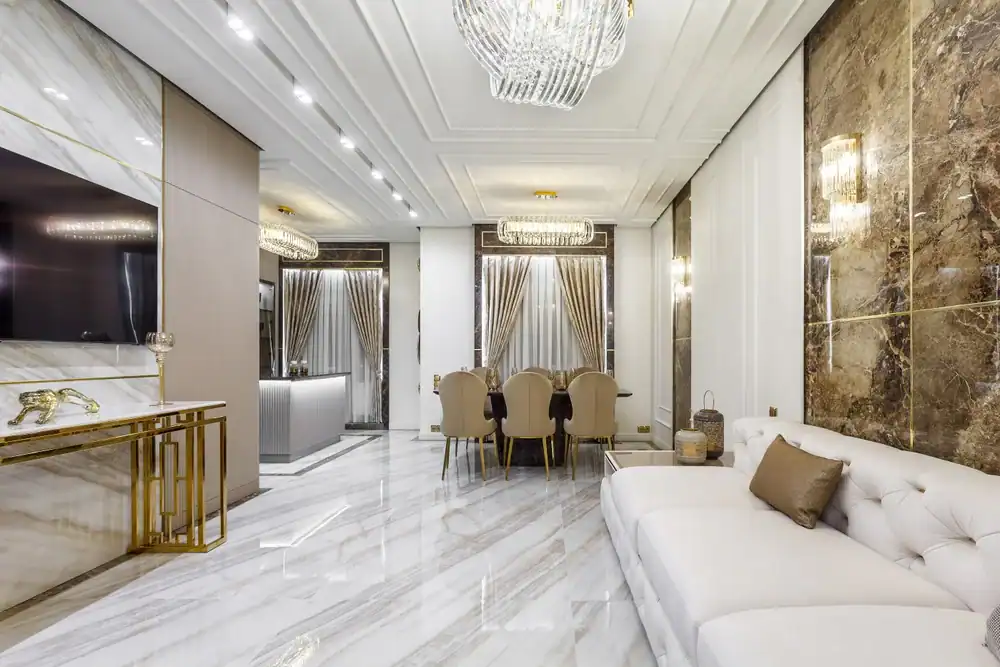
Your floors look dull because years of cleaning products, foot traffic, and Long Island’s hard water have worn down the surface. That haze isn’t permanent damage in most cases. It’s a fixable problem.
Professional marble floor restoration removes the damaged layer, polishes the surface back to the finish you want, and seals it properly. You’re looking at a day or two of work instead of weeks of construction chaos. The cost runs about 60-80% less than replacement, and you keep the original marble that came with your home.
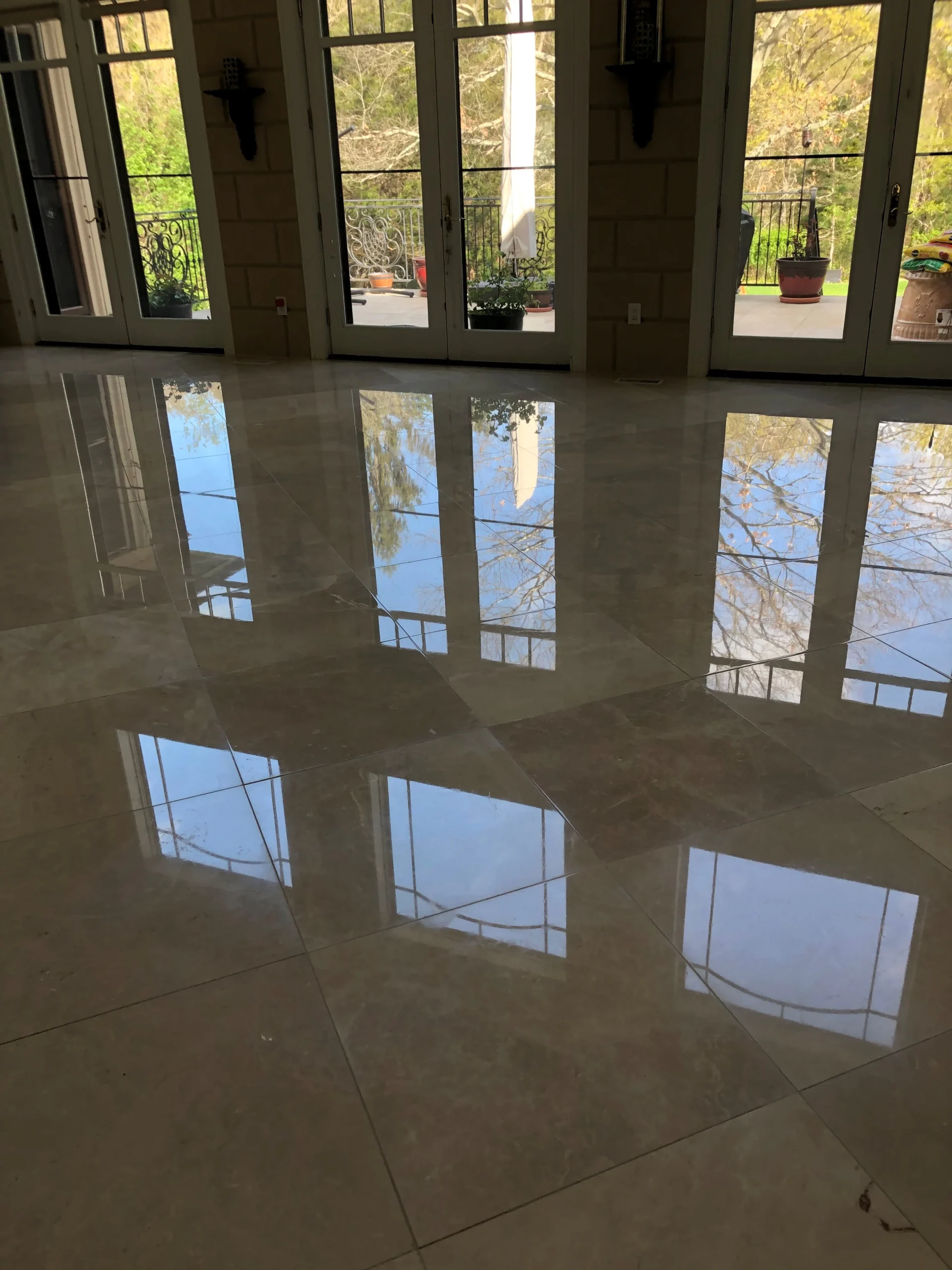
The floors in Russell Gardens’ Tudor and Colonial homes weren’t just decorative choices. They were investments in materials that last generations when maintained correctly. Restoration protects that investment and brings back the mirror-like finish that made you fall in love with the space in the first place.
We specialize in the kind of work most contractors won’t touch. The 100-year-old floors in Russell Gardens’ historic homes require different techniques than modern installations, and we’ve spent over 25 years figuring out exactly how to handle them.
Our owner oversees every project personally. You’re not getting a crew that learned marble restoration last month. You’re getting someone who was featured in the New York Times for this exact work and has been restoring floors across Nassau County since before most online reviews existed.
We work throughout Russell Gardens and the surrounding Long Island area because we understand what these older homes need. The marble in your 1920s Tudor wasn’t installed the same way modern stone goes down, and treating it like a contemporary surface is how people end up with bigger problems than they started with.
First, we evaluate the floor in person. Not every marble problem needs the same solution, and we’re not going to sell you services you don’t need. We look at the type of damage, the stone itself, and what finish you’re trying to achieve.
The restoration process removes the damaged surface layer using diamond abrasives in progressively finer grits. Think of it like sanding wood, but much more precise. We’re taking off just enough material to get past the scratches, etching, and dullness without compromising the floor’s integrity.
Once we’ve removed the damage, we polish the marble to your preferred finish. Some Russell Gardens homeowners want a high-gloss mirror finish. Others prefer a honed, matte look. Both are possible, and the choice affects how the floor behaves long-term.
The final step is sealing. Modern sealers protect against staining and make daily maintenance easier, but they need a few weeks to fully cure. We’ll walk you through exactly what to avoid during that period so you don’t undo the work.

Ready to get started?
Marble floor restoration covers the entire surface, not just the worst spots. We work on floors, bathroom marble, countertops, and walls. If it’s natural stone and it’s damaged, we can likely restore it.
The service includes damage removal, polishing to your specified finish, and protective sealing. We also handle marble repair for chips and cracks when the damage goes beyond surface-level wear. Many Russell Gardens homes have marble that’s developed small cracks over the decades, and those need to be stabilized before polishing or they’ll continue spreading.
Nassau County’s hard water creates specific challenges for marble surfaces. The mineral content leaves deposits that build up over time and eventually require professional removal. We see this constantly in bathrooms and kitchens throughout the area, and it’s one of the most common reasons homeowners call us.
We’ve also added concrete restoration and polishing to our services. If you have concrete floors that need refinishing or polishing, we handle that with the same attention we give historic marble. It’s a newer offering, but it uses similar techniques and equipment.
Restoration typically costs $1-3 per square foot for standard work. Full replacement runs $70-190 per square foot on Long Island when you factor in demolition, disposal, new material, and installation.
For a 200-square-foot entryway, you’re looking at roughly $200-600 for restoration versus $14,000-38,000 for replacement. The math gets even more compelling with larger spaces.
Replacement also means weeks of construction, dust throughout your home, and the permanent loss of original materials that can’t be replicated. The marble in Russell Gardens’ older homes often has characteristics modern stone doesn’t match, and that authenticity matters to property value.
Most residential marble restoration projects take one to two days depending on square footage and damage severity. A typical bathroom might be done in a day. A large entryway or multiple rooms might need two.
The actual work is efficient, but you’ll need to stay off the floors while they cure. We can usually work in sections if you need to maintain access to certain areas.
This timeline assumes we’re dealing with standard wear and dullness. If there’s significant cracking or deep damage that requires repair work first, that adds time. We’ll give you an accurate estimate after seeing the space in person.
Usually, yes. What looks like irreversible damage is often surface-level wear that comes off during restoration. We’ve brought back floors that homeowners were convinced needed replacement.
The exception is structural damage. If the marble is cracked all the way through, unstable, or has pieces missing, we’re looking at repair work before restoration. But etching, dullness, water spots, and surface scratches all respond well to professional treatment.
Historic marble in Nassau County homes is often denser and higher quality than contemporary stone. That means it holds up better to restoration and can be refinished multiple times over its lifespan without losing integrity. The worse the floor looks, the more dramatic the transformation tends to be.
Polished marble has a glossy, reflective finish that shows the stone’s color and veining most dramatically. It’s what most people picture when they think of marble floors. The downside is that scratches and etching show up more easily on high-gloss surfaces.
Honed marble has a matte, smooth finish with little to no shine. It hides wear better and works well in high-traffic areas or homes with kids and pets. The tradeoff is that it doesn’t have the same visual impact as a mirror-finish floor.
Both finishes require the same restoration process. The difference comes in the final polishing steps. We can show you samples of each finish and explain how they’ll perform in your specific space. Many Russell Gardens homeowners with historic homes choose polished finishes for formal areas and honed finishes for bathrooms and kitchens where water exposure is constant.
Standard household cleaners will absolutely damage restored marble. Most contain acids or harsh chemicals that etch the surface, and you’ll be back where you started within months.
You need pH-neutral cleaners specifically formulated for natural stone. We’ll recommend specific products after the work is done. For daily maintenance, warm water and a microfiber mop handle most situations.
Long Island’s hard water is particularly problematic for marble. If you’re using tap water to clean, you’re depositing minerals that will build up over time. Distilled water or a water softener system helps, but the reality is that marble in Nassau County requires more careful maintenance than it would in areas with softer water. The sealer we apply helps protect against this, but it’s not a permanent shield.
Yes. Bathroom floor restoration is a significant part of what we do. Marble in wet areas takes more abuse than anywhere else in the house, and it shows.
The combination of soap residue, hard water, and cleaning products creates the perfect conditions for etching and buildup. We see bathroom marble in Russell Gardens homes that’s been dulled to the point where it barely looks like stone anymore.
The restoration process is the same, but sealing becomes even more important in bathrooms. We use sealers rated for wet areas, and we’re careful about ensuring proper curing time before the space gets used normally. You’ll need to keep the bathroom dry for a period after we finish, and we’ll give you specific instructions based on the sealer we use.