Your marble doesn’t shine anymore. You’ve tried cleaning it, but the dullness won’t budge. That’s because the damage isn’t sitting on top of the stone—it’s etched into the surface itself.
Restoration removes that damaged layer entirely. We use professional diamond grinding compounds to take off the compromised surface and reveal fresh stone underneath. What you’re left with is the floor as it looked decades ago—smooth, reflective, and clean.
This isn’t a coating or a topical treatment. It’s actual removal and refinishing of the marble itself. The shine you get back is the stone’s natural finish, not something that will wear off in six months. And because we’re working with the original material, you keep the authentic character that makes these floors valuable in the first place.
Most Port Washington homes with original marble were built during Long Island’s estate era—1900s through 1930s. The marble in those floors was installed using methods and materials you can’t replicate today. Restoration lets you keep that, instead of ripping it out and losing it forever.
We specialize in the floors most contractors won’t touch. The 100-year-old installations. The ones with water damage, deep etching, or years of improper cleaning. The ones where someone tells you replacement is the only option.
We were featured in the New York Times in 2001 for our restoration work, and we’ve spent over 25 years working on historic properties throughout Nassau County. The Garden City Hotel has trusted us exclusively for their natural stone care for more than 16 years.
Every project is owner-operated. You’re not getting a crew that’s been trained for two weeks—you’re getting someone who’s been doing this for decades and knows exactly how old marble behaves. That matters when you’re working with floors that have been in place since before World War II.
Port Washington has some of the most beautiful historic homes on Long Island’s North Shore. Many of those homes still have their original marble floors, and many of those floors are salvageable. You just need someone who knows how to work with them.
First, we assess the damage. Not all marble problems are the same. Etching from acidic cleaners looks different than scratching from foot traffic, and water damage presents its own issues—especially common in Port Washington homes near the water where humidity and moisture barriers weren’t standard in older construction.
Once we understand what we’re dealing with, we start the grinding process. This is where we remove the damaged surface layer using diamond abrasives. It’s not aggressive—we’re taking off micrometers at a time—but it’s thorough. We work through progressively finer grits until the surface is completely smooth and the fresh stone is exposed.
After grinding comes polishing. This is what brings back the shine. We use compounds specifically formulated for marble to build up that reflective finish you remember. The process is methodical, and it takes time, but the result is a floor that looks like it was just installed.
Most jobs take less than two days for straightforward restoration work. You’ll have some dust during the process, but we contain it as much as possible. And when we’re done, you’ll have a floor you can actually use and enjoy again—not one you’re embarrassed to show guests.
The whole process is transparent. You’ll know what we’re doing, why we’re doing it, and what it costs before we start any work.

Ready to get started?
You’re getting a complete surface restoration—grinding, honing, and polishing using professional-grade diamond abrasives. We remove etching, scratches, dullness, and staining that’s worked its way into the stone over years or decades.
We also address specific damage common to Long Island’s North Shore. Hard water leaves mineral deposits that regular cleaning won’t touch. Coastal humidity accelerates wear and can cause issues with the stone’s subsurface if the original installation didn’t include proper moisture barriers. Salt air affects the finish differently than you’d see in inland homes.
Bathroom floor restoration is a specialty. Bathrooms see more water exposure, more cleaning product use, and more acidic contact than any other room. The marble in a 1920s bathroom has usually been subjected to decades of harsh cleaners that weren’t formulated for natural stone. We reverse that damage and restore the original finish.
If you have historic marble in your entryway, kitchen, or bathroom, you’re looking at floors that were installed during an era when craftsmanship mattered more than speed. The marble itself is often higher quality than what’s available today. Restoration costs a fraction of replacement—typically $5 to $15 per square foot versus $70 to $190 for new installation—and you keep the authentic material that adds value to your home.
Port Washington buyers pay premium prices for well-maintained original features. Restored marble floors can increase your property value by 3 to 5 percent, and they’re a selling point that modern installations can’t replicate.
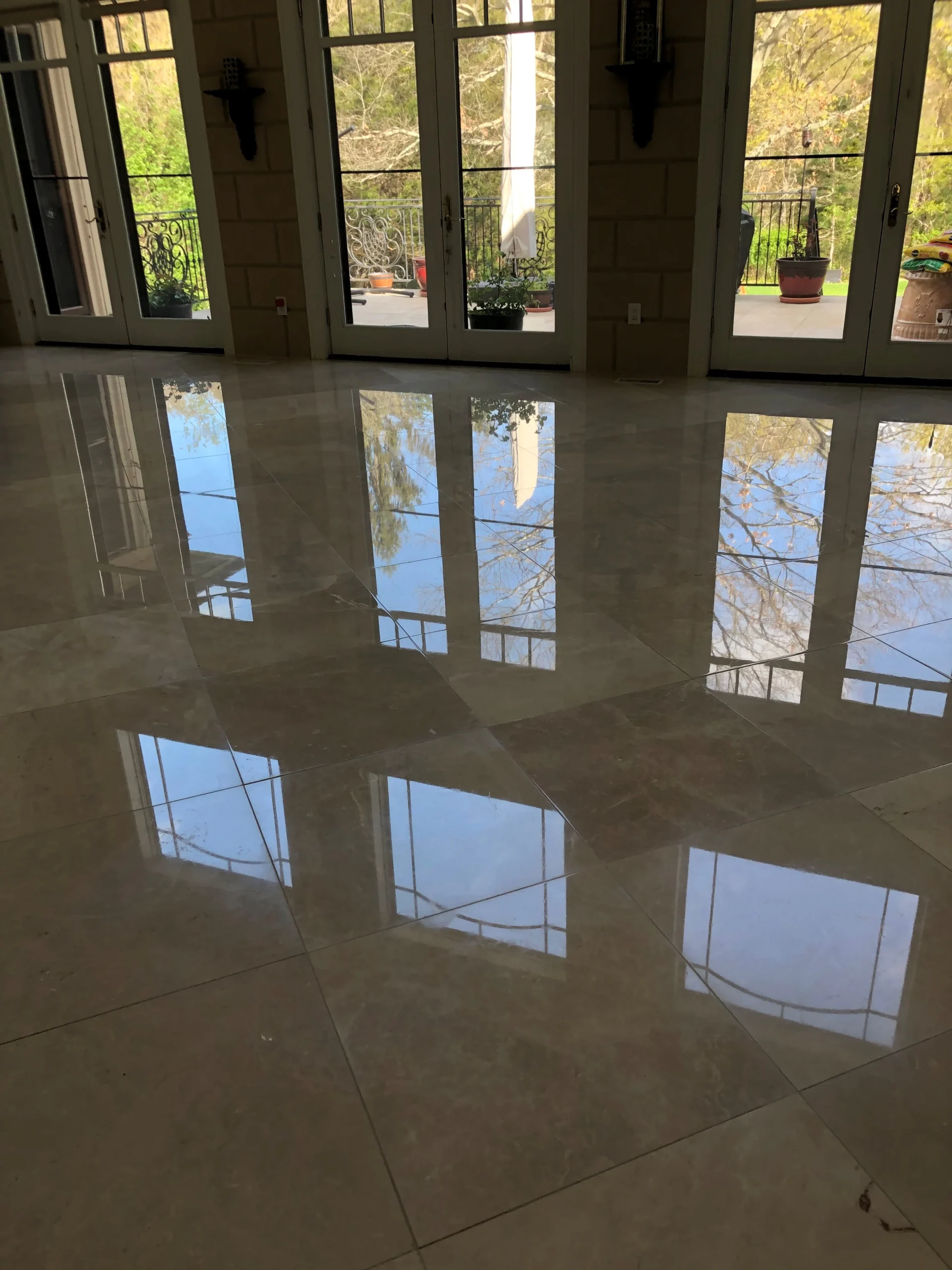
Most residential marble floor restoration projects take less than two days. That’s for a standard room—an entryway, bathroom, or kitchen with a few hundred square feet of marble.
The timeline depends on the condition of your floors and the square footage we’re working with. A small bathroom with light etching might be done in a day. A large foyer with deep scratches, water damage, or years of neglect could take longer.
We’re not rushing through the process. Restoration involves multiple steps—grinding to remove the damaged surface, honing to smooth it out, and polishing to bring back the shine. Each step has to be completed properly before we move to the next one. Cutting corners means a finish that won’t last.
You’ll have access to the space again as soon as we’re finished. There’s no curing time or waiting period. The floor is ready to use immediately.
Yes. Etching from acidic cleaners is one of the most common problems we see, and it’s completely fixable.
Most household cleaners are too harsh for marble. Anything with vinegar, lemon, or acidic pH will eat into the stone’s surface and leave dull spots. Over time, those spots accumulate and the entire floor loses its shine. A lot of homeowners don’t realize they’ve been making the problem worse every time they clean.
The good news is that etching is a surface issue. We remove that damaged layer during the grinding process and expose fresh, undamaged stone underneath. Once we’ve polished it back up, you’re left with a floor that looks the way it did before the damage started.
We’ll also walk you through proper marble care so you don’t end up in the same situation again. It’s not complicated—you just need to use the right products. Most people have never been told what those are.
Significantly cheaper. Professional marble restoration typically costs between $5 and $15 per square foot. Replacement runs anywhere from $70 to $190 per square foot on Long Island, depending on the quality of the new marble and the complexity of the installation.
That’s not even accounting for the cost of removing and disposing of your old floors, or the downtime while new material is ordered and installed. Restoration is faster, less disruptive, and keeps the original stone that’s already in your home.
There’s also the issue of value. Original marble floors—especially in historic Port Washington homes—are a selling point. Buyers pay more for authentic period features that have been well maintained. Rip them out and replace them with modern material, and you lose that appeal.
Restoration makes sense unless your floors are structurally compromised—cracked substrates, major settling issues, or damage that goes beyond the surface. In most cases, the marble itself is fine. It just needs to be brought back to life.
You should expect your floors to look the way they did when they were originally installed—smooth, reflective, and clean. The shine comes from the stone itself, not from a coating or sealer that will wear off over time.
Professional polishing removes the microscopic scratches and etching that make marble look dull. Once that damaged surface is gone and we’ve worked through the polishing process, the stone’s natural reflectivity comes back. You’ll be able to see your reflection in the floor again.
The results are permanent as long as you maintain the floors properly. That means using pH-neutral cleaners and avoiding anything acidic. It also means addressing spills quickly and not letting water sit on the surface for extended periods—especially important in Port Washington’s humid coastal environment.
We’ve restored floors that hadn’t been touched in 50 years. The transformation is dramatic, and it’s not because we’re doing anything magical. We’re just removing the damage and letting the stone be what it’s supposed to be.
That’s our specialty. We’ve spent over 25 years restoring marble in some of Nassau County’s oldest and most valuable properties—Gold Coast estates, historic Port Washington homes, and buildings that date back to the early 1900s.
Older floors come with challenges you don’t see in modern installations. The marble itself might be a type that’s no longer quarried. The installation methods were different. And after a century of use, you’re dealing with accumulated wear, outdated repairs, and sometimes structural issues that need to be addressed before we can even start the restoration.
We know how to work with those complications. We’ve seen floors that were installed before moisture barriers were standard, floors that have been patched with the wrong materials, and floors that have survived multiple rounds of bad restoration attempts by contractors who didn’t know what they were doing.
If you’ve been told your floors are too far gone, get a second opinion. Most of the time, they’re not. They just need someone who understands how to handle old marble and has the experience to back it up.
If regular cleaning isn’t bringing back the shine, you’re dealing with damage that goes beyond surface dirt. That’s when you need restoration.
Cleaning removes things that are sitting on top of the stone—dust, grime, everyday buildup. Restoration removes damage that’s in the stone itself—etching, scratches, dullness from wear. You can clean a floor every day and it still won’t shine if the surface has been compromised.
Here’s a simple test: wipe down a section of your floor with water and a soft cloth. If it looks better when it’s wet but goes back to looking dull when it dries, the problem isn’t dirt. It’s surface damage. Water temporarily fills in the microscopic scratches and makes the floor look smooth, but as soon as it evaporates, you’re back to seeing the damage.
Another sign is uneven dullness. If some areas of your floor still have a shine—maybe spots that don’t get much foot traffic—but other areas look flat and lifeless, that’s wear. Cleaning won’t fix that. You need to remove the worn layer and re-polish the surface.
If you’re not sure, we offer free quotes. We’ll take a look at your floors and tell you exactly what they need—and what they don’t.