


Your marble floors weren’t meant to look cloudy, scratched, or dull. Most damage you’re seeing right now came from the wrong cleaner or an inexperienced contractor who used harsh abrasives that stripped the finish.
Here’s what most homeowners in Plandome Heights don’t realize: restoration costs between $5 and $15 per square foot. Replacement runs $70 to $190 per square foot. You’re looking at 60-80% savings by restoring what you already have—and you keep the original character that makes your home irreplaceable.
The floors in these century-old homes can’t be replicated. Once they’re gone, they’re gone. Restoration brings back the clarity, shine, and smooth finish you remember—without tearing anything out. Most projects wrap up in one to three days, and you’re left with marble that looks like it did decades ago, protected against Long Island’s hard water and coastal humidity.
We’ve been restoring historic marble floors across Nassau County since 1998. We’re owner-operated, which means you’re working directly with the craftsman doing the work—not a salesperson, not a subcontractor.
We were featured in The New York Times for our restoration expertise, and we’ve been the exclusive marble restoration company for the Garden City Hotel for over 16 years. The worse your floor looks, the better the project is for us. We specialize in the complex, severely damaged jobs that other contractors turn down or make worse.
Most homes in Plandome Heights were built in the 1930s and 1940s. The marble in these properties requires someone who understands old materials, not modern shortcuts. We know how coastal humidity affects stone, how hard water leaves deposits, and how to remove decades of damage without destroying what’s underneath.
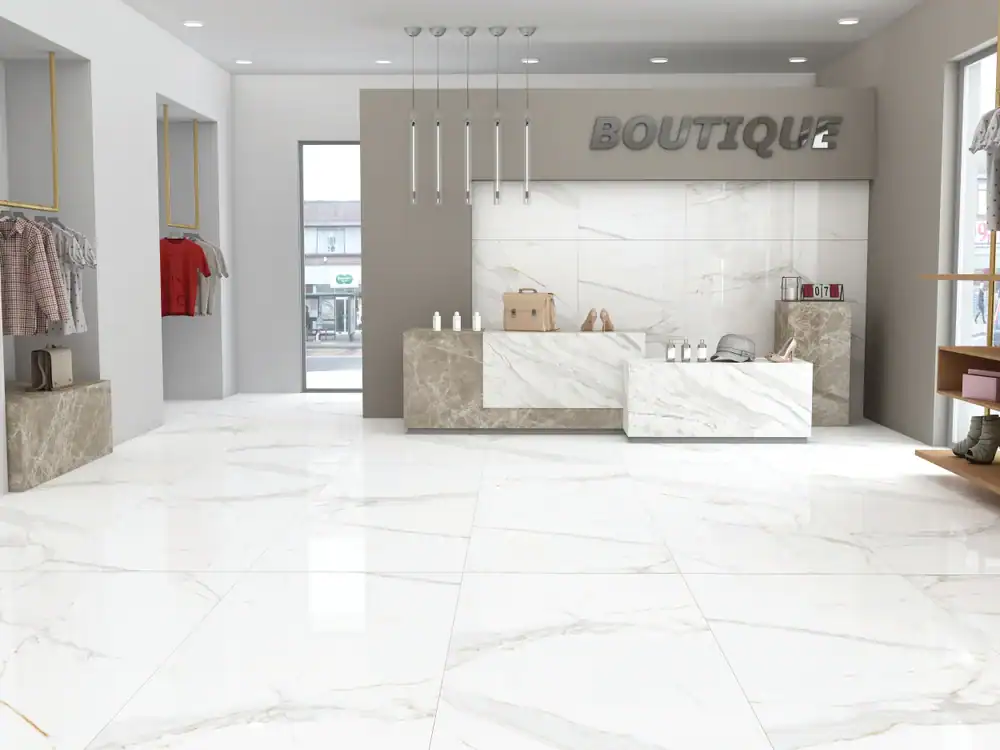
We start with an in-person assessment of your marble. We’re looking at the type of stone, the extent of damage, and what caused it. Most issues we see come from acidic cleaners that etched the surface or abrasive pads that scratched the finish.
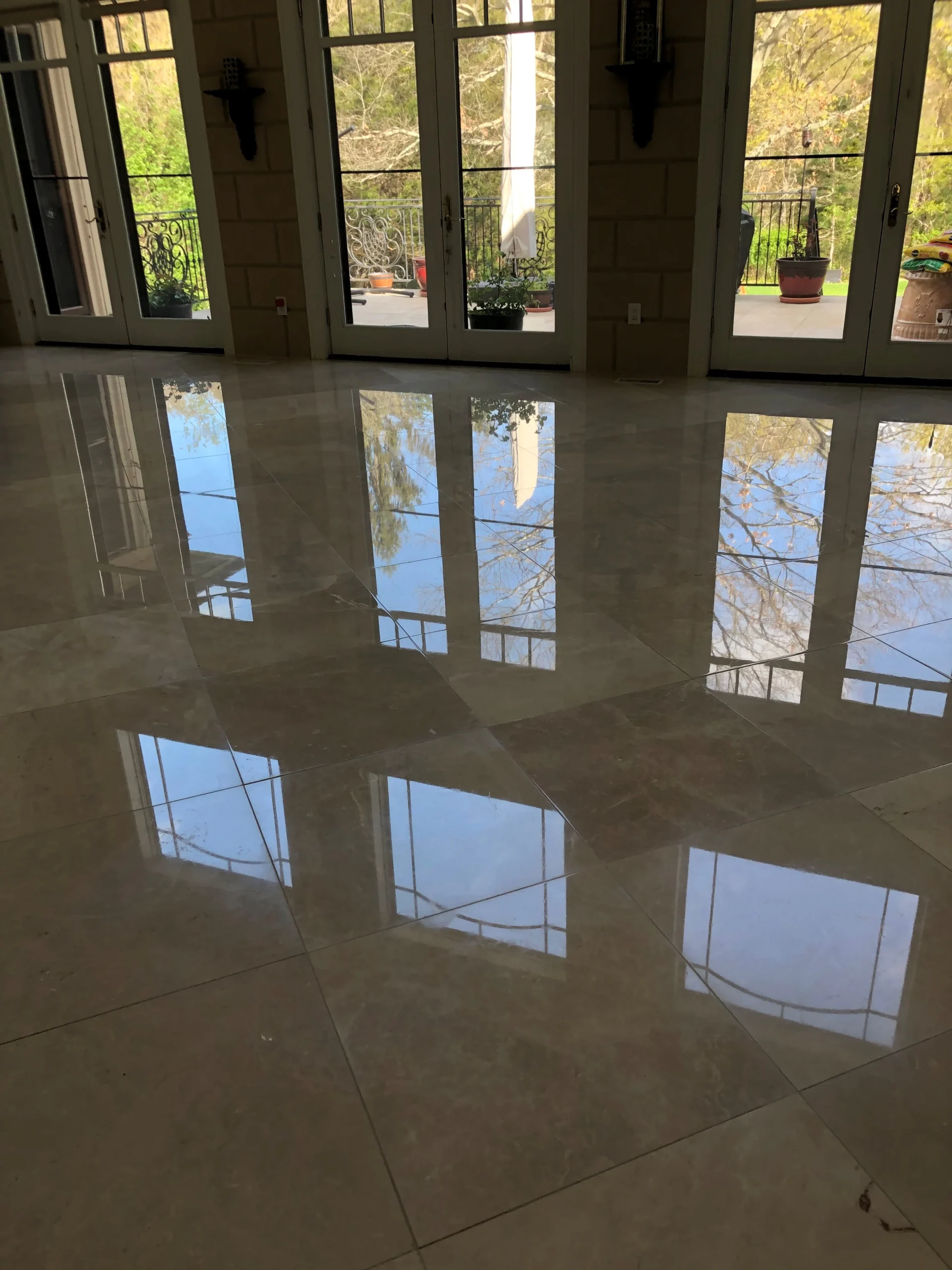
Once we understand what we’re working with, we begin the restoration process. For light damage, that might mean polishing and sealing. For severe wear, we’re honing the surface to remove scratches and etching, then polishing it back to a high-gloss or honed finish depending on what you want. We use diamond abrasives in progressively finer grits—this is how you restore clarity without damaging the stone.
After polishing, we apply a penetrating sealer that protects against stains, moisture, and the daily wear your floors take. The sealer doesn’t change the look of the marble; it just gives you a buffer against spills and dirt working their way into the stone. You’ll get care instructions that actually work—no vinegar, no harsh chemicals, just the right approach to keep your floors looking like this for years.

Ready to get started?
You’re getting a full restoration—not a quick polish that wears off in six months. We handle everything from bathroom floor restoration to large entryway marble, staircases, and any other stone surface that’s seen better days.
Plandome Heights homes deal with specific challenges. Long Island’s water is mineral-heavy, which leaves white deposits and buildup on marble if it’s not sealed properly. Coastal humidity accelerates wear and can cause issues with older grout and stone. We account for all of this when we’re restoring your floors, which is why the sealer we use and the techniques we apply are different than what you’d see in a drier climate.
We also restore marble that’s been damaged by contractors who didn’t know what they were doing. If someone used muriatic acid, harsh grout cleaners, or aggressive pads on your stone, we can usually reverse that damage. It takes more work, but it’s still cheaper and faster than replacement. You’ll also see an increase in property value—well-maintained historic floors can boost your home’s value by 3-5%, and buyers in this area pay a premium for original details that have been properly cared for.
Restoration typically costs between $5 and $15 per square foot depending on the condition of your marble and the level of work required. Replacement costs between $70 and $190 per square foot when you factor in demo, disposal, new material, and installation.
For a 200-square-foot entryway, you’re looking at $1,000 to $3,000 for restoration versus $14,000 to $38,000 for replacement. The math makes sense even if your floors look terrible right now. Most of the damage we see is surface-level—etching from acidic cleaners, scratches from dirt and grit, or dullness from improper maintenance. All of that can be honed and polished out without replacing a single tile.
You also keep the original stone, which matters in historic homes. The marble in older Plandome Heights properties often can’t be matched with modern materials. Once it’s gone, you’ve lost something irreplaceable.
Yes. This is one of the most common problems we fix. Acidic cleaners—anything with vinegar, lemon, or harsh bathroom chemicals—etch marble by dissolving the calcium carbonate in the stone. You’re left with dull spots, cloudy areas, or rough texture where the surface used to be smooth and glossy.
Honing removes that damaged layer. We use diamond abrasives to carefully grind down the surface until we’re past the etching, then polish it back to the original finish. It’s not a quick buff—it’s actual restoration that removes the damage instead of covering it up.
The process works on everything from light etching around a bathroom sink to entire floors that have been cleaned with the wrong products for years. Once we’re done, you won’t be able to tell where the damage was. We also seal the marble so future spills and cleaners are less likely to cause the same issue.
Most residential marble restoration projects take one to three days depending on square footage and the condition of the stone. A small bathroom might be done in a few hours. A large entryway or multiple rooms could take two full days.
The process involves some noise and dust, but we contain it as much as possible. You’ll need to stay off the floors while we’re working and for a few hours after we apply the sealer. If we’re restoring a main entryway, we’ll work with you to schedule around your routine so you’re not blocked from using your home.
Compare that to replacement, which involves demolition, debris removal, subfloor prep, new stone installation, grouting, and curing time. You’re looking at a week or more of construction mess, and you’ll need to avoid the area entirely during that time. Restoration is faster, cleaner, and far less disruptive.
Yes, as long as they’re sealed properly. Long Island water is loaded with minerals—calcium, magnesium, iron—that leave deposits on marble if the stone isn’t protected. Coastal humidity also accelerates wear and can cause moisture-related issues if the stone is porous or poorly maintained.
We use penetrating sealers that soak into the marble and block moisture and minerals from getting in. This doesn’t change the look of your floors, but it gives you a protective barrier that makes cleaning easier and prevents new damage from forming. The sealer also helps with spills—wine, coffee, oils—so they don’t stain the stone before you can wipe them up.
Resealing should happen every few years depending on traffic and use. We’ll give you a realistic timeline based on your specific floors. The goal is to keep your marble looking like it does right after restoration without constant maintenance or worry about every spill.
We restore marble stairs regularly, and yes, we can adjust the finish to make sure they’re safe. High-gloss polished marble can be slippery, especially on stairs where traction matters. If that’s a concern, we can hone the marble to a matte or satin finish instead of polishing it to a mirror shine.
Honed marble has a smooth, flat appearance without the high gloss. It still looks clean and well-maintained, but it offers better grip underfoot. This is a common choice for stairs, bathrooms, and entryways where people are walking in wet shoes or where kids and older adults need stable footing.
We can also do a combination—polished marble on flat floors and honed marble on stairs—so you get the look you want without sacrificing safety. Over a million stair-related injuries happen every year, and worn or slippery marble is a real liability. Restoration fixes that while keeping your stairs looking original.
Polishing is the final step in refinishing, but they’re not the same thing. Refinishing involves honing the marble to remove scratches, etching, and surface damage, then polishing it back to the finish you want. Polishing by itself just buffs the existing surface to add shine—it doesn’t remove damage.
If your marble is scratched, etched, or dull from years of wear, polishing alone won’t fix it. You need to hone the stone first to get rid of the damage, then polish to restore clarity and gloss. Think of honing as leveling the surface and polishing as bringing out the shine.
Some companies will try to sell you a polish-only service because it’s faster and cheaper for them. It might look better for a few weeks, but the underlying damage is still there, and it’ll show through again quickly. Refinishing actually fixes the problem so your floors look right and stay that way.