

There’s a difference between cleaning marble and actually restoring it. Cleaning removes surface dirt. Restoration removes the damage underneath—the etching from decades of wear, the dullness from foot traffic, the scratches that catch light the wrong way.
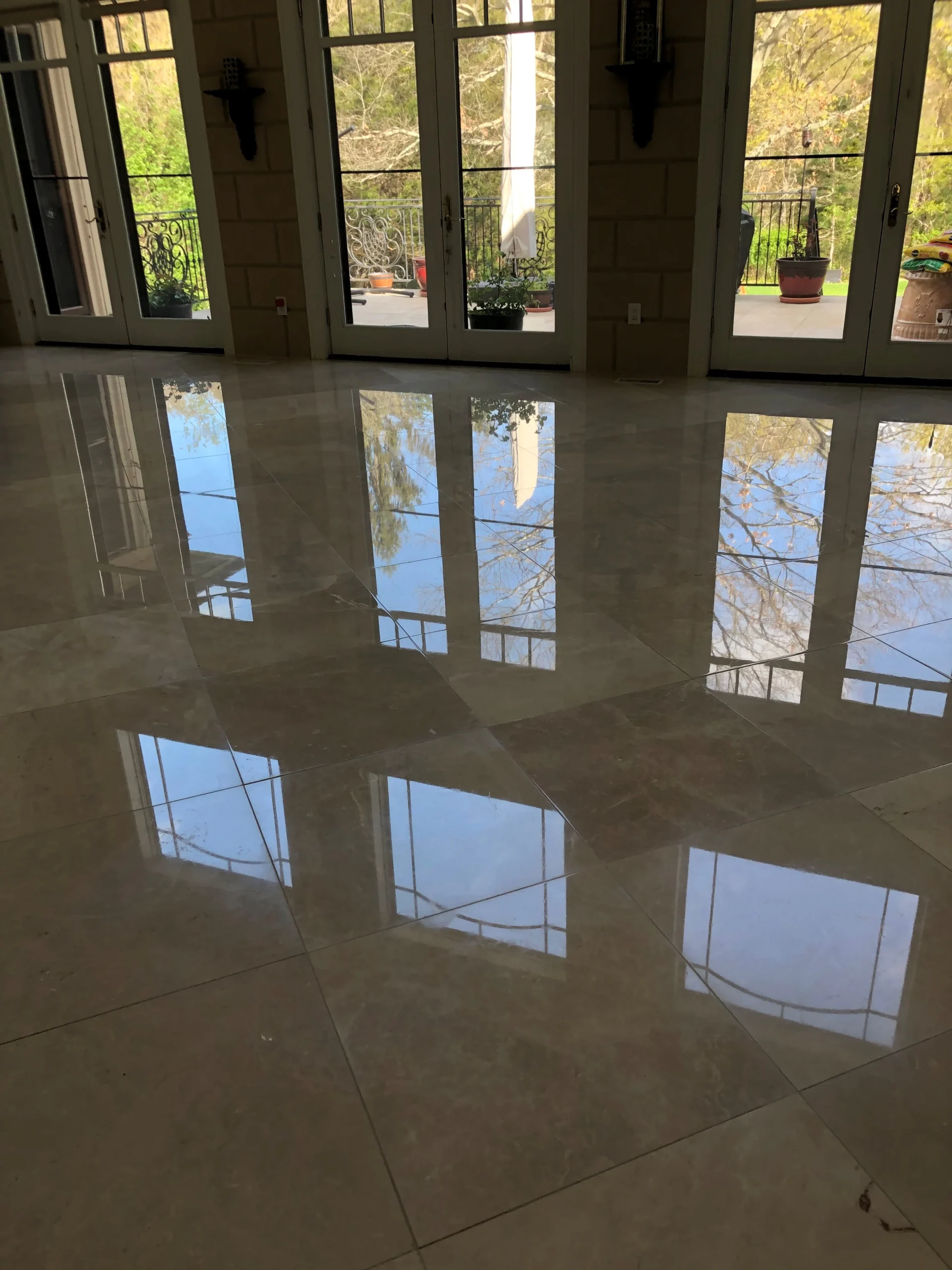
When marble floor restoration is done right, you’re not looking at a “cleaned” floor. You’re looking at stone that reflects light like it did when your house was built. The grout lines are actually clean, not just scrubbed. The shine is even across the entire surface, not just the low-traffic areas.
Most homeowners in Old Bethpage don’t realize their marble can look this good again. They’ve tried cleaning services. They’ve tried DIY products. What they haven’t tried is actual restoration—the kind that addresses what’s happened to the stone over 50, 75, or 100 years. That’s what changes everything.
High Definition Marble Restoration Inc has spent over 25 years working on the kinds of floors most companies won’t touch. The ones with real age. The ones with problems that didn’t exist when the marble was new.
Old Bethpage homes—especially the historic properties near Old Bethpage Village Restoration—have marble that’s seen generations of use. That means the stone has issues modern installations never face. We’ve built our reputation on exactly these projects. The New York Times featured our work in 2001 because we take on the floors other companies walk away from.
You’re not getting a crew. You’re getting the owner on site, evaluating your floors in person, explaining what’s realistic and what’s not. That’s how we’ve worked since the beginning, and it’s why homeowners across Nassau County call us when they need marble floor care they can trust.
First, we assess the floor. Not just a quick look—we’re checking the marble type, how it was installed, what kind of damage exists, and what caused it. Some marble has natural defects that show up over time. Some has been damaged by the wrong cleaning products. We need to know what we’re working with before we start.
Then comes the restoration itself. We’re not buffing the surface or applying a topical coating that’ll wear off in six months. We’re grinding down to remove etching and scratches, honing the stone to the right level, and polishing it to bring back the natural shine. This is a multi-step process that takes skill—stone can be ruined very easily if you don’t know what you’re doing.
After polishing, we seal the marble properly. This isn’t about making it shiny. It’s about protecting the stone from future damage so the restoration actually lasts. You’ll see the difference immediately—the floor reflects light evenly, the color is consistent, and the stone looks like it did decades ago.

Ready to get started?
A real marble restoration covers everything your floor needs. That includes marble repair for cracks or chips, stain removal for spots that have set in over years, and scratch removal from furniture or foot traffic. We also handle bathroom floor restoration, which often involves different challenges than larger spaces—tighter corners, more moisture exposure, different wear patterns.
In Old Bethpage, we see a lot of homes built in the 1950s and 1960s with original marble that’s never been professionally restored. These floors still have decades of life left, but they need proper marble floor care to get there. That means addressing the damage that’s already present and preventing new damage from happening.
We also offer concrete restoration and polishing now—a newer service for homeowners who want that same high-end finish on concrete surfaces. It’s the same attention to detail, just a different material. Whether it’s marble polishing services or full-scale marble refinishing, the goal is the same: make your floors look like they were just installed, even if they’re a century old.
Most residential marble floor restoration projects take between one and three days, depending on the size of the area and the condition of the stone. A small bathroom might be done in a day. A large foyer or living space with significant damage could take longer.
The timeline also depends on what the floor needs. If we’re just polishing and sealing, that’s faster. If we’re repairing cracks, removing deep stains, or addressing structural issues underneath the marble, that adds time. We’ll give you a realistic estimate after we assess the floor in person.
You’ll need to stay off the floors while we work, and for a few hours after we seal them. But once the job’s done, the floor is ready to use. No long curing times or multi-week processes.
Yes. In fact, those are the floors we prefer. The worse the condition, the better the opportunity to show what real restoration can do.
Marble that’s been neglected for 30, 50, or even 100 years often has etching, deep scratches, stains, and dullness that regular cleaning can’t fix. That’s exactly what restoration is designed to address. We’re not just cleaning the surface—we’re removing damaged layers of stone and bringing the marble back to its original finish.
Some homeowners think their marble is beyond saving. They’re looking at replacement options because they don’t realize restoration is possible. But unless the marble is structurally compromised—cracked all the way through, for example—it can almost always be restored. And restoration costs a fraction of what replacement does, while keeping the original character of your home intact.
Polishing is one step in the restoration process, but it’s not the whole thing. Polishing brings out the shine after the stone has been repaired and honed. Restoration is the full process—assessment, repair, grinding, honing, polishing, and sealing.
If your marble just needs a refresh and doesn’t have significant damage, polishing might be enough. But if you’re dealing with etching, scratches, stains, or dullness that won’t come out with cleaning, you need full restoration. Polishing alone won’t fix those problems.
A lot of cleaning companies offer “marble polishing services,” but what they’re really doing is buffing the surface or applying a coating. That might make the floor look better temporarily, but it doesn’t address the underlying damage. Real polishing is done with diamond abrasives after the stone has been properly prepared. That’s what creates a lasting finish.
Absolutely. Restoring original marble is almost always more cost-effective than replacing it, and it maintains the historic character of your home. That matters in Old Bethpage, where so many properties have architectural significance and original materials that can’t be replicated with modern products.
Replacement means tearing out the old marble, disposing of it, and installing new stone—which will never look quite the same as what was originally there. You’re also losing the craftsmanship and quality of older installations. Restoration keeps all of that intact while making the floor look new again.
From a property value standpoint, original restored marble is a selling point. Buyers looking at historic homes in Nassau County want authentic materials, not modern replacements. Restoration gives you the best of both worlds—original character with a like-new appearance.
Yes. Bathroom floor restoration is actually one of the most common requests we get. Bathrooms see a lot of moisture, which can cause etching and staining on marble over time. The stone also tends to show wear more obviously in smaller spaces because you’re looking at it up close every day.
Restoring marble in a bathroom involves the same process as larger areas, but the logistics are different. We’re working in tighter spaces, around fixtures, and often dealing with more moisture damage. The results are just as dramatic, though—dull, stained bathroom marble can look brand new after restoration.
We also work on marble countertops, fireplace surrounds, and other smaller installations. If it’s marble and it needs restoration, we can handle it. The size of the space doesn’t change the quality of the work.
If regular cleaning isn’t bringing back the shine, you probably need restoration. Dull spots that won’t buff out, scratches that catch the light, etching from spills, grout lines that stay dirty no matter how much you scrub—those are all signs the stone needs more than surface cleaning.
Another indicator is uneven appearance. If high-traffic areas look noticeably worse than the rest of the floor, or if you can see clear wear patterns, that’s damage that’s penetrated the surface. Cleaning won’t fix that. Restoration will.
The best way to know for sure is to have someone who understands marble look at it in person. We offer free quotes, and part of that process is explaining what your floor actually needs—not just what we can sell you. If cleaning is enough, we’ll tell you. If restoration is necessary, we’ll explain why and what’s involved.