You’re looking at floors that don’t shine anymore. Maybe they’re etched from the wrong cleaner. Maybe they’re scratched from years of foot traffic. Either way, you’re wondering if it’s time to rip them out.
Here’s what most people don’t realize: what looks like major damage is usually routine work for someone who knows marble. Etching, dullness, light scratches—these don’t require replacement. They require the right process and the right equipment.
Restoration costs a fraction of what new marble runs. On Long Island, new marble installation averages $70 to $190 per square foot. Restoring what you already have? Less than half that, and it’s done in one to three days depending on the size of the space.
You keep the original material. You avoid the mess and timeline of a full replacement. And if your home has any historic value, you’re maintaining something buyers actually pay more for.
We’ve been restoring marble floors across Nassau and Suffolk Counties for over 25 years. We’re owner-operated, which means the person who quotes your job is the same person overseeing the work.
North Lynbrook has plenty of older homes with original marble—bathrooms, entryways, kitchens. We’ve worked on floors installed in the early 1900s and floors put in last decade. The process changes depending on the age, the wear, and what’s been done to it before we show up.
We were featured in the New York Times back in 2001. Our first client, the Garden City Hotel, has used us exclusively for more than 16 years. We’ve restored over a million square feet of marble, limestone, and granite across the tri-state area. That’s not marketing language—it’s just what happens when you stay in business this long doing one thing well.
First, we assess the condition. Not every floor needs the same level of work. Light etching requires different treatment than deep scratches or staining. We’ll tell you exactly what your floor needs and what it’ll cost before we start anything.
Next comes the actual restoration. For most marble floors, we’re grinding down the damaged surface layer using diamond abrasives, then polishing it back up to the original finish. This removes etching, scratches, and dullness. We’re not covering anything up—we’re removing the damaged layer and exposing clean marble underneath.
The process is dusty, so we mask off the surrounding area. Most jobs take one to three days depending on square footage and condition. When we’re done, we clean everything thoroughly and apply a sealer to protect against future damage.
You’ll get care instructions before we leave. Marble needs specific cleaners—not the acidic stuff sold in most stores. Using the wrong products is usually what creates the damage in the first place, so we make sure you know how to maintain what we just restored.

Ready to get started?
We handle marble floor polishing, marble repair, etching removal, scratch removal, and full refinishing. That covers most of what people call us for—bathroom floors, kitchen floors, entryway floors, and even marble stairs or tub decks.
North Lynbrook’s proximity to the Atlantic means higher humidity year-round. That affects how marble wears and how we approach restoration. Moisture-related staining and surface wear patterns are different here than in drier climates, so the process adjusts accordingly.
We also do concrete restoration and polishing, which isn’t listed on most marble companies’ sites. If you’ve got old concrete floors that need brought back, we handle that too. What we don’t do is porcelain—different material, different process, not our specialty.
Every project gets transparent pricing upfront. You’ll know what it costs before we start. No surprises, no upselling once we’re halfway through. We quote it, you approve it, we do it.
The work is done by people who’ve been doing this for decades, not a rotating crew of subcontractors. You’re getting the same level of expertise whether it’s a small bathroom floor or a large historic entryway.
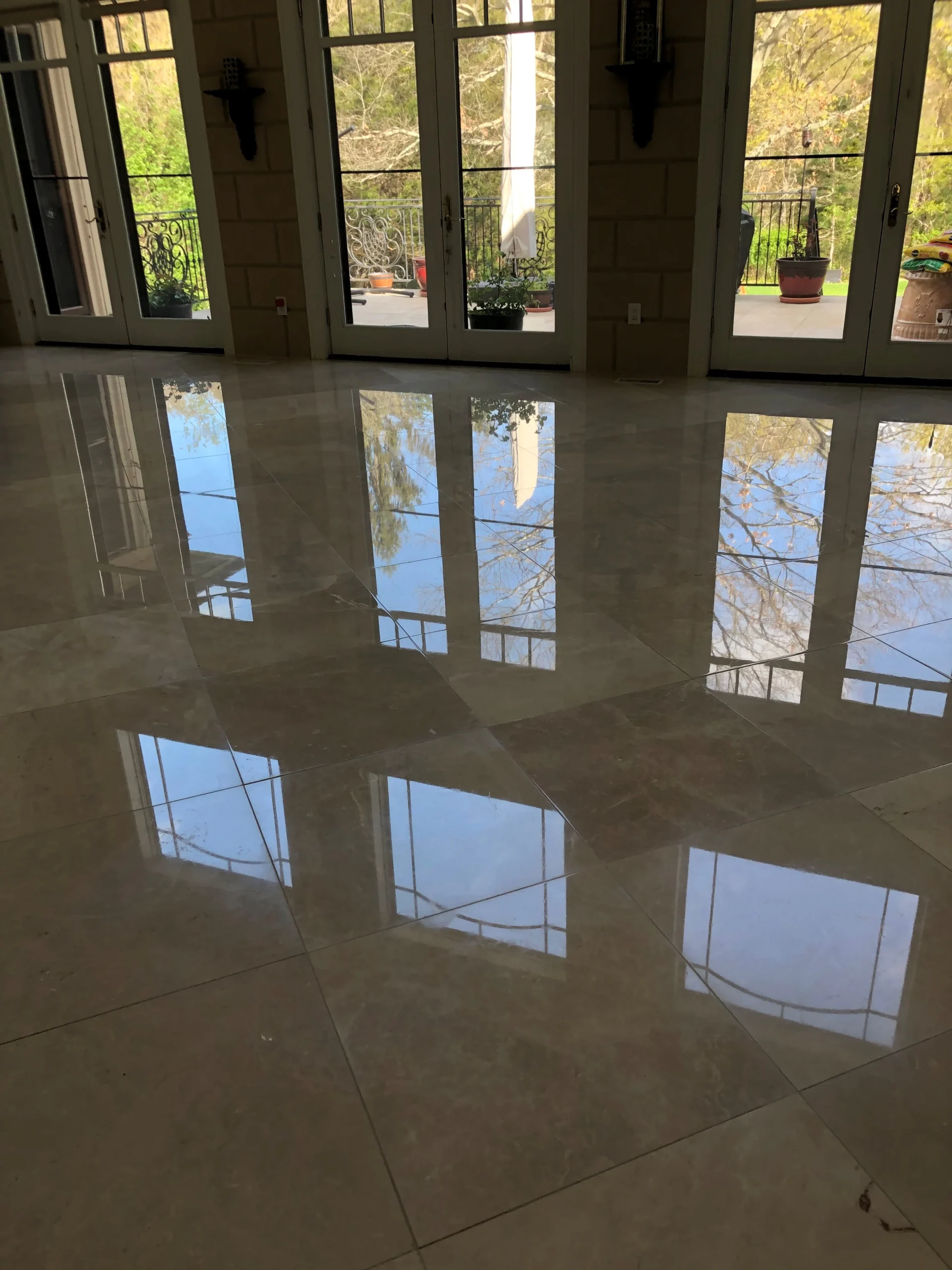
Restoration typically costs less than half of what replacement runs. New marble installation on Long Island averages between $70 and $190 per square foot when you factor in materials, labor, and disposal of the old floor.
Restoring your existing marble usually falls well below that range. The exact cost depends on the size of the space, the condition of the marble, and what level of finish you’re going for. A 100-square-foot bathroom floor in rough shape will cost significantly less to restore than to replace.
The other cost people forget: time. Replacement means demo, disposal, subfloor prep, installation, grouting, and sealing. That’s a week or more of construction mess. Restoration is usually done in one to three days, and you’re not dealing with the same level of disruption.
Yes. Etching happens when acidic cleaners eat into the marble surface. It shows up as dull spots or cloudy areas that won’t buff out no matter how much you clean.
Most homeowners make it worse by using standard household cleaners. Those products contain acids that dissolve the calcium carbonate in marble. The more you clean, the duller it gets.
We remove etching by grinding down the damaged surface layer and re-polishing the marble underneath. It’s not a topical fix—we’re actually removing the etched layer. Once it’s polished back up and sealed, the floor looks like it did before the damage happened. Then we give you the right cleaner so it doesn’t happen again.
Most residential jobs take one to three days depending on square footage and how much work the floor needs. A small bathroom might be done in a day. A large entryway or kitchen floor with heavy damage might take two or three.
The process itself isn’t slow—it’s just thorough. We’re not rushing through it to get to the next job. Each step has to be done right or the finish won’t hold.
We’ll give you a timeline when we quote the job. If something comes up that changes the schedule, we’ll tell you before it becomes a problem. Most projects stay on schedule because we’ve done this enough times to know how long each type of floor actually takes.
If the marble is structurally sound—no major cracks, no pieces missing, no warping—restoration almost always makes more sense. You’re keeping the original material, spending less money, and avoiding a multi-week construction project.
Replacement makes sense when the marble is beyond repair. That means large cracks, broken tiles, or damage that goes deeper than the surface. But that’s rare. Most of what people think is “too far gone” is actually routine restoration work.
The other factor: if your home is historic or has original marble from decades ago, replacement means losing something you can’t get back. Modern marble doesn’t have the same character. Buyers looking at older homes in North Lynbrook specifically want original features, and they’ll pay more for them when they’re well-maintained.
Polishing is the final step in the refinishing process. Refinishing means grinding down the surface to remove damage, then working through progressively finer abrasives until the marble is smooth. Polishing is when we bring out the shine using the finest grit and polishing compounds.
Some floors only need polishing. If the marble is in good shape but just looks dull, we might be able to skip the grinding steps and go straight to polishing. That’s faster and costs less.
But if there’s etching, scratches, or staining, you need the full refinishing process. We have to remove the damaged layer first. Polishing alone won’t fix that—it’ll just make the damage shinier. We’ll tell you which one your floor needs after we look at it.
Yes. Bathroom floors are some of the most common jobs we do. They’re usually where the damage shows up first because that’s where water, soap, and cleaning products hit the marble most often.
Small spaces don’t get skipped or deprioritized. The process is the same whether it’s a 50-square-foot bathroom or a 500-square-foot entryway. We mask everything off, restore the floor, clean up, and seal it.
Bathrooms do require extra care during the work because of fixtures, tight corners, and the need to protect surrounding tile or walls. We’ve been doing this long enough that small spaces aren’t a problem—they just require more precise masking and cleanup. You’ll get the same level of finish as a larger floor.