

You’re living with dull marble that’s lost its shine. The bathroom floors look lifeless. High-traffic areas are scratched and etched from years of the wrong cleaners eating away at the stone.
A contractor walked through and said replacement is your only option. That number made you sick to your stomach—not just because of the cost, but because those floors are original to your home. They’re part of what makes a Gold Coast estate actually worth owning.
Here’s what most people don’t know: if the marble is structurally sound, it can be restored. We’ve spent over 25 years working on floors just like yours—100-year-old installations with materials and craftsmanship you can’t replicate today. The worse the condition, the better we are at bringing it back.
Restoration costs a fraction of replacement. You keep the authentic character. Your property value stays intact. And you’re not hauling irreplaceable stone to a landfill because someone didn’t know how to fix it.
High Definition Marble Restoration Inc isn’t a franchise or a crew that showed up last year. We’re owner-operated, and we’ve been restoring historic floors across Nassau and Suffolk Counties since 1998. The New York Times featured our work in 2001—back when earning that kind of recognition actually meant something.
Muttontown sits in the heart of Long Island’s Gold Coast, where over a thousand estates were built between 1900 and 1930 with imported marble staircases and floors that have survived a century. We understand how those floors were installed, what materials were used, and how to work with stone that’s older than most businesses in this area.
You’re not getting a sales pitch or a one-size-fits-all process. You’re getting someone who’s seen hundreds of floors in worse shape than yours—and knows exactly how to fix them.
First, we assess the floor. Not every marble floor needs the same approach, and historic installations require different techniques than modern ones. We’re looking at the stone type, the damage level, and what’s causing the dullness or etching.
Next comes surface preparation. We remove old coatings, clean out embedded dirt, and address any scratches or etching that’s made the marble look permanently damaged. This step is where experience matters—aggressive methods can ruin old stone, but too light of a touch won’t solve the problem.
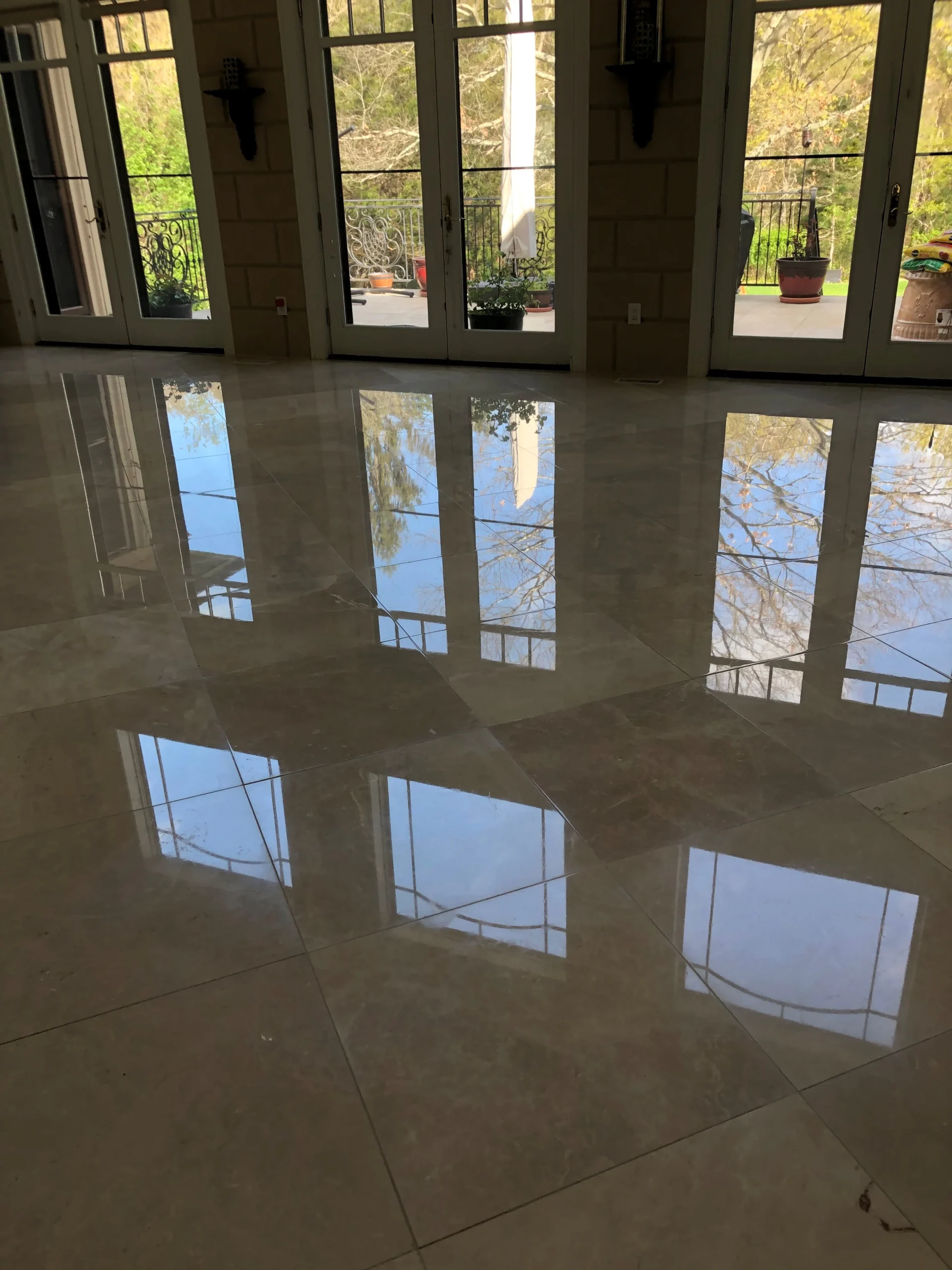
Then we restore the finish. Depending on your floor, that might mean honing, polishing, or a combination of both. We’re bringing back the shine and clarity the marble had when it was first installed, using refined techniques that don’t compromise the stone.
Finally, we protect it. You’ll get clear guidance on how to maintain the restored surface so it stays looking right. We’re not interested in creating a maintenance nightmare or selling you products you don’t need—just straightforward care that keeps the floor in good shape.
The whole process is done with your home protected. We mask everything off, keep the work area contained, and leave your space cleaner than most contractors would.

Ready to get started?
You’re getting a complete restoration, not a surface-level polish that lasts six months. That means we’re addressing the actual damage—scratches, etching, dullness—and restoring the stone to a condition that holds up.
For historic floors common in Muttontown estates, we’re working with materials that were installed using techniques you don’t see anymore. Many of these floors have survived a century because they were built right. Our job is to respect that craftsmanship while using modern restoration methods that actually work.
We also handle bathroom floor restoration, where moisture and cleaning products tend to do the most damage. Marble in wet areas needs specific care, and we’ve seen every type of problem those spaces create.
And here’s something most people don’t know we do: concrete restoration and polishing. If you’ve got old concrete floors that you thought were beyond saving, we can bring those back too. It’s a newer service for us, but it’s the same principle—restore what’s there instead of replacing it.
Transparent pricing means you know what you’re paying before we start. No surprises, no upselling once we’re halfway through the job. You’ll get a free quote, and that’s what you’ll pay.
Restoration typically costs 70% less than full replacement. In the New York area, professional marble restoration runs between $10 and $25 per square foot depending on the condition and the work required. Simple polishing sits on the lower end. Extensive repair and refinishing costs more.
Replacement, on the other hand, means you’re paying for demo, disposal, new materials, and installation. For a historic marble floor, you’re looking at $25,000 or more for an average-sized space—and you’re losing the original stone that adds value to your property.
Here’s the part most contractors won’t tell you: well-maintained original marble floors increase property value by 3-5%. Buyers pay a premium for authentic restored features, especially in areas like Muttontown where historic character matters. Ripping out original marble and replacing it with new stone actually hurts your home’s value and appeal.
If the marble is structurally intact—meaning it’s not cracked all the way through or crumbling—it can be restored. Age doesn’t disqualify a floor from restoration. In fact, older marble is often higher quality than what you can buy today.
The floors installed in Gold Coast estates during the early 1900s were built with materials and methods that aren’t replicated anymore. That stone has survived a century because it’s durable. What you’re seeing as “damage” is usually surface-level: dullness from wear, etching from acidic cleaners, scratches from foot traffic.
We’ve restored floors in far worse condition than most people think is possible. The worse the floor, the better the job is for us—because we know how to work with historic materials and bring them back without causing further damage. Contractors who default to “replacement” often just don’t have the expertise to restore old stone properly.
You’re probably using the wrong cleaner, and it’s making the problem worse. Most general-purpose cleaners are acidic, and acid eats away at marble. Every time you clean with the wrong product, you’re dulling the surface a little more.
Marble is a soft, porous stone made primarily of calcium carbonate. When acidic substances—lemon juice, vinegar, most household cleaners—come into contact with it, they cause a chemical reaction that etches the surface. That etching looks like dullness or water spots, and it doesn’t come out with more scrubbing.
The other issue is wear. High-traffic areas lose their polish over time just from people walking on them. Dirt and grit act like sandpaper, slowly wearing down the finish. Once the polish is gone, the marble looks flat and lifeless no matter how much you clean it. Restoration brings back that finish by re-polishing the surface and removing the etched layer.
A properly restored marble floor can last decades before needing major work again—if you maintain it correctly. The longevity depends on traffic levels, how you clean it, and whether you’re protecting it from damage.
In high-traffic areas like entryways, you might see some dulling after 10-15 years and need a light re-polish. In lower-traffic spaces like formal dining rooms or bedrooms, a restored floor can look great for 20+ years. Compare that to replacement, where you’re paying five times as much and still dealing with the same maintenance requirements.
The key is using the right cleaning products and addressing spills quickly. We’ll walk you through exactly what to use and what to avoid. It’s not complicated, but it does require a different approach than you’d use on tile or hardwood. Most of the marble floors we see in bad shape got that way because someone used the wrong products for years without realizing the damage they were causing.
We work on marble, granite, limestone, travertine, terrazzo—basically any natural stone floor that can be restored. Each material requires a slightly different approach, but the principle is the same: assess the damage, restore the surface, protect the finish.
We also do concrete restoration and polishing, which is a newer service but follows the same philosophy. Old concrete floors that look beyond saving can be ground down, polished, and sealed to create a durable, attractive surface. It’s becoming more popular as people realize they don’t need to cover up or replace existing concrete.
The one material we don’t work with is porcelain. Porcelain tile can’t be restored the same way natural stone can—once it’s damaged, replacement is usually the only option. But if you’ve got natural stone or concrete, we can most likely bring it back. The worse the condition, the more experience matters, and that’s where 25+ years of working with historic and damaged floors makes the difference.
Experience with the specific type of floor you have. If your home was built in the early 1900s and has original marble, you need someone who understands historic installations. Modern techniques don’t always work on old stone, and the wrong approach can cause permanent damage.
Ask how long they’ve been in business and whether the owner is involved in the work. Franchises and crews that subcontract everything out don’t have the same accountability. You want someone who’s going to be there, overseeing the job, and standing behind the results.
Transparent pricing matters too. If a company won’t give you a clear quote upfront, that’s a red flag. You should know what you’re paying before any work starts—no surprises, no upselling halfway through the project. And finally, look for proof of credibility. We were featured in the New York Times back in 2001, which isn’t something that happens by accident. It’s evidence of a track record that goes beyond marketing claims.