


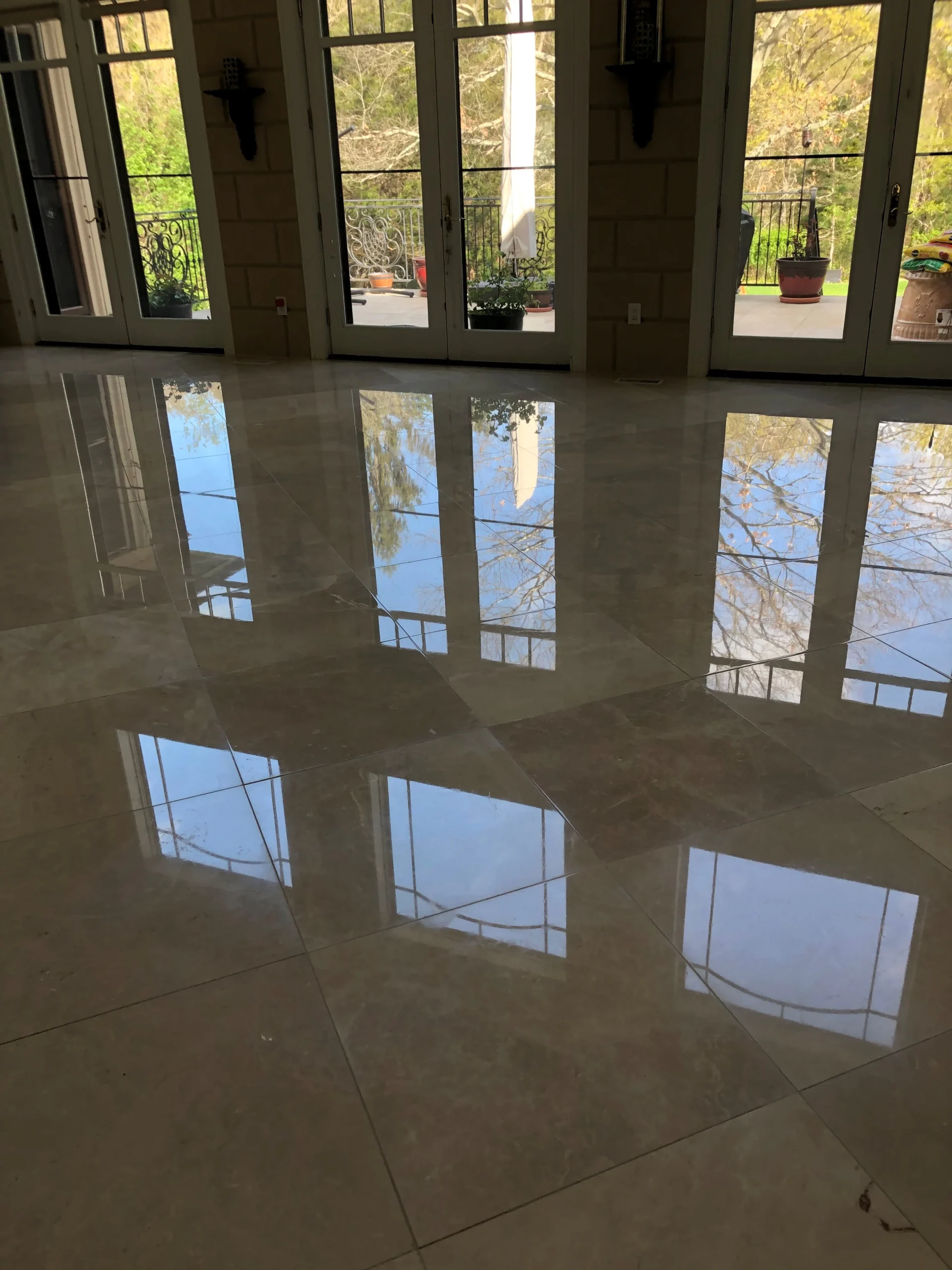
You’ll see the deep, rich veining that’s been hidden under years of damage and dullness. The mirror-like finish reflects light throughout your space in a way that completely changes how your home feels.
Most homeowners in Munsey Park don’t realize how much character their marble has lost until they see it restored. The difference isn’t subtle. It’s the kind of transformation that makes you wonder why you waited so long.
And here’s what matters beyond appearance: restored marble is protected. After polishing, we seal your floors with solvent-based sealer that provides real protection from stains and etching. Not the kind that wears off in months, but protection that lasts years. You’re not just getting a prettier floor. You’re getting one that’s easier to maintain and harder to damage going forward.
High Definition Marble Restoration Inc has been restoring historic floors throughout Nassau County since 1998. The worse the condition, the better the project is for us. That’s not a sales line—it’s what we’re known for.
Munsey Park’s housing stock is some of the oldest and most architecturally significant on Long Island. Many of these homes were built between 1928 and the 1950s with materials and craftsmanship you can’t replicate today. We understand what we’re working with when we step into these properties.
The owner oversees every project personally. No subcontractors. No rushing off to the next job. When you hire us, you’re getting 25+ years of hands-on experience, not a crew that learned marble restoration last month. We were featured in the New York Times back in 2001 for our restoration work, and we’ve spent two decades since then refining our process on some of the most challenging floors in the area.
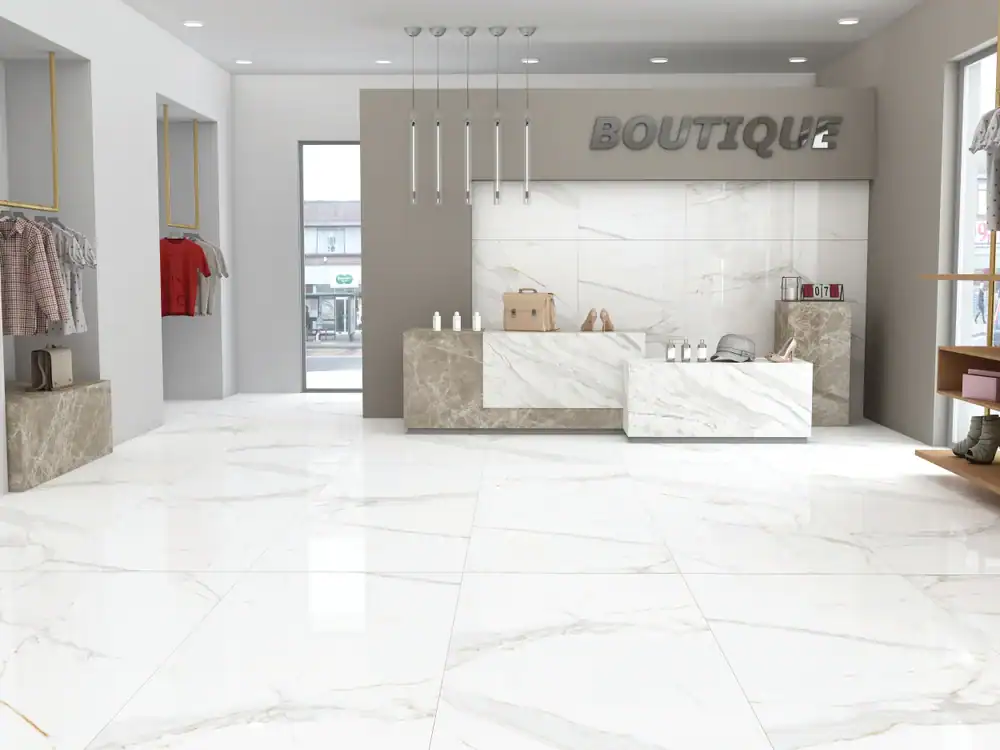
First, we assess the damage. Most marble floor care issues in Munsey Park homes come from decades of hard water exposure, improper cleaning products, or just normal wear on high-traffic areas. We identify what’s causing the dullness, etching, or staining before we start any work.
Then comes the restoration itself. We use diamond abrasives to remove the damaged surface layer—this is where scratches, etches, and stains live. It’s not a quick buff or a topical fix. We’re removing the problem at the surface level and working our way up through finer grits until the marble is completely smooth.
After that, we polish the marble to bring out its natural shine. This is where you see the real transformation. The veining becomes visible again. The color deepens. The surface goes from dull and lifeless to reflective.
Finally, we seal everything. Most restoration companies use water-based sealers because they’re easier to apply. We use solvent-based sealers because they last longer and protect better against the specific issues Long Island homeowners deal with—hard water, humidity, and mineral deposits.
Most jobs are done in less than two days. You’re not dealing with weeks of construction, demolition, or living around a mess. We show up, restore your floors, and you’re back to normal life faster than you’d expect.

Ready to get started?
You’re getting a complete marble floor restoration—not a surface-level cleaning or temporary shine. That means diamond grinding to remove damage, multi-stage polishing to restore the finish, and solvent-based sealing for long-term protection.
We also handle marble repair for cracks, chips, or missing pieces. Historic floors in Munsey Park often have damage that’s accumulated over decades. We don’t just polish around problems—we fix them first so your floor looks and performs the way it should.
Bathroom floor restoration is another area where we see a lot of need. Bathrooms take more abuse than any other room—constant moisture, soap scum, hard water, and cleaning products that weren’t meant for marble. We’ve restored countless bathroom floors throughout Nassau County, and the process is the same: assess, restore, protect.
Here’s what you won’t get: surprise costs, subcontractors you’ve never met, or a crew that doesn’t know the difference between marble and granite. Pricing is transparent before we start. The owner is on-site. And if we say it’ll take two days, it takes two days.
One more thing worth mentioning: we also offer concrete restoration and polishing. It’s a newer service, but it’s becoming more popular with homeowners who want that same high-end finish on basement floors, patios, or garage spaces. Same attention to detail, just a different material.
Restoration typically costs between $5 and $15 per square foot depending on the condition and size of the area. Replacement runs anywhere from $70 to $190 per square foot when you factor in new material, demolition, disposal, installation, and all the hidden costs that come with tearing out old floors.
For a 200-square-foot entryway, you’re looking at $1,000 to $3,000 for restoration versus $14,000 to $38,000 for replacement. The gap gets even wider when you’re dealing with larger spaces like living rooms, hallways, or full-floor installations.
And here’s the part most people don’t think about: replacement takes weeks. Restoration takes days. You’re not living through construction dust, contractors coming and going, or trying to keep your home functional while half of it is torn apart. You get better results, faster, for a fraction of the cost.
Yes. Hard water damage and cleaning product etching are two of the most common issues we see in Munsey Park and throughout Nassau County. Long Island’s water is notoriously hard, and decades of mineral buildup leave marks that look permanent—but they’re not.
Etching from acidic cleaners is the same story. Most household cleaners contain acids that eat away at marble’s surface. Over time, this creates dull spots, rough patches, or areas that just don’t shine no matter how much you clean them.
We remove the damaged layer entirely through diamond grinding, then polish the marble back to its original finish. Once it’s sealed with a solvent-based sealer, it’s far more resistant to the same issues going forward. You’re not just fixing old damage—you’re preventing new damage from happening as quickly.
Most marble polishing services we provide are completed in one to two days depending on the size of the space and the condition of the floors. Smaller areas like bathrooms or entryways can often be done in a single day. Larger projects—full floors, multiple rooms, or heavily damaged marble—might take two days.
Compare that to replacement, which typically takes a week or more once you factor in demolition, disposal, subfloor prep, installation, grouting, and cleanup. You’re also dealing with dust, noise, and limited access to parts of your home during that time.
Restoration is faster because we’re not tearing anything out or rebuilding from scratch. We’re working with what’s already there, which means less disruption to your daily routine and a quicker turnaround from start to finish.
In most cases, restored marble looks better than new marble—especially when you’re working with historic materials. The marble in older Munsey Park homes often came from quarries that no longer exist or produce the same quality. The veining, color depth, and character of that stone can’t be replicated with modern materials.
Restoration brings all of that back. You’ll see details and patterns that have been hidden under years of damage, dullness, and improper maintenance. The finish we create is just as reflective and smooth as the day it was originally installed.
New marble gives you a clean slate, but it doesn’t give you the same craftsmanship or irreplaceable character. And when you’re talking about a home with historic value, ripping out original materials often hurts resale value rather than helping it. Buyers pay a premium for authentic, well-maintained period features.
Maintenance is straightforward once your floors are properly restored and sealed. Use a pH-neutral cleaner designed specifically for marble—nothing acidic, nothing abrasive. Avoid vinegar, lemon-based cleaners, or anything you’d use on tile or laminate. Those products will etch the surface over time.
Wipe up spills quickly, especially anything acidic like wine, coffee, or citrus juice. The sealer we apply provides good protection, but it’s not indestructible. The faster you clean up spills, the less chance they have to penetrate or stain.
Resealing depends on traffic and use, but most residential floors need resealing every two to three years. High-traffic areas like entryways or kitchens might need it sooner. You’ll know it’s time when water stops beading on the surface and starts soaking in instead. At that point, give us a call and we’ll reseal everything to keep your floors protected.
Yes. Bathroom floor restoration is one of our most common projects. Bathrooms are tough on marble because they deal with constant moisture, soap scum, shampoo residue, and hard water—all of which damage marble faster than normal foot traffic.
The restoration process is the same, but the sealing step becomes even more important. We use solvent-based sealers that hold up better in high-moisture environments compared to water-based options. This gives you stronger protection against staining and etching in areas where marble takes the most abuse.
We also restore marble in kitchens, entryways, and any other area where you’ve got natural stone that needs help. The location doesn’t change our approach—we assess the damage, remove it, restore the finish, and seal everything properly so it lasts.