

You’ve probably noticed your marble floors don’t look the way they used to. The shine’s gone. There are dull spots where acidic spills etched the surface. Scratches have built up over the years, and no amount of cleaning brings back that original luster.
Here’s what most homeowners don’t realize: that damage isn’t permanent. Professional marble floor restoration removes the damaged layer and exposes fresh stone underneath. We use industrial diamond pads to grind down the surface in stages, then progressively finer grades to bring it to a mirror-like finish.
The result isn’t just cosmetic. Restored marble is sealed properly, which means it resists staining and etching going forward. You’re not just getting a floor that looks better—you’re getting one that’s protected against the daily wear that damaged it in the first place. And you’re doing it for a fraction of what replacement would cost.
High Definition Marble Restoration Inc has spent over 25 years working on Long Island’s most challenging restoration projects. We’re not a cleaning company that dabbles in stone care. We’re specialists who focus on historic marble floors, the kind installed in Medford’s older homes during the mid-20th century when quality materials and craftsmanship were standard.
Most of Medford’s housing stock dates back to the 1970s, with many homes built even earlier. Those properties often feature original marble in entryways, bathrooms, and kitchens—materials that were meant to last generations. Our owner-operated approach means you work directly with experienced craftsmen who understand how these older installations differ from modern ones.
We’ve been featured in the New York Times for our restoration work. We’re not the cheapest option, and that’s intentional. You’re paying for expertise that prevents costly mistakes and delivers results that last decades, not years.
First, we assess the condition of your marble. Not all damage is the same. Etching requires different treatment than staining. Cracks need repair before polishing. We identify what your specific floor needs rather than applying a one-size-fits-all approach.
Next comes the actual restoration. We use diamond abrasives to remove the damaged surface layer—this is called honing. It’s a grinding process that eliminates scratches, etches, and stains by exposing fresh stone. Then we move through progressively finer diamond pads, each one smoothing the surface more than the last.
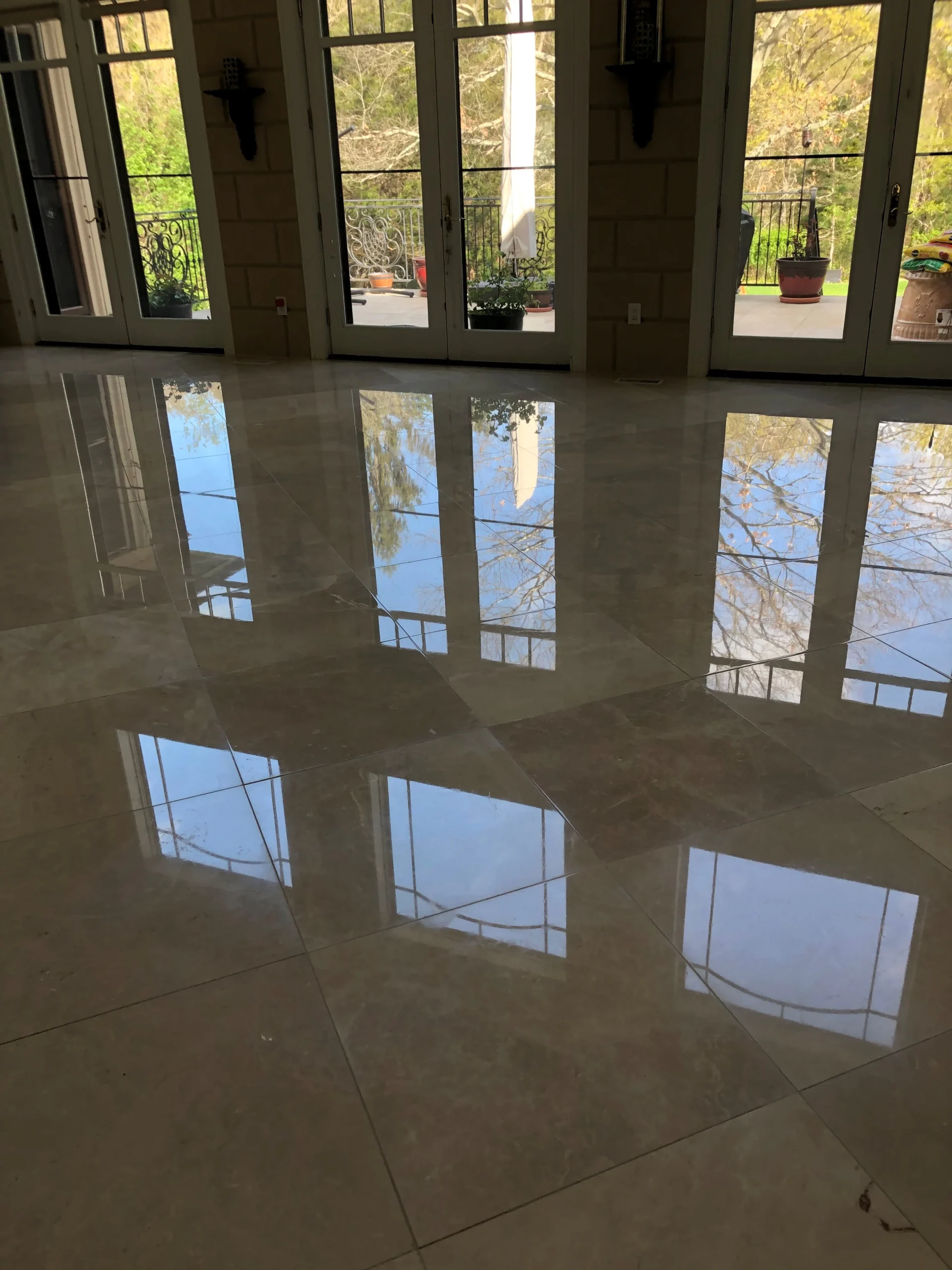
The final step is polishing. This brings up the shine you remember, creating that reflective finish marble is known for. We finish with a penetrating sealer that protects the stone from future damage without changing its appearance. The whole process typically takes a day for most residential floors, and you can walk on it immediately after we’re done.

Ready to get started?
Our marble floor restoration service covers the full scope of what your floors need. That includes crack and chip repair using color-matched epoxy that blends seamlessly with the surrounding stone. We handle stain removal, even deep-set discoloration that’s penetrated below the surface. Etching from acidic damage gets ground out completely.
We also restore marble in bathrooms, which face unique challenges. Constant moisture exposure, soap buildup, and hard water deposits require specialized treatment. Bathroom floor restoration in Medford homes often involves dealing with grout issues and tile lippage that developed over decades of settling.
For historic properties—and Medford has plenty—we bring specific expertise in working with older marble types and installation methods. Calcite marble, which is common in vintage homes, requires different handling than modern stone. We understand the mineral composition and how different varieties respond to restoration techniques. That knowledge prevents damage and produces results that respect the original character of your home.
Medford homeowners are sitting on significant property value. The median home price here recently hit $565,000, up 5% year over year. With over 90% of housing units owner-occupied, protecting that investment matters. Original marble floors are a selling point when maintained properly—and a liability when they’re visibly damaged.
Professional marble floor restoration typically runs between $2 and $3 per square foot in the Medford area. That’s for standard honing and polishing. If your floor needs crack repair, deep stain removal, or other specialized work, costs go up accordingly.
Compare that to replacement, which can easily hit $15 to $25 per square foot once you factor in demolition, disposal, new material, and installation. Restoration costs a fraction of replacement and preserves your original stone.
The exact price depends on your floor’s current condition and square footage. Heavily damaged marble takes more time and multiple passes with different diamond grits. We provide free quotes after seeing the floor in person, because accurate pricing requires understanding what we’re working with.
Yes. Etching happens when acidic substances—wine, citrus juice, vinegar, even some cleaners—chemically react with the calcium carbonate in marble. That reaction dissolves a thin layer of stone, leaving a dull or rough spot that won’t buff out with regular cleaning.
The only way to remove etching is to grind down past the damaged layer. We use diamond honing pads to remove the etched surface, then polish the fresh stone underneath. This completely eliminates the dull spots and restores uniform shine across the entire floor.
If your marble has widespread etching from years of improper cleaning products, full restoration is the answer. Surface treatments and DIY kits don’t work because they can’t remove material—they just try to hide the damage temporarily.
Most residential marble floor restorations take one full day. That includes honing, polishing, and sealing. Larger floors or those requiring extensive repair work may take longer.
The process can’t be rushed. Each stage of diamond abrasive needs adequate time to do its job. Skipping steps or moving too quickly produces poor results—uneven shine, visible scratches, or incomplete stain removal.
You can walk on the floor immediately after we finish. The sealer we use penetrates into the stone rather than sitting on top, so there’s no curing time required. Normal use can resume right away, though we recommend waiting 24 hours before placing heavy furniture back.
Cleaning removes dirt and surface grime. Restoration removes damaged stone and exposes fresh material underneath. They’re completely different processes.
If your marble looks dull, scratched, etched, or stained, cleaning won’t fix it. Those problems exist in the stone itself, not on top of it. You need abrasive restoration to physically remove the damaged layer. That’s why homeowners get frustrated when professional cleaning services can’t restore their marble’s appearance—cleaning isn’t designed to address structural damage.
Restoration uses industrial equipment and diamond abrasives. We’re literally grinding down and refinishing the stone surface. It’s closer to refinishing a hardwood floor than cleaning it. The result is a floor that looks new again because you’re seeing stone that was previously buried under years of microscopic damage.
Yes. Historic marble restoration is actually our specialty. We’ve worked on floors installed in the 1920s through 1970s throughout Nassau and Suffolk Counties. Older marble presents unique challenges that require specific expertise.
Historic installations used different setting methods, adhesives, and stone varieties than modern floors. The marble itself often has different mineral composition. Calcite marble, red marble with hematite, and green-tinted marble from limonite all require adjusted restoration techniques. Using the wrong approach can cause permanent damage.
Medford’s housing stock includes many homes from the 1960s and 1970s with original marble still in place. That stone was built to last, but decades of wear and improper maintenance take their toll. We’ve spent over 25 years developing the skills to bring these historic floors back to original condition while preserving their authentic character. Once original marble is removed, it’s gone forever—restoration lets you keep that irreplaceable material.
Yes. Cracks and chips are repairable using color-matched epoxy that bonds to the stone. We fill the damaged area, let it cure, then grind it flush with the surrounding surface during the honing process. When done correctly, repairs blend invisibly with the rest of the floor.
Cracks are actually important to address quickly. Once marble cracks, the damage spreads over time as pressure continues to act on the weakened area. Cracks also collect dirt and moisture, which leads to staining and potential mold growth in the substrate below.
Not all cracks mean your floor needs replacement. Even significant damage is often repairable. We assess the structural integrity during our initial inspection. If the marble is still sound and properly supported, repair and restoration will give you many more decades of use. That’s almost always more cost-effective than tearing out and replacing original stone, especially in historic Medford homes where that marble is part of the property’s character and value.