

You get your original investment back. That’s what matters here. When marble loses its shine, gets etched by acidic spills, or develops scratches from years of foot traffic, most people assume replacement is the only option. It’s not.
Professional marble floor restoration removes surface damage through a multi-step process that grinds away imperfections, re-levels the surface, and polishes it back to the finish you remember. The result isn’t just cosmetic—it’s structural protection that extends your floor’s life by decades.
If you’re in an older home in Islip Terrace or anywhere across Nassau County, you already know how hard it is to match historic materials. Restoration preserves what you have, maintains the character of your space, and costs a fraction of what you’d spend ripping everything out and starting over. You keep the marble that belongs in your home, and it looks like it was installed yesterday.
High Definition Marble Restoration Inc is owner-operated, which means the person you talk to is the same person overseeing your job. No subcontractors. No handoffs. Just direct accountability from start to finish.
We’ve spent over two decades working on Long Island’s most challenging floors—the 100-year-old marble in Gold Coast estates, the worn bathroom floors in historic homes, and the neglected entryways that other companies walk away from. The New York Times featured our work back in 2001, but what matters more is that we’re still here, still doing this, and still taking on the projects that require real skill.
Islip Terrace sits in the heart of a region filled with older homes that deserve proper care. We understand the materials, the construction methods, and the mistakes that happen when inexperienced contractors try to “clean” marble with the wrong products. That’s why homeowners call us after someone else made it worse.
First, we assess the damage. Not every floor needs the same treatment, and we’re not going to upsell you on services you don’t need. We look at etching, scratches, lippage (uneven tiles), staining, and overall dullness to determine the right approach.
Then we start with grinding. This is where we remove the damaged surface layer using diamond abrasives in progressively finer grits. If your floor has lippage from poor installation, this is where we level it. If it has deep scratches or etch marks, this is where they disappear. It’s a dusty process, but we contain it.
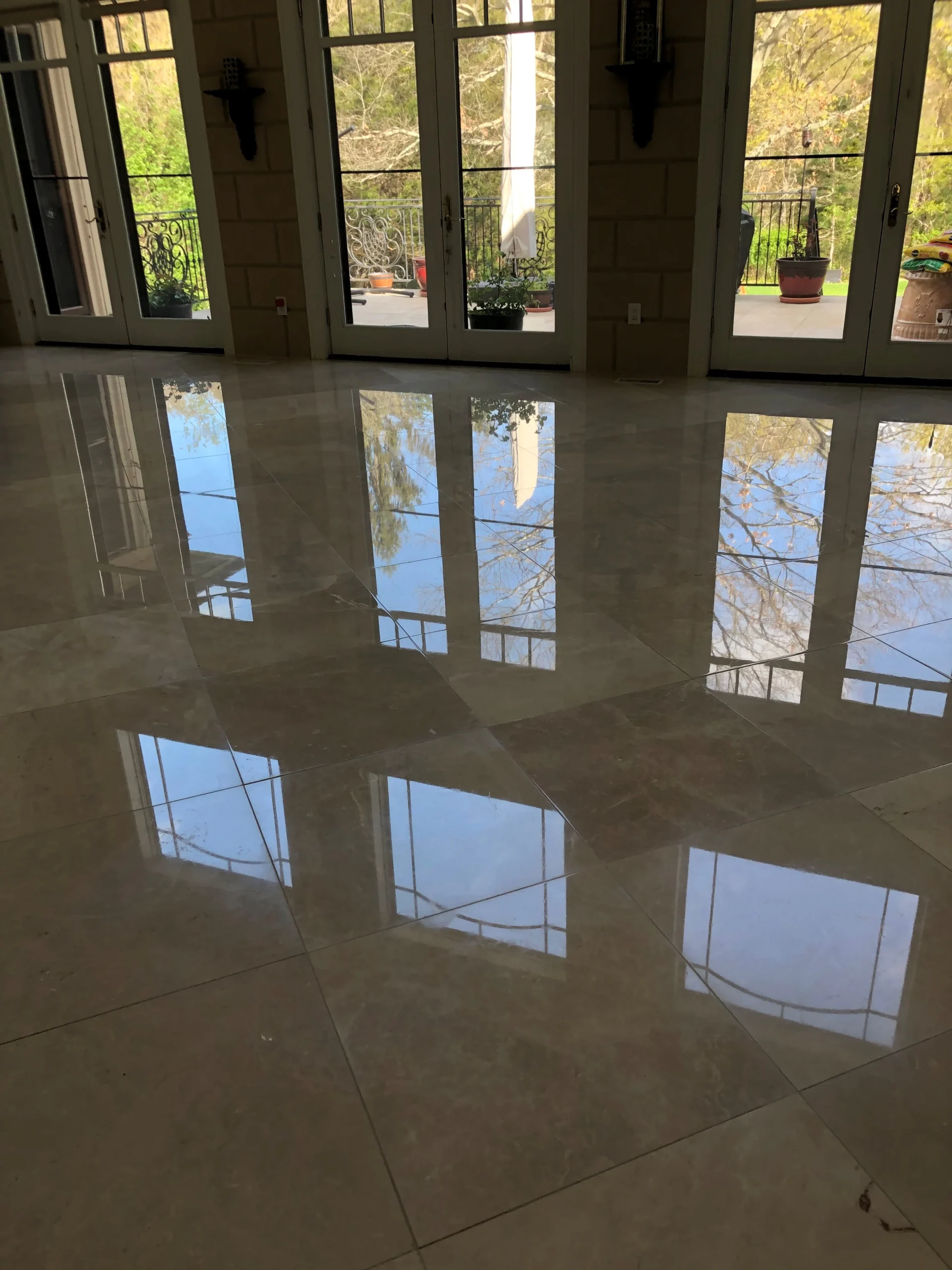
After grinding comes honing, which smooths the surface to your desired finish—matte, satin, or semi-polished. Then we polish using finer abrasives and compounds until the marble reflects light the way it should. Finally, we seal the surface to protect against future staining and make maintenance easier.
The whole process can take anywhere from one day to several, depending on square footage and condition. You’ll know the timeline upfront, and we’ll protect the surrounding areas so the rest of your home stays clean. When we’re done, your marble looks like new marble—but it’s the same floor you’ve always had.

Ready to get started?
You’re getting a complete restoration, not just a surface buff. That means we handle everything from deep cleaning and stain removal to crack repair and chip filling. If your marble has structural issues, we address those before we touch the finish.
For homes in Islip Terrace and the surrounding Nassau County area, we also bring expertise in historic floor restoration. Many of Long Island’s older properties have marble that’s been there for 50, 75, even 100 years. These floors weren’t installed with modern materials or methods, and they require someone who understands how to work with them without causing more damage.
We also offer concrete restoration and polishing, which has become increasingly popular for basements, garages, and modern interior spaces. It’s a different process than marble, but the principles are the same—remove damage, refine the surface, protect the investment.
Every job includes transparent upfront pricing, so you know what you’re paying before we start. We don’t do surprise charges or hidden fees. And because we’re owner-operated, you’re getting our full attention on your project, not a crew we barely supervise.
Most residential marble floor restorations take between one and three days, depending on the square footage and the condition of the stone. A small bathroom might be done in a day. A large foyer or kitchen could take longer, especially if there’s significant damage or lippage that needs correction.
We’ll give you an accurate timeline after we see the floor in person. The process can’t be rushed—each step has to be completed properly before moving to the next, or the results won’t hold up. That said, we work efficiently and keep disruption to a minimum.
If you’re planning around an event or have a specific deadline, let us know upfront. We’ll tell you honestly whether it’s doable, and we’ll prioritize your schedule where we can without compromising the quality of the work.
Yes. Etching happens when acidic substances—lemon juice, vinegar, wine, certain cleaners—react with the calcium carbonate in marble and dissolve the surface. It leaves dull spots that look like water stains but won’t wipe away. It’s one of the most common problems we see, especially in kitchens and bathrooms.
The only way to remove etching is to grind away the damaged layer and re-polish the surface. Topical products and DIY kits don’t work—they might hide the damage temporarily, but they don’t actually fix it. Professional restoration removes the etch completely and brings back the original finish.
If the etching is severe or widespread, the process takes longer, but it’s absolutely fixable. We’ve restored marble floors that looked completely ruined and brought them back to a flawless shine. The key is using the right equipment and technique, which most cleaning companies don’t have.
By a significant margin. Replacing marble means demolition, disposal, new material costs, new installation, and dealing with the mess and downtime that comes with a full renovation. You’re easily looking at tens of thousands of dollars for a typical residential floor, and that’s assuming you can even find matching marble.
Restoration costs a fraction of that because we’re working with what’s already there. There’s no demolition, no new materials, and no extended construction timeline. You get a floor that looks brand new without the expense or hassle of replacement.
For historic homes in Islip Terrace and across Long Island, restoration also preserves the original character of the property. You can’t always match old marble with modern stone—the quarries have changed, the colors have shifted, and the quality isn’t always the same. Keeping your original floor means keeping the authenticity and value of your home intact.
Polishing is the final step in restoration, but it’s not the same thing as full restoration. If your marble just needs a shine boost and has no significant damage, polishing alone might be enough. But if there are scratches, etching, stains, or uneven areas, you need restoration first.
Restoration involves grinding away the damaged surface, honing it smooth, and then polishing. Polishing by itself only affects the top layer—it can’t remove scratches or etch marks that go deeper than the surface. Trying to polish over damage just highlights the flaws.
We’ll assess your floor and tell you what it actually needs. If polishing is sufficient, that’s what we’ll recommend. If it needs full restoration, we’ll explain why and what the process involves. We’re not here to oversell—we’re here to fix the problem correctly so it lasts.
That’s exactly the kind of work we specialize in. Historic marble floors require a different level of care and expertise than modern installations. The stone is often softer, the installation methods were different, and previous “repairs” may have caused additional damage that needs to be undone.
We’ve worked on floors that are over a century old—marble that’s been walked on by generations, survived poor maintenance, and endured well-meaning but damaging cleaning attempts. These projects are challenging, but they’re also the most rewarding because the results are dramatic.
Long Island has an incredible concentration of historic properties, especially in Nassau County. We understand the materials used in these homes, the common issues they develop over time, and how to restore them without compromising their integrity. If your marble floor has history, we know how to honor that while bringing it back to life.
Maintenance is straightforward if you follow a few basic rules. First, clean up spills immediately—especially anything acidic. Marble is porous and reactive, so the longer a spill sits, the more likely it is to stain or etch. Use a pH-neutral cleaner designed for natural stone, not general household cleaners.
Second, use mats or rugs in high-traffic areas and entryways to reduce the amount of dirt and grit that gets tracked across the floor. Small particles act like sandpaper and will dull the finish over time. Sweep or vacuum regularly to keep the surface clean.
Third, reseal the marble every one to three years, depending on traffic and use. Sealing doesn’t make marble stain-proof, but it gives you more time to clean up spills before they penetrate. We can handle resealing for you, or you can do it yourself with the right product. We’ll walk you through what your specific floor needs and how often it should be done.