

You’ve probably been told replacement is your only option. That’s rarely true, and it’s almost never the smart choice.
Marble floor polishing and restoration typically costs $5-15 per square foot. New marble installation runs $70-190 per square foot on Long Island. Most of our Islip projects finish in under three days, not the weeks that full replacement demands.
But the real value isn’t just financial. Once you rip out those original floors—especially in historic homes—they’re gone forever. The craftsmanship, the materials, the character that buyers specifically seek when they’re looking at properties in Nassau and Suffolk Counties. Restoration preserves that authenticity while giving you floors that look stunning again.
You’re not just saving money. You’re protecting an investment that increases property value by 3-5% according to market data on well-maintained historic features. That’s the difference restoration makes when it’s done right.
High Definition Marble Restoration Inc has been restoring historic floors across Nassau and Suffolk Counties since 1998. The New York Times featured our work in 2001, but what matters more is this: we’re still owner-operated, and the owner still personally oversees every project.
That’s not common in this industry. Most companies subcontract the actual work. We don’t, because marble restoration is a highly skilled job where stone can be ruined easily by inexperienced hands.
Islip and the surrounding Long Island communities are full of homes built during the early 1900s—properties with original marble installed using techniques that simply aren’t replicated today. Those floors are what we specialize in. The worse the condition, the better we can demonstrate what real restoration expertise looks like. If you’ve been told your floors are too far gone, we’d like to take a look before you make that replacement decision.
First, we assess the damage. Etching from household cleaners, hard water stains from Long Island’s mineral-rich water, cracks, chips—we document everything during the free quote so you know exactly what you’re paying before any work starts.
Next comes surface preparation. We remove old sealers, clean out embedded dirt, and repair any structural issues. This is where experience matters most—different marble types require different approaches, and century-old installation methods affect how we handle repairs.
Then we restore the surface itself. Depending on your floor’s condition and your goals, this might mean honing away etching and scratches, polishing to bring back that original shine, or both. We use progressively finer abrasives to rebuild the surface without removing more material than necessary.
Finally, we seal and protect. The right sealer depends on your marble type, your home’s conditions, and how the space gets used. We’re not guessing—we’re applying 25+ years of hands-on knowledge to make sure your restored floors stay beautiful.
Most projects take one to three days total. We mask and protect surrounding areas carefully, and we clean up completely before we leave. You get your space back fast, and it actually looks the way it’s supposed to.

Ready to get started?
Every marble floor restoration project includes damage assessment, surface repair, professional honing or polishing, and protective sealing. But what that looks like depends entirely on your specific floors and their condition.
For Islip homeowners dealing with cleaning product damage—one of the most common problems we see—restoration focuses on removing the etching that acidic cleaners create. That cloudy, dull appearance isn’t permanent. It’s surface damage that proper marble floor care techniques can reverse.
Hard water damage is another major issue across Long Island. Decades of mineral deposits create stains that look permanent but aren’t. Bathroom floor restoration often involves removing these mineral buildups, repairing any erosion or corrosion, and sealing properly to prevent future accumulation.
We also handle cracks, chips, and structural repairs. Some marble repair work requires filling and color-matching. Some requires stabilizing the substrate underneath. We address whatever your floors actually need, not just what’s visible on the surface.
And if you’re interested in alternatives, we now offer concrete polishing services too. Polished concrete has become one of the fastest-growing flooring trends—it’s cost-effective, durable, and creates a glossy finish similar to marble and terrazzo. It’s worth considering if you’re evaluating all your options.
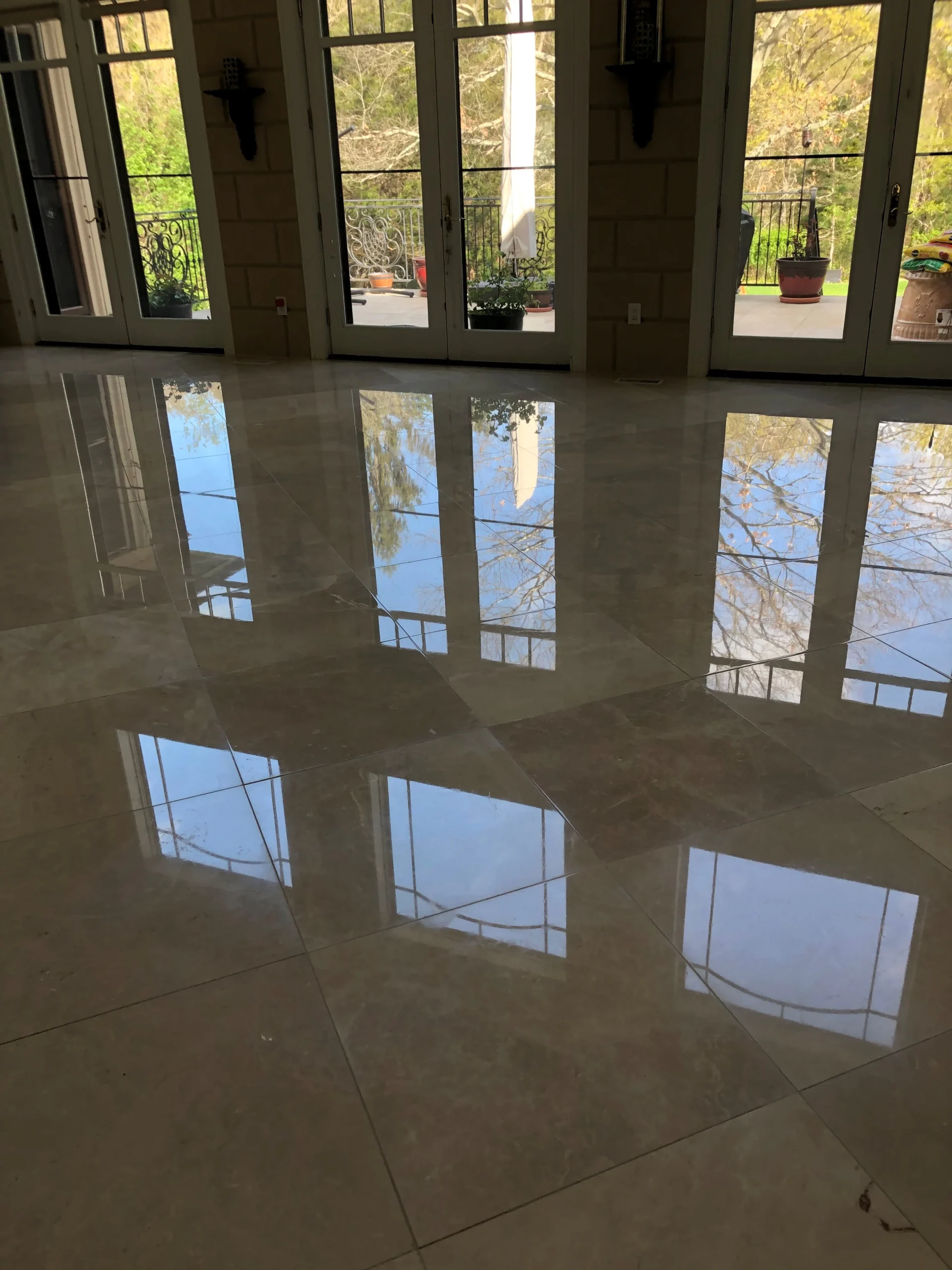
Restoration typically costs $5-15 per square foot depending on your floor’s condition and size. Replacement runs $70-190 per square foot for new marble installation on Long Island—that’s not including demolition and disposal of your existing floors.
Most of our Islip projects cost 60-80% less than replacement quotes. A recent historic home restoration came in at approximately 70% less than what replacement would have required, and the project took three days instead of several weeks.
The math is straightforward. If you’re looking at 500 square feet of marble, restoration might cost $2,500-7,500. Replacement could easily hit $35,000-95,000. That’s a significant difference, especially when restoration preserves the original character and craftsmanship that makes historic Long Island homes valuable to buyers.
Yes. Etching from acidic cleaners is one of the most common problems we fix, and it’s completely reversible with the right approach.
What’s happening is the acid is dissolving the calcium carbonate in your marble, creating that dull, cloudy appearance. It looks like the shine is gone forever, but the damage is only surface-level. Professional marble polishing services remove the damaged layer and rebuild the surface using progressively finer abrasives.
We’ve restored floors where homeowners used standard bathroom cleaners for years without realizing the damage being done. The floors looked terrible—cloudy, uneven, worn. After restoration, they looked like new installations. The key is catching it before the etching goes too deep, but even severe cases are usually fixable. If you’re seeing this kind of damage in your Islip home, get it assessed before it gets worse.
Most residential projects take one to three days depending on square footage and condition. That’s dramatically faster than replacement, which can take several weeks once you factor in demolition, substrate prep, installation, and curing time.
A typical 300-400 square foot marble floor restoration—common for Islip historic home entryways and foyers—usually takes two days. Day one covers prep, repair, and initial honing. Day two handles final polishing and sealing. You can walk on the floors the same day we finish.
Larger projects or floors with extensive damage might take three days. Complex bathroom floor restoration with significant hard water damage and tile repairs might need similar timeframes. But you’re still looking at days, not weeks. And because we’re owner-operated and don’t juggle multiple job sites, we finish your project before moving to the next one. You’re not waiting around wondering when we’ll be back.
Well-maintained original floors in historic homes can increase property value by 3-5% according to real estate data. Buyers actively seek authentic period features when they’re shopping for homes in Nassau and Suffolk Counties.
But here’s what matters more than percentages: buyers pay premium prices for homes where the historic character has been preserved properly. When they see original marble floors that have been professionally restored, they’re looking at craftsmanship and materials that can’t be replicated today. That’s valuable.
Replace those floors with modern materials, and you’ve lost that authenticity. You might have nice new floors, but you don’t have what makes historic Long Island properties special. Restoration maintains that value while giving you floors that function beautifully. It’s the smart financial choice if you’re thinking about resale, and it’s the right choice if you’re planning to stay and want to preserve what makes your home unique.
Honing creates a smooth, matte finish. Polishing creates that glossy, reflective shine most people picture when they think of marble floors. Both are part of professional marble restoration, but which one you need depends on your goals and your marble’s current condition.
Honing uses abrasives to remove scratches, etching, and surface damage. It levels the stone and creates an even surface, but it doesn’t produce shine on its own. If your floors are heavily damaged, we’ll hone first to eliminate the problems, then decide whether to stop at a honed finish or continue to polishing.
Polishing takes that honed surface and buffs it to a high gloss using finer and finer abrasives. This is what brings out marble’s natural beauty and color depth. Most Islip homeowners with historic floors want that polished look—it’s how the floors originally appeared when they were installed.
Some spaces work better with honed finishes, though. Bathrooms with moisture issues, for example, sometimes benefit from the slip-resistance that honing provides. We’ll walk you through the options during your assessment so you understand what makes sense for your specific situation.
If the marble itself is intact—not crumbling, not completely broken apart—it can almost always be restored. The question is whether restoration makes sense given the extent of damage and your budget.
Surface damage like etching, scratches, dullness, and stains is straightforward to fix. That’s the majority of what we see in Islip homes. Cracks and chips are repairable as long as the pieces are stable and the substrate underneath is sound. Even floors that look terrible often just need professional marble refinishing to bring them back.
The only time replacement makes more sense is when the substrate has failed—when the concrete or mortar bed underneath has deteriorated so badly that the marble tiles are loose and unstable throughout the floor. That’s rare in well-built historic homes, but it happens. Or if you genuinely want to change the flooring material entirely for design reasons.
Get a professional assessment before you decide. We’ll tell you honestly whether restoration will work and what it’ll cost. If replacement actually makes more sense, we’ll say so. But in 25+ years of doing this work, that’s the exception, not the rule.