


You’re dealing with marble that’s lost its shine, covered in etching from household cleaners, or stained beyond what you thought was fixable. Maybe you’ve been told replacement is your only option, with quotes that made you wince.
Here’s what changes after professional marble floor restoration: those cloudy, dull areas disappear. The etching from acidic spills gets ground out and repolished. Stains that seemed permanent lift out with the right techniques and equipment.
Your floors look like they did when they were first installed. Not “better than before” in some vague marketing sense – actually restored to their original finish. The process typically costs 60-80% less than tearing out and replacing marble, and in Hempstead’s historic homes, you’re keeping the original character that adds real value to your property.
Most residential marble floor restoration lasts 10-15 years with normal use and proper maintenance. That’s significantly longer than the 2-3 years you’d get from basic cleaning services, and it’s done without the dust, mess, and disruption of a full replacement project.
We’ve worked on marble floors throughout Hempstead and Nassau County since 1998. We’re owner-operated, which means the person who quotes your job is the same person overseeing the work.
We were featured in the New York Times back in 2001 for our restoration work. Our reputation is built on a straightforward approach: the worse the condition, the better we can demonstrate what proper restoration actually accomplishes.
Hempstead has countless historic properties with original marble floors installed using techniques that aren’t replicated today. We specialize in those challenging projects – the 100-year-old floors with materials and installation methods that require specific knowledge to restore without causing damage. You’re not getting a crew that learned marble work last month. You’re getting decades of refined processes on the exact type of floors common in this area’s older homes.
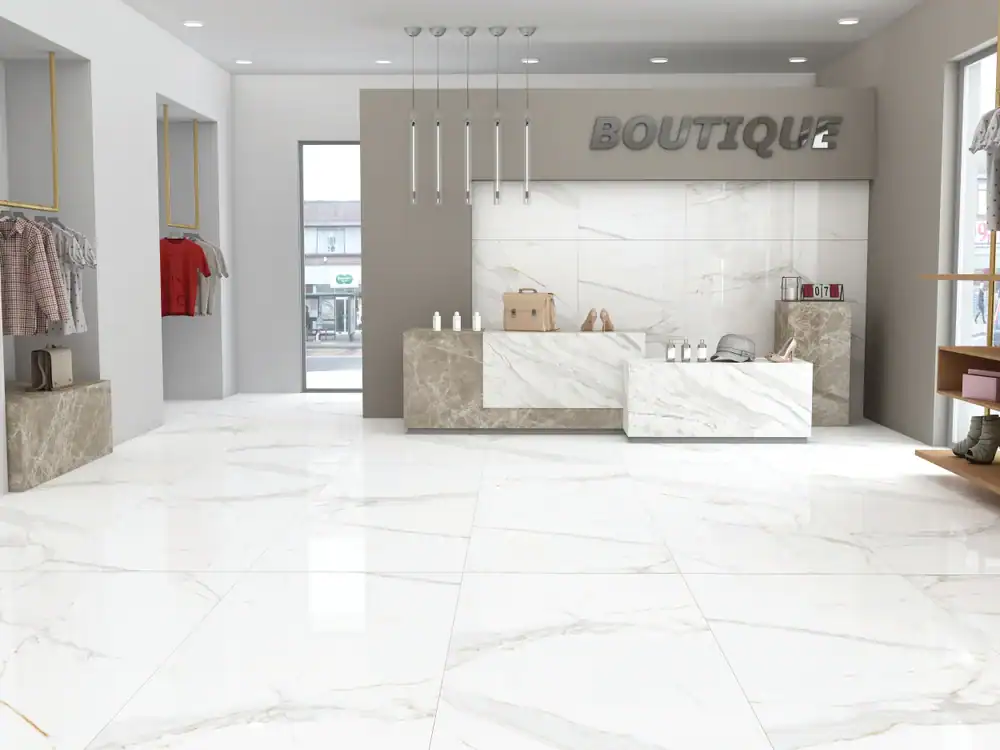
First, we assess the current condition of your marble floors. This means identifying the type of damage – etching, staining, scratches, or dullness – and determining which restoration approach will work. Not all marble damage is the same, and the assessment tells us whether we’re dealing with surface-level issues or deeper problems that need more intensive work.
Next comes the actual restoration. For most marble floor polishing projects, we use diamond abrasives to remove the damaged layer and bring fresh marble to the surface. This process grinds out etching, removes stains, and eliminates scratches. We work through progressively finer grits until the marble reaches the desired finish – whether that’s a high polish or a honed matte look.
The final step is sealing and protection. We apply a penetrating sealer that helps protect against future staining without changing the appearance of the stone. Then we walk you through proper marble floor care so you know exactly which products are safe to use and which ones will cause the etching that probably brought you here in the first place.
The entire process is done on-site, and we complete 99% of the work without creating the dust you’d expect. Most residential projects in Hempstead take 1-3 days depending on square footage and damage severity.

Ready to get started?
You get a complete assessment before any work starts. We identify the specific type of damage, explain what’s causing it, and give you transparent pricing upfront. No surprises, no hidden costs that appear halfway through the project.
The restoration itself addresses whatever damage exists – etching from acidic cleaners, stains from spills, scratches from furniture, or general dullness from years of wear. We’re equipped to handle bathroom floor restoration where hard water has left mineral deposits, kitchen floors with etching around islands and prep areas, and historic marble in entryways that’s seen decades of foot traffic.
Long Island’s coastal environment creates specific challenges for marble surfaces. The combination of salt air, humidity, and hard water throughout Nassau County accelerates deterioration in ways that require adjusted restoration techniques. We account for these local conditions in how we approach the work and what we recommend for ongoing maintenance.
You also get education on proper care after restoration. Most marble damage happens because homeowners don’t know which cleaners are safe. Standard household products – even ones marketed as “natural” or “gentle” – contain acids that etch marble on contact. We’ll tell you exactly what to use and what to avoid so your restored floors actually stay that way.
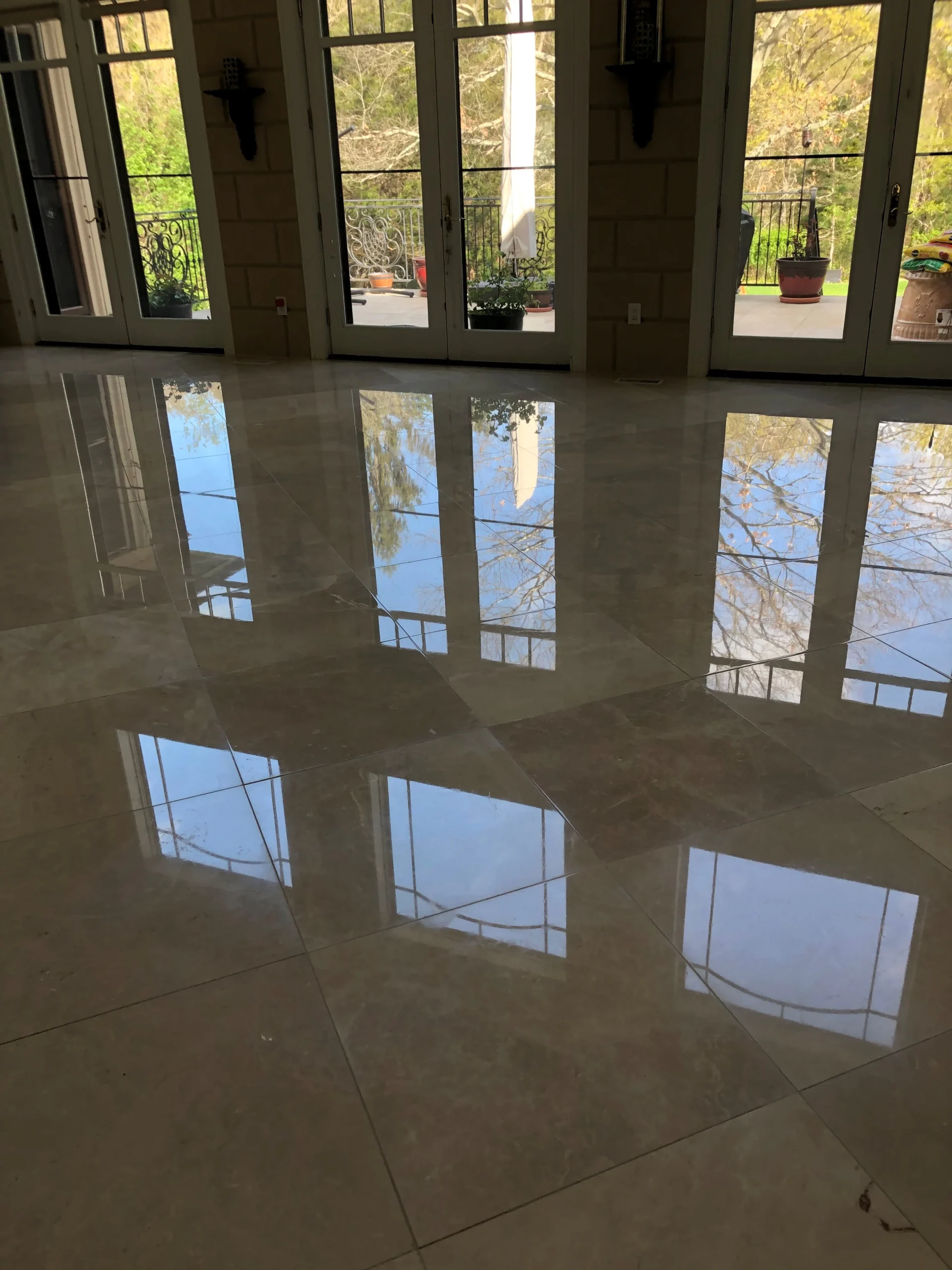
Marble floor restoration typically runs $3-8 per square foot in Hempstead, depending on the current condition and the level of damage we’re addressing. Light etching and dullness fall on the lower end. Deep staining, severe scratches, or lippage issues that require more intensive grinding fall on the higher end.
For context, that’s 60-80% less than replacement costs. Tearing out and installing new marble floors runs $15-25+ per square foot when you factor in demolition, disposal, new material, and installation. Restoration brings your existing floors back to original condition without that expense or disruption.
We provide transparent pricing after assessing your specific floors. The quote you get is the price you pay – no surprises or additional costs that appear once work starts.
Yes. Etching happens when acid dissolves the calcium carbonate in marble, leaving a dull, cloudy spot. This is permanent damage that won’t buff out with household products, but it’s exactly what marble restoration addresses.
We use diamond abrasives to remove the etched layer and expose fresh marble underneath. Then we polish the surface back to its original finish. The etching disappears completely because we’re not trying to cover it up or fill it in – we’re removing the damaged marble and refinishing what’s beneath.
This is common work for us. Most homeowners in Nassau County don’t realize their standard cleaners contain acids until the damage is done. Even products that seem harmless – bathroom cleaners, vinegar-based solutions, or anything with citrus – will etch marble on contact. Once we restore the surface, we’ll tell you exactly which products are safe so you don’t end up with the same problem six months later.
Professional marble floor restoration typically lasts 10-15 years in residential settings with normal use and proper maintenance. That timeline assumes you’re not using acidic cleaners that cause new etching and you’re addressing spills reasonably quickly.
Commercial settings with heavier foot traffic see shorter timelines – usually 5-8 years before another restoration is needed. But for most homes in Hempstead, you’re looking at a decade or more of restored floors that maintain their finish.
Compare that to basic cleaning services, which might make marble look better temporarily but don’t actually restore the surface. Those results last 2-3 years at best. Or compare it to replacement, which is permanent but costs 4-5 times more than restoration. The math makes sense for most homeowners, especially in historic properties where keeping original materials adds real value.
Yes. Historic floor restoration is actually what we prefer. The older the floor and the worse the condition, the better we can demonstrate what proper restoration accomplishes.
Hempstead has many properties built in the early 1900s with original marble floors installed using period techniques and materials. These floors require specific knowledge to restore correctly. The marble itself is often different from modern stone – quarried from sources that no longer exist or cut in dimensions that aren’t standard today. The installation methods used adhesives and setting beds that you don’t see in contemporary work.
We’ve been restoring these floors since 1998. We know how to work with century-old marble without causing damage, and we understand which approaches work for historic materials versus modern installations. If you’ve been told your floors are too old or too damaged to restore, we’d like to assess them ourselves. Most of the “impossible” projects we see are completely restorable with the right techniques.
Marble polishing is one step in the restoration process, but it’s not the same as full restoration. Polishing brings out shine on marble that’s already in decent condition – no major etching, staining, or scratches. It’s maintenance work that refreshes the surface.
Full marble restoration addresses actual damage. This means grinding out etching, removing stains, eliminating scratches, and potentially leveling lippage where tiles have shifted. We’re removing damaged marble and refinishing the surface from scratch, not just buffing what’s already there.
If your floors are dull but otherwise undamaged, polishing might be enough. If you’re dealing with etching from cleaners, stains that won’t lift, or visible scratches, you need restoration. We’ll tell you which approach makes sense after assessing your specific floors. There’s no point in paying for restoration if polishing will accomplish what you need, and there’s no point in polishing if the damage requires actual restoration.
Yes, but it depends on how deep the staining goes. Surface-level hard water deposits usually come out during the grinding and polishing process. We remove the stained layer and expose clean marble underneath.
Deeper staining – where minerals have penetrated into the stone – requires more intensive treatment. We use poultices designed to draw out specific types of stains before we start the restoration process. This adds time but it’s often the only way to fully remove staining that’s soaked into the marble.
Long Island’s hard water creates ongoing challenges for marble in bathrooms throughout Nassau County. The mineral content is high enough that deposits build up quickly, and many bathroom cleaners marketed to remove hard water are too acidic for marble. They remove the deposits but etch the stone in the process. After we restore your bathroom floors, we’ll recommend specific products that handle hard water without damaging the marble.