

You’ve probably tried everything. Different cleaners, different techniques, maybe even called a regular cleaning company. And your marble still looks dull, etched, or worse than before.
That’s because most marble damage can’t be cleaned away. It needs to be restored—ground down past the damage and polished back to a mirror finish. When that’s done right, you get floors that look better than the day they were installed.
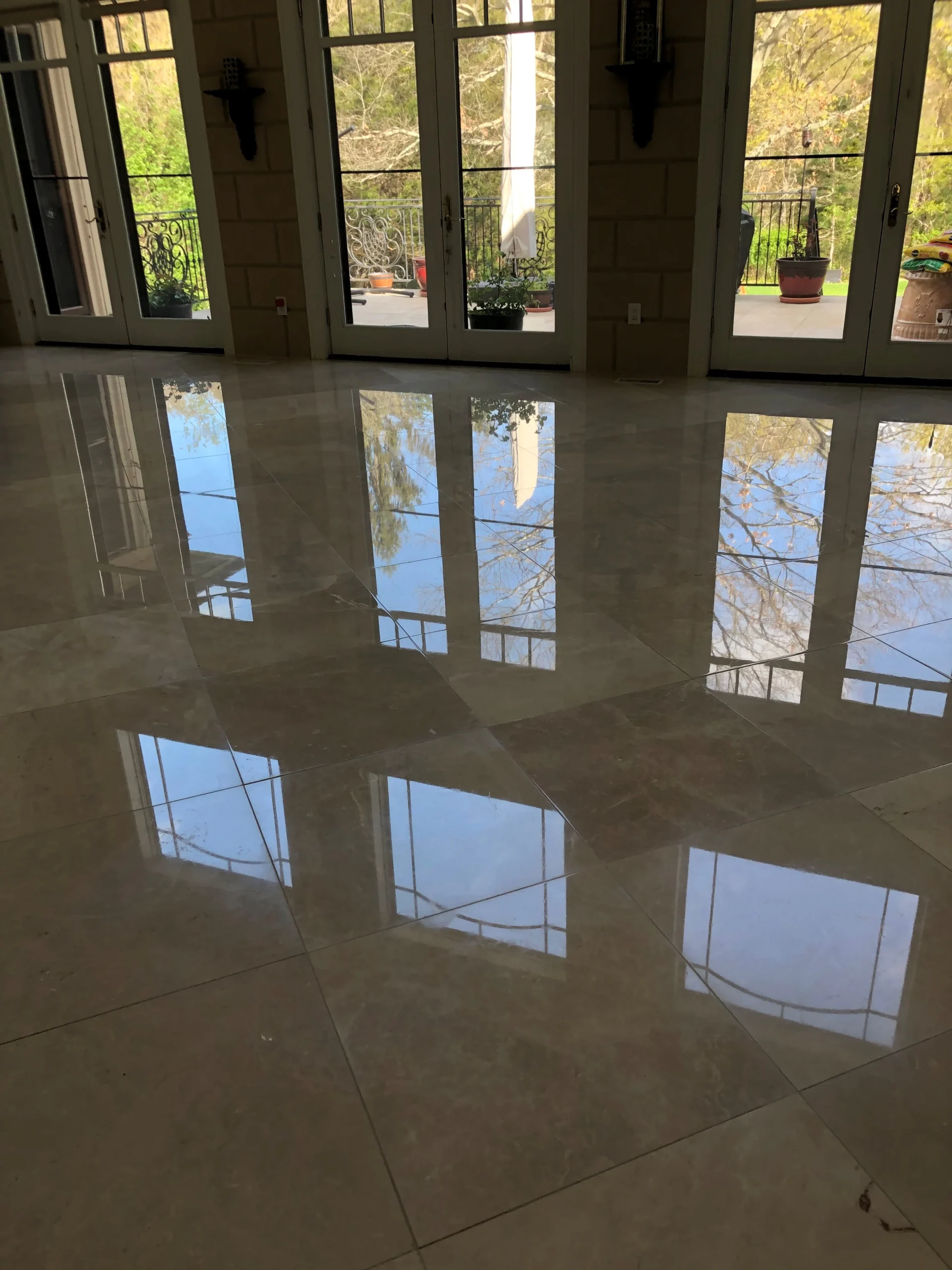
The difference shows up immediately. Deep, rich color. Dramatic veining that was hidden under years of etching. A finish so reflective you can see yourself in it. And protection that actually lasts, so you’re not dealing with this again in six months.
For historic homes in Greenlawn—especially those built in the 1940s through 1960s with original marble—this isn’t just about aesthetics. It’s about preserving something you can’t replace. Original marble floors increase your property value and maintain the authentic character that makes these homes special. Restoration costs $5-15 per square foot. Replacement runs $70-190 per square foot, and you lose the original material forever.
High Definition Marble Restoration Inc specializes in one thing: bringing damaged, historic marble back to life. We’re not a cleaning company that dabbles in stone. We’re restoration specialists who work exclusively with marble, terrazzo, and now concrete.
The New York Times featured our work in 2001 because we take on the projects other contractors won’t touch. Century-old floors with severe etching, water damage, and wear patterns that most people assume are beyond repair. Those are exactly the jobs we want.
Greenlawn’s historic homes present specific challenges. The coastal environment means salt air exposure. Nassau County’s hard water is loaded with calcium and magnesium that reacts with marble and creates permanent discoloration. And many of these homes have original marble that’s been subjected to decades of improper cleaning with acidic products. We understand these materials, these conditions, and how to reverse the damage without compromising what makes these floors valuable.
We start by assessing the damage. Not all marble problems are the same—etching from acidic cleaners looks different than scratching from grit, which looks different than lippage from settling. The assessment determines how much material we need to remove and what grit sequence we’ll use.
Then we grind. Using diamond abrasives and a wet process, we remove the damaged layer of stone. This is where the dust-free process matters—wet sanding is better for the stone and eliminates the mess that dry grinding creates. We work through progressively finer grits, each one removing the scratches from the previous grit, until the surface is perfectly smooth.
Polishing comes next. This is where marble goes from matte to mirror. We use specialized compounds and equipment to bring out the stone’s natural reflectivity. The goal isn’t just shine—it’s bringing out the depth of color and the clarity of veining that’s been hidden under damage.
Finally, we seal. Not all sealers are equal, and the wrong one can yellow, trap moisture, or fail within months. We use penetrating sealers that protect without changing the appearance, and we’ll walk you through the simple maintenance that keeps your floors looking like this.
Most projects take one to three days depending on square footage. You’ll have your space back fast, and the results last for years—not months.

Ready to get started?
Every marble floor restoration includes a complete assessment of the damage, a detailed explanation of what we’re going to do and why, and a transparent quote before we start. No surprises.
The restoration itself covers grinding, honing, polishing, and sealing. We also address specific issues like lippage (uneven tiles), crack repair, and grout cleaning or replacement if needed. If you have historic marble with unique patterns or rare materials, we adjust our approach to preserve those characteristics instead of grinding them away.
For Greenlawn homeowners, we also address the hard water issue. Nassau County water is tough on marble, and standard sealing doesn’t always prevent the mineral deposits that dull your floors over time. We can recommend specific maintenance products that work with local water conditions, and we’ll show you how to spot problems early before they require another full restoration.
We’ve also expanded into concrete restoration and polishing. If you have concrete floors in a basement, garage, or commercial space, we can apply the same grinding and polishing process to create a durable, attractive finish. It’s a newer service for us, but it uses the same expertise and equipment we’ve been using on marble for over 25 years.
Restoration typically costs between $5 and $15 per square foot depending on the condition of the marble and the size of the project. Replacement costs between $70 and $190 per square foot when you factor in demolition, disposal, new material, and installation.
For a 200-square-foot entryway, you’re looking at $1,000 to $3,000 for restoration versus $14,000 to $38,000 for replacement. The cost difference is significant, but that’s not the only factor. Replacement means you lose the original marble, which matters if you’re in a historic Greenlawn home where original materials add value and character.
Restoration also takes less time. Most projects are done in one to three days with minimal disruption. Replacement can take a week or more, and you’re dealing with demolition dust, disposal logistics, and the risk that new marble won’t match the rest of your home’s aesthetic.
Yes. Etching from acidic cleaners is one of the most common problems we fix, and it’s completely reversible. When acid touches marble, it dissolves the calcium carbonate in the stone and leaves a dull, white mark. You can’t clean that away because it’s not a stain—it’s actual damage to the stone’s surface.
The fix is grinding and polishing. We remove the damaged layer using diamond abrasives, then polish the fresh surface back to a mirror finish. The etching disappears completely, and you’re left with marble that looks new.
This is especially common in Greenlawn because many homeowners don’t realize that products like vinegar, lemon-based cleaners, or even some “natural” cleaning solutions are acidic enough to etch marble. Once we restore the floor, we’ll walk you through what products are safe so you don’t end up with the same problem again.
Most residential marble restoration projects take between one and three days depending on the square footage and the condition of the floors. A small bathroom might be done in a day. A large foyer or multiple rooms might take three days.
The timeline breaks down like this: grinding and honing usually take the longest because we’re working through multiple grit levels to remove damage and smooth the surface. Polishing is faster but requires precision. Sealing is quick, but the sealer needs time to cure before the floor gets heavy use—usually 24 hours.
We’ll give you a specific timeline during the quote based on your project. And because we’re owner-operated, you’re working directly with the person doing the work. No miscommunication, no delays from coordinating subcontractors. We show up when we say we will, and we finish when we say we will.
Yes, especially if you have original marble in a historic home. Well-maintained original floors can increase property value by 3-5%, and buyers consistently pay premium prices for homes with authentic restored features rather than replacements.
Greenlawn has a significant number of homes built between the 1940s and 1960s, and many of these properties have original marble in entryways, bathrooms, or kitchens. When that marble is damaged or dull, it drags down the perceived value of the entire home. When it’s restored to a mirror finish, it becomes a selling point.
Beyond the direct value increase, restored marble signals to buyers that the home has been maintained with care. It shows attention to detail and respect for the property’s original character. That matters in a market where median home values are over $900,000 and buyers are looking for homes that stand out.
Polishing is the final step in restoration, but they’re not the same thing. Polishing creates shine on a surface that’s already smooth. Restoration involves grinding away damage, honing the surface flat, and then polishing it to a mirror finish.
If your marble just looks a little dull but doesn’t have scratches, etching, or other damage, polishing alone might be enough. But if you have visible damage—white spots from etching, scratches, uneven areas, or staining—you need full restoration. Polishing won’t fix those problems because they’re below the surface.
Most of the marble floors we see in Greenlawn need full restoration, not just polishing. Decades of foot traffic, improper cleaning, and exposure to hard water create damage that goes deeper than a polishing compound can reach. We assess every floor individually and recommend only the work that’s actually needed. If polishing is enough, we’ll tell you. If you need restoration, we’ll explain why.
Yes—that’s actually our specialty. The older the floor and the worse the condition, the better the project is for us. We’ve been restoring century-old marble since 1998, and we understand the unique characteristics of historic materials that newer contractors often don’t.
Older marble was often sourced from quarries that no longer exist, which means the stone has unique veining, color, and density that you can’t replicate with modern materials. It also means you can’t just replace it if something goes wrong. Historic marble requires a different approach—more conservative grinding, careful attention to lippage and settling issues, and an understanding of how the stone has aged.
Greenlawn has homes dating back to before 1939, and many of these properties have original marble that’s been walked on for decades. That marble has value beyond aesthetics—it’s part of the home’s history. We treat it that way. Our goal isn’t just to make it look good. It’s to preserve it for another hundred years.