

Your marble doesn’t need replacing. It needs someone who knows how to work with 100-year-old materials without causing more damage.
Most marble floors in Great Neck’s historic homes have survived a century of foot traffic, furniture moves, and well-meaning but misguided cleaning attempts. The surface you’re looking at right now—dull, etched, stained—isn’t the real floor. It’s just years of accumulated damage sitting on top of perfectly good marble.
Professional marble floor polishing removes that damaged layer using industrial diamond pads in progressive grits, from coarse to fine. We’re not covering up problems. We’re taking the floor back to what it was before acidic cleaners broke down the surface, before scratches accumulated into an overall haze, before moisture found its way into cracks you didn’t know were forming.
What you get is a floor that reflects light again. A surface that feels smooth under your feet. Marble that actually looks like marble, not like something that’s been slowly degrading for decades.
High Definition Marble Restoration was built specifically for the kind of work Great Neck homes require. This area has some of the oldest, most valuable residential marble on Long Island—Gold Coast estates, historic properties dating back to 1911, homes that were standing when Fitzgerald was writing about West Egg.
We’re owner-operated, which means the person who answers your call is the same person who’ll be working on your floor. No subcontractors. No crew rotations. Just someone who’s been doing this for over 25 years and was featured in the New York Times for exactly this kind of restoration work.
Great Neck’s housing stock is aged, and that’s exactly what we want. The worse the floor, the better the result. We’re not interested in basic maintenance jobs—we’re here for the floors that need real restoration, the ones that have been through decades of life and need someone who understands historic materials.
First, we assess what we’re actually dealing with. Etching looks different than staining. Cracks need different treatment than surface scratches. Most damage you’re seeing is a combination of several issues that built up over time.
The restoration itself uses a wet-sanding process with industrial diamond pads. We start with coarser grits to remove the damaged surface layer—the etching, the dull spots, the microscopic scratches that have accumulated. Then we move through finer and finer grits, essentially re-polishing the marble from scratch. This is done on-site in 99% of cases, and it’s a wet process, so there’s no dust filling your home.
If there are cracks, we repair them before polishing so dirt and moisture can’t get in and cause more damage. If there are stains that have penetrated below the surface, we address those separately—some come out during the grinding process, others need specific treatment depending on what caused them.
After the surface is restored and polished, we seal it. Marble is porous, and in a place like Great Neck where homes have marble in bathrooms, kitchens, and entryways, that seal is what prevents future staining and makes regular maintenance actually work.
You’ll get a free estimate within 24 hours that breaks down exactly what your floor needs. No surprises, no upselling—just a clear explanation of what’s damaged and what it takes to fix it.

Ready to get started?
Full marble restoration covers everything your floor needs to go from damaged to functional and beautiful again. That includes honing to remove the damaged surface layer, polishing to bring back the original shine, crack repair to stop structural issues from spreading, stain removal for discoloration that’s penetrated the stone, etch removal for acid damage, and sealing to protect against future damage.
We also handle concrete restoration and polishing now, which matters in Great Neck because many historic properties have original concrete elements that are worth preserving rather than replacing.
The area’s housing stock—much of it over a century old—means most marble floors here have been through multiple generations of owners, each with different cleaning habits and levels of care. Properties in Great Neck’s nine villages often feature original marble installations from the Gilded Age, and those materials were quarried and finished differently than modern stone. They require someone who understands how old marble behaves, how it wears, and how to restore it without damaging the integrity of century-old material.
This isn’t about making your floor look acceptable. It’s about bringing it back to what it was when it was first installed—and in many cases, making it look better than it has in decades. Professional marble restoration can increase your property value by up to 25%, but more importantly, it saves you from spending tens of thousands on replacement when the original floor just needs proper attention.
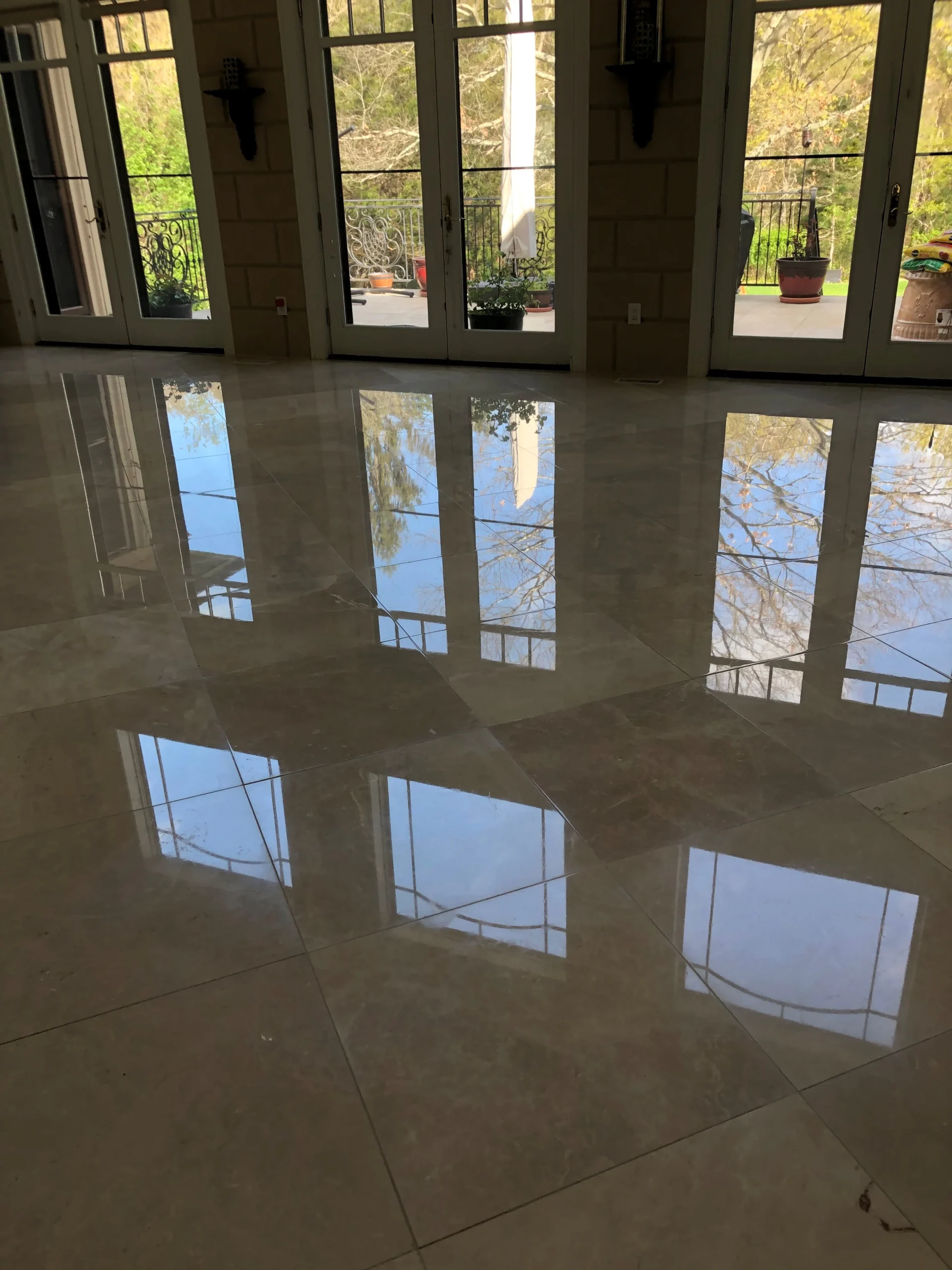
Restoration costs a fraction of replacement and gets you the same result—a floor that looks new.
Replacing marble means demolition, disposal, new material, new installation, and dealing with the mess and downtime of a full renovation. You’re looking at anywhere from $15 to $30+ per square foot depending on the marble you choose, plus labor, plus the reality that new marble won’t have the character or quality of what’s already in your home.
Professional marble floor restoration typically costs significantly less and can be completed in a matter of days, not weeks. You keep your original floor, which in Great Neck’s historic homes often means keeping marble that’s higher quality than what you’d buy new today. The process is done on-site with no dust, and you’re left with a floor that looks like new marble was just installed—because we’ve removed all the damage and brought the original surface back.
Yes. Etching and staining are two different problems, but both are fixable with the right process.
Etching happens when acidic substances—wine, citrus, vinegar, certain cleaners—break down the top layer of marble. It leaves dull spots that won’t go away no matter how much you clean. The only way to remove etching is to physically remove that damaged layer through honing and re-polishing. We use industrial diamond pads in progressive grits to grind down past the etched surface, then polish it back to a high shine.
Staining is different. That’s when a substance penetrates into the porous marble and discolors it from within. Some stains come out during the honing process if they haven’t penetrated too deep. Others require specific treatment depending on what caused the stain—organic stains respond to different methods than oil-based or rust stains. We assess what you’re dealing with and treat it accordingly. Most stains that homeowners assume are permanent can actually be removed or significantly reduced with professional marble restoration.
Most residential marble restoration projects take one to three days depending on the size and condition of the floor, and yes, you can stay in your home.
We work in sections and use a wet-sanding process, so there’s no dust cloud taking over your house. You’ll need to stay off the floor while we’re actively working on it, but we’re not tearing anything out or creating the kind of disruption that forces you to leave for weeks.
The timeline depends on what your floor needs. A straightforward honing and polishing job on a moderately sized area might be done in a day. A larger floor with significant damage, cracks that need repair, or deep stains that require extra treatment will take longer. We’ll give you a clear timeline in the estimate so you know exactly what to expect. The goal is to get in, do the work right, and get your floor back to you as quickly as possible without rushing through steps that matter.
No. Once your marble is properly restored and sealed, regular maintenance is straightforward and resealing isn’t an annual requirement.
After restoration, your floor gets sealed with a penetrating sealer that protects against staining and moisture. How long that seal lasts depends on traffic and use, but you’re typically looking at several years before it needs reapplication—not every year.
Daily maintenance is simple: sweep or vacuum to remove grit that can scratch the surface, and clean with a pH-neutral cleaner made for marble. That’s it. No special rituals, no expensive products, no constant worry. The key is avoiding acidic or abrasive cleaners—no vinegar, no bleach, no scrubbing pads. Those are what caused the damage in the first place.
If your marble is in a high-traffic area or a bathroom where it’s exposed to moisture and products regularly, you might want to reseal every few years as a precaution. But proper restoration and sealing from the start means your floor is protected and much easier to maintain than it was when it was damaged.
Yes. Bathrooms and kitchens are some of the most common places we restore marble, and they’re also where marble tends to take the most damage.
Marble in wet areas is constantly exposed to water, soap, shampoo, cleaning products, and in kitchens, acidic foods and spills. All of that breaks down the surface over time, causing etching, dullness, and staining. The moisture also gets into any cracks or unsealed areas, which can lead to deeper damage if it’s not addressed.
We restore marble showers, bathroom floors, vanity tops, kitchen counters, and backsplashes. The process is the same—honing away the damaged surface, polishing it back to a shine, repairing any cracks, and sealing it properly to protect against future moisture and staining. Sealing is especially important in wet areas because it gives you a barrier against all the things that constantly come into contact with the marble.
Great Neck homes often have original marble bathrooms with features like Jacuzzi soaking tubs and intricate tilework. That marble is worth restoring, both for the quality of the material and the character it brings to the space.
That’s specifically what we’re here for. Historic marble restoration is the core of what we do.
Old marble behaves differently than new marble. It was quarried differently, finished differently, and installed differently. It’s often higher quality than modern stone, but it also requires someone who understands how to work with aged materials without causing damage.
Great Neck has some of the best examples of historic residential marble on Long Island—Gold Coast estates, century-old homes, original installations that have been in place since the early 1900s. We’ve worked on floors that were installed when this area was being developed, and we’ve seen what happens when those floors are treated like modern materials by people who don’t know better.
The worse the floor, the better the job for us. If your marble has been through a century of use and abuse, if it’s cracked and stained and dull and you’ve been told it needs to be ripped out—that’s exactly the kind of project we want. We’ve been doing this since 1998, we were featured in the New York Times for this work, and we’re owner-operated, which means you’re getting someone who’s spent over 25 years specializing in exactly this type of restoration.