You’re looking at a marble floor that’s seen better days. Maybe it’s the original installation from when your Gold Coast-area home was built. Maybe it’s etched from years of the wrong cleaners, or clouded with hard water deposits that won’t budge no matter what you try.
Here’s what most people don’t realize: restoration costs a fraction of replacement. New marble installation on Long Island runs $70-190 per square foot. Professional restoration? Far less, and it’s usually done in under two days.
But cost isn’t the only reason to restore. Historic marble has characteristics you can’t replicate with modern materials. The veining patterns, the color variations, the craftsmanship – it’s irreplaceable. When you restore instead of replace, you’re keeping something authentic. You’re maintaining the character that makes your property valuable. Well-maintained original floors in historic Nassau County homes can increase property value by 3-5%.
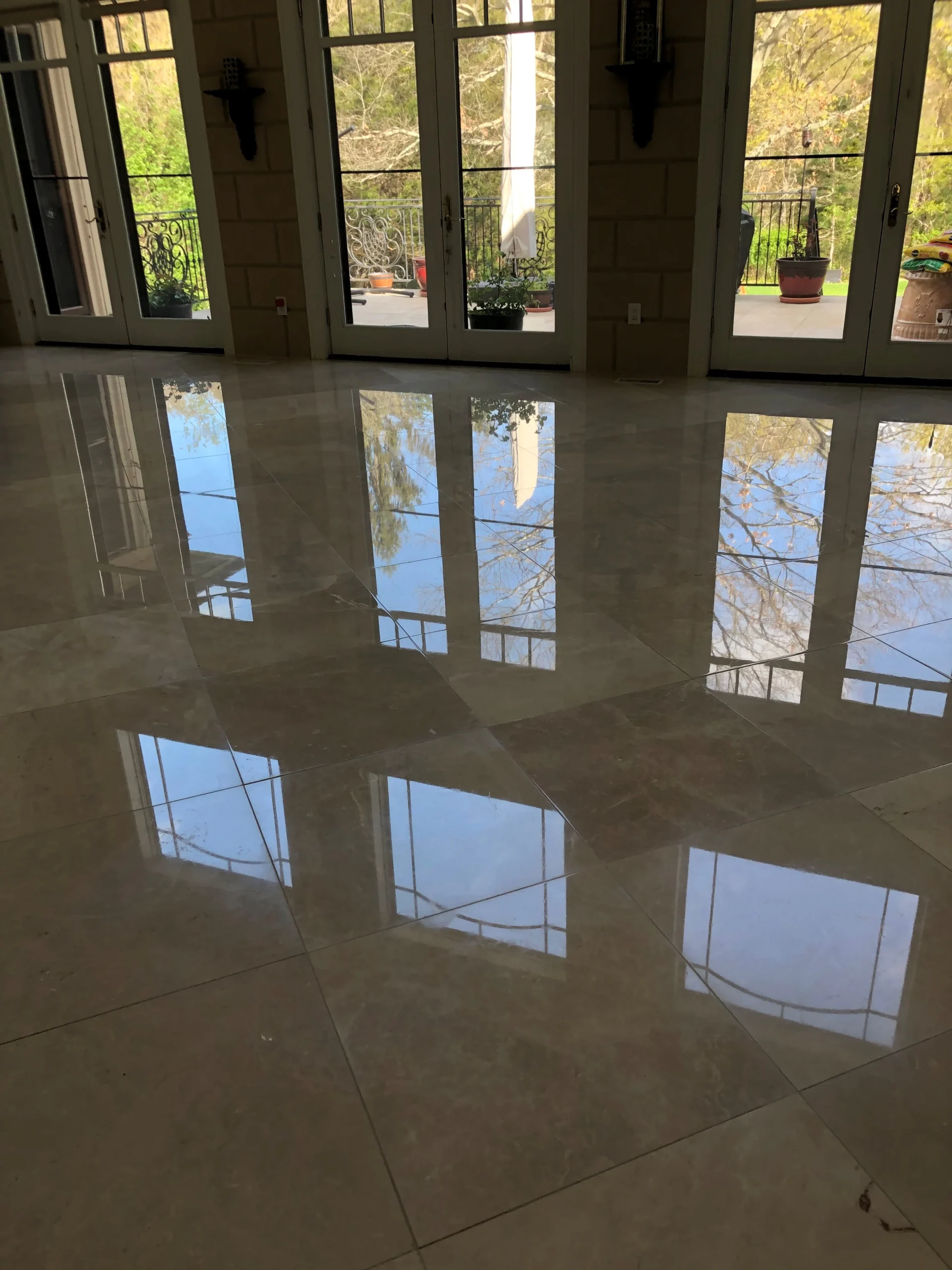
The difference shows immediately. Dull surfaces regain their depth. Etching disappears. The stone looks like it did decades ago, but stronger and better protected against whatever comes next.
High Definition Marble Restoration Inc specializes in the floors other companies don’t want to touch. The worse the condition, the better the challenge for us. We’re talking about century-old marble in Glen Head estates, original installations with damage that looks permanent, complex historic materials that require actual expertise.
This is an owner-operated business. That means you’re getting direct expertise on every project, not a crew that learned marble restoration in a weekend training. We were featured in the New York Times back in 2001, and we’ve spent over 25 years working on historic properties throughout Nassau and Suffolk Counties.
Glen Head sits in the heart of Long Island’s Gold Coast, where estates from the early 1900s still stand with their original marble intact. We understand what those floors have been through – the decades of foot traffic, the well-meaning but damaging cleaning attempts, the hard water that’s specific to this area. We know how to fix it.
First, we assess the damage. Not every floor needs the same approach, and historic marble especially requires careful evaluation. We’re looking at the type of stone, the age, the specific issues – etching, staining, lippage, cracks, whatever’s there. You get a free quote with transparent pricing. No hidden fees.
The actual restoration starts with addressing any structural issues. If there are cracks or loose sections, those get fixed first. Then we move into the surface work – grinding down lippage if needed, honing out etches and scratches, removing stains that have been there for years.
Polishing comes next. This isn’t buffing with a household product. We’re talking about professional marble polishing services that bring back the original finish, whether that’s a high gloss or a softer hone. The goal is to match what the floor looked like when it was first installed.
Finally, we seal and protect. This is especially important in Glen Head, where Long Island’s hard water creates ongoing challenges. The right sealer makes a massive difference in how your floor holds up long-term.
Most jobs take less than two days. You’re not dealing with weeks of construction mess or the chaos of a full replacement.

Ready to get started?
You’re getting comprehensive marble floor care, not just a surface polish. That includes crack and chip repair, lippage correction, deep stain removal, etch removal, honing, polishing, and sealing. We also handle bathroom floor restoration – those smaller spaces where damage shows up fast because of constant moisture and cleaning product exposure.
For historic properties in Glen Head, we pay attention to details that matter. Original marble often has quirks – variations in thickness, old repair attempts, previous coatings that need removal. We work with what’s there, preserving the authentic character while fixing the damage.
We’ve also added concrete restoration and polishing to our services. If you have concrete floors that need professional attention, we handle those too. Concrete polishing typically runs $3-12 per square foot, making it an attractive option for larger spaces like basements or commercial areas.
Long Island’s environment creates specific problems for marble. Hard water leaves mineral deposits. Coastal humidity accelerates certain types of damage. Common household cleaners – especially anything acidic like vinegar or toilet bowl cleaner – can etch marble on contact. We see this constantly in Glen Head homes, and we know how to reverse it.
Restoration costs significantly less than replacement, and the gap is substantial. New marble installation on Long Island runs between $70 and $190 per square foot when you factor in materials, labor, removal of old flooring, and disposal. For a 200 square foot space, you’re looking at $14,000 to $38,000.
Professional marble restoration costs a fraction of that. Most restoration projects come in far below replacement costs, and the work is typically completed in under two days instead of weeks of construction disruption.
The math gets even better when you consider that historic marble – the kind found in many Glen Head estates built during the Gold Coast era – has characteristics you simply cannot replicate with modern materials. You’re not just saving money. You’re preserving something irreplaceable that adds authentic value to your property.
Yes, and those are exactly the projects we specialize in. The worse the condition, the better the challenge for us. We focus on restoring 100-year-old floors and complex historic materials that other contractors consider too far gone.
Etching from acidic cleaners, deep stains from decades of use, dullness from hard water buildup, cracks, chips, lippage – these are all fixable with the right expertise and equipment. The key is understanding what you’re working with. Historic marble behaves differently than modern stone, and it requires specialized knowledge.
We’ve worked on century-old marble throughout Nassau County where the damage looked permanent. In most cases, it’s not. It just requires someone who knows what they’re doing and has the patience to do it right. That’s why we’re owner-operated – direct expertise on every project, treating each restoration like it’s our own floor.
Most marble restoration jobs take less than two days from start to finish. Compare that to replacement, which involves demolition, disposal, substrate prep, new installation, grouting, and curing time – easily two weeks or more of construction chaos in your home.
During restoration, you’ll need to stay off the floor while we’re working and during the initial curing period after sealing. But you’re not dealing with jackhammers, dumpsters in your driveway, or dust spreading through your entire house.
The process is straightforward: we come in, assess and prep, complete the restoration work, seal and protect, and you’re done. For bathroom floor restoration or smaller spaces, it’s often a single day. Larger areas or floors with extensive damage might stretch into a second day, but that’s still remarkably fast compared to any other option.
Those white cloudy spots are etching, and they happen when acidic substances contact your marble. The acid dissolves the calcium carbonate in the stone, leaving behind a rough, dull patch that you can’t buff out with regular cleaning.
Common culprits include vinegar, lemon juice, wine, certain cleaning products, and anything with a low pH. Toilet bowl cleaners are especially brutal – some have pH levels as low as 1 and can damage marble almost instantly. Even products marketed as “natural” or “eco-friendly” can be acidic enough to cause etching.
Long Island’s hard water makes this worse. Mineral deposits build up over time, and when people try to remove them with acidic cleaners, they end up etching the marble while trying to clean it. It’s a cycle we see constantly in Glen Head homes. The good news is that etching is fixable through professional marble refinishing. We hone out the damaged layer and restore the original finish.
Marble restoration is a highly skilled job, and stone can be ruined very easily by someone without proper training. We’ve seen the aftermath of DIY attempts and “cleaning companies” that offer marble services using harsh abrasives and acids. The damage is often worse than the original problem.
Professional restoration requires specialized equipment – commercial-grade grinders, honing tools, polishing machines – that most homeowners don’t have access to. It also requires knowing which abrasives to use in what sequence, how to address different types of damage, and how to work with historic materials that behave differently than modern stone.
The stakes are especially high with historic marble. If you’re dealing with original floors from a century-old Glen Head estate, you’re working with irreplaceable material. One wrong move with the wrong product or technique, and you’ve permanently damaged something that adds significant value to your property. That’s why we recommend professional marble polishing services for anything beyond basic maintenance cleaning.
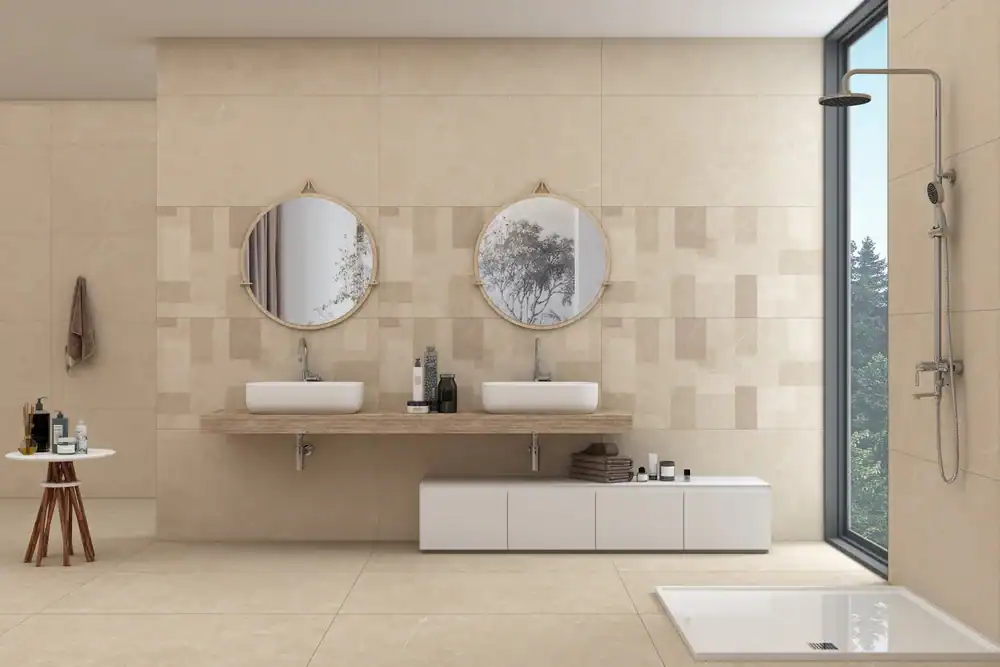
Absolutely. Bathroom floor restoration is a significant part of what we do. Bathrooms present unique challenges because of constant moisture exposure, soap scum, hard water deposits, and the cleaning products people use in those spaces.
Marble in bathrooms often shows damage faster than floors in other areas. The combination of Long Island’s hard water, humidity, and acidic cleaning products creates a perfect storm for etching, staining, and dullness. We see this constantly – beautiful marble that’s been slowly destroyed by well-meaning maintenance.
The restoration process for bathroom marble is the same careful approach we use everywhere else: assess the specific damage, address structural issues, remove stains and etching, restore the finish, and seal properly. The smaller space actually works in your favor – bathroom projects are often completed in a single day, and you’re back to using the space quickly.