
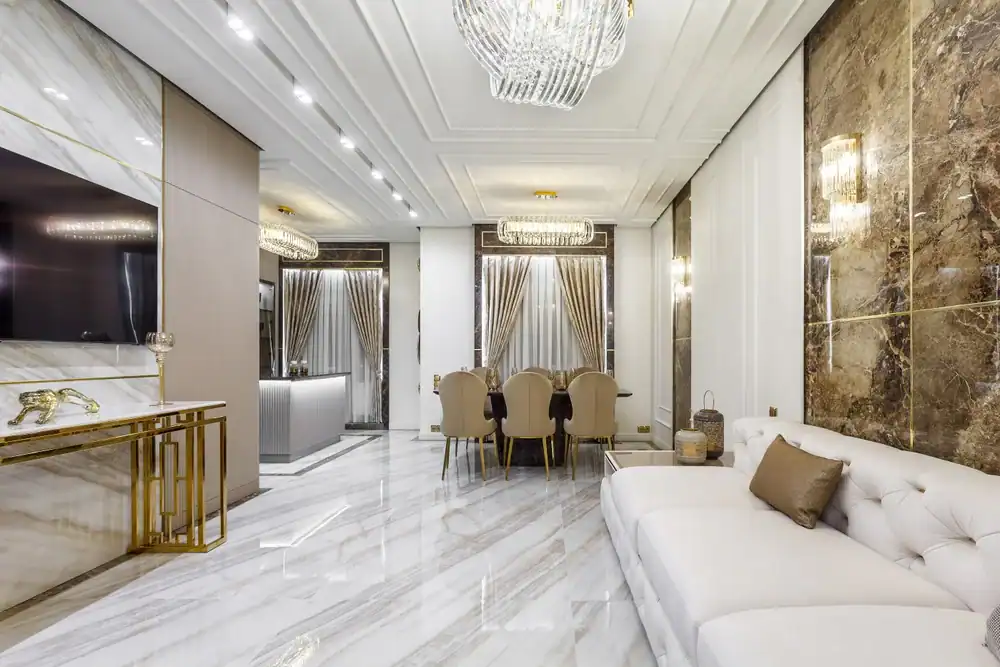
Your marble floors have been part of your home’s story for decades, maybe even a century. The veining patterns, the color variations, the craftsmanship—none of it can be replicated with modern materials. But scratches, stains, and dullness make you wonder if replacement is the only option.
It’s not. Restoration brings back the original finish without ripping out what makes your floors special. Most jobs take one to three days depending on size and condition. Compare that to weeks of construction dust, contractor schedules, and the permanent loss of historic character.
The cost difference matters too. Restoration typically runs between $3 to $8 per square foot. Full replacement can easily hit $50 to $200 per square foot once you factor in demolition, disposal, new materials, and installation. You’re looking at real savings while keeping what you already own.
And if you’re planning to sell eventually, restored original floors increase property value by 3% to 5% in historic home markets. Buyers pay premiums for authentic features that have been properly maintained.
High Definition Marble Restoration Inc has spent over 25 years working on Long Island’s historic properties. The New York Times featured our work back in 2001, but what matters more is that we’re still here, still owner-operated, and still taking on the projects other companies won’t touch.
Gilgo and the surrounding barrier island communities have their share of vintage homes with original marble installations. Coastal humidity, hard water, and decades of foot traffic create specific challenges. We’ve seen it all—from bathroom floors damaged by mineral deposits to entryway marble dulled by sand and salt.
The owner oversees every project personally. No subcontractors. No handoff to a crew that doesn’t know the difference between Carrara and Thassos. When you call, you’re talking to someone who actually does the work and has been doing it for decades.
First, we come out to look at your floors in person. No charge for this. We assess the damage, identify the type of marble, and give you a transparent price before any work starts. You’ll know exactly what you’re paying upfront.
Once we schedule the work, we start by protecting everything around the work area. Masking and containment matter because marble restoration creates dust and requires water. We don’t leave a mess for you to clean up later.
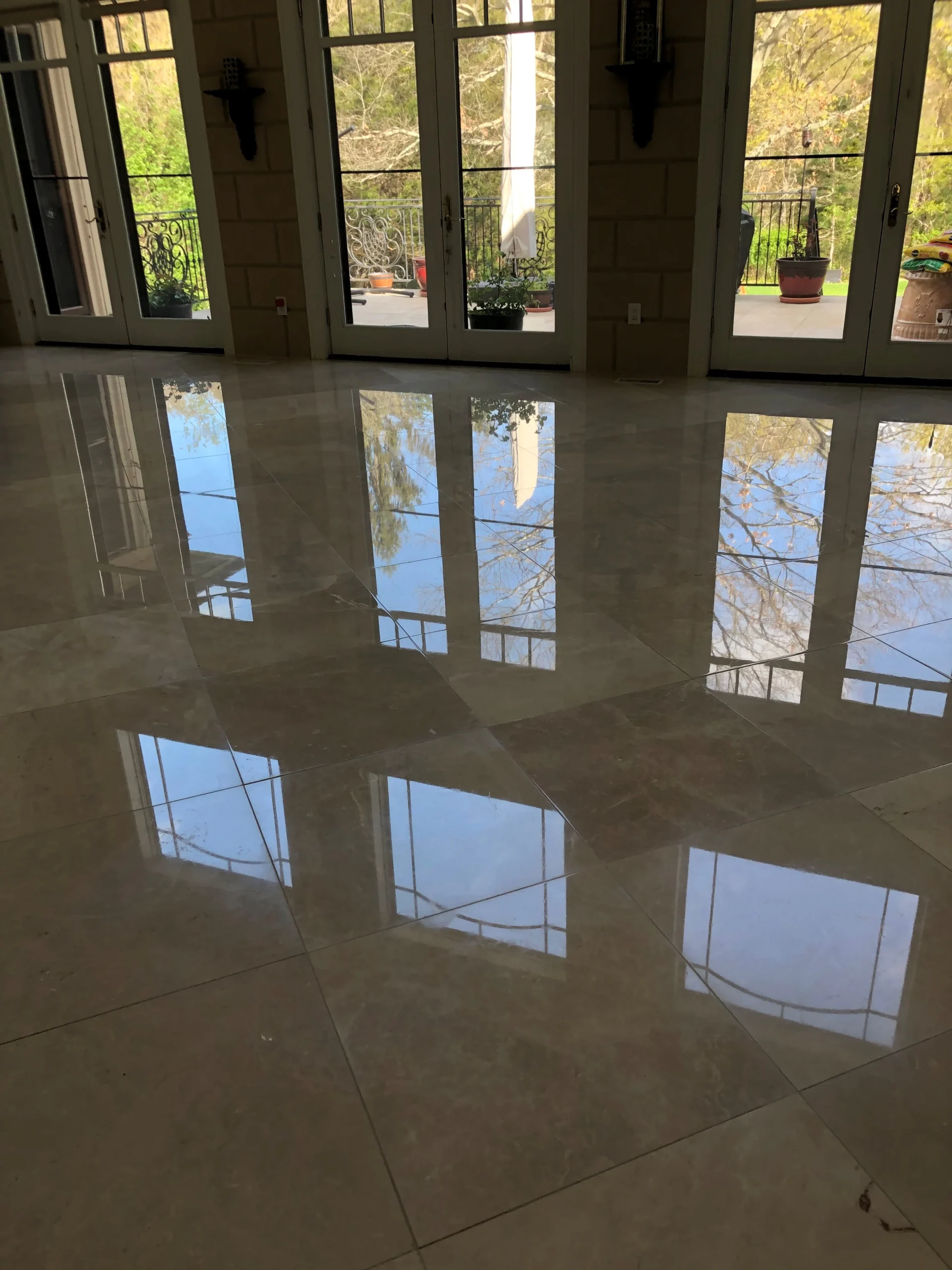
The actual restoration involves multiple steps: grinding away surface damage, honing the stone to remove scratches and etching, and polishing to bring back the original shine. For historic floors, we adjust our approach based on the age and condition of the material. Older marble often requires gentler techniques than modern stone.
Most residential projects finish in one to three days. Bathrooms and smaller spaces usually take a day. Larger areas like entryways or great rooms might need two or three days depending on how much correction the floors need. We work efficiently because we know you don’t want your home torn apart longer than necessary.

Ready to get started?
The service covers everything needed to bring your marble back to life. That includes damage assessment, surface preparation, grinding, honing, polishing, and sealing if appropriate for your specific stone type. We also handle bathroom floor restoration where soap scum, hard water deposits, and etching from cleaning products have dulled the surface.
Long Island’s water is notoriously hard. Gilgo’s coastal location adds humidity and salt exposure to the mix. These factors accelerate wear on marble surfaces, especially in bathrooms and entryways. We account for this when planning the restoration approach and recommend maintenance practices that work with local conditions.
If previous DIY attempts or inexperienced contractors have made things worse, we can usually correct that damage too. Harsh chemicals and improper techniques leave uneven patches, deeper etching, and sometimes permanent discoloration. The fix takes more time, but it’s still faster and cheaper than replacement.
We’ve also added concrete restoration and polishing to our services. If you have decorative concrete floors or countertops that need refinishing, we bring the same level of expertise to that material.
Most marble floor restoration projects in Gilgo run between $3 and $8 per square foot. The final price depends on the current condition of your floors, the type of marble, and how much correction work is needed to remove scratches, stains, or etching.
A typical bathroom floor restoration might cost $400 to $800 for a standard-sized space. Larger areas like entryways or living rooms will cost more based on square footage, but you’re still looking at a fraction of what replacement would run.
Replacement costs hit $50 to $200 per square foot once you include demolition, disposal, new materials, and installation. For a 200-square-foot entryway, that’s $10,000 to $40,000 versus $600 to $1,600 for restoration. The math makes sense if your marble is structurally sound and just needs surface correction.
We provide free quotes after looking at your floors in person. No pressure, no games—just a straightforward price so you can make an informed decision.
Yes, and that’s actually our specialty. Century-old marble requires a different approach than modern stone because the material characteristics and installation methods were different back then.
Historic marble often has a patina and character marks that developed over decades. We preserve those authentic qualities while removing the actual damage—scratches, stains, dullness—that makes the floors look neglected. The goal is to bring back the original finish without making everything look brand new and fake.
The process involves using gentler abrasives and taking more time with each step. Older marble can be softer or more porous than contemporary stone, so aggressive techniques that work fine on new installations can cause irreversible damage to historic floors.
We’ve worked on Gold Coast mansion floors and vintage Long Island homes built in the early 1900s. The worse the condition, the better the transformation. If your floors look beyond hope, that’s exactly the type of project we want to see.
Most residential marble floor polishing projects take one to three days depending on the size of the area and the current condition of the stone. A single bathroom usually takes one day. Larger spaces like entryways, kitchens, or great rooms might need two or three days.
The timeline also depends on how much correction work your floors need. If we’re just polishing and the marble is in decent shape, that’s faster. If we need to grind out deep scratches, remove etching from acidic cleaners, or correct previous DIY damage, that adds time to the process.
We work efficiently because we understand you don’t want bathrooms or main living areas out of commission longer than necessary. Most families can work around a one-to-three-day project without major disruption to daily routines.
Compare that to replacement timelines. Demolition, disposal, substrate preparation, new installation, and grouting can easily take two weeks or more. Then you’re waiting for grout to cure before you can use the space. Restoration gets you back to normal much faster.
Yes. Hard water damage is one of the most common problems we fix on Long Island bathroom floors, and Gilgo’s water makes this issue even more prevalent in coastal homes.
Mineral deposits from hard water build up over time and create a cloudy, rough film on marble surfaces. Regular cleaning products often can’t remove it, and acidic cleaners people try as a last resort actually etch the marble and make the problem worse.
Restoration removes both the mineral deposits and any etching that’s already happened. We grind away the damaged surface layer, hone the stone smooth, and polish it back to its original finish. The result is a clean, glossy surface that looks the way it did before years of hard water exposure took their toll.
After restoration, we can recommend sealing products and maintenance practices that help protect against future hard water damage. The reality is that Long Island water will always be hard, but proper care makes a significant difference in how quickly damage accumulates.
For historic homes, restoration almost always makes more sense unless the marble is structurally compromised with cracks or missing sections that can’t be repaired.
Original marble floors in century-old homes have characteristics you can’t replicate with modern materials. The veining patterns, color variations, and craftsmanship represent a specific period and quality level that’s simply not available anymore. Once you rip those floors out, that authenticity is gone forever.
Buyers specifically shopping for historic properties pay premiums for original features that have been properly maintained. Real estate data shows that well-restored original floors can increase property value by 3% to 5% in the historic home market. Replacement with modern materials doesn’t carry the same value because it eliminates the very character these buyers are seeking.
The cost difference is substantial too. Restoration costs a fraction of what replacement runs, and the timeline is much shorter. You preserve what makes your home special while solving the cosmetic problems that make the floors look worn out.
There are cases where replacement makes sense—severe structural damage, major sections missing, or floors that have been covered with tile or other materials that caused irreversible harm. But if your marble is intact and just looks bad, restoration is the smarter choice for historic properties.
Honing and polishing are two different steps in the marble restoration process, and they create different finishes on the stone surface.
Honing uses progressively finer abrasives to smooth the marble and remove scratches, etching, and surface damage. The result is a smooth, matte finish without much shine. Some people prefer this look, especially in bathrooms where a high-gloss finish can show water spots more easily.
Polishing comes after honing and uses even finer abrasives or polishing compounds to create a glossy, reflective finish. This is the classic marble look most people picture—smooth and shiny. Polishing brings out the depth of color and veining patterns in the stone.
Most marble floor restoration projects include both honing and polishing because you need the honing step to create a smooth surface before you can achieve a proper polish. But you can stop at honing if you prefer a matte finish, or we can adjust the level of polish based on what you want.
The choice often depends on the room and how the space is used. High-traffic entryways might benefit from a honed finish that hides wear better. Formal spaces or bathrooms where you want that luxury look typically get a high polish. We’ll walk through the options when we assess your floors so you understand what finish will work best for your specific situation.