


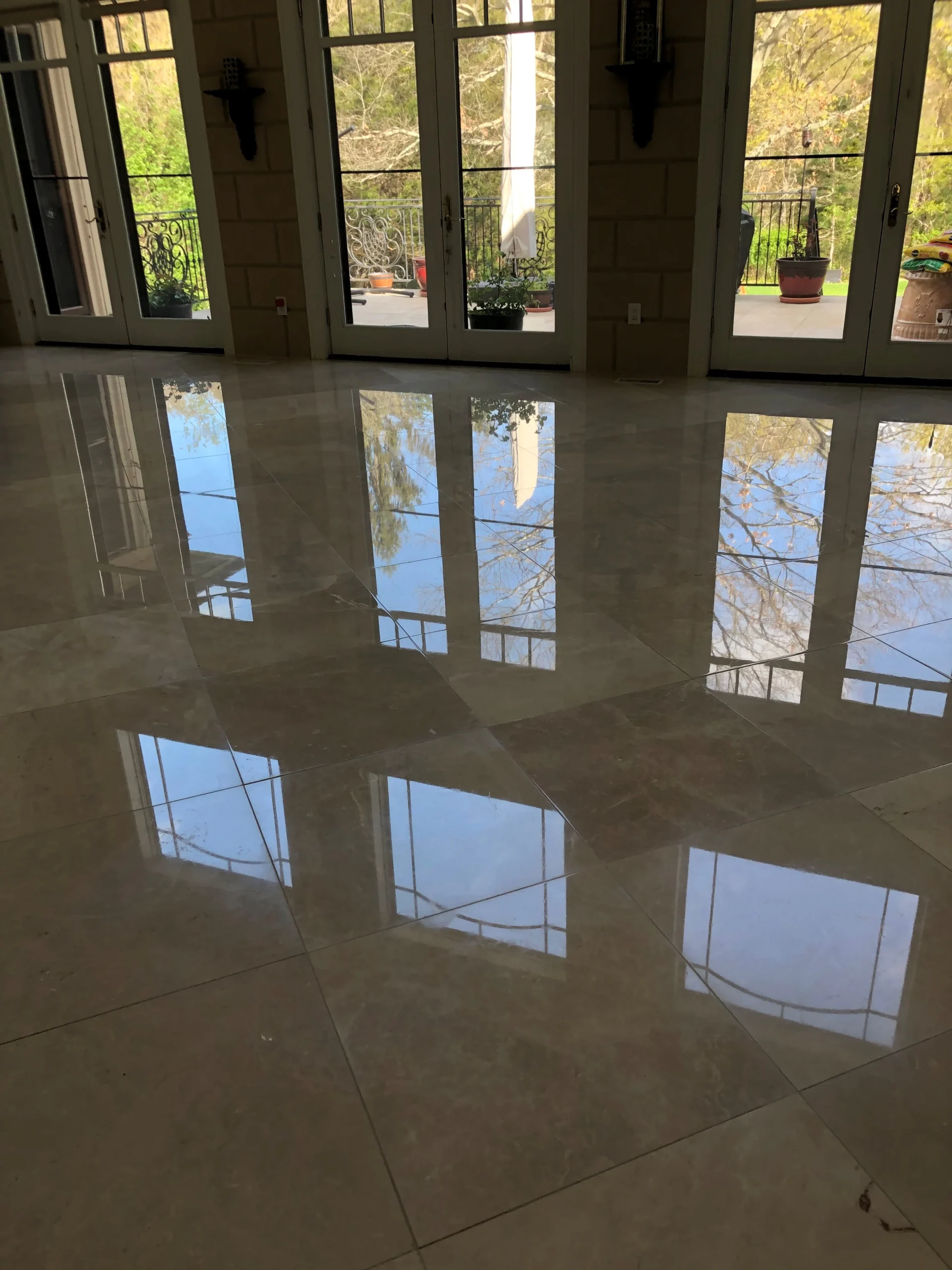
Those dull, scratched marble floors you’ve been living with don’t need to be replaced. The veining patterns and craftsmanship in your Garden City home’s original marble represent something you can’t buy today—many of these materials came from quarries that no longer exist.
Professional marble floor restoration removes damaged surface layers through diamond grinding, rebuilds the finish with specialized polishing, and seals the surface against future damage. The result is a floor that looks the way it did when your home was built, for 60-80% less than replacement costs.
Garden City’s historic homes—many built in 1939 or earlier—feature marble that’s fundamentally different from modern installations. The calcium carbonate composition reacts to everything from cleaning products to humidity. That’s why restoration requires someone who understands both the material and the era it came from.
We’ve specialized in complex historic restoration work since 1998. We’re owner-operated, which means every project gets direct oversight from someone who’s been doing this for over 25 years.
The New York Times featured our work in 2001. Our very first client, the Garden City Hotel, has used our services exclusively for more than 16 years. We’ve built our reputation on a simple approach: the worse the condition, the better the opportunity to show what real restoration looks like.
Garden City’s concentration of pre-1940 homes makes it one of Nassau County’s most important historic communities. We understand what these properties require because we’ve worked on countless floors throughout the area—from the Apostle Houses to colonial estates across the village.

First, we assess the damage. Etching from acidic cleaners, scratches from foot traffic, and dullness from wear all require different approaches. We identify what’s happened to your marble and explain exactly what we’ll do to fix it.
Next comes diamond grinding. We remove the damaged surface layer—sometimes just a fraction of a millimeter—to expose fresh marble underneath. This eliminates scratches, etching, and stains that have penetrated the surface.
Then we rebuild the finish through progressive polishing stages. Each stage uses finer abrasives until we’ve restored the original shine. For historic marble, this process requires understanding how different types of marble respond to polishing—something that only comes with experience.
Finally, we seal the surface with a professional-grade sealer that protects against moisture, staining, and etching. Garden City’s humidity levels, influenced by proximity to the Atlantic, make proper sealing essential for long-term protection.
The entire process is efficient and won’t disrupt your daily routine for long. Most residential floors are completed in one to three days, depending on size and condition.

Ready to get started?
We handle everything from bathroom floor restoration to large foyer installations. The scope includes grinding, polishing, sealing, and cleanup—with superior masking to protect surrounding surfaces.
You’ll also get transparent pricing upfront. Floor restoration typically runs $1-3 per square foot. Countertop restoration costs $5-25 per square foot, depending on condition and complexity. You know exactly what you’re paying before we start.
Garden City homeowners often discover that their marble floors are in better structural condition than they appear. Surface damage looks catastrophic but is actually repairable. We’ve restored floors that looked beyond saving—floors other contractors said needed replacement.
We also offer concrete restoration and polishing, a newer service that applies similar techniques to modern materials. Whether you’re dealing with century-old marble or contemporary concrete, the approach is the same: restore rather than replace whenever possible.
Marble floor restoration costs $1-3 per square foot for most residential projects. Replacement costs vary widely, but you’re looking at $15-50 per square foot for materials alone—not including demolition, disposal, and installation labor.
For a typical 200-square-foot foyer, restoration might cost $400-600. Replacement could easily run $5,000-10,000 or more, depending on the marble you choose. That’s assuming you can even find marble that matches your home’s period and character.
The bigger issue is that you can’t replace what’s already there. The marble in Garden City’s historic homes often came from specific quarries or periods that aren’t available anymore. Once you remove it, that character is gone forever. Restoration preserves both your investment and your home’s authentic appeal.
Yes. Deep scratches and etching are exactly what diamond grinding is designed to fix. We remove the damaged surface layer to expose fresh marble underneath, then rebuild the finish through progressive polishing.
Etching happens when acidic substances dissolve the calcium carbonate in marble. It looks like dull spots or water marks that won’t buff out. Many homeowners try DIY solutions that make it worse. Professional restoration is the only way to actually remove etching—you have to grind past the damaged layer.
Scratches work the same way. Surface scratches come out during the polishing stages. Deeper scratches require more aggressive grinding first. The key is knowing how much material to remove without compromising the floor’s structural integrity. That’s where experience matters—we’ve been doing this since 1998 and know exactly how different types of marble respond.
Most residential marble floor restoration projects take one to three days, depending on the size of the area and the condition of the marble. A single bathroom might be done in a day. A large foyer or multiple rooms might take two to three days.
The process itself is efficient. We’re not waiting for materials to cure or dry for extended periods. Diamond grinding and polishing happen in stages, and we move through them systematically. The sealer needs time to cure—usually 24 hours—before the floor is ready for normal use.
We schedule projects to minimize disruption to your routine. You won’t be displaced from your home for weeks. We work in defined areas, mask and protect surrounding spaces, and clean up thoroughly at the end of each day. Most Garden City homeowners are surprised by how quickly the transformation happens.
Restored marble floors need minimal maintenance if you avoid acidic cleaners and use the right products. The biggest threat to marble is vinegar, lemon-based cleaners, and other acidic substances that cause etching on contact.
Use pH-neutral cleaners designed for natural stone. Regular dust mopping or vacuuming prevents grit from scratching the surface. For wet cleaning, a damp mop with stone-safe cleaner is all you need. Garden City’s humidity means you should wipe up spills promptly to prevent water spots, especially in bathrooms.
The professional sealer we apply protects against staining and moisture penetration, but it’s not permanent. Depending on traffic and use, you might want to reseal every one to three years. That’s a simple process—nothing like the original restoration. Following these basic guidelines keeps your marble looking the way it did right after we finished the work.
Yes. Bathroom floor restoration is one of our most common projects. High-moisture areas present specific challenges—soap scum buildup, hard water deposits, and constant humidity exposure—but these are all fixable.
Garden City’s proximity to the Atlantic Ocean means higher year-round humidity than you’d find inland. This affects how marble behaves, especially in bathrooms. Moisture penetration can cause staining and dullness over time. Our restoration process addresses existing damage and includes professional sealing to protect against future moisture issues.
We’ve restored marble in showers, bathroom floors, and vanity tops throughout Nassau County’s historic homes. The key is proper surface preparation and the right sealer for the specific application. Bathroom marble needs a sealer that can handle constant moisture exposure without breaking down. That’s different from what you’d use on a foyer floor, and it’s the kind of detail that matters for long-term results.
Yes. Matching the finish is part of the restoration process. We assess the original finish level—whether it’s a high polish, honed finish, or something in between—and replicate it across the entire surface.
Historic marble floors in Garden City homes often have varying finish levels due to uneven wear patterns. High-traffic areas look dull while protected spots retain their original shine. Our job is to bring everything back to a consistent finish that matches what the floor looked like when it was new.
This requires understanding how different marble types take a polish. Some marbles achieve a glass-like shine easily. Others have a softer finish by nature. We adjust our polishing process based on the specific material we’re working with. The goal is a uniform appearance across the entire floor—no obvious transitions between restored and original areas.