


Your marble floors looked stunning once. They can again.
Professional marble floor restoration brings back the depth, clarity, and shine that made you fall in love with these floors in the first place. You’re not covering up damage or applying temporary fixes. You’re reversing years of wear, etching, and dullness through a process that works with the stone itself.
Most Fort Salonga homes were built between the 1940s and 1960s, and many still have their original marble installations. That’s not just flooring—it’s craftsmanship you can’t buy anymore. When you restore instead of replace, you’re preserving irreplaceable materials while saving 60-80% compared to new installation costs.
The difference shows immediately. Restored marble reflects light properly again. The natural veining becomes visible. The surface feels smooth, not rough or pitted. And because we’re removing damage at the molecular level, not just buffing the surface, the results last.
You’ll also see it in your property value. Well-maintained original marble can increase your home’s value by up to 25%, especially in historic neighborhoods where authenticity matters to buyers.
We specialize in the kind of work other contractors turn down. The 100-year-old floors with water damage. The historic installations with etching throughout. The projects that require actual expertise, not just equipment.
We’ve been owner-operated since 1998, which means the person who quotes your job is the same person overseeing the work. No handoffs to undertrained crews. No surprises halfway through. The New York Times featured our restoration work in 2001, and we’ve spent the past two decades building on that reputation.
Fort Salonga’s historic homes need specialists who understand old marble. The stone itself is different—denser, often hand-cut, installed with methods that don’t exist anymore. We know how to work with these materials because we’ve been doing it longer than most companies in this space have existed.

First, we assess the damage. Not all marble problems need the same solution, and we’re not going to sell you services you don’t need. Etching, scratches, dullness, stains, and cracks all require different approaches.
For most restoration projects, we start with diamond abrasion. This removes the damaged layer of stone—the part that’s etched, scratched, or stained beyond surface cleaning. We’re taking the marble back to fresh stone, then rebuilding the finish from there. It’s the same principle as refinishing hardwood, but the process is completely different because marble is calcium-based, not wood fiber.
Next comes honing and polishing. We work through progressively finer grits, smoothing the surface and bringing out the stone’s natural reflectivity. This isn’t a coating or topical treatment. The shine comes from the stone itself, which is why it lasts.
For deep stains or bacteria concerns, we use 356°F steam cleaning. This pulls out contamination without harsh chemicals that can damage marble. It’s especially important in bathrooms and kitchens where moisture has been sitting in the stone for years.
Most jobs in Fort Salonga take one to two days. You’ll have your floors back fast, and they’ll look like they did when your house was new.

Ready to get started?
You get a full assessment before we start. We’ll show you exactly what’s causing the damage, what can be fixed, and what the finished result will look like. Pricing is transparent upfront—no surprises when the work is done.
The restoration itself includes diamond grinding to remove damaged stone, multi-stage honing to smooth the surface, and polishing to bring back the natural shine. If you have stains, cracks, or chips, we address those specifically. Some damage requires filling or repair work before we can polish. We’ll tell you what’s needed during the assessment.
Fort Salonga’s proximity to the Atlantic means higher humidity year-round, which affects how marble ages. We see more water damage, mineral deposits, and moisture-related staining here than in drier areas. That’s why steam cleaning is often part of the process—it’s the most effective way to pull moisture and contaminants out of the stone without introducing more chemicals.
You also get guidance on maintenance. Most marble damage happens because homeowners don’t know what harms the stone. Acidic cleaners, hard water, certain soaps—these all cause problems over time. We’ll show you what to avoid and what actually works for long-term care.
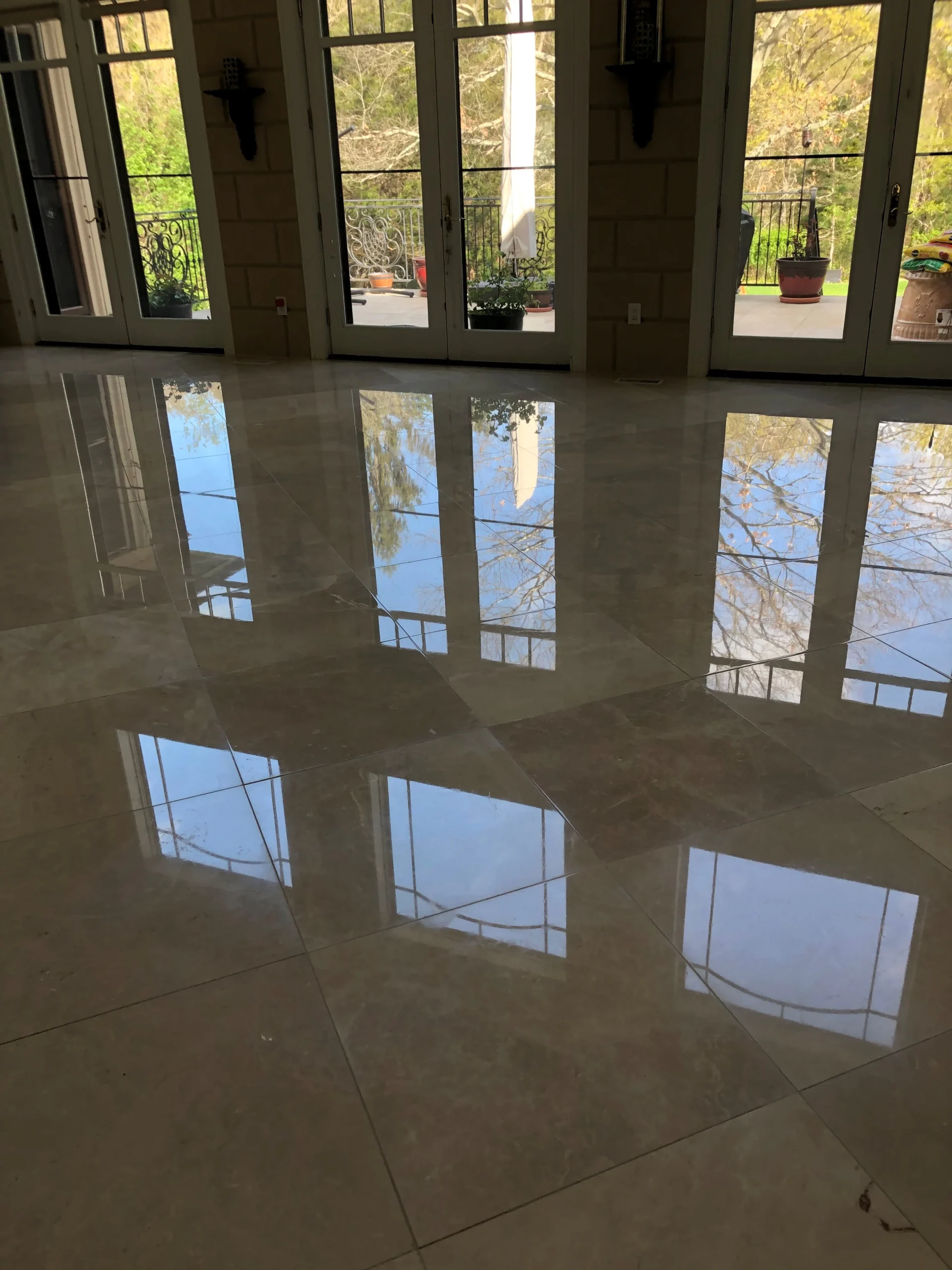
Restoration costs between $5 and $15 per square foot depending on the condition of your floors and the level of damage. Replacement runs $70 to $190 per square foot on Long Island once you factor in demolition, disposal, new stone, and installation.
For a 200-square-foot entryway, you’re looking at $1,000 to $3,000 for restoration versus $14,000 to $38,000 for replacement. The cost difference is significant, and you’re keeping the original materials that give your home its character.
The other factor is time. Restoration takes one to two days for most residential projects. Replacement can take weeks once you account for demolition, subfloor prep, material delivery, installation, and curing time. You’re living in a construction zone much longer, and the disruption costs you in ways beyond the invoice.
Yes. Etching happens when acidic substances dissolve the calcium in marble, leaving dull spots or rough patches. It’s chemical damage, not a stain, which is why cleaning doesn’t fix it.
We remove etching through diamond abrasion and honing. We’re taking off the damaged layer of stone and exposing fresh marble underneath, then polishing it back to a smooth, reflective finish. The etching disappears completely because we’ve removed the damaged material.
This works for light etching and severe damage. If your entire floor is dull from years of acidic cleaners or hard water, we can restore the whole surface. The process is the same—remove the damage, rebuild the finish. Most homeowners are surprised how much depth and color comes back once the etched layer is gone.
Professional polishing lasts years, not months, because we’re creating a finish in the stone itself—not applying a coating that wears off. How long it lasts depends on traffic, maintenance, and what you’re exposing the marble to.
In residential settings with proper care, you’re looking at five to ten years before you need polishing again. High-traffic commercial spaces need it more frequently. The Garden City Hotel has used our services exclusively for over 16 years, which tells you how the work holds up under heavy use.
The key is avoiding the things that damage marble: acidic cleaners, abrasive scrubbing, hard water buildup. We’ll walk you through proper maintenance when we finish your floors. Most damage is preventable once you know what harms the stone and what doesn’t.
Polishing is the final step in refinishing. Refinishing is the full process—grinding, honing, and polishing. Polishing alone only works if your marble is in good condition and just needs the shine brought back.
If you have scratches, etching, stains, or dullness throughout the floor, you need refinishing. That means removing the damaged stone, smoothing the surface through progressively finer abrasives, and then polishing to create the reflective finish.
Think of it like this: polishing is the last 10% of the job. Refinishing is the full 100%. Most floors we see in Fort Salonga need refinishing because the damage goes beyond surface dullness. We’ll assess your floors and tell you exactly what’s required. If polishing alone will work, we’ll say so. If you need the full process, we’ll explain why.
Most water stains and mineral deposits come out during restoration, but the approach depends on whether the staining is surface-level or has penetrated the stone. Nassau County’s hard water leaves calcium and magnesium deposits that show up as white, chalky residue. These usually come off during the honing process.
Deeper water stains—especially in older homes where moisture has been sitting in the stone for decades—require steam cleaning at 356°F. The heat pulls the contamination out without introducing harsh chemicals that can cause more damage.
Some staining is permanent if it’s been there long enough, but even then, we can often minimize it to the point where it’s not noticeable. We’ll know during the assessment. If a stain won’t come out, we’ll tell you upfront rather than promise results we can’t deliver.
That’s specifically what we do best. Historic marble is different from modern installations—the stone is denser, often hand-cut, and installed with techniques that don’t exist anymore. It requires knowledge that goes beyond standard cleaning or polishing.
Fort Salonga has plenty of homes built in the 1940s through 1960s with original marble still intact. These floors have survived decades because the materials were superior, but they need proper restoration to look right again. We’ve been specializing in this type of work since 1998, and it’s the part of the job we’re most interested in.
The worse the condition, the better the project is for us. If other contractors have told you the floors are too far gone or not worth restoring, call us anyway. We’ve brought back marble that looked beyond saving, and the results speak for themselves.