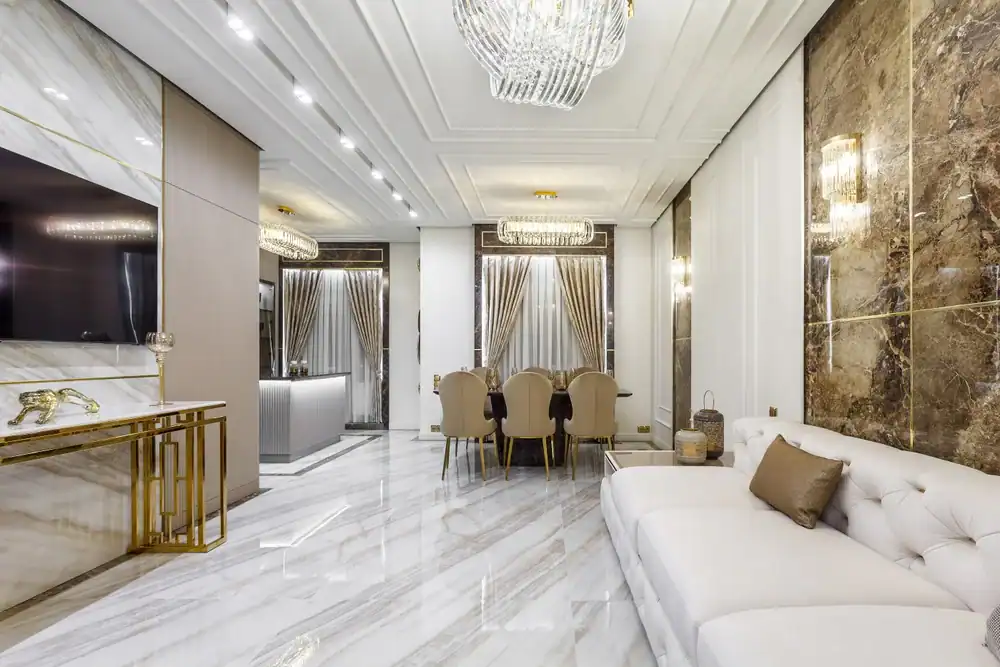

Your marble floors looked stunning when they were first installed. That’s probably why you bought the house. But decades of foot traffic, cleaning products, and Long Island’s coastal humidity have left them dull, etched, and stained.
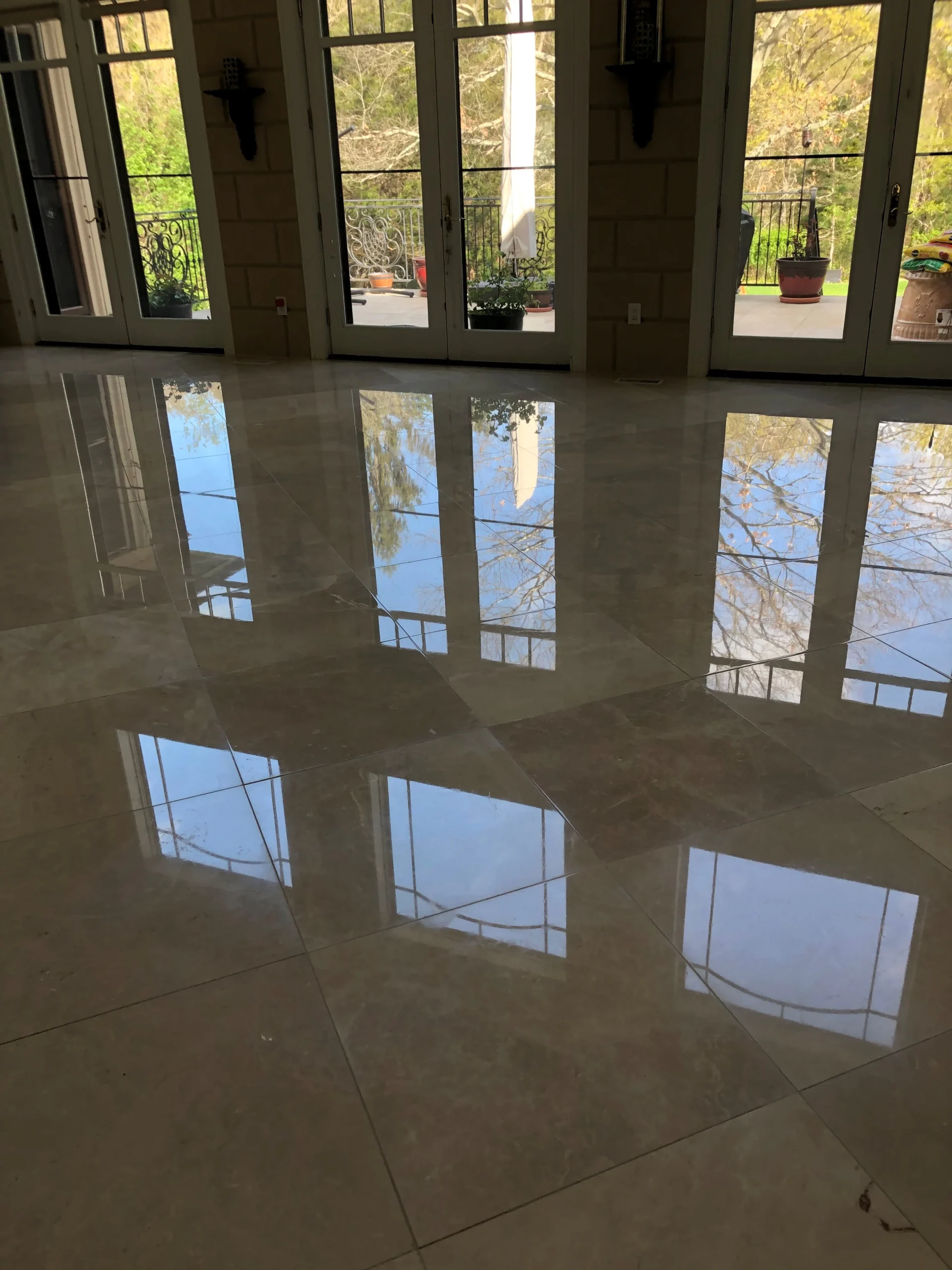
Here’s what changes after professional restoration. The shine comes back—not the fake, waxy coating kind, but the deep, natural luster that made marble valuable in the first place. Scratches disappear. Etching from acidic spills gets ground away. Stains that survived years of scrubbing finally lift out.
You’re not covering up damage. You’re removing it. Layer by layer, we take the floor back to clean stone, then polish it to the finish it deserves. The result looks like new marble, but it’s your original floor—the one that’s been there since your home was built.
And you keep the history. In East Williston, where homes date back to the early 1900s and the entire residential core sits on the National Register of Historic Places, that matters. Ripping out original marble means losing a piece of your home’s story. Restoring it means you get to keep it.
We specialize in the kind of work other contractors turn down. The 100-year-old floors with deep damage. The historic marble that’s been painted over or covered up. The projects where replacement seems like the only option—until you see what restoration can do.
We’re owner-operated, which means you’re working directly with someone who’s been doing this for over 25 years. No subcontractors. No crews that show up without knowing your floor’s history. Just hands-on expertise from start to finish.
East Williston is exactly the kind of area we work best in. Homes built in the 1920s, 1930s, and 1940s. Original marble in entryways, bathrooms, and kitchens. Floors that have seen generations of family life and deserve more than a cheap cover-up. The New York Times featured our work back in 2001 for bringing historic floors back to life, and that’s still what we do best.
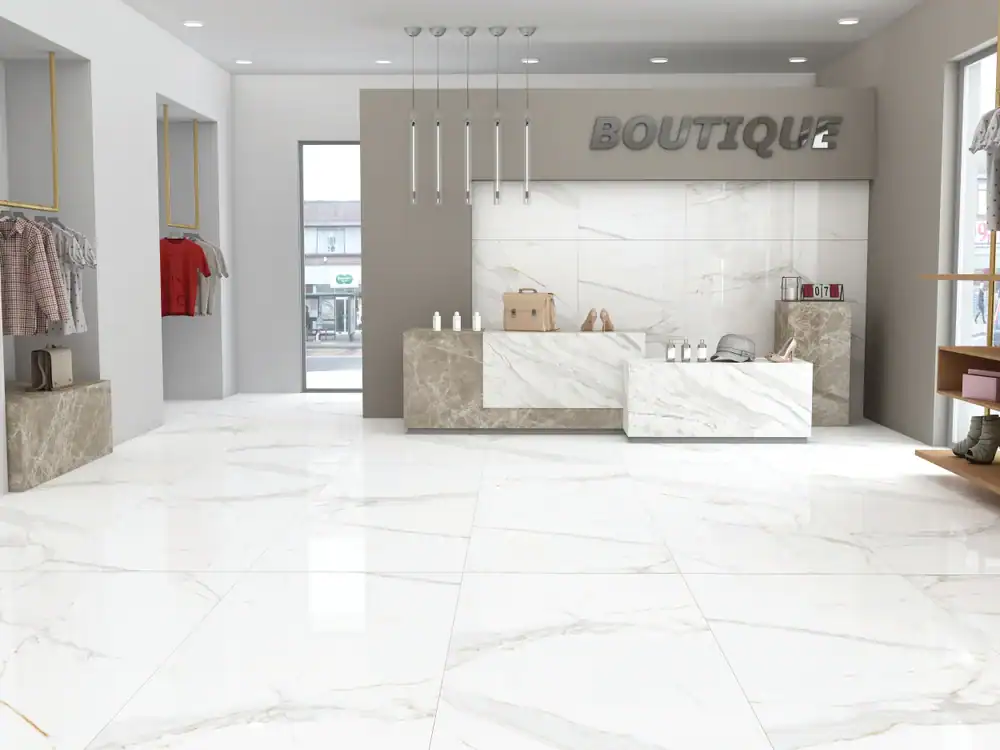
First, we assess the damage. Not every floor needs the same level of work. Some just need polishing. Others need full restoration—grinding away years of etching, scratches, and wear. We’ll tell you exactly what your floor needs and what it’ll cost. No surprises.
Once we start, we protect everything around the work area. Marble restoration creates dust, and we take masking and cleanup seriously. Then we begin the actual restoration: grinding the surface with diamond abrasives to remove damage, working through progressively finer grits until the stone is smooth and scratch-free.
After grinding comes polishing. We use a combination of mechanical polishing and compounds to bring out the natural shine in the marble. This isn’t a topical coating that wears off in six months. It’s the stone itself, polished to a mirror finish.
Finally, we seal the floor. Marble is porous, and without a proper seal, it’ll absorb stains from everyday spills. We apply a penetrating sealer that protects the stone without changing its appearance. Most projects take one to two days, depending on size and condition. You’ll have your floor back fast—and it’ll look better than it has in decades.

Ready to get started?
Marble floor restoration covers more than just polishing. We handle crack repair, chip filling, and stain removal. If your marble has structural damage, we fix it before we refinish it. That means your floor doesn’t just look better—it lasts longer.
We also address the specific challenges Long Island marble faces. Salt air from the coast. Hard water that leaves mineral deposits. Humidity that accelerates wear. These aren’t problems you deal with in other parts of the country, and they require someone who understands how coastal environments affect natural stone.
In East Williston, we see a lot of marble in historic bathrooms—floors, thresholds, and shower surrounds that have been etched by decades of soap and shampoo. Bathroom floor restoration is one of our most common requests, and it’s one of the most dramatic transformations. What looked permanently damaged comes back to a clean, polished finish.
We also work on concrete now. If you’ve got original concrete floors or you’re considering polished concrete as a modern complement to your home’s historic marble, we handle that too. Same attention to detail, same owner-operated quality control.
Marble restoration typically costs between $5 and $25 per square foot, depending on the condition of the floor and the level of work required. Full replacement—tearing out the old marble, disposing of it, and installing new stone—runs anywhere from $25 to $100+ per square foot when you factor in materials, labor, and disposal fees.
You’re looking at savings of 60% to 80% with restoration. For a 200-square-foot entryway, that’s the difference between spending $1,500 and spending $8,000. And you keep your original floor, which matters if you own a historic home in East Williston.
The other cost people forget: time. Replacement takes weeks. Restoration takes days. You’re not living in a construction zone for a month. Most of our projects wrap up in one to two days, and you can walk on the floor as soon as we’re done.
Yes. Etching happens when acidic substances—lemon juice, wine, vinegar, certain cleaning products—dissolve the marble’s surface. It leaves dull spots that don’t respond to regular cleaning because the damage is in the stone itself, not on top of it.
We remove etching by grinding away the damaged layer and re-polishing the marble. It’s not a quick fix with a topical product. It’s actual restoration of the stone’s surface. The etched areas disappear completely, and the floor goes back to a uniform finish.
Stains are different. They happen when porous, unsealed marble absorbs a staining agent—oil, rust, coffee, wine. We use a combination of poultices and specialized cleaning agents to draw the stain out of the stone. Some stains come out completely. Others lighten significantly. It depends on how deep the stain penetrated and how long it’s been there. But we’ve pulled out stains that homeowners thought were permanent, and the results usually surprise people.
If the floor is properly sealed and maintained, you’re looking at 10 to 15 years before it needs another full restoration. High-traffic areas might need a polish touch-up sooner—every five to seven years—but that’s a much lighter service than full restoration.
The key is the seal. Marble is porous, and without a good penetrating sealer, it absorbs stains and moisture. That accelerates wear. We apply a professional-grade sealer after every restoration, and if you reseal every few years, the marble stays protected.
Daily maintenance matters too. Use a pH-neutral cleaner made for natural stone—not vinegar, not bleach, not the all-purpose spray under your sink. Those products etch marble. A damp mop with the right cleaner keeps the floor looking good without causing damage. Treat your marble right, and the restoration we do now will hold up for years.
Polishing is the final step in restoration, but it’s not the same thing as restoration. If your marble is dull but not damaged—no deep scratches, no etching, no stains—polishing might be all you need. We clean the surface, apply polishing compounds, and bring back the shine. It’s faster and less expensive than full restoration.
Full restoration is what you need when the marble has actual damage. Scratches you can feel with your fingernail. Etched areas that won’t shine no matter how much you polish. Cracks, chips, or stains that have soaked into the stone. Restoration means grinding the surface down to remove the damage, then polishing it back to a mirror finish.
We assess your floor before we start and tell you exactly what it needs. Some floors only need polishing. Others need full restoration. We don’t upsell you on work your floor doesn’t require, and we don’t try to polish away damage that needs grinding. You get an honest evaluation and a clear recommendation based on what we see.
That’s our specialty. We’ve been restoring historic floors since 1998, and the worse the floor, the better the project is for us. East Williston is full of homes from the 1920s, 1930s, and earlier—many with original marble that’s been covered, neglected, or damaged over the decades.
Historic marble requires a different approach than newer stone. The material itself is often higher quality than what’s available today, but it’s also been through a century of wear. We understand how old marble behaves, how to work with it without causing further damage, and how to bring it back to its original finish.
We’ve worked on floors that other contractors said needed replacement. Marble that had been painted over, covered with vinyl, or ground down unevenly by someone who didn’t know what they were doing. The New York Times featured our work in 2001 specifically because we take on the complex, historic restoration jobs that most people avoid. If your marble is original to your home and you want to preserve it, we can help.
Salt air, humidity, and temperature swings all accelerate wear on marble. Long Island’s coastal environment means your floors are exposed to moisture and salt particles that inland homes don’t deal with. Over time, that breaks down sealers faster and makes the stone more vulnerable to staining and etching.
Hard water is another issue. If you’ve got mineral deposits building up on your marble—white, cloudy spots that won’t wipe away—that’s from the water. It etches the surface and leaves behind calcium and magnesium deposits. Regular cleaning won’t remove it. You need professional restoration to grind it away and reseal the stone.
We’ve worked in Nassau County for over 25 years, and we know how the local environment affects natural stone. When we restore your marble, we’re not just making it look good. We’re sealing it properly for the conditions it’s actually living in. That means it holds up better and lasts longer before it needs attention again.