Your marble floors look dull. The shine disappeared years ago, and now you’re wondering if replacement is the only option. It’s not.
Restoration brings back the original finish—the one that made you fall in love with your home in the first place. Most jobs take less than two days. You’re not living in a construction zone for weeks, and you’re not spending $15,000 to $25,000 on replacement marble that won’t match the character of your historic home.
The floors are usable again within 24 hours. No extended downtime. No wondering if new materials will look right in a 100-year-old house. Just the original marble, restored to how it looked when it was first installed—often better, because we’re using techniques that account for a century of wear and Long Island’s specific environmental challenges.
This isn’t about making do with damaged floors. It’s about bringing them back to a condition where they’re an asset again, not something you’re embarrassed about or planning to cover up.
We specialize in the floors other companies turn down. The 100-year-old installations with damage that looks irreversible. The historic homes in East Northport where the marble was laid using techniques that aren’t replicated anymore.
We’re owner-operated, which means the person who quotes your job is the same person doing the work. No subcontractors. No handoff to a crew that’s rushing to the next appointment. The New York Times featured our work in 2001 because we take on the projects that showcase real restoration expertise—the worse the condition, the better the opportunity to prove what’s possible.
East Northport’s historic homes present specific challenges. Long Island’s hard water, humid climate, and the age of these properties mean your marble faces conditions that require more than standard cleaning or polishing. We’ve been handling these exact situations since 1998, and we understand what these floors need to last another century.
First, we assess the damage. Not all marble problems are the same. Etching from acidic cleaners requires different treatment than staining from hard water deposits. We identify what’s actually wrong before we start any work.
Next comes the restoration itself. For most historic marble, this means diamond abrasive honing to remove damaged surface layers, followed by polishing to rebuild the finish. We use dustless equipment, so you’re not dealing with marble dust coating everything in your home. The process is methodical—each step addresses specific damage while preserving the integrity of century-old stone.
The final step is protection. We apply sealers that guard against future staining and etching, chosen specifically for your marble type and how the space is used. You get care instructions that actually work for Long Island conditions—not generic advice that ignores our hard water and humidity levels.
Most projects wrap up in one to two days. You can walk on the floors immediately after we finish, and they’re fully usable within 24 hours. Compare that to the weeks of disruption if you were replacing the marble entirely.

Ready to get started?
You get a complete assessment of your marble’s condition before any work begins. We explain what’s causing the damage, what can be fixed, and what results you should expect. No surprises, no upselling services you don’t need.
The restoration includes honing to remove surface damage, polishing to restore shine, and sealing to protect against future problems. We handle the specific issues East Northport homeowners face—hard water etching in bathroom floors, soap scum buildup in shower areas, and the dullness that comes from decades of incorrect cleaning products.
For historic homes, we adjust our approach based on the marble’s age and installation method. Marble laid in 1920 wasn’t installed the same way modern floors are, and it doesn’t respond to restoration techniques the same way either. We account for these differences because we’ve worked on enough century-old Long Island homes to know what works and what causes more problems.
You also get maintenance guidance specific to your floors and your water conditions. Generic marble care advice doesn’t cut it when you’re dealing with Long Island’s mineral-heavy water and humid climate. We tell you exactly what products to use, what to avoid, and how to keep your restored floors looking right for years.
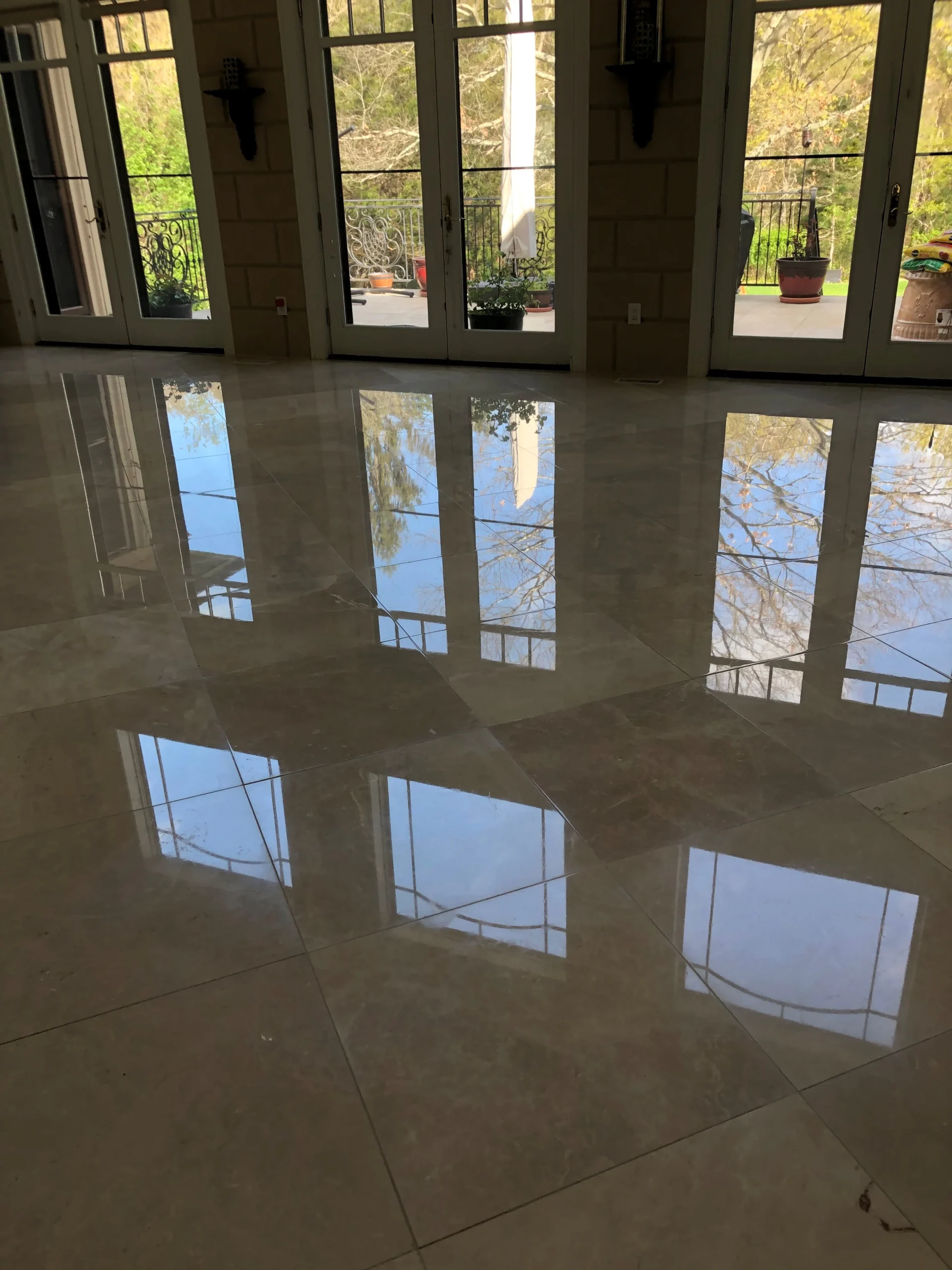
Restoration typically costs 40-60% less than replacement. The exact savings depend on your floor’s size and condition, but we’ve completed projects that saved homeowners $18,000 to $25,000 compared to replacement quotes they received from other contractors.
Replacement costs have increased significantly in recent years. You’re paying for new marble, removal and disposal of old material, installation labor, and weeks of disruption to your home. Restoration skips most of that. We’re working with the marble that’s already there, which means lower material costs and much faster completion.
For historic homes in East Northport, there’s another factor. Finding marble that matches your original floors isn’t always possible. Quarries close, stone characteristics change, and modern cutting techniques produce different results than century-old methods. Restoration preserves the authentic material that’s part of your home’s character—something you can’t put a price on when you’re trying to maintain a historic property’s integrity.
Yes. Acid etching is one of the most common problems we see, and it’s completely reversible with proper restoration. The etching happens when acidic cleaners dissolve the marble’s surface, leaving dull spots or cloudy areas that won’t shine no matter how much you clean them.
We remove the damaged surface layer through diamond honing, then rebuild the finish through progressive polishing. The process takes the marble down to undamaged stone, then brings it back up to a high-gloss finish. It’s not a coating or topical treatment—we’re actually restoring the marble’s natural ability to reflect light.
The key is stopping the damage from getting worse. If you’ve been using vinegar, lemon-based cleaners, or standard bathroom cleaners on your marble, switch to pH-neutral products immediately. The longer acidic cleaners stay in contact with marble, the deeper the etching goes. Surface etching is straightforward to fix. Deep etching that’s been happening for years requires more aggressive restoration, but it’s still fixable—we’ve handled plenty of severe cases in East Northport homes where the damage looked permanent.
Properly restored and maintained marble floors last decades. The marble in East Northport’s historic homes has already survived 100+ years—restoration doesn’t shorten that lifespan, it extends it by removing damage that would otherwise continue degrading the stone.
The longevity depends on two factors: the quality of the restoration work and how you maintain the floors afterward. Professional restoration with proper sealing protects against the staining and etching that cause most marble damage. If you’re using the right cleaning products and resealing every few years, your floors should look good for 20-30 years before they need another full restoration.
Compare that to replacement, where you’re hoping modern installation methods and materials perform as well as the century-old craftsmanship in your historic home. Original marble floors in East Northport have proven durability. They’ve survived generations of use, Long Island’s climate, and everything else that’s been thrown at them. Restoration maintains that proven track record instead of gambling on new materials.
Polishing addresses surface dullness. Restoration fixes actual damage to the marble itself. If your floors just need their shine back and there’s no etching, staining, or scratches, polishing might be enough. But most floors we see in East Northport need more than that.
Full restoration includes honing to remove damaged surface layers, then polishing to rebuild the finish. Honing uses diamond abrasives to grind away etching, stains, and scratches that have penetrated beyond the surface. It’s more aggressive than polishing, but it’s necessary when the marble has real damage—not just dullness from dirt buildup.
Here’s how to tell what you need: If cleaning your floors makes them look better temporarily, you might only need polishing. If they still look dull, cloudy, or stained even right after cleaning, you need restoration. We assess this during the initial consultation and tell you exactly what your floors require. No point in paying for restoration if polishing will solve the problem, and no point in polishing if the underlying damage will just show through again immediately.
Yes. Bathroom marble floor restoration is actually one of our most common projects in East Northport. Bathrooms create the worst conditions for marble—constant moisture, soap residue, hard water deposits, and cleaning products that often contain acids.
Shower floors and walls take the most abuse. Water sits on the surface longer in humid environments, giving minerals time to bond with the marble. Soap scum combines with those minerals to create buildup that’s nearly impossible to remove with regular cleaning. Many homeowners make it worse by using acidic cleaners to cut through the buildup, which etches the marble while removing the soap scum.
We handle all of it. The restoration process for bathroom floors is similar to other marble work, but we adjust sealing and finishing techniques based on constant water exposure. The goal is a surface that sheds water better and resists the staining and etching that destroyed the original finish. Most bathroom floor projects take one to two days, and you can use the space again within 24 hours—though we recommend keeping it as dry as possible for the first few days while sealers fully cure.
Historic marble was installed differently than modern floors, and the stone itself often came from quarries that aren’t operating anymore. The installation methods, setting materials, and even the marble’s composition can be different from what you’d get today. That means restoration techniques need to account for these differences.
Century-old floors in East Northport were typically set in thick mortar beds, not the thin-set adhesives used now. The marble was often thicker and cut using different methods. Some historic marble is softer or more porous than modern stone. If you treat it the same way you’d treat a floor installed last year, you risk causing damage instead of fixing it.
We’ve worked on enough historic Long Island homes to recognize these differences and adjust our approach accordingly. That includes knowing which diamond abrasives to use, how aggressive the honing process should be, and which sealers work best for older, more porous marble. It’s why we focus on historic restoration—these projects require knowledge that most contractors simply don’t have, and the results prove it when you’re working with someone who understands what makes these floors different.