You walk into your bathroom and actually feel proud of those floors again. The dullness from years of hard water buildup is gone. The etching from cleaning products you didn’t know were damaging the stone has been corrected. What you’re left with is the floor you remember—or maybe better than you remember.
Restoration costs about 70% less than replacement. But the bigger win is keeping what you can’t get back. Those marble floors were installed with materials and techniques that don’t exist anymore. Once they’re gone, they’re gone. Restoration gives you both: the look you want and the authenticity that makes historic East Hampton homes worth owning.
You also avoid the mess and timeline of a full replacement. Most marble floor polishing projects wrap up in days, not weeks. You’re not dealing with demolition, disposal, or the gamble of finding new stone that actually matches the rest of your home.
We specialize in the kind of work most companies won’t touch—century-old marble in historic East Hampton estates. Our owner oversees every project personally. That’s not a marketing line. It’s how our business runs.
East Hampton’s coastal environment creates specific problems for marble. Salt air, humidity swings, and temperature changes accelerate wear on natural stone. We account for that in how we restore and seal your floors. The NY Times featured our work back in 2001, but what matters more is the track record we’ve built across Nassau and Suffolk Counties since then.
You’re not hiring a cleaning company that dabbles in stone. You’re hiring a marble restoration company that understands how these floors were installed, what’s gone wrong over the decades, and how to fix it without causing new damage.
First, we assess the floor in person and give you transparent pricing upfront. No surprises later. You know what you’re paying before we start.
Next comes surface preparation. We remove years of buildup—hard water deposits, soap scum, old sealers that have broken down. This step matters because you can’t restore what you can’t reach. If there’s etching or scratching, we address that through a process called honing, which levels the surface using progressively finer abrasives.
Then we polish. This is where the floor starts looking like itself again. We use diamond polishing pads in stages, each one finer than the last, until the stone develops that deep, reflective finish. It’s not a coating. It’s the stone itself, brought back to its original state.
Finally, we seal. A quality sealer protects against future staining and makes marble floor care much easier going forward. We also mask and protect everything around the work area, so the rest of your space stays clean. When we’re done, we’re done—no lingering mess to deal with.

Ready to get started?
You get a full evaluation of your marble’s condition and a breakdown of what needs to happen. That includes identifying the type of stone you have, because Carrara marble behaves differently than Calacatta or Thassos. Each one requires specific handling.
The restoration itself covers honing, polishing, and sealing. If you have bathroom floor restoration needs, we handle the specific challenges that come with that—years of hard water exposure, soap buildup, and etching from acidic cleaners. Long Island’s water is particularly harsh on marble, and we see the effects constantly in East Hampton homes.
We also offer concrete restoration and polishing now. If you’ve got original terrazzo, worn concrete floors, or other stone surfaces that need attention, we handle those too. The same principles apply: restore what’s there instead of replacing it. East Hampton’s historic homes often feature multiple types of stone flooring, and we’re set up to work on all of it.
You’ll also get guidance on marble floor care after we’re done. Simple stuff—what to clean with, what to avoid, how to keep the stone looking good between professional services.
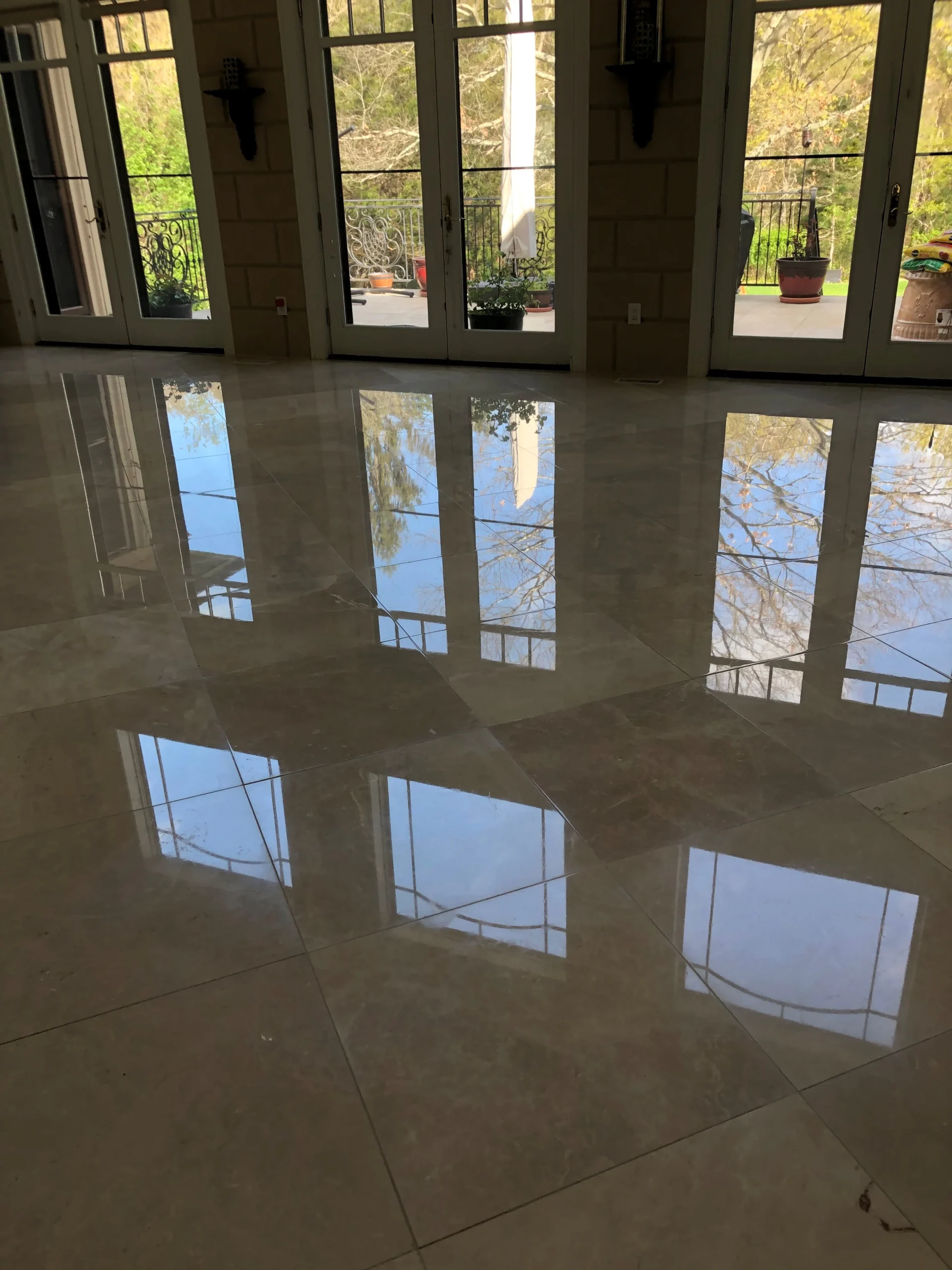
Most residential marble polishing projects take one to three days depending on square footage and the floor’s condition. A small bathroom might be done in a day. A large entrance hall or multiple rooms could take longer.
The timeline also depends on what the floor needs. If we’re just polishing and sealing, that’s faster. If there’s significant etching, staining, or damage that requires honing first, it adds time. We’ll tell you the realistic timeline during the estimate.
We work efficiently, but we don’t rush. Marble refinishing is a process that requires precision at each stage. Skipping steps or moving too fast leads to uneven results. You’d rather have it done right than done fast.
Yes. This is one of the most common problems we fix. A lot of commercial marble cleaners contain acids or abrasives that etch the stone. You think you’re cleaning, but you’re actually wearing away the surface.
The damage shows up as dull spots, uneven patches, or a hazy film that won’t buff out. Once the stone is etched, cleaning harder doesn’t help. You need to restore the surface through honing and polishing.
We’ve reversed damage from years of incorrect cleaning products. The stone itself is still good—it just needs the top layer corrected. That’s what marble restoration does. It removes the damaged surface and brings back the smooth, polished finish underneath.
Restoration typically costs about 70% less than full replacement. You’re not paying for demolition, disposal, new materials, or reinstallation. You’re paying for skilled labor to restore what’s already there.
The cost difference gets even bigger in historic East Hampton homes where the original marble is rare or custom. Matching that stone today—if you even can—gets expensive fast. And you still lose the authenticity of the original installation.
Replacement makes sense if the marble is cracked beyond repair or if you genuinely want a different look. But if the goal is to bring back the original beauty, restoration is the smarter financial move. You get the results you want without the cost or hassle of a full replacement.
We work on all types of natural stone—Carrara, Calacatta, Statuario, Thassos, travertine, limestone, and more. Each stone has different characteristics, and we adjust our approach accordingly.
A lot of historic East Hampton homes have Carrara marble, which was popular in early 1900s construction. It’s a softer stone, so it etches more easily, but it also polishes beautifully when restored correctly. Travertine is another common one, especially in bathrooms. It’s more porous and requires different sealing.
We also restore terrazzo, which is marble chips set in concrete. That’s a specialized process, but we’ve been doing it for decades. If you’re not sure what type of stone you have, we’ll identify it during the assessment. Knowing exactly what we’re working with is part of doing the job right.
Use a pH-neutral cleaner made specifically for natural stone. Avoid anything acidic—no vinegar, no lemon-based cleaners, nothing with harsh chemicals. Even some products marketed as “safe for marble” aren’t actually safe. We’ll recommend specific products that work.
Wipe up spills quickly, especially anything acidic like wine, coffee, or citrus. Marble etches on contact with acid. It doesn’t stain immediately, but the acid eats into the polish. The faster you clean it up, the less chance of damage.
Reseal your floors every one to three years depending on traffic and use. Sealing doesn’t make marble indestructible, but it buys you time to clean up spills before they penetrate. We can handle resealing when it’s time, or you can do it yourself with the right product. Proper marble floor care between professional services keeps your floors looking good for decades.
Yes. We come out, assess the floor in person, and give you transparent pricing before any work starts. You’ll know exactly what the project costs and what’s included.
We don’t do estimates over the phone or from photos. Marble restoration requires seeing the floor in person—understanding the stone type, the extent of damage, and what the space needs. That’s the only way to give you an accurate price.
The estimate also includes a realistic timeline and a walkthrough of what we’ll do. You can ask questions, and we’ll explain the process in plain terms. No pressure, no upselling. You get the information you need to make a decision. If restoration makes sense for your floors, we’ll tell you. If it doesn’t, we’ll tell you that too.