

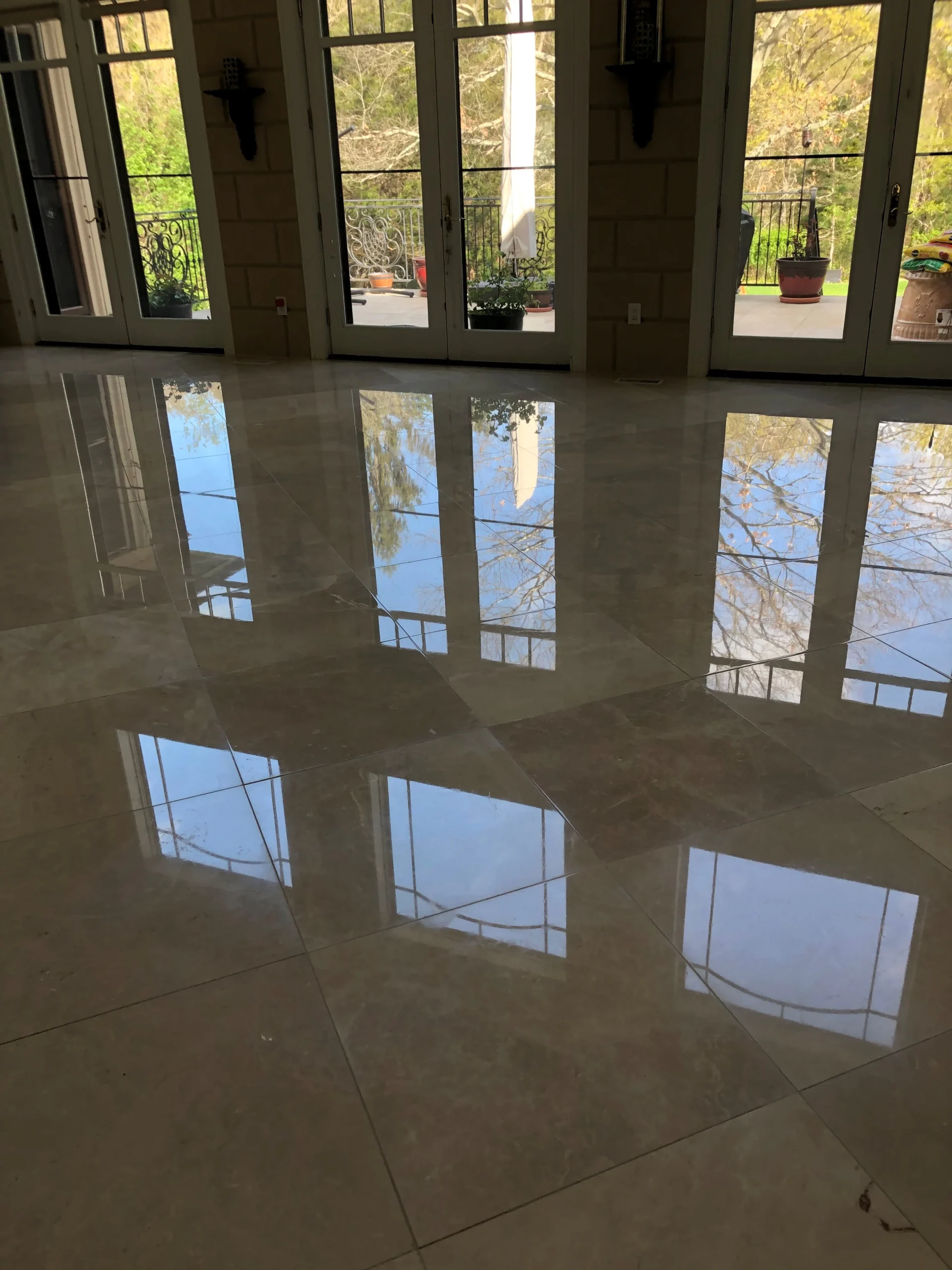
You’re not looking at a cleaning service. You’re looking at restoration because your marble floor has real damage—etch marks, dullness, scratches that no amount of mopping will fix.
Here’s what changes after we’re done. The surface is smooth again, not rough or pitted. The shine comes back, but it’s not that fake, slippery coating some companies spray on. It’s the actual stone, polished correctly using techniques that match how it was originally finished.
If your home was built before 1950, there’s a good chance your marble was installed using methods and materials that aren’t common anymore. That’s not something you replace on a whim. Restoration costs a fraction of what new flooring runs—usually $2 to $3 per square foot versus $4,000 to $10,000+ for replacement. More importantly, you keep the floor that’s been there for decades, the one that adds character and value to your home.
Most jobs take less than two days. You’re not dealing with weeks of construction, dust, or contractors tracking through your house.
High Definition Marble Restoration Inc has been restoring marble floors across Long Island for over 25 years. We’re owner-operated, which means the person who quotes your job is the same person who shows up to do the work.
Deer Park and the surrounding Nassau County area have plenty of older homes—many built during Long Island’s estate-building era when marble was a standard feature in entryways, bathrooms, and kitchens. We’ve worked on floors in homes from that period, and we understand what those installations need. The New York Times featured our work back in 2001, and we’ve been the exclusive marble restoration provider for the Garden City Hotel for more than 16 years.
You’re not getting a cleaning crew or a general contractor who dabbles in stone. You’re getting someone who knows the difference between honing and polishing, who understands how historic marble reacts to modern products, and who won’t use harsh acids or abrasives that do more harm than good.
First, we assess the damage. Not every floor needs the same treatment. Some need full restoration with diamond abrasives to remove deep etching and scratches. Others just need polishing to bring back the finish. We’ll tell you exactly what yours needs.
If restoration is required, we start by grinding down the damaged surface using progressively finer diamond pads. This removes etch marks, stains, and surface damage. It’s not a quick buff—it’s actual material removal and leveling, done carefully to avoid taking off more than necessary.
After grinding, we move into honing and polishing. This is where the shine comes back. We’re not applying a topical sealer or wax that wears off in six months. We’re polishing the stone itself to a natural, durable finish that lasts.
The process is dusty, so we contain the work area and clean thoroughly when we’re done. Most residential jobs wrap up in one to two days depending on square footage and condition. You’ll see the difference immediately—the floor looks like it did when it was first installed, sometimes better.

Ready to get started?
Marble floor restoration covers the full process: damage assessment, grinding, honing, polishing, and sealing if needed. We also handle marble repair for cracks, chips, or broken tiles, though that’s evaluated on a case-by-case basis.
Bathroom floor restoration is one of our most common requests in Deer Park. Bathrooms take a beating—soap scum, hard water, acidic cleaners that homeowners didn’t realize were damaging the stone. We see a lot of etching around sinks and showers. That’s fixable, and it doesn’t require ripping out the whole floor.
If you’ve got a historic home near the water, moisture is another issue we address. Older homes in Nassau and Suffolk Counties weren’t built with modern moisture barriers, so marble floors in basements or ground-level rooms sometimes show water damage or efflorescence. We can restore the surface, but if there’s an underlying moisture problem, that needs to be handled separately.
We also offer concrete restoration and polishing now. If you’ve got an old concrete floor in a basement or garage that you want to refinish, we can bring it back or give it a polished, modern look. It’s a newer service for us, but it uses the same skill set—diamond grinding, polishing, sealing.
Most marble restoration runs between $2 and $3 per square foot, depending on the condition of the floor and the level of work required. A typical residential entryway or bathroom might cost a few hundred to a couple thousand dollars.
Compare that to replacement, which averages $4,000 to over $10,000 for materials and installation. You’re also not dealing with the mess and time involved in tearing out old flooring, prepping the subfloor, and installing new stone. Restoration is faster, cleaner, and keeps the original floor intact.
If your floor just needs polishing and not full restoration, the cost is on the lower end. If there’s significant etching, staining, or damage, it takes more time and materials. We’ll give you a free quote after seeing the floor in person—no guessing, no surprise charges later.
Yes. Etch marks are physical damage to the marble surface, usually caused by acidic substances like lemon juice, vinegar, wine, or harsh cleaners. They look like dull spots or watermarks, and no amount of cleaning will remove them because the surface has been chemically altered.
The fix is grinding and polishing. We remove the damaged layer using diamond abrasives, then polish the stone back to a smooth, glossy finish. It’s the same process used to restore the entire floor, just localized to the damaged area if that’s all that’s needed.
Dull spots from wear and traffic are even easier. That’s usually just loss of polish, not deep damage. We can re-polish those areas or the whole floor depending on how widespread the dullness is. Either way, the floor comes back looking like new.
Most residential jobs take one to two days, depending on the size of the area and the extent of the damage. A small bathroom might be done in a few hours. A large entryway or multiple rooms might take a full day or two.
The process itself isn’t slow—it’s methodical. Grinding, honing, and polishing each require specific steps and drying time between stages. We’re not rushing through it because doing it right the first time means you won’t need it done again for years.
You’ll need to stay off the floor while we’re working and for a few hours after we finish, depending on whether we apply a sealer. We’ll give you a clear timeline when we quote the job so you know exactly what to expect.
If your marble is original to the house and in restorable condition, yes. Restoration preserves the character and authenticity of your home, especially if it’s a historic property. Original marble floors are part of what makes older Long Island homes valuable, and buyers notice.
Replacement makes sense if the marble is beyond repair—severely cracked, broken, or missing large sections. But if the issue is surface damage, dullness, staining, or etching, restoration is the smarter move. It’s faster, less expensive, and you’re not throwing away a floor that’s been there for decades.
Well-maintained original floors can increase property value by 3 to 5 percent. Replacing them with modern materials might update the look, but it also removes one of the features that made the home special in the first place. Unless the floor is structurally unsound, restoration is almost always the better option.
Yes. Historic floor restoration is actually our specialty. The older and more damaged the floor, the better suited we are for the job. We’ve worked on century-old marble floors throughout Nassau and Suffolk Counties, including homes from Long Island’s Gold Coast era.
Deer Park has its share of older properties, and many of them have original marble in entryways, bathrooms, or kitchens. Those installations were done differently than modern ones—different materials, different techniques, sometimes different types of marble altogether. We understand how to work with those older floors without causing further damage.
If your home was built before 1950 and the marble hasn’t been touched in decades, we’ve probably seen something similar. We know what to expect, what problems to look for, and how to restore it correctly. That’s not something every contractor can say.
Polishing is the final step in restoration, but it’s not the same thing as full restoration. Polishing brings back the shine on a floor that’s in decent shape but has lost its finish from wear and traffic. It’s surface-level work—buffing the stone to a gloss without removing significant material.
Restoration is more involved. It includes grinding to remove damage, honing to smooth the surface, and then polishing to finish. If your floor has etch marks, deep scratches, stains, or uneven areas, polishing alone won’t fix it. You need restoration.
Think of polishing as maintenance and restoration as repair. If you’ve kept up with your floor and it just needs a refresh, polishing might be enough. If it’s been neglected or damaged over the years, restoration is what brings it back. We’ll assess your floor and tell you which one it needs—we’re not going to upsell you on work that isn’t necessary.