

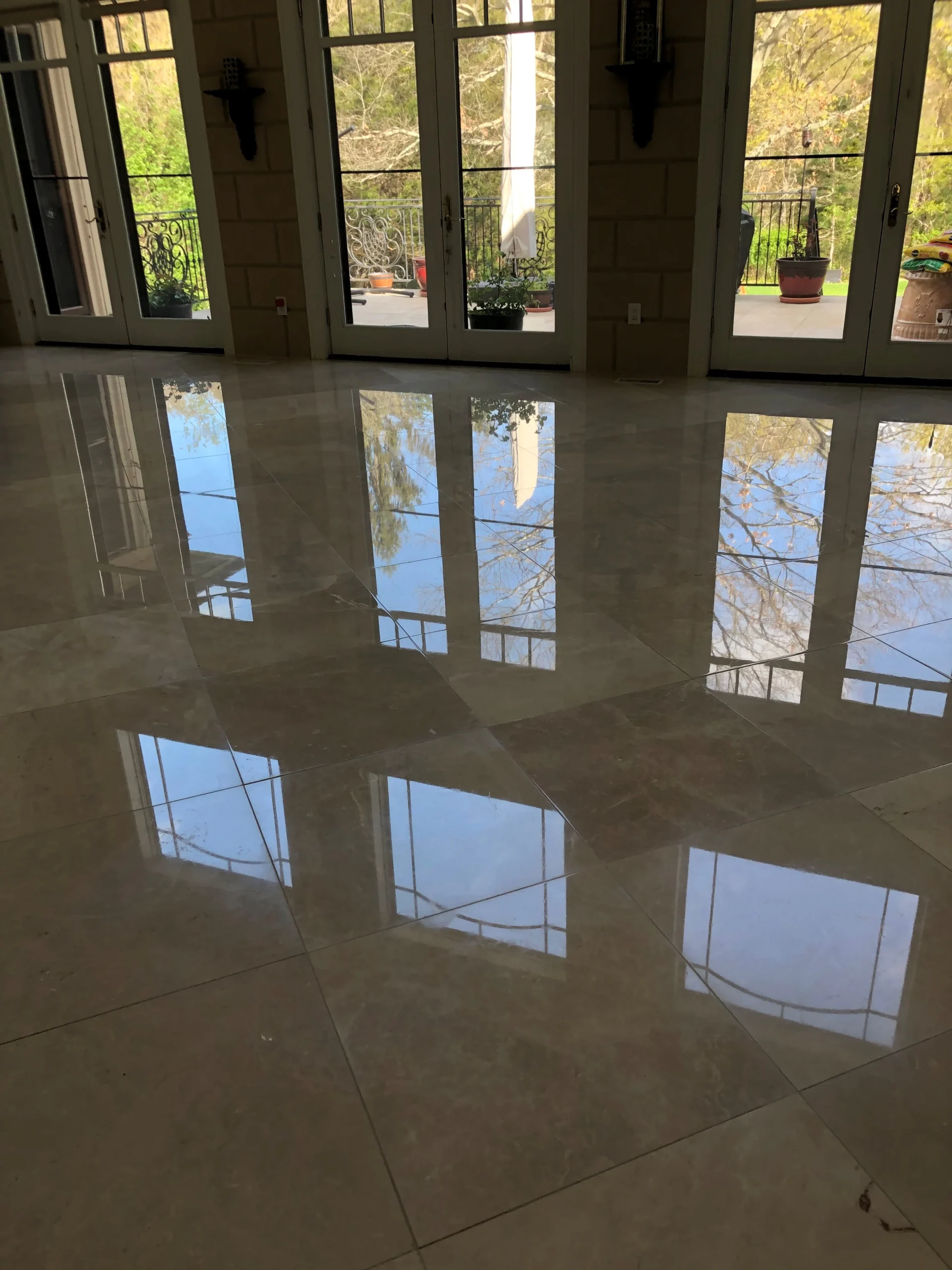
Your marble floors stop looking tired. The dull spots from spilled wine, coffee rings, and years of foot traffic disappear. The cloudy haze that made you think about replacement goes away completely.
Most Coram homeowners don’t realize their marble can be brought back. You’ve probably tried store-bought cleaners that made things worse. Maybe you got a quote for replacement and nearly fell over at the $70-190 per square foot price tag for new marble installation on Long Island.
Restoration costs a fraction of that. More importantly, it preserves what you already have—especially if your home has original marble from Long Island’s historic building era. Those century-old floors have veining patterns and color variations you can’t replicate with modern materials. When we restore them properly, you’re protecting both the character of your home and its resale value.
High Definition Marble Restoration Inc specializes in historic marble floor restoration across Nassau and Suffolk Counties. We’re owner-operated, which means the person who quotes your job is the same person overseeing the work. No handoffs. No miscommunication.
We’ve spent over 25 years working on Long Island’s oldest homes—the ones with marble floors that have been walked on for a century. The New York Times featured our work in 2001, but what matters more is that we understand what your floors need. Coram has plenty of mid-century and older properties where the marble has seen decades of use, and we know how to assess damage that other companies miss or misdiagnose.
You’ll get a free quote, transparent pricing before we start, and direct communication throughout the project. We’re not interested in upselling you on services you don’t need.
First, we assess the damage. Etching, scratching, cracks, and stains all require different approaches. We’re looking at the depth of the damage and the marble’s current condition to determine the right restoration method.
Next comes surface preparation. We grind away the damaged top layer—this removes years of etching, scratches, and wear that can’t be buffed out. This step is why DIY methods fail. You need professional equipment and an understanding of how much material to remove without compromising the floor’s integrity.
Then we move through progressive polishing stages. Each stage uses finer abrasives to rebuild the surface smoothness and bring back the natural shine. This isn’t a topical coating that wears off in six months. We’re actually restoring the marble’s finish at the molecular level.
Finally, we seal the floor and give you maintenance guidance. The sealer protects against future etching and staining. We’ll tell you exactly which products to use and which ones to avoid—because most household cleaners will destroy your newly restored finish.
Most jobs take one to three days depending on square footage and damage severity. You’ll have your space back quickly, and it’ll actually look the way marble is supposed to look.

Ready to get started?
You get a complete assessment of your marble’s condition before any work starts. We identify etching patterns, structural issues like cracks, staining depth, and surface wear. This determines whether you need full restoration or if marble polishing services alone will solve the problem.
The restoration itself addresses root causes. We’re not masking symptoms with wax or topical shine products. Grinding removes the damaged surface layer entirely. Progressive polishing rebuilds the finish. Sealing protects the restored surface from the acidic spills and harsh cleaners that caused the original damage.
Coram homeowners often don’t realize how much value proper marble floor care adds to their property. Well-maintained original floors can increase home value by 3-5%. Buyers pay premium prices for authentic, restored features—especially in areas like Long Island where historic character matters. When you’re competing with other homes in the $425,000 median property value range, details like gleaming original marble floors make a difference.
We also handle marble repair for cracks and chips. Cracks spread over time, creating places for dirt and moisture to accumulate. Fixing them early prevents bigger structural problems and keeps your floors looking uniform after polishing.
Restoration typically costs less than half of what you’d pay for replacement. New marble installation on Long Island runs $70-190 per square foot when you factor in materials, labor, and disposal of your existing floors. A full bathroom replacement starts around $12,000 minimum.
Professional marble restoration costs a fraction of that because we’re working with what’s already there. You’re paying for the expertise and equipment to restore the surface, not for new materials and full demolition. Most residential projects in Coram fall into a range that makes restoration the obvious financial choice.
The bigger consideration is time and disruption. Replacement projects take weeks and create massive mess. Restoration takes one to three days for most floors, and we protect your space during the work. You’re back to normal life quickly, with floors that look new but retain their original character.
Yes. Etching is actually the main problem we fix. Those dull spots, cloudy areas, and rings you see are etching—chemical damage from acidic substances like lemon juice, vinegar, wine, coffee, or even some cleaning products. The acid literally eats into the marble’s surface and destroys the polish.
You can’t buff out etching with household products. Most people make it worse by using the wrong cleaners. The more you try to clean away the dullness, the duller it gets because those cleaners are often too caustic for marble.
Restoration removes the etched layer entirely through controlled grinding, then rebuilds the polished surface. We’re eliminating the damage, not covering it up. After restoration and proper sealing, your marble is protected against future etching—but you still need to use the right maintenance products, which we’ll provide guidance on.
Most residential marble floor polishing projects take one to three days depending on the square footage and the condition of the marble. A standard bathroom might take one day. A large foyer or multiple rooms might take two to three days.
The timeline depends on how much damage we’re correcting. Light polishing on marble that’s been well-maintained goes faster than full restoration on floors with heavy etching, scratches, or stains. We’ll give you an accurate timeframe after assessing your specific floors.
During the work, we mask and protect the surrounding areas so dust and debris don’t spread through your home. Cleanup is part of the process—we don’t leave you with a mess to deal with. You can typically walk on the floors within a few hours of completion, though we’ll give you specific guidance based on the sealer we use.
Absolutely. Historic marble is actually our specialty. We’ve worked on century-old floors throughout Nassau and Suffolk Counties, including properties from Long Island’s Gold Coast era. Older marble often has characteristics you can’t find in modern materials—unique veining, color depth, and craftsmanship that’s irreplaceable.
The challenge with historic marble is that it requires different knowledge than modern installations. Period installation techniques, the marble varieties used decades ago, and how those materials age all factor into the restoration approach. An inexperienced company can ruin historic marble by using techniques meant for contemporary stone.
We take extra care with historical properties because we understand what you’re preserving. These floors have witnessed decades of family life and represent authentic architectural character. Proper restoration maintains that historical integrity while bringing back the original beauty. You’re not just fixing a floor—you’re preserving a piece of your home’s story.
Cleaning addresses surface dirt and grime. It’s maintenance-level work that doesn’t fix damage to the marble itself. If your marble is dull, etched, or scratched, cleaning won’t help—it might actually make things worse if you use the wrong products.
Polishing rebuilds the surface shine on marble that’s in decent condition but has lost its luster from normal wear. We use progressively finer abrasives to smooth the surface and bring back the natural gloss. Polishing works when the damage is shallow and there are no structural issues.
Full restoration is what you need when there’s significant etching, deep scratches, staining, or surface damage that polishing alone won’t fix. Restoration involves grinding away the damaged layer, then polishing to rebuild the finish from scratch. It’s more intensive but it’s the only way to truly correct serious damage.
During your free quote, we’ll assess which level of work your floors actually need. We’re not going to recommend full restoration if polishing will solve your problem—that’s not how we operate.
The key is using the right products and avoiding the wrong ones. Most generic household cleaners are too acidic or caustic for marble. They’ll etch your newly restored finish and you’ll be back where you started. We’ll tell you exactly which pH-neutral cleaners to use.
Daily maintenance is simple: sweep or vacuum regularly to remove grit that can scratch the surface, and wipe up spills immediately—especially acidic liquids like wine, coffee, or citrus juice. For routine cleaning, use a damp mop with the cleaner we recommend. That’s it.
The sealer we apply during restoration provides protection, but it’s not permanent. Depending on traffic and use, you’ll need resealing every one to three years. We can handle that for you, or you can do it yourself with the right product. The important thing is maintaining that protective barrier so your marble stays in the condition we restored it to. Proper marble floor care is straightforward once you know what to do and what to avoid.