

Your marble floors looked incredible when they were first installed. That deep shine, the smooth surface, the way light moved across the stone. Then life happened.
Years of foot traffic dulled the finish. Acidic spills from wine or cleaning products etched the surface. Water left rings that wouldn’t come out no matter how hard you scrubbed. You tried everything—different cleaners, more elbow grease, products that promised miracles. Nothing worked. In fact, most of those attempts made things worse.
Here’s what most people don’t realize: once marble loses its shine, conventional cleaning won’t bring it back. Scrubbing etched areas just creates more scratches. Using acidic cleaners to cut through buildup actually deepens the damage. You’re not dealing with dirt anymore. You’re dealing with compromised stone that needs professional marble floor care.
That’s where restoration comes in. Real marble polishing services remove the damaged layer and rebuild the finish from the surface up. The result isn’t just cleaner marble—it’s marble that looks and feels like it did decades ago. The kind of floor that makes you stop and notice it again.
High Definition Marble Restoration Inc specializes in the floors that other companies avoid. The 100-year-old marble in historic Copiague homes. The intricate patterns in Nassau County estates. The worn bathroom floors that look beyond saving.
We’ve been doing this work since 1998, and we’re still owner-operated. That means you’re getting direct expertise on every job, not a crew that learned the basics last month. The New York Times featured our work back in 2001, but what matters more is the track record we’ve built with homeowners throughout Long Island who needed their original floors brought back to life.
Copiague has its share of vintage homes with original marble installations. These aren’t the mass-produced tiles you see in new construction. They’re authentic materials installed with techniques that aren’t replicated today. Once they’re gone, they’re gone. We get that, and we know how to work with them.
First, we assess the damage. Not all marble problems are the same, and the approach changes based on what we’re dealing with. Etching requires different treatment than staining. Historic marble needs different handling than newer installations.
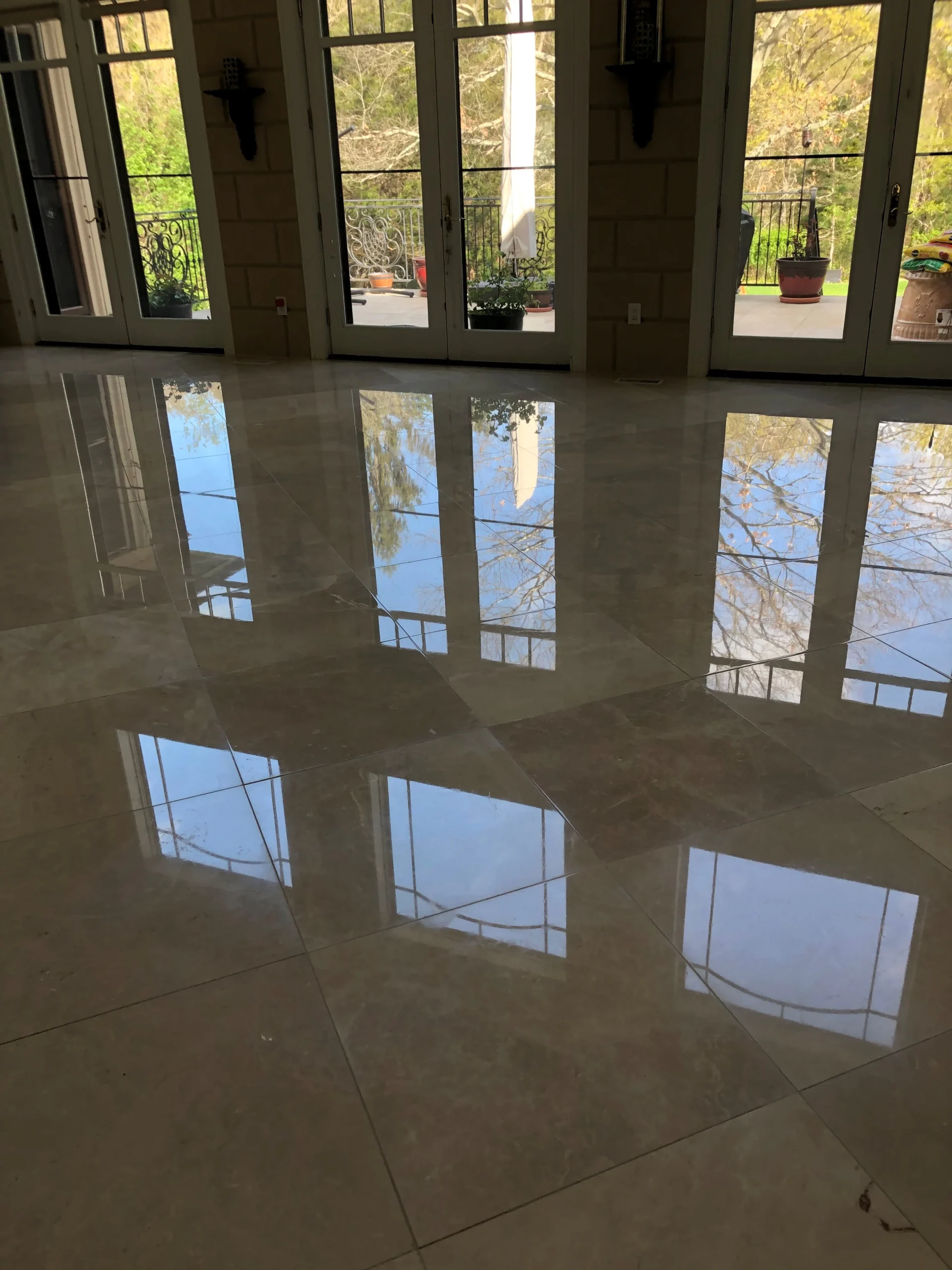
Next comes the actual restoration work. We use diamond abrasives to remove the damaged surface layer—this is what eliminates etching, scratches, and dullness. Then we work through progressively finer grits to rebuild the finish. This is marble refinishing done right: controlled, precise, and done on-site. No need to remove your floors. We complete 99% of our work in your home using dust-free techniques.
The final step is polishing. This is where the shine comes back. We’re not talking about a temporary coating that wears off in six months. We’re talking about a restored surface that’s been properly honed and polished to bring out the natural luster of the stone.
Most jobs take less than two days. You’ll see the difference immediately, but the real payoff is long-term. Properly restored marble floor care means your floors can last another century. That’s not an exaggeration—that’s what happens when you fix the problem instead of covering it up.

Ready to get started?
You’re getting a complete marble floor restoration, not a surface-level cleaning. That includes damage assessment, diamond grinding to remove compromised layers, honing to smooth the surface, and polishing to restore the original finish.
We handle etching from acidic damage, which is the number one reason marble loses its shine in Copiague homes. We remove water stains and rings that conventional cleaning can’t touch. We repair scratches and dullness from years of foot traffic. If your bathroom floor restoration involves marble, we address the specific challenges that come with moisture exposure and frequent cleaning product use.
Here’s what matters for homeowners in Copiague: your vintage home likely has original marble that’s worth preserving. Nassau County properties from the early 1900s often feature stone and craftsmanship you can’t replace at any price. Well-maintained original floors can increase your property value by 3-5%. Buyers pay premium prices for authentic, restored features—especially in historic areas where character matters.
Restoration is faster and more affordable than replacement. You’re also keeping the original materials that give your home its character. That’s something you can’t get back once it’s gone, no matter how much you’re willing to spend.
If your marble has lost its shine and looks dull even after cleaning, you’re dealing with damage that cleaning won’t fix. Standard cleaning removes dirt and grime from the surface. Restoration removes the damaged layer of stone itself.
The test is simple: if you can see dull spots, etching, or areas where the finish looks inconsistent, you need restoration. If your floors feel rough to the touch or you can see scratches when light hits them at an angle, you need restoration. If you’ve tried multiple cleaning products and the problem hasn’t improved, you definitely need restoration.
Many Copiague homeowners don’t realize their marble is damaged until the difference becomes obvious. You might notice that high-traffic areas look completely different from the marble under furniture or in corners. That’s not dirt—that’s wear that’s destroyed the polished surface. Cleaning will never bring that shine back because there’s no shine left to reveal. The stone needs to be re-polished, and that requires professional equipment and expertise.
Yes, and this is actually our specialty. Historic marble requires different handling than modern installations, and that’s exactly the kind of work we focus on. We’ve been restoring century-old floors throughout Nassau County since 1998.
The key is understanding the material you’re working with. Marble from 100 years ago often has different characteristics than contemporary stone. The installation methods were different. The wear patterns are different. Even the composition can vary. You need someone who knows how to read the stone and adjust the restoration process accordingly.
We use controlled diamond abrasive techniques that remove only the damaged layer—nothing more. This preserves as much of the original stone as possible while eliminating the surface damage that’s killing the appearance. For historic homes in Copiague, this approach means you can restore the beauty without compromising the authenticity. Your floors will look like they did when they were first installed, but the original material stays intact. That’s important for property value and for maintaining the character that makes historic homes special.
Most marble restoration jobs take less than two days, and we complete 99% of the work on-site using dust-free techniques. You won’t have construction debris throughout your house or contractors tracking mess into other rooms.
The timeline depends on the size of the area and the extent of damage. A bathroom floor restoration might be done in a day. A large foyer or multiple rooms might take two days. We’ll give you an accurate timeframe during the initial assessment so you can plan accordingly.
The disruption is minimal compared to replacement. You’re not tearing out floors, dealing with demolition, or waiting weeks for new materials to arrive and cure. We show up, restore your existing marble, and you’re back to normal use within 24-48 hours in most cases. For homeowners in Copiague with busy schedules, this matters. You’re not losing access to key areas of your home for extended periods. You’re getting professional results without the chaos of a major renovation project.
Polishing is the final step that creates shine. Refinishing is the complete process that includes removing damage, smoothing the surface, and then polishing. Most damaged marble needs full refinishing, not just polishing.
Think of it this way: if your marble is etched, scratched, or dull, polishing alone won’t fix it. You’d be trying to shine a damaged surface, which doesn’t work. The damage has to be removed first through grinding and honing. That’s refinishing. Once the surface is smooth and level again, then we polish to bring out the natural luster.
A lot of cleaning companies offer “marble polishing services” but don’t actually do refinishing. They might apply a topical coating that creates temporary shine, or they’ll buff the surface without addressing the underlying damage. That’s why you see results that don’t last. True marble refinishing rebuilds the surface properly. The shine you get isn’t from a product—it’s from the stone itself. That’s why it lasts and why it looks authentic. For marble floor care in Copiague homes, especially historic properties, you want the real process, not a shortcut.
Yes, significantly. Restoration costs a fraction of replacement and takes a fraction of the time. You’re also keeping the original marble, which matters for historic homes where authenticity affects property value.
Replacement means demolition, disposal, new material costs, installation labor, and downtime while everything cures. You’re easily looking at weeks of work and costs that run into tens of thousands for larger areas. Restoration removes those expenses entirely. We work with what’s already there, which is almost always higher quality than what you’d install new anyway.
For Copiague homeowners with vintage properties, there’s another factor: original marble from historic homes often can’t be matched. The quarries that produced that stone might not exist anymore. The patterns, colors, and quality were different. If you rip it out, you’re losing something irreplaceable. Restoration preserves that value while giving you floors that look brand new. From a financial standpoint and a preservation standpoint, restoration makes more sense unless the marble is structurally compromised, which is rare.
Use pH-neutral cleaners designed for marble, clean up spills immediately, and avoid acidic substances. That covers 90% of what you need to know. The other 10% is just being mindful about what touches your floors.
Most damage happens because people use the wrong products. Standard household cleaners are too harsh for marble. Anything with vinegar, lemon, or ammonia will etch the surface. Even some “natural” cleaners are acidic enough to cause problems. Stick with cleaners specifically formulated for marble and you’ll avoid most issues.
Spills are the other big concern. Wine, coffee, fruit juice—anything acidic needs to be wiped up right away. The longer it sits, the more it etches. For Copiague homes with restored marble, this kind of basic maintenance is what keeps your floors looking good for decades. You’ve already invested in professional restoration. Protecting that investment just means being smart about daily care. We’ll walk you through exactly what products to use and what to avoid when we complete your restoration work.