

You’re looking at scratched, etched, or dull marble floors in a home that deserves better. Maybe it’s the entryway that’s seen decades of foot traffic. Maybe it’s bathroom floors that lost their shine years ago. Either way, you’ve probably been told replacement is your only option.
It’s not. Professional marble floor restoration costs a fraction of replacement—typically $5 to $15 per square foot versus $70 to $190 for new installation. Most jobs finish in two to four days, not weeks. You keep the original craftsmanship, the authentic veining patterns, and the character that makes your Brightwaters home worth what it is.
The floors don’t just look clean. They look restored. There’s a difference, and it shows up in how light moves across the surface, how the stone feels underfoot, and how long the results actually last.
We specialize in the floors other contractors won’t touch. The 100-year-old marble in Brightwaters colonials and Tudors. The intricate patterns in historic bathrooms. The entry floors that have been walked on since the 1920s.
The owner oversees every project personally. No subcontractors. No crews showing up with generic equipment hoping for the best. You get direct communication with the person doing the work, transparent pricing before anything starts, and the kind of attention that comes from 25 years of working exclusively on historic stone.
Brightwaters homes were built during an era when marble installation was an art form. The materials, the techniques, the craftsmanship—none of it gets replicated today. That’s exactly why restoration matters, and why it takes someone who understands what they’re working with.
First, we assess the damage. Scratches, etching, staining, and dullness all require different approaches. Surface damage gets addressed differently than deep wear patterns, and historic marble often has quirks that modern stone doesn’t.
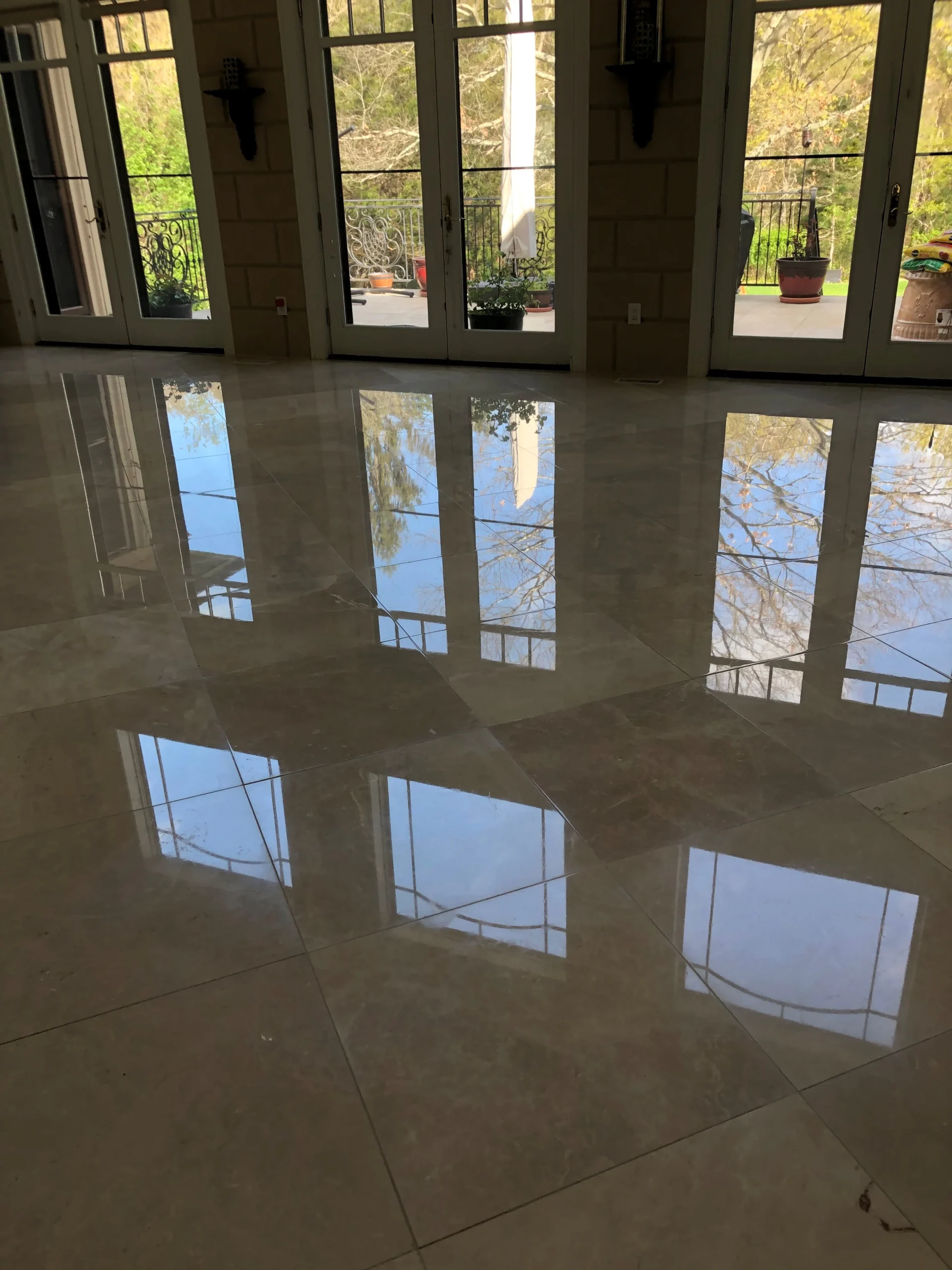
The restoration itself uses diamond abrasives—not harsh chemicals or acids that eat away at stone. We remove the damaged layer uniformly, working through progressively finer grits until the surface is level and smooth. Then comes polishing, which brings back that deep, reflective finish you remember.
The space stays protected throughout. Masking, containment, and cleanup aren’t afterthoughts. Most projects wrap up in a few days, and you’re left with floors that look like they did decades ago—before the wear, before the scratches, before someone tried fixing it with the wrong products.
You’ll also get guidance on marble floor care that actually works. Long Island’s hard water creates specific challenges for marble, and knowing how to maintain the finish makes a difference in how long it lasts.

Ready to get started?
You’re getting a full restoration, not a surface cleaning. That means crack and chip repair if needed, stain removal where possible, and complete honing and polishing to bring the stone back to its original finish. We handle everything from small bathroom floors to large entryways and foyers.
Brightwaters sits in an area where humidity, hard water, and age all take their toll on marble. Etching from acidic cleaners is common—homeowners don’t realize that most store-bought products are actively damaging their floors. Water spots, dullness, and surface wear build up over years, and by the time you notice, the damage feels overwhelming.
Historic homes in Nassau County often have marble that was quarried and installed using methods that don’t exist anymore. The stone itself has characteristics—color depth, veining complexity, finish quality—that you won’t find in modern materials. Restoration preserves that. Replacement erases it.
The cost difference is significant. A typical marble floor replacement in this area runs $15,000 to $18,000 or more. Restoration costs less than half that, finishes faster, and keeps the authenticity that buyers pay premium prices for when these homes go on the market.
Restoration typically costs $5 to $15 per square foot depending on the condition and size of the floor. Replacement runs $70 to $190 per square foot when you factor in removal, disposal, new material, and installation. For a standard 200-square-foot entryway, you’re looking at $1,000 to $3,000 for restoration versus $14,000 to $38,000 for replacement.
The math gets even better when you consider what you’re keeping. Original marble floors in Brightwaters homes were installed with craftsmanship and materials that aren’t available today. The veining patterns, the color variations, the way the stone was cut and laid—it’s irreplaceable. Buyers recognize that, and well-maintained historic features can add 3% to 5% to your property value.
Restoration also finishes faster. Most jobs take two to four days. Replacement can drag on for weeks, especially if there are substrate issues or custom work involved.
Yes. Etching happens when acidic substances—cleaners, spills, even some water—react with the calcium in marble and eat away at the surface. It leaves dull spots or rough patches that won’t buff out with regular cleaning. Most homeowners make it worse by scrubbing harder or using stronger products.
Professional marble refinishing removes the damaged layer entirely using diamond abrasives. We work through the stone methodically, leveling the surface and eliminating the etched areas. Then we polish it back to a uniform finish. The result is a floor that looks consistent again, not patchy or dull in spots.
Long Island’s hard water makes etching more common here. Mineral deposits build up, and if you’re cleaning with anything acidic to remove them, you’re creating a cycle where the floor gets duller over time. Part of the restoration process is breaking that cycle and giving you a maintenance plan that actually protects the stone.
Most residential marble restoration projects take two to four days depending on the square footage and condition. A small bathroom might be done in a day. A large entryway or multiple rooms might take closer to a week if there’s significant damage or repair work involved.
The timeline depends on how many passes we need to make with the diamond abrasives. Heavily damaged floors require more grinding to remove scratches and etching. Floors that just need polishing go faster. Either way, the space is usable again as soon as we’re done—there’s no curing time or waiting period.
We work efficiently, but we don’t rush. Historic marble requires a level of care that modern stone doesn’t. The owner oversees every project personally to make sure the work is done right, not just done fast.
That’s exactly what we specialize in. The older and more complex the floor, the better suited we are to handle it. Marble floors installed in Brightwaters homes during the 1920s through 1960s were done using techniques and materials that differ significantly from modern installations. The stone itself often has characteristics—density, hardness, finish—that require specific knowledge to restore properly.
A lot of contractors avoid historic floors because they’re unpredictable. Old adhesives, settling foundations, previous repair attempts—all of it affects how the stone responds to restoration. We’ve been working on century-old floors since 1998, and that experience shows up in how we assess damage, plan the work, and handle complications that come up.
The New York Times featured our work back in 2001 specifically because we take on the complex restoration jobs that others turn down. If your floors are old, worn, and full of character, that’s exactly what we’re here for.
Polishing is the final step in restoration, but it’s not the same thing. Polishing brings out shine on a surface that’s already smooth and level. Restoration fixes the underlying damage first—scratches, etching, staining, uneven wear—and then polishes the stone to finish.
If your marble is just dull but otherwise in good shape, polishing might be enough. But if you’re seeing scratches, rough spots, or areas where the finish is completely gone, you need full restoration. Trying to polish over damage doesn’t work. It just highlights the problems.
We use professional-grade diamond abrasives to remove damaged layers of stone and create a uniform surface. Then we work through progressively finer polishing steps until the marble has that deep, reflective finish. It’s not a quick buff with a machine. It’s a methodical process that brings the stone back to what it looked like when it was first installed.
Yes. We assess the floors, explain what needs to happen, and give you transparent pricing before any work starts. No surprises, no upselling once we’re on-site. You’ll know exactly what you’re paying and what you’re getting.
The quote process also gives you a chance to talk directly with the owner—the person who’ll actually be doing the work. You’re not dealing with a salesperson or a project manager. You’re talking to the craftsman who’s going to restore your floors, and that makes a difference in how the conversation goes.
Brightwaters is part of our service area in Nassau County, and we’ve worked on plenty of historic homes in the area. If you’re trying to decide between restoration and replacement, or you just want to know if your floors can be saved, a quote gives you the information you need to make the call.