

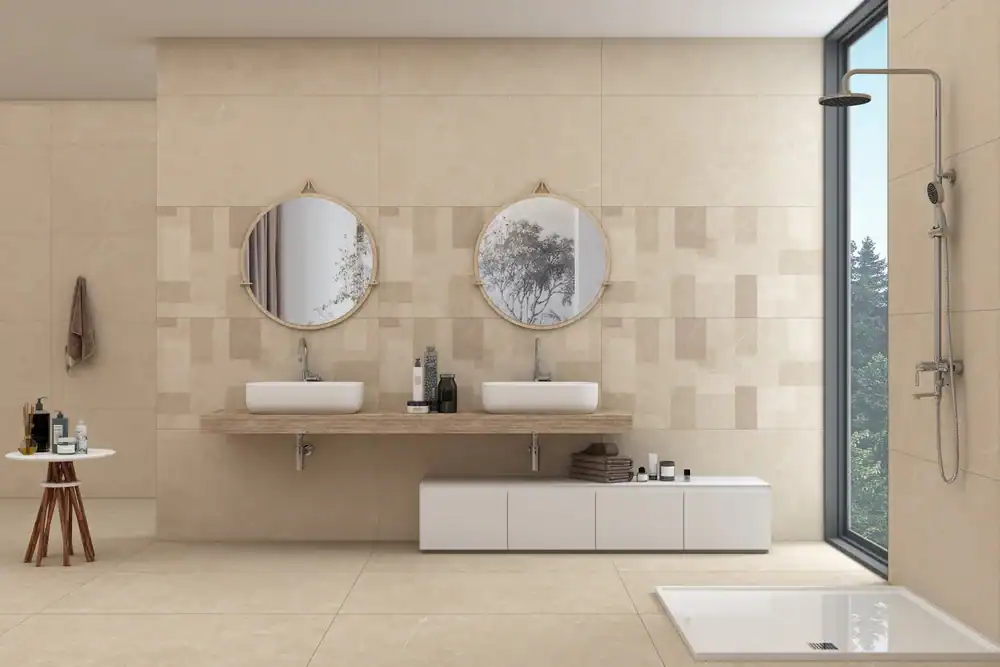
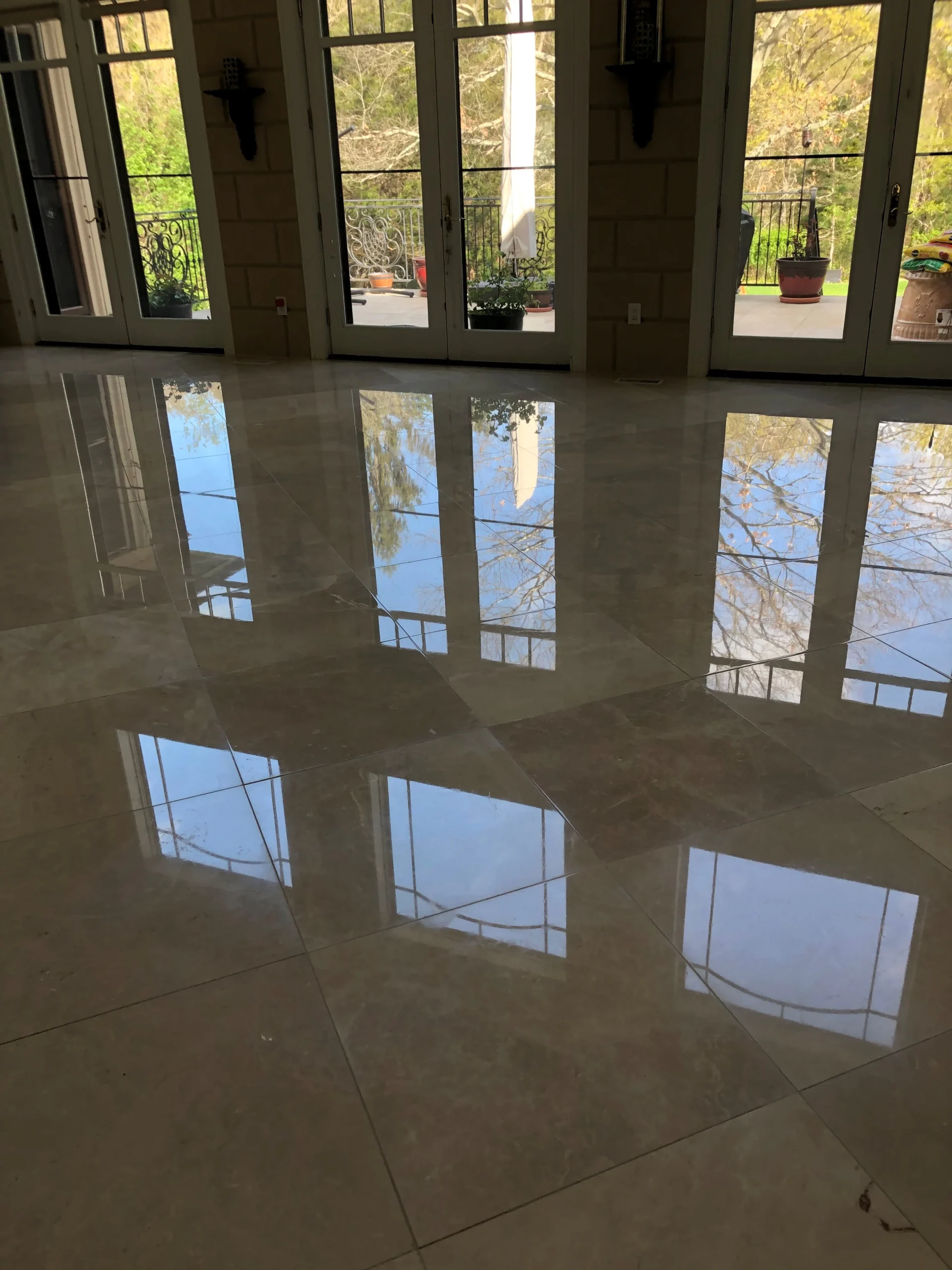
You walk into your entryway and actually see the veining again. The dull, cloudy haze that made your marble look tired is gone. Light reflects off the surface the way it did when the floor was first installed.
Your bathroom marble stops looking perpetually dirty. Those water spots and soap scum stains that wouldn’t budge no matter what cleaner you tried are completely removed.
The etching from years of acidic cleaners gets polished out. Your marble feels smooth again under your feet, not rough or chalky. You stop worrying about what guests think when they see your floors. You start appreciating what you have instead of pricing out replacement options you can’t afford.
This is what proper marble floor polishing does. It doesn’t cover up damage or apply a temporary coating. It removes the damaged layer and brings back the stone underneath.
High Definition Marble Restoration Inc has spent over two decades working on the exact type of floors most companies won’t touch. The 100-year-old marble in Brentwood’s historic homes. The bathroom floors with decades of etching and water damage. The entryways where three generations of foot traffic have worn down the finish.
We’re owner-operated, which means you talk directly to the person doing the work. No project managers. No subcontractors. Just someone who’s been refining marble restoration techniques since 1998 and was featured in the New York Times for this exact work.
Most of our work comes from homeowners in Brentwood and surrounding Nassau County areas who’ve tried the DIY route or hired someone cheaper. They call us when they realize marble restoration isn’t something you learn from YouTube.
First, we assess your marble in person. We need to see the type of stone, the extent of damage, and what’s causing the problems. Most etching comes from the wrong cleaners. Most dullness comes from wear patterns. We identify the actual issue before we quote you.
Once you approve the estimate, we start with a deep cleaning to remove any surface buildup. Then we use diamond abrasives to remove the damaged layer of marble. This is where the real restoration happens—we’re not buffing or coating, we’re removing scratches, etches, and stains by grinding them out.
After we’ve removed the damage, we move through progressively finer grits to refine the surface. This is what brings back the shine. We’re polishing the actual stone, not applying anything to it.
The final step is honing and polishing to your preferred finish. Some people want a high-gloss look. Others prefer a softer honed finish, especially in bathrooms where high polish can be slippery. We do 99% of this work on-site with dust containment systems, so you’re not cleaning marble dust out of your house for weeks.

Ready to get started?
You get a full assessment of your marble’s condition and a transparent quote before any work starts. We explain what’s fixable, what’s not, and what your options are. No surprises.
The restoration itself includes deep cleaning, damage removal, multi-stage polishing, and sealing if your stone needs it. We handle marble floor restoration in any room—entryways, bathrooms, kitchens, living areas. We also work on marble countertops, vanities, and other surfaces that need the same level of care.
For Brentwood homeowners, this matters because so many properties here were built before 1939. Your marble wasn’t installed with modern materials or techniques. It requires someone who understands how these older floors were laid and what they’ve been through. Nassau County’s hard water alone causes specific types of mineral damage that we see constantly.
We also provide guidance on proper marble floor care after restoration. Most damage we fix is preventable. You just need to know which cleaners are safe and which ones will etch your marble in a single use. We’ll walk you through maintenance that actually protects your investment instead of slowly destroying it.
Restoration typically costs a fraction of what you’d pay to remove and replace marble flooring. Replacement means demolition, disposal, new material, and reinstallation. You’re looking at $15-30 per square foot minimum, often much higher for quality marble.
Professional marble restoration usually runs $5-12 per square foot depending on the condition and size of the area. More importantly, you keep your original floors. If you have historic marble in a Brentwood home, that’s not something you can replicate with new material.
The other cost people forget is the disruption. Replacement takes weeks. Restoration takes days. You’re not living in a construction zone, and you’re not throwing away perfectly good stone just because the surface is damaged.
Yes. Deep scratches and etching are exactly what the restoration process is designed to fix. We remove the damaged layer of marble using diamond abrasives, then polish the stone underneath back to a smooth finish.
Etching happens when acidic substances eat away at the calcium carbonate in marble. It leaves dull spots that look like water stains but won’t wipe away. Scratches come from abrasive dirt, dragged furniture, or aggressive cleaning. Both issues require removing material, not adding a coating.
The depth of the damage determines how much material we need to remove. Surface etching comes out quickly. Deep gouges take more work. But unless your marble is worn down to almost nothing, it’s restorable. We’ve brought back 100-year-old floors that looked completely ruined.
Most residential marble restoration projects take one to three days depending on the square footage and condition. A typical bathroom might take a day. A large entryway or multiple rooms might take two to three days.
We work on-site, and we use dust containment systems so you’re not dealing with a mess throughout your house. You’ll need to stay off the floors while we’re working and for a few hours after we finish, but you’re not displaced for weeks like you would be with replacement.
The timeline also depends on what we find once we start. Sometimes there’s hidden damage under years of buildup. Sometimes the marble is in better shape than it looked. We give you an estimated timeline upfront and keep you updated if anything changes.
Polishing and refinishing are often used interchangeably, but they describe different levels of work. Polishing typically means restoring shine to marble that’s in decent shape. Refinishing means more aggressive restoration—removing scratches, etching, stains, and damage before polishing.
If your marble just looks dull but doesn’t have major scratches or etching, polishing might be enough. We use finer abrasives to bring back the shine without removing much material. This is common for marble that’s been maintained but has lost its luster over time.
Refinishing is what most Brentwood homeowners actually need. Years of wear, wrong cleaners, and water damage require removing the damaged surface layer. We start with coarser abrasives to grind out the damage, then move through finer grits to refine and polish. It’s more involved, but it’s the only way to truly restore compromised marble.
Properly restored marble holds its finish for years if you maintain it correctly. The shine comes from the polished surface of the stone itself, not from a coating that wears off. But marble is calcium-based, which means acidic substances will etch it no matter how well it’s been restored.
The key is using pH-neutral cleaners designed for natural stone. Most household cleaners are too acidic or alkaline. Even “natural” cleaners like vinegar will etch marble. We’ll tell you exactly what products are safe and what to avoid.
High-traffic areas will dull faster than low-traffic areas just from wear. You might need professional repolishing every few years in entryways, less often in bathrooms or other spaces. But you’re talking about maintenance polishing, not full restoration. That’s a much quicker and less expensive process once your marble is in good shape.
We restore all marble surfaces—floors, countertops, vanities, shower walls, fireplace surrounds, and any other marble in your home. The process is the same regardless of whether it’s horizontal or vertical. We’re removing damage and polishing the stone back to its original condition.
Bathroom vanities are one of the most common projects we handle outside of flooring. They take a beating from toothpaste, soap, cosmetics, and hard water. All of those things etch and stain marble over time. Kitchen countertops have similar issues with food acids and spills.
We’ve worked on everything from small powder room vanities to large kitchen islands. The techniques don’t change, but the access and setup do. We bring the same equipment and expertise to every surface. If it’s marble and it’s damaged, we can restore it.