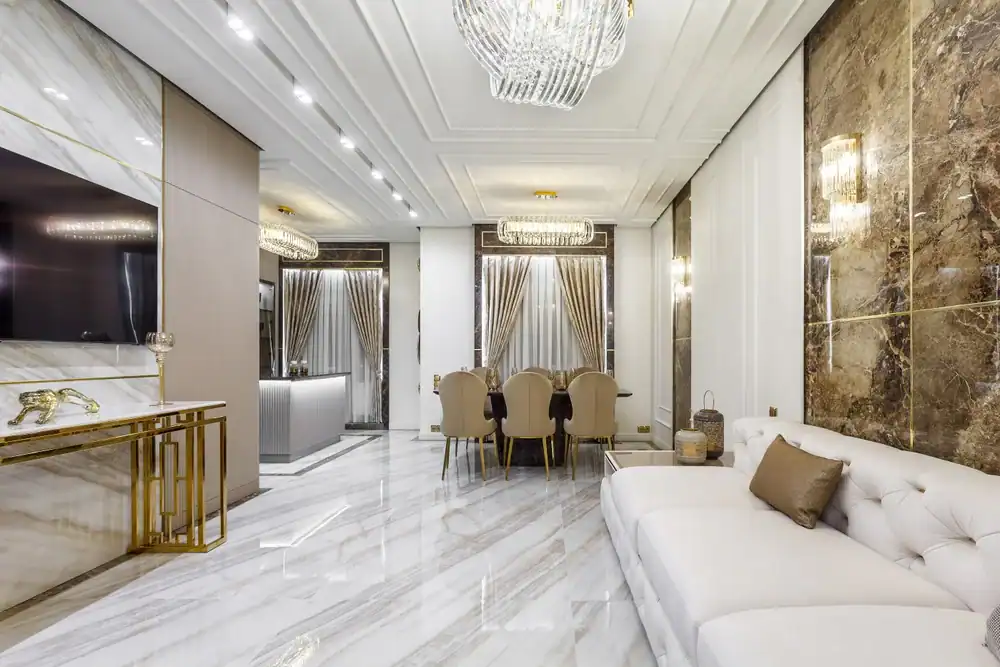
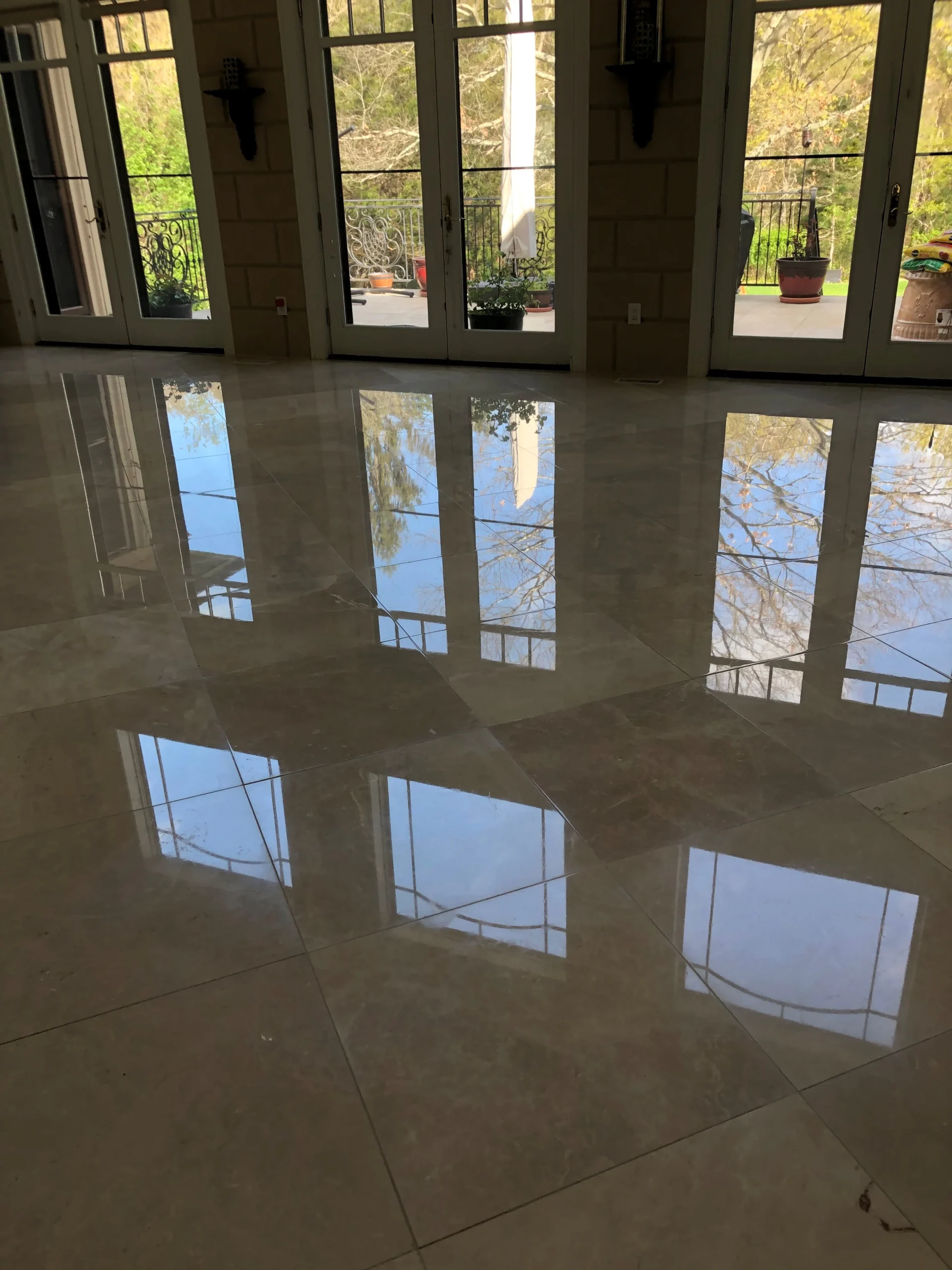
Your marble goes from dull and damaged to the gleaming surface it was a century ago. The etching from years of wrong cleaners disappears. The water stains from Long Island’s hard water vanish. The scratches and wear patterns get polished out completely.
You’re looking at floors that stop guests in their tracks again. More importantly, you’re protecting an investment that modern materials simply can’t replicate—the veining, the color variations, the craftsmanship that makes historic Bay Shore homes special.
This isn’t a temporary fix. Proper marble restoration includes sealing specifically designed for Long Island’s coastal humidity and mineral-rich water. You’re preventing the next round of damage before it starts, which means your floors stay protected for years instead of degrading again in months.
We’ve been restoring historic floors throughout Nassau and Suffolk Counties since 1998. The New York Times featured our work in 2001, but what matters more is what we do every day: bring century-old marble back to life when other companies say it’s impossible.
Bay Shore’s historic homes present unique challenges. The coastal humidity, the hard water conditions, the age of the marble itself—these aren’t problems you solve with standard cleaning company techniques. You need someone who understands how marble from specific quarries and periods behaves, how Long Island’s environment affects it, and how to restore it without causing more damage.
We’re owner-operated, which means you deal directly with the craftsman doing the work. No subcontractors. No middlemen. Just direct communication and accountability from start to finish.
First, we assess the actual condition of your marble. Not every floor needs the same level of work, and we’re not going to recommend services you don’t need. We identify the specific damage—etching, staining, scratches, lippage—and explain exactly what it takes to fix each issue.
The restoration itself happens on-site and is 99% dust-free. We start with honing to remove surface damage and level any lippage. Then we move through progressively finer polishing stages until your marble reaches the level of shine appropriate for its type. Some marbles take a high gloss. Others look best with a honed finish. We match the restoration to what your specific marble should look like.
The final step is sealing with products designed for Long Island’s conditions. This isn’t generic sealer—it’s protection formulated to handle coastal humidity and hard water exposure. Most jobs finish in under two days, and you can walk on your floors immediately. Full curing happens within 24 hours, which means you’re back to normal use faster than you’d expect.

Ready to get started?
You get a complete assessment before any work starts. We provide free, itemized estimates within 24 hours so you know exactly what you’re paying for—no hidden fees, no surprise charges halfway through the job.
The restoration covers everything your floors need: honing to remove etching and stains, polishing to restore shine, lippage correction if your tiles are uneven, and crack or chip repair where necessary. We handle the specific problems Bay Shore homes face—hard water damage, soap scum buildup in bathrooms, etching from acidic cleaners, and deterioration from coastal humidity.
Your furniture doesn’t need to move in most cases. The process is contained, dust-free, and doesn’t require you to vacate your home. We work efficiently because we’ve done this for over 25 years, which means less disruption to your daily routine.
The work comes with a comprehensive warranty, and we provide maintenance guidance specific to your marble type and Long Island’s water conditions. You’re not guessing how to care for your floors after we leave—you know exactly what products to use and what to avoid.
Professional marble restoration typically runs $5 to $15 per square foot depending on the condition and type of marble. Replacement costs $70 to $190 per square foot on Long Island when you factor in demolition, disposal, new material, and installation.
For a 200-square-foot entryway, you’re looking at $1,000 to $3,000 for restoration versus $14,000 to $38,000 for replacement. That’s not a small difference, especially when restoration often delivers better results than new installation because you’re keeping the original material quality and character.
The cost varies based on damage severity. Light etching and dullness cost less to fix than deep staining or significant lippage issues. That’s why we provide itemized estimates—you see exactly what each aspect of the work costs before we start.
Yes, and this is actually one of the most common problems we fix in Bay Shore homes. Acidic cleaners—vinegar, lemon-based products, standard bathroom cleaners—etch marble by dissolving the calcium carbonate on the surface. It looks like cloudy, dull patches that won’t buff out with regular cleaning.
Honing removes that damaged surface layer entirely. We’re not covering up the etching—we’re eliminating it by taking the marble down to undamaged material, then polishing it back to the appropriate finish. The process removes years of accumulated damage in a single restoration.
The key is using the right abrasives in the right sequence. Too aggressive and you damage the marble further. Too gentle and you don’t remove enough material to reach the undamaged layer. This is where experience matters—we’ve been doing this since 1998 and know exactly how different marble types respond to different approaches.
Most residential jobs finish in one to two days depending on square footage and damage severity. A standard kitchen or bathroom takes a day. Larger areas like entryways, hallways, or multiple rooms might stretch into a second day.
You can walk on the floors immediately after we finish, but we recommend waiting 24 hours before placing furniture back or exposing the surface to water. That gives the sealer time to cure fully. It’s not a long disruption—you’re not dealing with the weeks-long process that replacement requires.
The timeline also depends on what we find during assessment. Severe lippage, extensive cracking, or deep staining takes longer to address properly. We give you an accurate timeframe in the estimate so you can plan accordingly. We don’t rush jobs to hit arbitrary deadlines—we finish when the work is done right.
Historic marble restoration is actually our specialty. The older and more challenging the floor, the better suited we are to handle it. We’ve worked on century-old marble throughout Nassau and Suffolk Counties, including many Bay Shore properties with original floors from the early 1900s.
Old marble often has characteristics you can’t replicate with modern materials—specific veining patterns, color variations, and quarry sources that no longer exist. Losing those floors means losing irreplaceable character. Our job is preserving that authenticity while addressing the wear and damage that comes with age.
Historic marble does present unique challenges. The installation methods were different. The marble itself may have different hardness or porosity than modern stone. Some old floors have lippage issues or previous repair attempts that need correction. We’ve seen it all, and more importantly, we know how to fix it without causing additional damage that inexperienced contractors often create.
Yes, when it’s done with the right sealing products. Long Island’s water has high mineral content—calcium and magnesium that create the white buildup you see on faucets and shower doors. That same water affects marble if it’s not properly protected.
We use sealers specifically formulated for high-mineral water environments and coastal humidity. These aren’t generic products—they’re designed to prevent the water absorption and mineral deposits that cause staining and etching over time. The sealer creates a barrier that keeps Long Island’s water from penetrating the marble surface.
Maintenance matters too. We provide specific guidance on what cleaning products work with your marble type and our sealing system. Following that guidance means your floors stay protected instead of degrading again. Most clients find that proper maintenance is simpler than what they were doing before—fewer products, less scrubbing, better results.
We repair structural damage as part of the restoration process. Cracks get filled with color-matched epoxy that bonds to the marble and cures to similar hardness. Chips get rebuilt using the same approach. The goal is making repairs invisible while restoring structural integrity.
This is common in historic floors where settling, temperature changes, or impact damage have caused cracks over decades. The repairs need to match not just the color but also the finish and veining pattern of the surrounding marble. That takes skill and experience—it’s not something you can cover up with generic filler.
After repairs cure, we hone and polish the entire surface together. This blends the repaired areas with the original marble so you don’t see obvious patches or color differences. The result is a floor that looks uniform and original, not obviously repaired. Most clients can’t identify where repairs were made after we finish.