
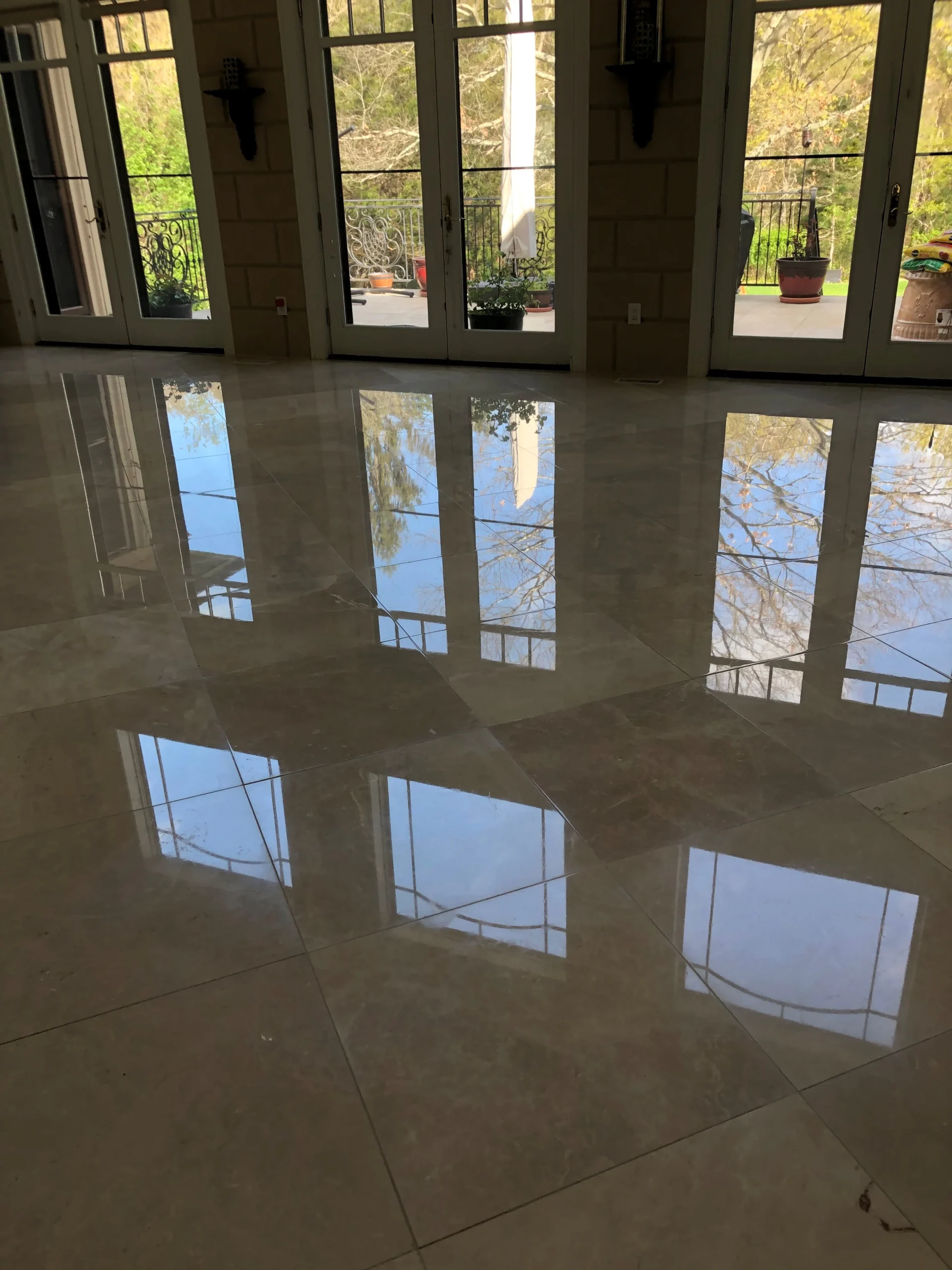
You get your floor back. Not a patched-up version or a temporary fix, but the actual surface you’ve been living on top of for years—smooth, reflective, and clean enough that you’ll notice it again.
Most marble floors in Baiting Hollow homes are decades old, some over a century. They’ve survived renovations, kids, pets, and whatever the previous owners put them through. But at some point, the dullness sets in. The etching from cleaning products. The scratches from furniture. The water stains that won’t budge no matter what you try.
Restoration brings it all back. The shine. The depth. The reason someone chose marble in the first place. And it happens faster than you think—usually in less than two days, with far less disruption than tearing everything out and starting over. You’re not covering up the problem. You’re fixing it at the surface level, where the damage actually lives.
High Definition Marble Restoration Inc has spent over 25 years working on floors that most contractors won’t touch. The owner oversees every job personally, which means you’re not dealing with a crew that showed up in a van yesterday. You’re working with someone who’s seen hundreds of historic floors across Nassau and Suffolk Counties and knows exactly what works.
Baiting Hollow sits in an area rich with vintage homes—many built in the 1970s and earlier, with original marble still intact. Those floors weren’t installed the way modern ones are, and they don’t respond to modern methods. That’s where experience matters. We’ve worked on everything from Gold Coast estate floors to bathroom marble in century-old farmhouses, and the approach is never one-size-fits-all.
We were featured in The New York Times back in 2001 for restoration work, and we’ve been the exclusive marble restoration provider for the Garden City Hotel for over 16 years. That’s not marketing. That’s proof.
First, we assess the floor. Not with a sales pitch, but with an actual look at what’s damaged, what’s salvageable, and what it’ll take to get it back. You’ll get a transparent quote before any work starts—no surprises, no upselling mid-job.
Once we begin, the process is methodical. We start by grinding down the damaged surface layer using diamond abrasives. This removes etching, stains, and scratches. Then we move through progressively finer grits to smooth and refine the stone. It’s the same principle as sanding wood, but with stone, the margin for error is much smaller. Too aggressive and you create more problems. Too light and nothing changes.
After grinding and honing, we polish the marble to restore its reflective finish. Depending on the stone and the look you want, we can go high-gloss or stop at a softer hone. Finally, we clean up. We mask off surrounding areas, manage dust as much as possible, and leave the space cleaner than we found it with your floor restored.
Most jobs wrap up in under two days. You’re not living in a construction zone for weeks. You’re getting a floor back that looks like it was just installed.

Ready to get started?
A full marble floor restoration covers everything from surface repair to final polish. That includes removing etching caused by acidic spills or harsh cleaners, eliminating scratches from years of foot traffic, and pulling out stains that have set into the stone. If there are cracks or chips, we handle those too—filling and leveling so the repair blends in with the rest of the floor.
In Baiting Hollow and the surrounding Long Island area, hard water is a real issue. The mineral content here leaves behind deposits that look permanent if you don’t know how to treat them. We do. We also deal with the specific challenges that come with older homes—uneven subfloors, historic installation methods, stones that were quarried differently than modern marble. It all factors into how we approach the job.
You also get honest advice. If your floor is in rough shape and you’re wondering whether restoration is even worth it, we’ll tell you. If replacement makes more sense, we’ll say that too. But in most cases, even floors that look too far gone can be brought back. And when they are, the cost is a fraction of what you’d pay to rip everything out and start over. Restoration typically runs $3 to $7 per square foot. Replacement can hit $100 to $200 per square foot installed. That’s not a small difference.
Most residential marble floor restoration projects are completed in less than two days. The timeline depends on the size of the area, the condition of the stone, and the level of finish you’re looking for, but the process itself is faster than most people expect.
Day one usually covers the heavy lifting—grinding down the damaged surface, removing etching and stains, and working through the honing stages. Day two is polishing and cleanup. If the floor is in particularly rough shape or the square footage is large, it might stretch into a third day, but that’s the exception.
Compare that to replacement, which involves demo, disposal, subfloor prep, new material installation, grouting, and sealing. You’re looking at a week or more of work, plus the mess and the cost. Restoration keeps you in your home with minimal disruption and gets you back to normal in a fraction of the time.
Yes. In fact, cleaner damage is one of the most common problems we see. A lot of homeowners don’t realize that most household cleaners are too acidic for marble. Anything with vinegar, lemon, or ammonia will etch the surface over time, leaving it dull and rough to the touch.
The good news is that etching is a surface-level issue. It’s not deep damage—it’s a chemical reaction that dulls the polish. We remove that damaged layer through grinding and honing, then bring the stone back to a smooth, polished finish. It’s the same process we’d use for scratches or wear patterns, and it’s completely reversible.
If you’ve been using the wrong products for years, the floor might look beyond saving. It’s not. We’ve restored marble that’s been scrubbed with bleach, treated with acidic tile cleaners, and worse. As long as the stone itself is intact, we can bring it back.
By a significant margin. Restoration typically costs between $3 and $7 per square foot depending on the condition and finish level. Replacement costs anywhere from $100 to $200 per square foot when you factor in demo, disposal, new material, labor, and installation.
For a 200-square-foot bathroom, that’s the difference between $600 to $1,400 for restoration versus $20,000 to $40,000 for replacement. And that’s assuming the new marble is comparable quality to what you already have. In many historic Baiting Hollow homes, the original marble is higher grade than what’s available today at standard pricing.
There’s also the time factor. Restoration takes a day or two. Replacement takes a week or more and leaves you without a functional space during that time. If the goal is to get your floor looking new again without the cost or chaos of a full renovation, restoration is the clear answer.
Honing and polishing refer to the level of finish on the marble surface. Honing creates a smooth, matte finish with little to no reflection. Polishing takes it further, creating a high-gloss, mirror-like shine. Both are achieved through the same grinding process, just stopped at different stages.
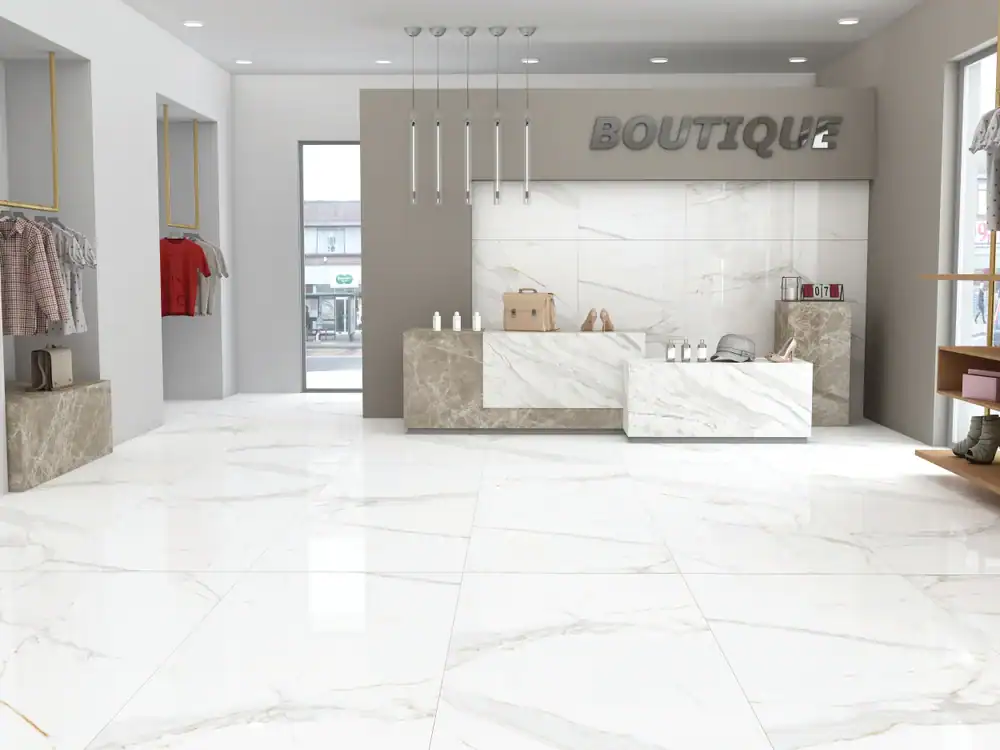
Honed marble has a softer, more understated look. It hides scratches and etching better than polished marble, which makes it a popular choice for high-traffic areas or homes with kids and pets. Polished marble is more formal and reflective, which is what most people picture when they think of marble floors. It shows damage more easily, but it also shows off the stone’s natural color and veining in a way honed finishes don’t.
We can take your floor to either finish depending on what you prefer. If it was originally polished and you want it back that way, we’ll polish it. If you’d rather tone it down to a honed finish for easier maintenance, we can do that too. It’s your floor—we just make sure it looks the way you want it to.
Absolutely. In fact, historic floors are what we do best. The older the floor, the more likely it is that we’ve worked on something similar. Baiting Hollow and the surrounding Long Island area are full of homes from the early 1900s with original marble still in place, and those floors respond extremely well to restoration.
Older marble is often higher quality than modern stone. It was quarried differently, cut thicker, and installed with more care. The problem is that decades of foot traffic, improper cleaning, and sometimes bad repair attempts have left the surface looking worn out. But the stone underneath is still solid.
We’ve restored marble floors in Gold Coast mansions, century-old farmhouses, and everything in between. The techniques are the same, but the approach has to account for how the floor was originally installed and what it’s been through since. That’s where experience matters. We’re not guessing. We’ve done this hundreds of times, and we know how to handle floors that other contractors won’t touch.
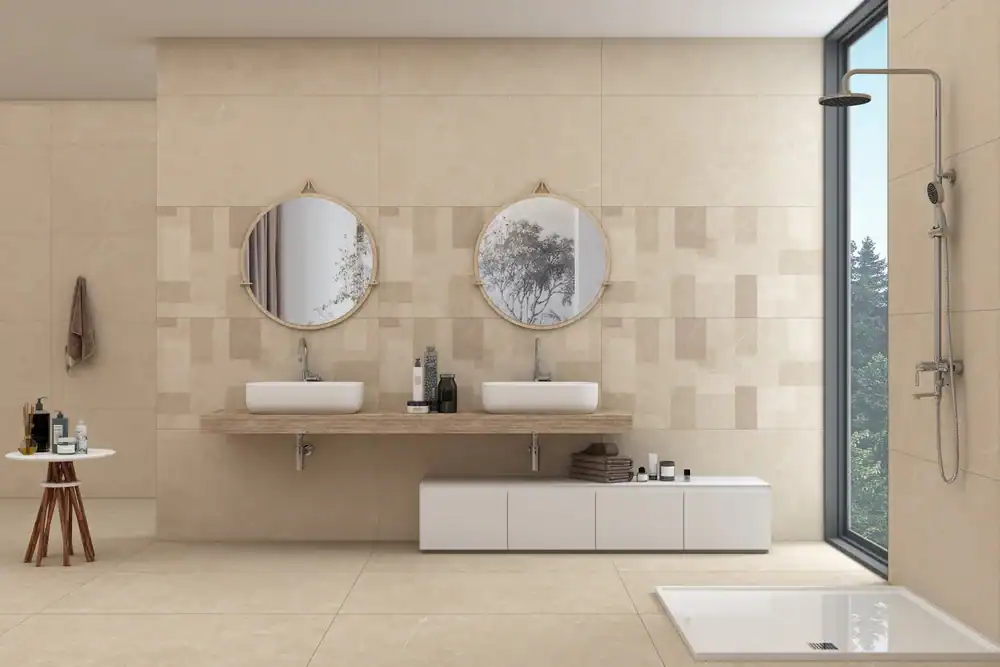
Yes. Bathroom floor restoration is one of our most common projects. Bathrooms take more abuse than almost any other room—constant moisture, soap residue, hard water, and cleaning products that are often too harsh for marble. Over time, that adds up to dull, stained, or etched floors that look worse every year.
Restoring a bathroom floor follows the same process as any other marble restoration, but the small space and high moisture environment require extra attention. We make sure the stone is properly sealed after polishing so it holds up better against water and daily use going forward.
Bathroom restoration also tends to be one of the most dramatic transformations. Because the space is small, the before-and-after difference is immediately obvious. A restored marble bathroom floor completely changes how the room feels, and it’s one of those upgrades that makes the whole house feel better maintained. If your bathroom marble has seen better days, it’s worth restoring. The cost is minimal compared to a full bathroom remodel, and the results speak for themselves.