You’re looking at dull, scratched marble that’s lost its shine over decades. Maybe you’ve tried cleaning it yourself and made it worse. Now you’re wondering if replacement is the only option.
It’s not. Professional marble floor restoration brings back the original finish without tearing anything out. The process removes years of damage, restores the natural translucency of the stone, and protects it going forward.
Most Asharoken homeowners are shocked at two things: how much better their floors look after restoration, and how much money they saved by not replacing them. New marble installation runs $70-190 per square foot on Long Island. Restoration costs a fraction of that and keeps your original floors—the ones that add character and value to your historic home.
You get floors that look new again, completed in 1-2 days with minimal disruption to your daily routine. No construction mess, no waiting weeks for materials, no losing the original craftsmanship that makes your home special.
We specialize in the floors other contractors won’t touch. The 100-year-old installations. The complicated historic materials. The projects where experience actually matters.
We’re owner-operated, which means you’re not dealing with a crew that learned marble restoration last month. Every project gets direct oversight from someone who’s been doing this for over 25 years. The New York Times featured our work back in 2001, and we’ve been restoring historic floors across Nassau and Suffolk County ever since.
Asharoken’s waterfront location creates specific challenges for marble. Humidity affects how stone ages. Salt air accelerates certain types of wear. Your floors face conditions that require someone who understands both historic materials and local environmental factors. That’s what you’re getting when you work with us—expertise that’s specific to what your floors actually need.
First, we assess your floors in person and give you a transparent quote. No surprises, no upselling once we start. You know exactly what you’re paying before any work begins.
The actual restoration process uses diamond abrasives to remove damaged layers of stone. We’re not covering up problems—we’re eliminating them. This removes scratches, etching from acidic cleaners, and dullness that’s built up over decades. Then we hone and polish the marble back to its original finish, bringing out the natural color and translucency.
We protect everything around the work area. Your furniture, walls, and adjacent rooms stay clean. Most jobs take 1-2 days depending on square footage and condition. You’re not living in a construction zone for weeks.
After restoration, your marble gets a protective treatment that makes daily maintenance easier. You’ll know exactly how to care for it going forward so it stays beautiful. We’re not the kind of company that does the work and disappears—you can call with questions anytime.

Ready to get started?
You’re getting a complete restoration—not a surface-level cleaning that wears off in six months. This includes damage removal, honing, polishing, and protective sealing. We handle bathroom floor restoration, entryways, kitchens, and any other marble surfaces in your Asharoken home.
The process works on various types of marble, including the Carrara and Calacatta commonly found in historic Long Island properties. If your floors have cracks or chips, we repair those too. Stone can develop natural defects over time, especially in century-old installations, and we address structural issues before refinishing.
Many Asharoken homeowners don’t realize their marble can be saved until they see what proper restoration actually does. You’re not just getting a shinier floor—you’re preserving an irreplaceable part of your home’s history. Original marble floors, especially in waterfront properties, add significant value. Well-maintained historic features can increase property value by 3-5%, and buyers pay premium prices for authentic restored materials versus replacements.
We also offer concrete restoration and polishing for homeowners looking to upgrade basement or garage floors. It’s a newer service we’ve added based on demand, and it creates a high-end look at a fraction of what you’d pay for new flooring.
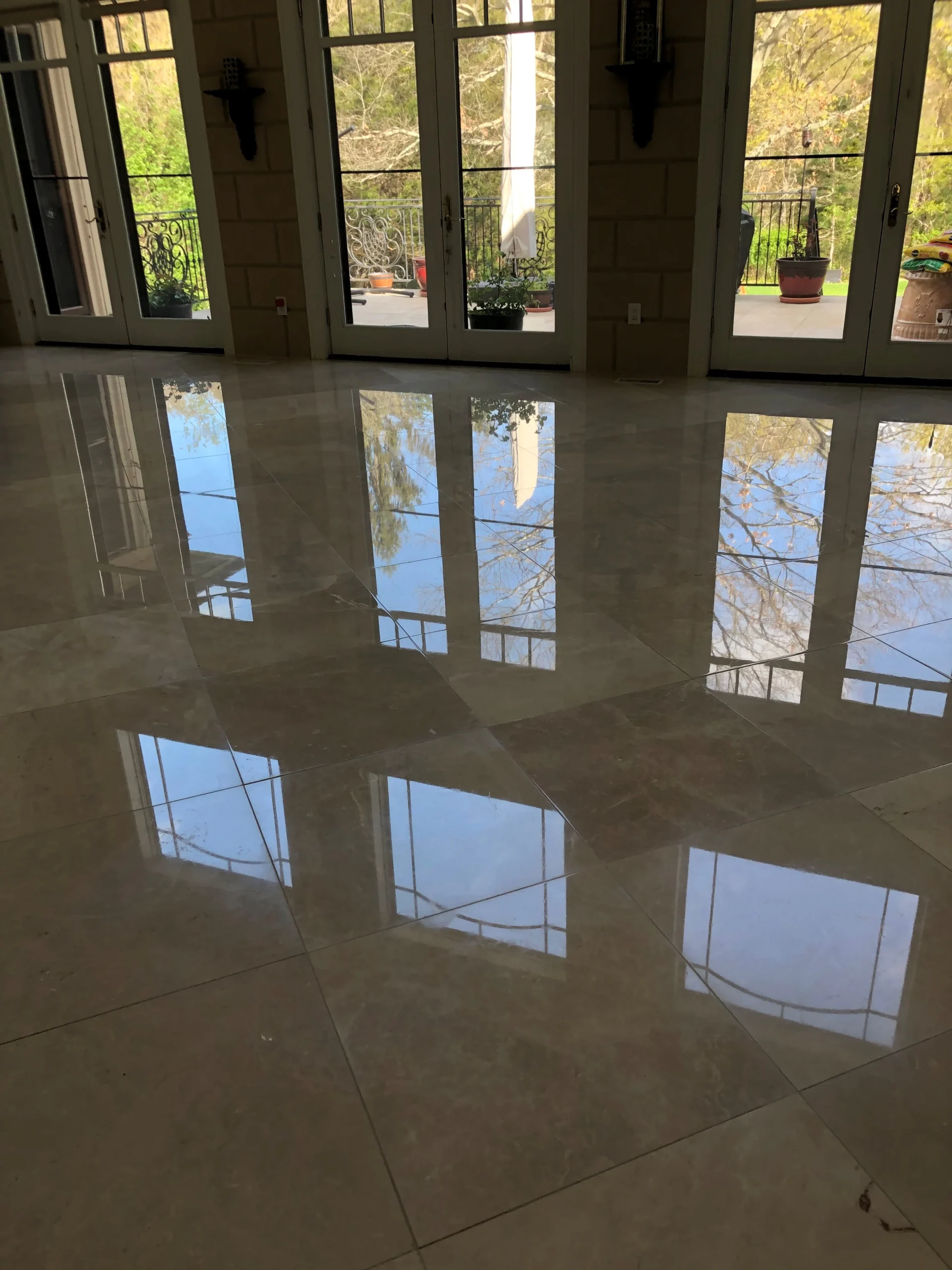
Most residential marble restoration projects take 1-2 days from start to finish. A typical bathroom might be done in one day. Larger areas like entryways or multiple rooms usually take two days, depending on the square footage and current condition of your floors.
The timeline also depends on what we find during the initial assessment. If your marble has deep scratches, heavy etching from years of acidic cleaners, or structural damage, that adds time. But even complicated historic floors rarely take more than 3-4 days.
You can use the space immediately after we finish. There’s no curing time or waiting period. We clean up completely, and your floors are ready for normal use right away. Compare that to replacement projects, which typically take weeks when you factor in demolition, material ordering, installation, and cleanup.
Yes. This is actually one of the most common problems we fix. Homeowners use the wrong cleaners—usually something acidic like vinegar or a generic bathroom cleaner—and it etches the marble surface. The more you clean, the duller and more damaged it gets.
Etching removes the polished layer of marble, leaving it rough and cloudy. It looks like a stain, but it’s actually surface damage. The good news is that etching can be completely removed through proper restoration. We grind down past the damaged layer and re-polish the stone to its original finish.
We see this constantly in Asharoken bathrooms and kitchens. You’re trying to maintain your floors, but the products you’re using are destroying them. After restoration, we’ll show you exactly what to use for daily cleaning so you don’t create the same problem again. It’s usually just pH-neutral soap and water—nothing complicated or expensive.
Significantly cheaper. New marble installation costs $70-190 per square foot on Long Island when you factor in materials, labor, demolition of old floors, and disposal. A typical bathroom replacement can easily run $8,000-$15,000. Restoration usually costs a fraction of that.
You’re also avoiding all the hidden costs of replacement. Demolition creates dust and mess throughout your home. You might discover subfloor damage that needs repair. Material delays can stretch the project timeline. And you lose the original marble, which matters if you own a historic Asharoken property where authenticity affects resale value.
Restoration preserves what you already have while making it look new again. You’re not compromising on quality—you’re making a smarter financial decision. The floors we restore often outlast new installations because we’re working with old-growth marble that was quarried when quality standards were higher. Your century-old floors are probably better material than what you’d buy today.
We restore all types of marble commonly found in Long Island historic homes. That includes Carrara, Calacatta, Crema Marfil, Emperador, and various other Italian and domestic marbles. Each type responds slightly differently to restoration, and we adjust our process based on the specific stone.
Carrara is probably the most common in Asharoken properties—it’s the white marble with gray veining that you see in older bathrooms and entryways. Calacatta is similar but with bolder veining and was typically used in higher-end installations. Both restore beautifully and can look brand new after proper treatment.
If you’re not sure what type of marble you have, that’s fine. We identify it during the initial assessment and explain what condition it’s in and what results you can expect. Some marbles are softer and more prone to scratching. Others are denser and hold up better to traffic. Knowing what you’re working with matters for both restoration and future maintenance.
Yes. Marble repair is part of the restoration process when needed. Cracks and chips happen over time, especially in century-old floors. Sometimes it’s from settling. Sometimes it’s from heavy furniture or dropped objects. Either way, we fix structural damage before refinishing.
The repair process involves filling cracks with color-matched epoxy or resin, then grinding and polishing so the repair blends with the surrounding marble. Done correctly, you shouldn’t be able to see where the damage was. This is particularly important in historic Asharoken homes where the marble might have natural defects that have worsened over decades.
Not every crack needs repair. Some are stable and purely cosmetic. We’ll tell you honestly what needs to be fixed for structural reasons versus what’s just aesthetic. If your floors are safe and functional as-is, we’re not going to recommend unnecessary work. But if there’s damage that will get worse without intervention, you need to know that before it becomes a bigger problem.
Daily maintenance is straightforward. Use a pH-neutral cleaner and a damp mop. That’s it. Don’t use vinegar, bleach, ammonia, or generic bathroom cleaners—they’re all acidic or harsh enough to damage marble over time.
For spills, clean them up quickly. Marble is calcium carbonate, which means acidic substances like wine, coffee, or citrus juice can etch the surface if left sitting. A quick wipe prevents damage. You don’t need to panic, but you also don’t want to leave a glass of orange juice on your marble countertop overnight.
We apply a protective sealer during restoration that makes your marble more resistant to staining and easier to clean. Depending on traffic, you might want to reseal every 1-2 years. It’s a simple process—you can do it yourself or call us. The key is that proper maintenance after restoration keeps your floors looking good for decades. You’ve invested in bringing them back to life. A little basic care protects that investment.