


Your marble floors look dull because decades of foot traffic create microscopic scratches that trap dirt and kill the shine. Regular cleaning can’t fix that. Neither can the wrong contractor with harsh chemicals.
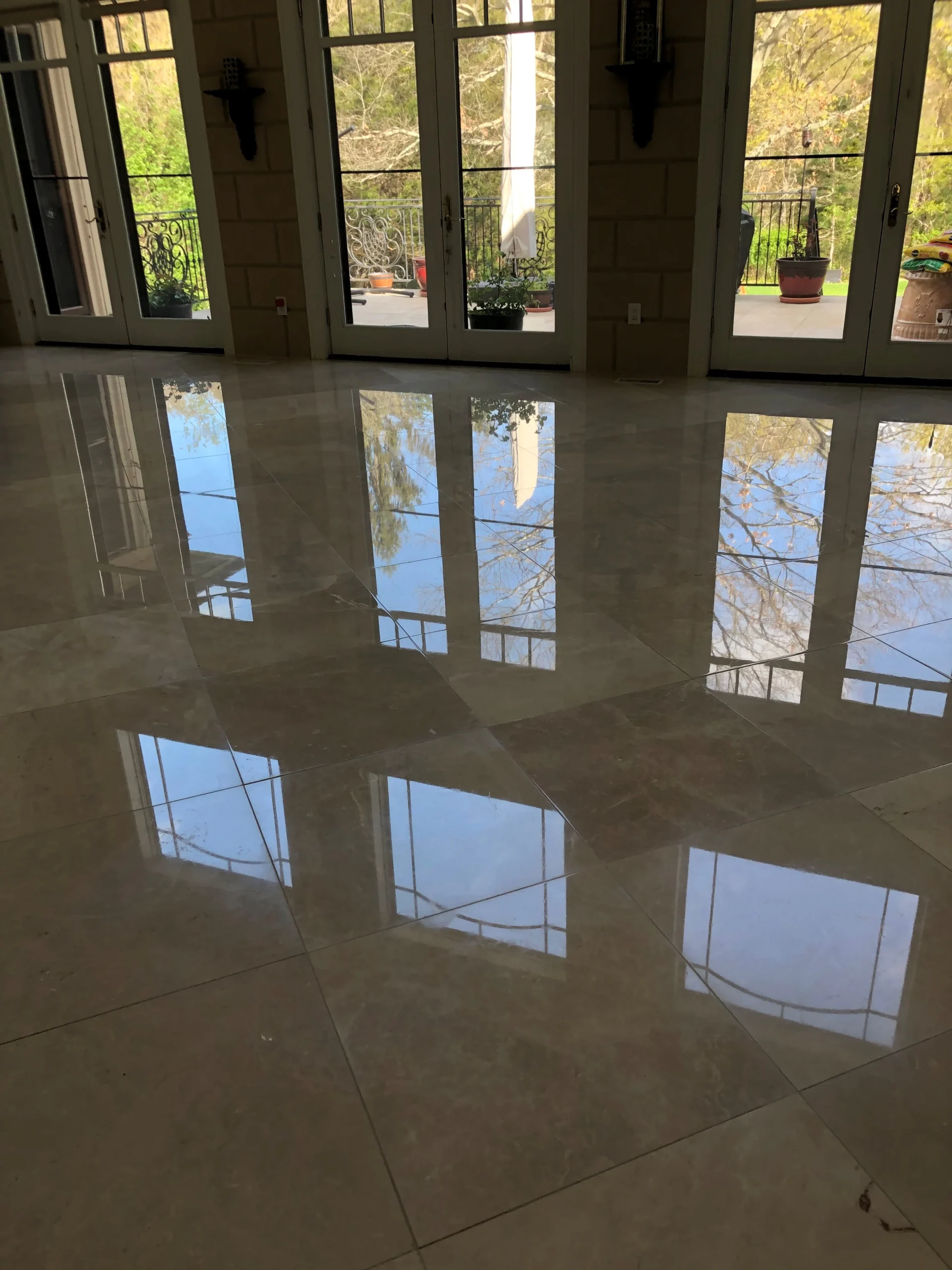
Professional marble floor restoration brings back the mirror-like finish you remember. We use diamond pad grinding and polishing techniques that remove damaged surface layers without destroying the stone. The result is a uniform, high-gloss finish that looks new again.
Most restoration projects in Woodmere take one to three days. Compare that to full replacement, which runs $100 to $200 per square foot, tears up your home for weeks, and destroys original materials you can’t get back. Restoration typically costs around $12 per square foot. You keep your authentic floors, save serious money, and avoid the disruption of a full renovation.
This matters especially in Woodmere, where many homes date back to the 1940s or earlier. Those original marble floors are part of what makes these properties special. Once you replace them, that character is gone forever.
High Definition Marble Restoration Inc specializes in the floors that other contractors walk away from. We’re talking about century-old marble in historic Woodmere homes where the installation methods are different, the materials are harder to source, and the margin for error is zero.
We’re owner-operated, which means you’re getting direct expertise on every project—not a crew that learned last month. We’ve been doing this for over 25 years across Nassau and Suffolk Counties. The New York Times featured our work back in 2001, and we’re still here because we do the job right.
The Five Towns area has some of the most beautiful historic homes on Long Island. We understand what these floors mean to you. They’re not just surfaces—they’re part of your home’s story and value. That’s why we focus on restoration over replacement whenever possible.
We start with a free assessment at your Woodmere home. Not every floor can be restored, and we’ll tell you straight up if yours can’t. If restoration makes sense, we’ll walk you through what we’ll do and give you transparent pricing on the spot.
The actual restoration starts with diamond grinding. We remove the damaged surface layer—the part that’s dull, scratched, or etched from years of wear and improper cleaning. This isn’t about slapping on a topical coating that wears off in six months. We’re rebuilding the surface itself.
Next comes honing, where we smooth the stone progressively with finer abrasives. Then polishing, which creates that high-gloss, mirror-like finish. We’re not using acids or harsh chemicals that eat away at your marble. We’re using professional-grade equipment and techniques that actually work.
Most jobs take one to three days depending on square footage and condition. You’ll need to stay off the floors during the process, but there’s no extended construction zone taking over your house. When we’re done, your floors look like they did when your house was new—or better.

Ready to get started?
Woodmere has a high concentration of homes built before 1960, with 18% dating back before 1940. These historic properties often feature original marble floors installed using methods that don’t exist anymore. The stone itself may come from quarries that closed decades ago.
That’s why you can’t treat a 100-year-old floor the same way you’d treat new marble. The thickness is different. The installation substrate is different. The wear patterns are different. An inexperienced contractor can do permanent damage in an afternoon with the wrong abrasive or chemical.
We specialize in these challenging projects. We understand how these floors were originally installed, what they’ve been through, and what they need now. That includes knowing when a floor has been ground down too many times and actually needs replacement—we’ll tell you that too.
Beyond marble, we also restore and polish concrete floors, which is becoming more popular in modern renovations. But our core expertise remains historic marble restoration throughout Nassau County. If your floor is old, complicated, or valuable, that’s exactly what we want to work on.
Professional marble restoration typically costs around $12 per square foot. Full replacement with new marble runs between $100 and $200 per square foot once you factor in demolition, disposal, new material, and installation.
For a 200-square-foot entryway, you’re looking at roughly $2,400 for restoration versus $20,000 to $40,000 for replacement. That’s an 80% to 90% cost savings while keeping your original floors.
The math gets even better when you consider that restoration takes one to three days, while replacement can disrupt your home for weeks. You’re also preserving the authentic character of your Woodmere home, which matters both personally and when it comes to resale value in historic neighborhoods.
Not every marble floor can be restored. If the stone has been ground down too many times in previous restoration attempts, there may not be enough material left to work with safely. Severe cracking or structural issues underneath the marble can also make restoration impossible.
That’s why we do a free assessment before quoting any job. We’ll tell you honestly whether restoration makes sense or if you’re better off with replacement. There’s no point in charging you for work that won’t last.
Most floors we see in Woodmere homes—even ones that look pretty rough—can be restored successfully. Dullness, surface scratches, etching from acidic spills, and most staining can be fixed. Deep cracks, missing sections, or floors that have been improperly restored multiple times are harder calls that require professional evaluation.
Most marble floor restoration projects take between one and three days depending on the square footage and current condition. Smaller areas like bathrooms or entryways might be done in a day. Larger spaces like open-concept living areas or full-floor restorations take longer.
You can stay in your home during the work, but you’ll need to stay off the floors we’re actively working on. There’s dust involved even with professional equipment, so we’ll seal off work areas when possible. It’s not as disruptive as a full renovation, but it’s not invisible either.
We’ll give you a realistic timeline during the free assessment. We’re owner-operated, so when we commit to a schedule, we show up and finish on time. No crews bouncing between five jobs leaving yours half-done for weeks.
Marble polishing is the final step in the restoration process—it creates the high-gloss, reflective finish. Marble refinishing or restoration includes the full process: grinding away damaged surface layers, honing with progressively finer abrasives, and then polishing.
If your floors just need a fresh shine and don’t have deep scratches or etching, polishing alone might work. But most floors we see in Woodmere need the complete refinishing process because years of wear have damaged the surface beyond what polishing can fix.
Some companies use topical coatings or waxes and call it polishing. That’s not real restoration. Those coatings wear off quickly and can actually make future restoration harder. We use diamond abrasives to rebuild the surface of the stone itself, which lasts years longer and looks dramatically better.
Most stains and etching can be removed during the grinding and honing process. We’re physically removing the damaged surface layer where the stain or etch exists. This works for common issues like water spots, wine stains, and etching from acidic substances like vinegar or citrus.
Deep stains that have penetrated far into the stone are trickier. Some can be drawn out with specialized treatments before we start grinding. Others might lighten significantly but not disappear completely. We’ll assess your specific stains during the free consultation and tell you what’s realistic.
Etching—those dull spots where acid has eaten into the marble—almost always comes out completely during restoration. That’s one of the most dramatic improvements people see. Floors that looked ruined from years of improper cleaning come back looking brand new once we remove that damaged surface layer.
Maintenance after professional restoration is straightforward. Use a pH-neutral cleaner designed for natural stone—never vinegar, bleach, or acidic cleaners. Sweep or vacuum regularly to prevent dirt from scratching the surface. Wipe up spills quickly, especially anything acidic like wine, coffee, or citrus juice.
You don’t need to seal marble floors as often as people think. A quality sealer applied every one to three years is usually enough, depending on traffic. We’ll give you specific recommendations based on your floor’s condition and location in your home.
The polished finish we create should last years with proper care. You’re not dealing with a topical coating that wears off in months. If you notice dullness starting to come back after several years, a professional re-polishing is much faster and cheaper than the full restoration you just had done. Think of it like maintaining a car—regular care prevents major repairs down the road.