

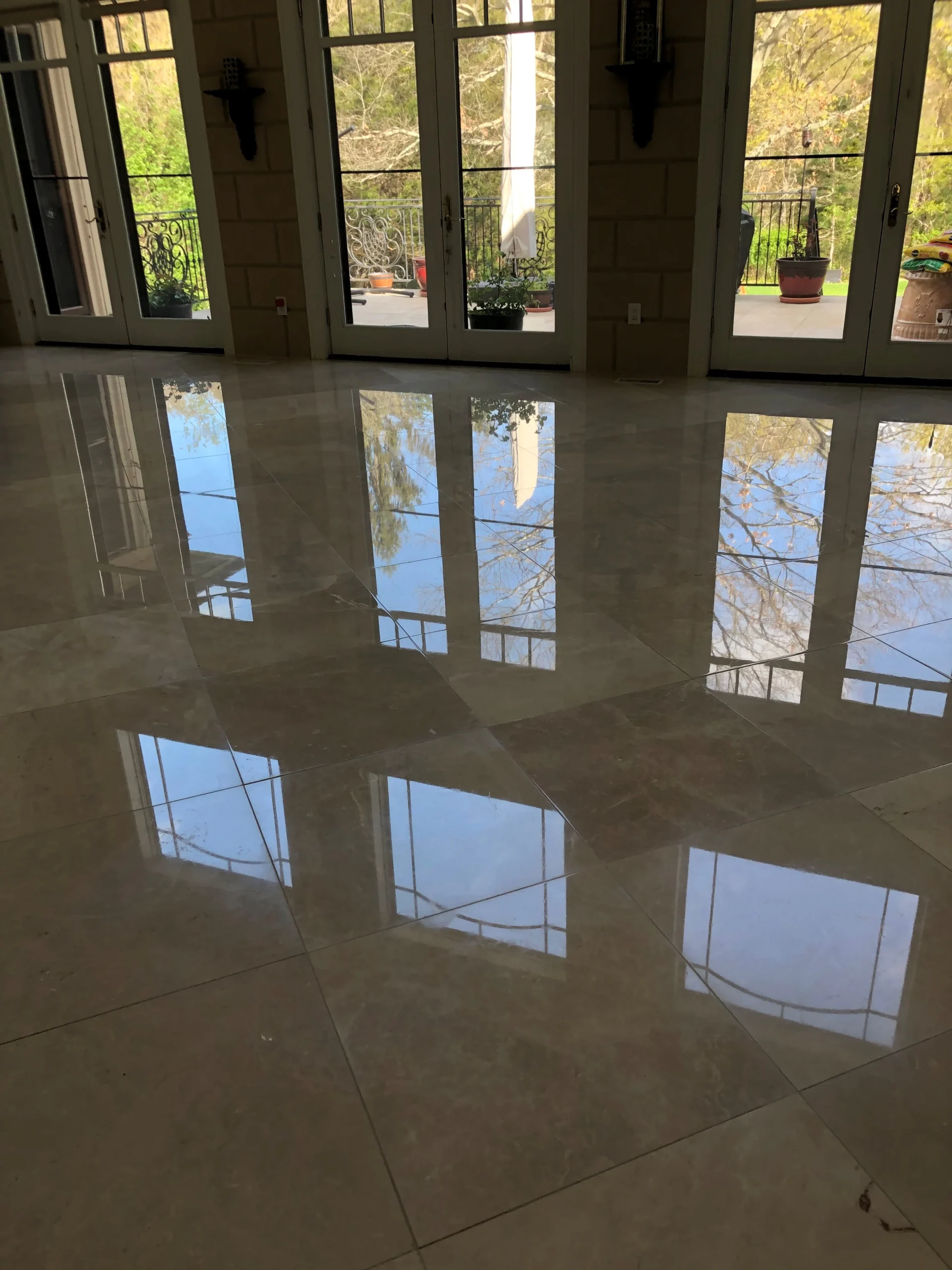
You walk into your entryway and actually see the veining patterns again. The dullness from years of wrong cleaning products is gone. The etching from Long Island’s hard water has been ground out and repolished.
Your bathroom floors reflect light the way they did when your house was built in the 1940s. The uneven patches where you tried commercial marble cleaners have been leveled out. You’re not looking at a floor that reminds you what it used to be—you’re looking at what it actually is again.
This matters because those floors are irreplaceable. Once you rip out original marble from a West Hempstead home, you lose the craftsmanship and character that makes your property worth $640,000. Restoration costs about 70% less than replacement and typically takes 2-3 days. You keep the original materials that buyers pay premium prices for, and you avoid the disruption of a full floor replacement.
We’ve been restoring historic floors across Nassau County since 1998. Our owner personally oversees every project in West Hempstead because these jobs require specific knowledge that you can’t hand off to rotating crews.
We were featured in the New York Times in 2001 for our work on century-old floors. That’s our specialty—the 100-year-old marble in your entryway or bathroom that’s been damaged by decades of incorrect care. The worse the condition, the better we are at bringing it back.
Most of the homes in West Hempstead were built in the 1940s, and many still have their original marble installations. We understand how those materials behave, what products have damaged them over the years, and how to restore them without destroying the historic installation underneath.
First, we assess the damage. Most marble floor damage in West Hempstead comes from acidic cleaners, hard water etching, or surface scratches from decades of foot traffic. We determine how much material needs to be removed to get below the damage without compromising the floor’s integrity.
Then we use diamond grinding technology to level the surface. This removes etching, staining, and uneven wear patterns. We work in stages with progressively finer abrasives, which is how we avoid the harsh lines and uneven patches that happen with DIY attempts. Each pass brings back more of the original stone.
After grinding, we hone and polish the marble using specialized compounds. This is where the reflection comes back. We’re not applying a coating that will wear off—we’re bringing out the natural polish in the stone itself. The entire process typically takes 2-3 days depending on square footage and damage severity. We mask and protect your space throughout, and we handle cleanup completely before we leave.

Ready to get started?
You get a free on-site assessment where we look at your specific floors and give you transparent pricing before any work starts. No surprises, no upselling once we’re in your home.
The restoration itself includes complete surface preparation, diamond grinding to remove damage, honing to smooth the stone, and polishing to restore the original finish. We also handle crack repairs and minor chip filling if your floors need it. Everything is done with equipment designed specifically for historic marble—not general-purpose floor tools that can cause more damage.
We also offer bathroom floor restoration, which requires extra attention because of the water exposure and typically smaller tile sizes in older West Hempstead homes. And we’ve recently added concrete restoration and polishing services, which use similar techniques to transform basement or garage floors into polished surfaces that look similar to terrazzo.
What you won’t get is a crew that shows up without the owner. Every project gets direct oversight to make sure the work meets the standard that got us featured in the New York Times. You also won’t get vague timelines—we tell you exactly how long your project will take and we stick to it.
Marble floor restoration in West Hempstead typically runs between $3 and $8 per square foot depending on the condition of your floors and the level of restoration needed. A standard entryway might cost $500-$800, while a full bathroom restoration usually falls between $600-$1,200.
That’s roughly 70% less than replacement, which can run $12-$15 per square foot once you factor in demolition, disposal, new materials, and installation. More importantly, you’re keeping your original floors, which actually increases your property value in West Hempstead’s historic home market.
We give you exact pricing after a free on-site assessment. We need to see the damage level, square footage, and any repairs needed before we can give you a real number. No guessing, no ranges that change once we start working.
Yes. The worse the damage, the better the restoration results tend to be. We’ve restored marble floors in West Hempstead homes that haven’t been properly maintained since the 1940s.
Decades of damage usually means deep etching from acidic cleaners, dullness from hard water, and surface scratches from grit and foot traffic. All of that can be ground out. We remove damaged material until we reach clean stone underneath, then we hone and polish it back to its original finish.
The only damage we can’t fix is structural—if the marble is cracked all the way through or if tiles are loose because the subfloor has failed. But surface damage, no matter how old or severe, is almost always reversible. That’s the advantage of working with solid stone instead of coated or synthetic materials.
Most marble floor restoration projects in West Hempstead take 2-3 days from start to finish. Smaller areas like a bathroom might be done in one long day. Larger entryways or multiple rooms might stretch to three days depending on damage severity.
The timeline depends on how much grinding is needed to get below the damage. Light surface restoration goes faster than deep grinding to remove years of etching. We also need drying time between certain steps, which you can’t rush without compromising results.
We’ll give you an exact timeline during your free assessment. And we stick to it—we’re not the kind of company that starts a job and then disappears for days between visits. Once we start, we finish.
Yes. Bathroom marble restoration is actually one of our specialties because older West Hempstead homes often have original marble in bathrooms that’s been damaged by decades of soap scum, hard water, and harsh cleaners.
Bathroom floors require more careful work because the tiles are usually smaller and the grout lines are more frequent. We have to grind and polish without damaging grout or creating uneven surfaces between tiles. That’s where experience with historic installations matters—newer companies often don’t understand how these floors were originally set.
We also address the specific damage patterns that happen in bathrooms: etching around the toilet and sink from cleaning products, dullness from constant water exposure, and staining from metal fixtures. All of that comes out during proper restoration.
We specialize in marble restoration, but we also work on other natural stone floors including terrazzo, limestone, and travertine. We’ve recently added concrete restoration and polishing to our services, which uses similar diamond grinding techniques to create polished concrete surfaces.
What we don’t work on is porcelain. It requires completely different tools and techniques, and it’s not our area of expertise. We’d rather refer you to someone who specializes in porcelain than take on a project we’re not set up to handle correctly.
Our focus is on historic, natural materials—the floors in older West Hempstead homes that were installed decades ago and need specialized knowledge to restore properly. If your floor is natural stone and it’s old, we can almost certainly help you.
Cleaning removes dirt and grime from the surface. Restoration removes the damaged surface itself and exposes fresh stone underneath. If your marble is dull, etched, or scratched, cleaning won’t fix it—you need actual material removal and repolishing.
Most of the marble floor damage we see in West Hempstead comes from people trying to clean their way out of problems that require restoration. Acidic cleaners, abrasive scrubbing, and commercial marble products often make the damage worse by creating uneven etching or dull patches.
Restoration uses diamond abrasives to grind away the damaged layer, then progressively finer abrasives to hone and polish the fresh stone. You’re not covering up damage or applying a temporary coating—you’re actually removing it and bringing back the original surface. That’s why restored marble lasts for decades instead of looking good for a few months after cleaning.